

Regency Mahogany Dressing Mirror
A regency mahogany dressing mirror brings tactile warmth and elegant pivot mechanics to a bedroom, offering a functional antique that reflects early nineteenth-century cabinet-making at its most refined.
Regency Mahogany Dressing Mirror
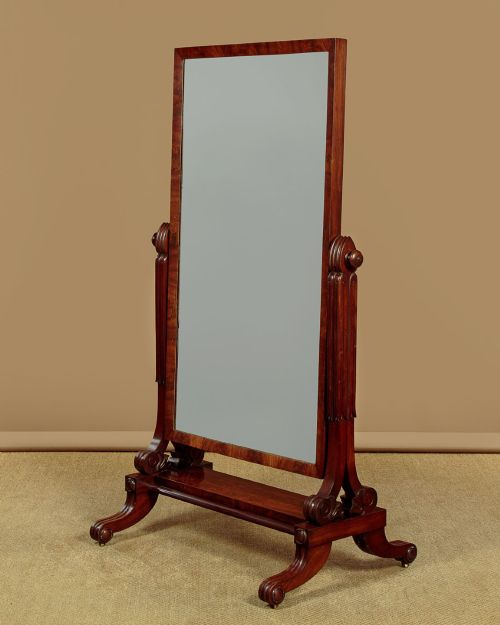
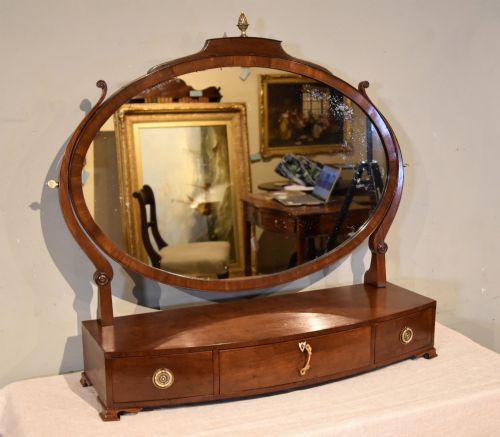
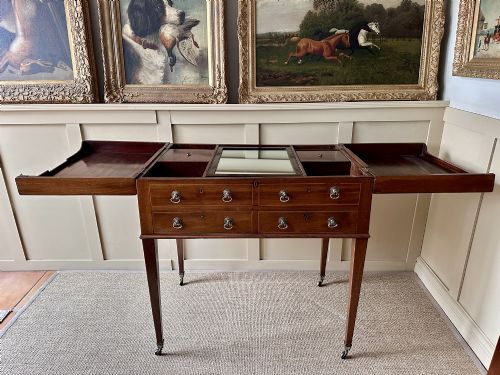
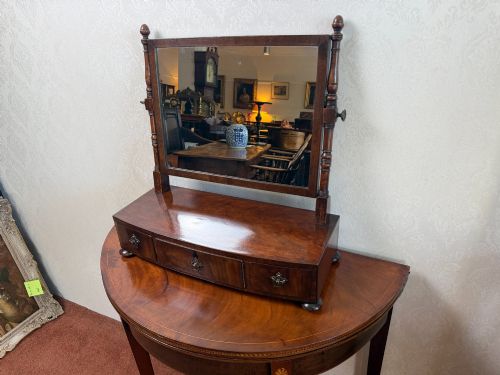
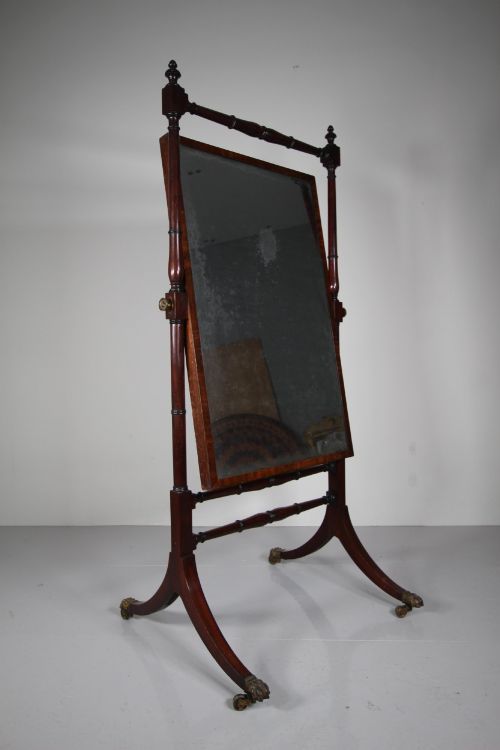
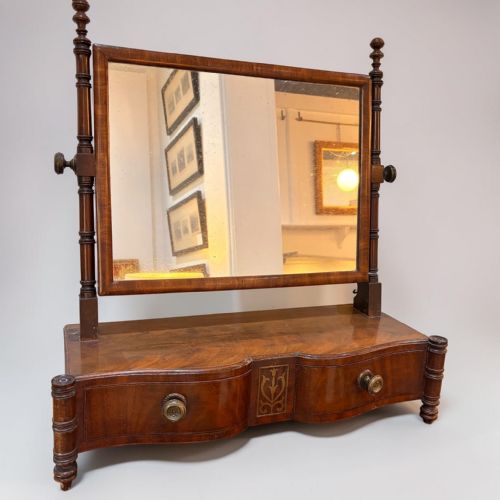
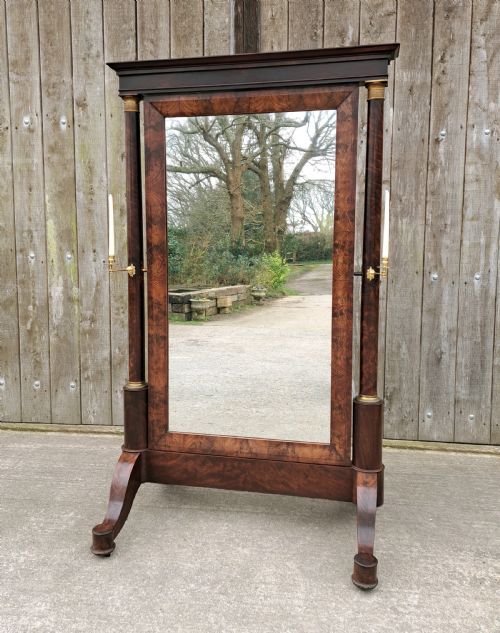
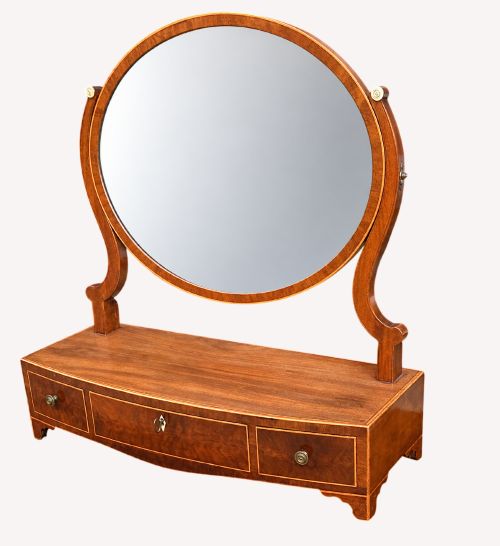
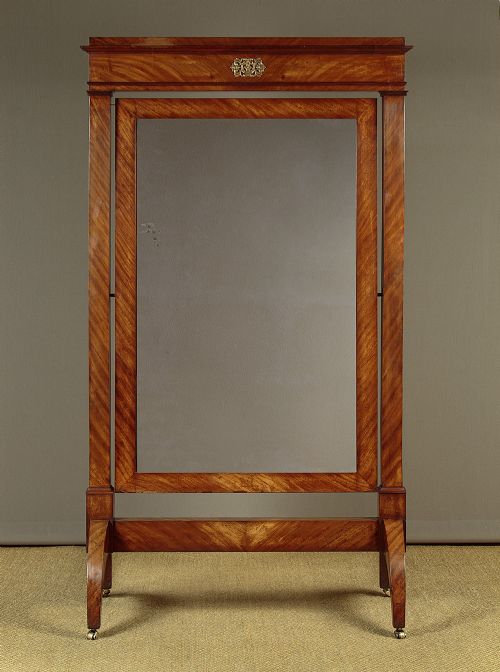
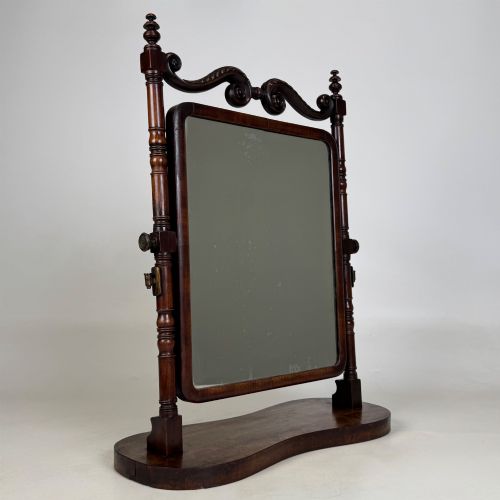
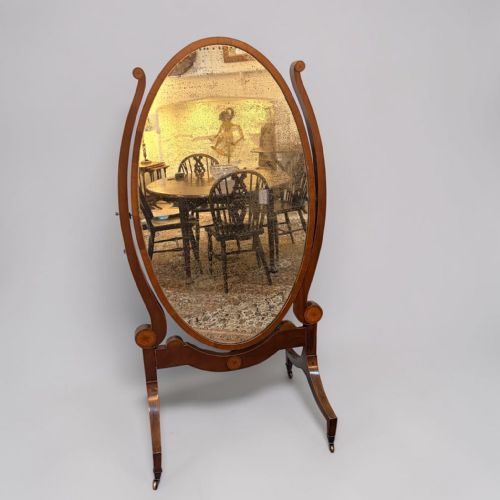
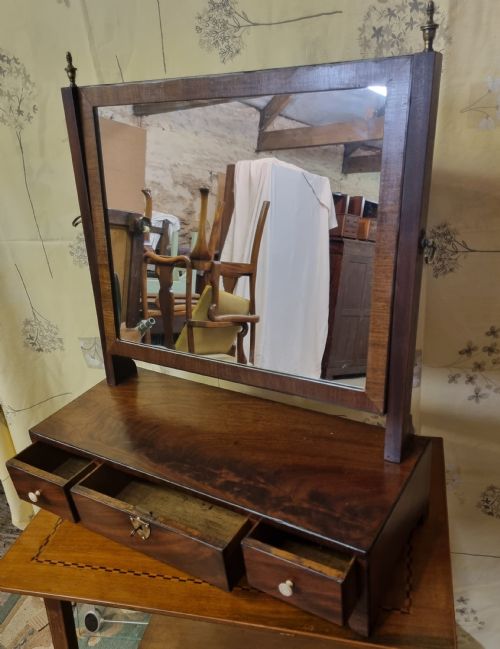
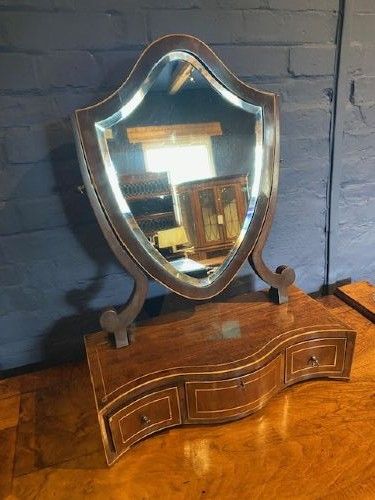
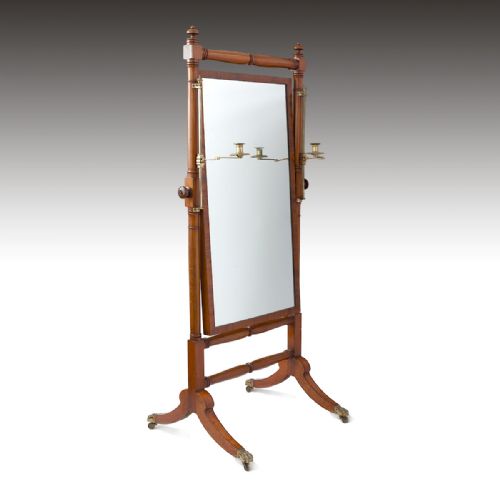
A regency mahogany dressing mirror is typically encountered as a compact table-standing toilet glass with integrated storage drawers or as a tall, floor-standing cheval version designed to pivot between upright supports. These pieces emerge predominantly from the nineteenth century, bridging Georgian restraint and the bolder proportions of the William IV era.
The table-standing variants often feature serpentine or bow-fronted box bases fitted with small drawers, while the larger cheval iterations rest on sabre legs finished with brass sabots and castors. Both forms rely on swing frames that allow the glass to tilt, offering adjustable angles for daily grooming.
Makers and workshops of the period utilised rich timber grains to create focal points for country houses and town residences alike. The survival of these objects in both small toilet formats and large cheval designs demonstrates their enduring utility in domestic spaces.
Materials and construction
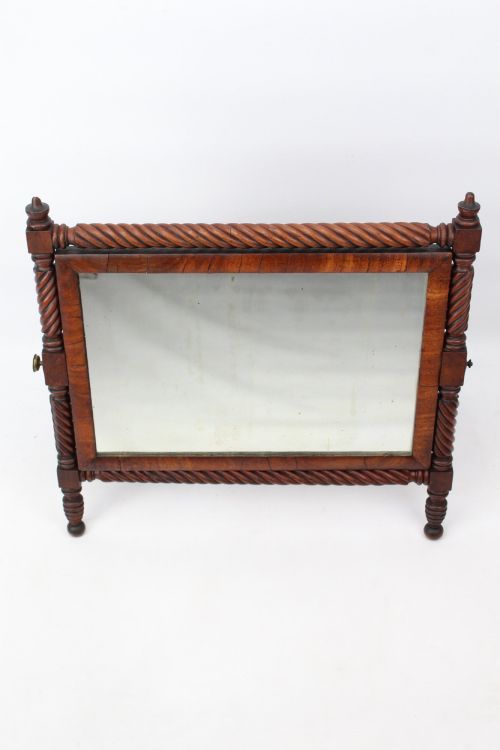
Cabinet-makers built these frames primarily using solid mahogany and mahogany veneers selected for their deep colour and pronounced grain figures, occasionally incorporating satinwood or rosewood accents. Boxwood stringing and delicate inlay work frequently outline the drawer fronts and mirror surrounds, adding linear contrast to the dark timber.
Structural integrity depended on steady pivot screws and brackets that allowed the glass frame to tilt smoothly without sagging. Brass mounts, candle sconces, and castors provided both functional durability and decorative contrast against the polished wood surfaces.
Regency Mahogany Dressing Mirror Retail Price Guide 2026
Typical asking prices for regency mahogany dressing mirror among the pieces listed under this phrase on Sellingantiques today, from the lower quarter to the upper quarter. They describe what is for sale here now, not the wider market.
Listings feature mahogany, brass, boxwood inlay, and satinwood across eighteenth and nineteenth-century periods.
Judging the execution
Quality rests in the crispness of the boxwood inlay, the harmonious proportion of the drawer base to the swing frame, and the selection of figured timber veneers. Superior examples display neat dovetail joinery within the drawer boxes and retain their original mirror glass and brass hardware.
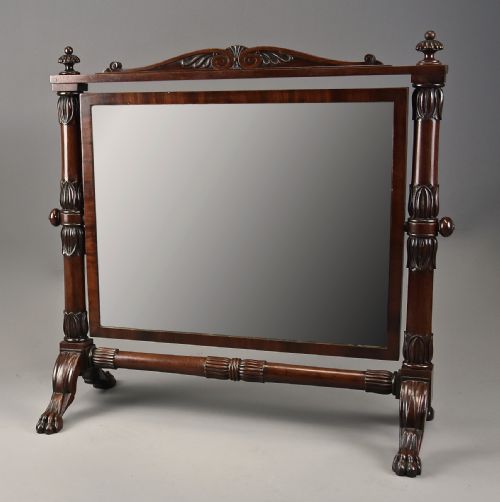
Heavier country house pieces and works attributed to known workshops demonstrate more confident carving on the upright supports and sturdier framing that resists the natural tendency of pivoting glass to warp over time.
P & MA Nicholson·Gillow·Gillows of Lancaster
The Regency Mahogany Dressing Mirror Glossary
- Cheval mirror
- A large, floor-standing dressing mirror supported by a frame with four legs, allowing the glass to swing completely through its vertical axis. This form became popular in the early nineteenth century for full-length attire checks.
- Toilet mirror
- A smaller dressing glass designed to sit atop a chest of drawers or a dedicated dressing table. These typically incorporate a box base with small drawers for trinkets.
- Sabre leg
- A curving, outward-swooping leg of circular or rectangular section that tapers toward the foot, characteristic of the Regency style. They frequently terminate in brass sabots and castors.
- Boxwood stringing
- A narrow inlaid line of pale boxwood set flush into the darker mahogany veneer of drawer fronts or frame borders. It provides a crisp, linear geometric contrast.
- Tilt glass
- The pivoting mirror plate held between two upright arms by adjustable thumbscrews. This mechanism allows the user to alter the angle of reflection.
Regency Mahogany Dressing Mirror: Frequently Asked Questions
Where were these mirrors placed?
These mirrors found their places primarily on top of dressing chests in bedrooms or upon dedicated vanity tables in grand dressing rooms. The taller cheval versions stood directly on floorboards in dressing areas or hallways.
Their placement depended entirely on scale, with smaller toilet models requiring a supportive surface and floor-standing mirrors occupying a dedicated corner for full-length viewing.
How do I maintain the pivot mechanism?
The side thumbscrews and pivot pins require gentle handling and occasional light adjustment to ensure the mirror glass stays positioned at the desired angle. Avoid over-tightening the brass hardware against the wooden uprights.
Keeping the metal components clean and free from accumulated dust preserves the smooth tilting action established by the original cabinet-maker.
Are the mirror plates original?
Many surviving pieces retain their early mercury or silvered glass, which often displays gentle foxing, small blemishes, and soft oxidation around the edges. These subtle imperfections confirm age and authenticity.
Replacement glass occurs frequently in pieces of this age, though collectors generally prefer mirrors that preserve their original reflective plates where possible.
How do I distinguish Regency from Victorian?
Regency pieces typically exhibit cleaner, lighter proportions with restrained boxwood stringing, sabre legs, and classical restraint. Victorian examples often lean toward heavier proportions, darker finishes, and denser carvings.
Examining the secondary timbers inside the drawer boxes and the style of the brass mounts helps clarify the manufacturing decade.