
Regency Mahogany Display Stand
A regency mahogany display stand brings architectural clarity to a room, offering tiered surfaces for books, needlepoint, or prized objects.
Regency Mahogany Display Stand
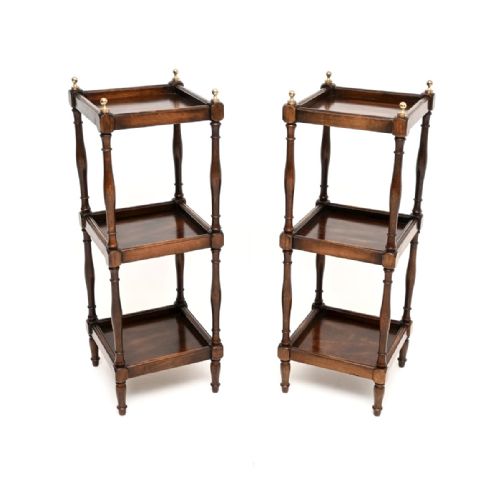
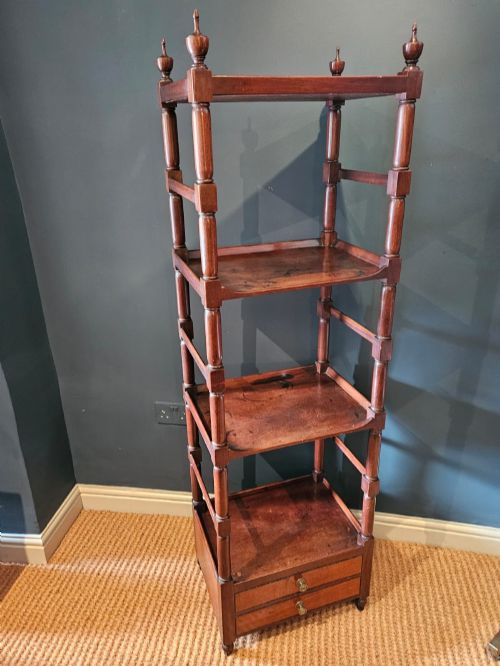
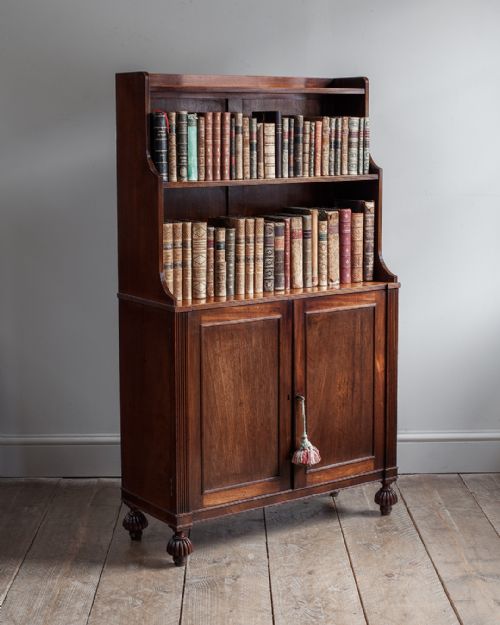
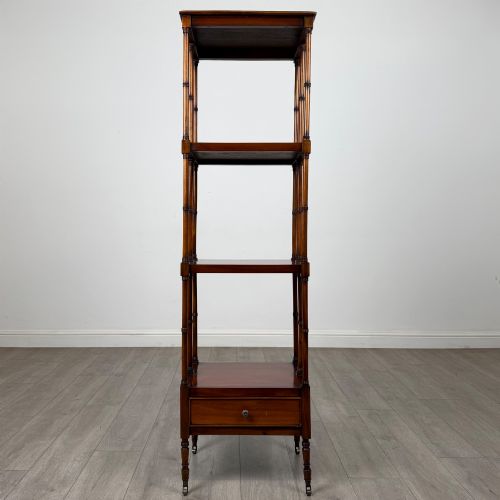
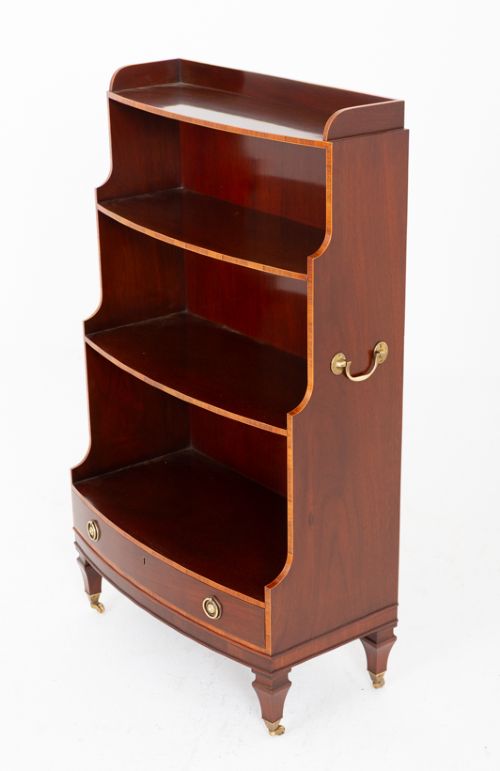
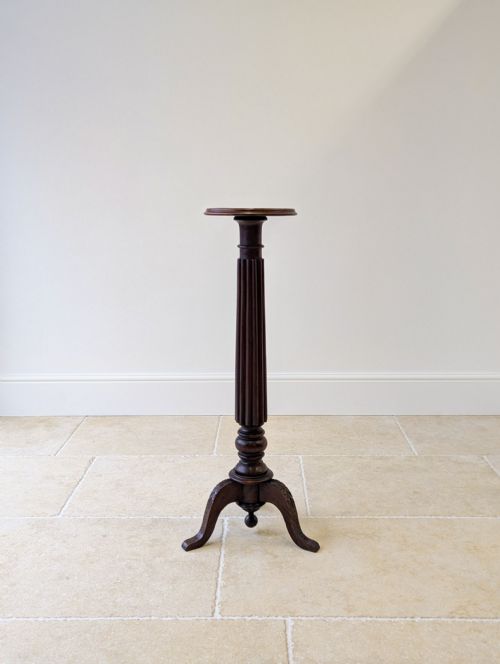
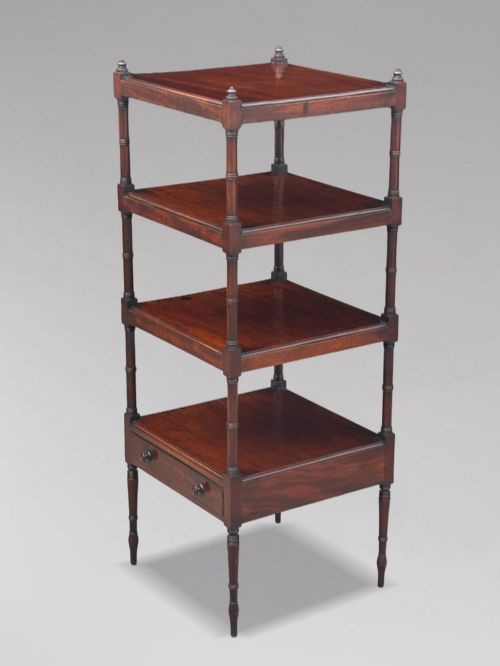
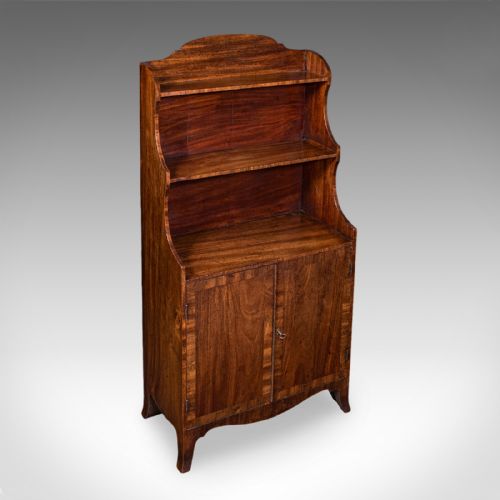
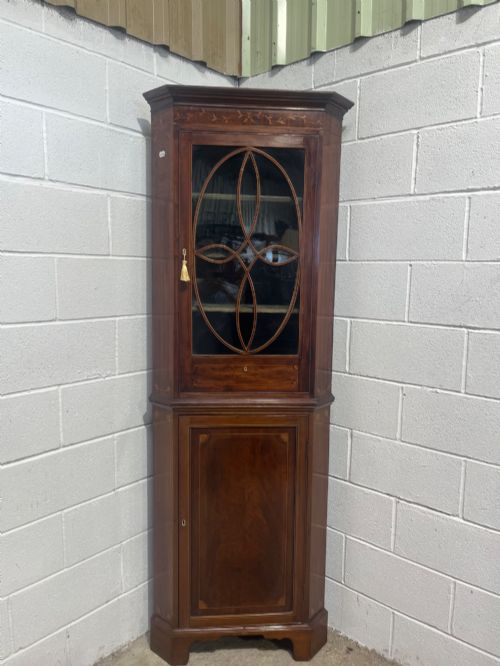
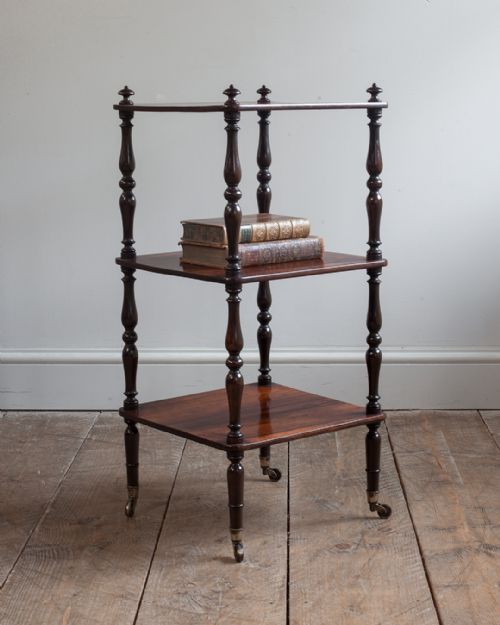
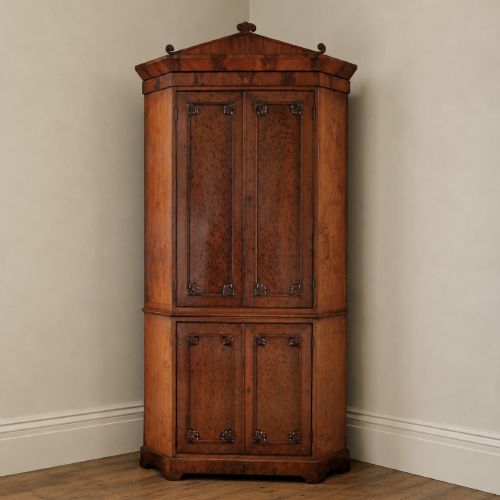
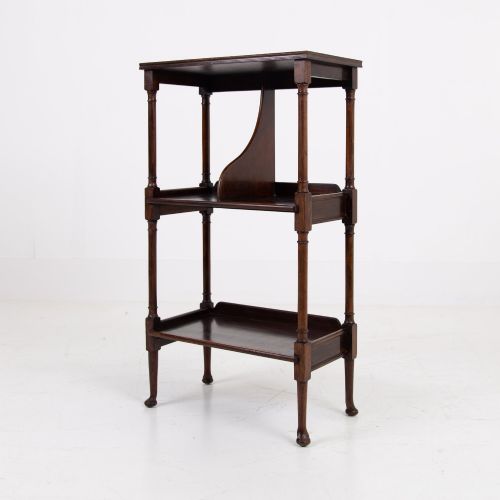
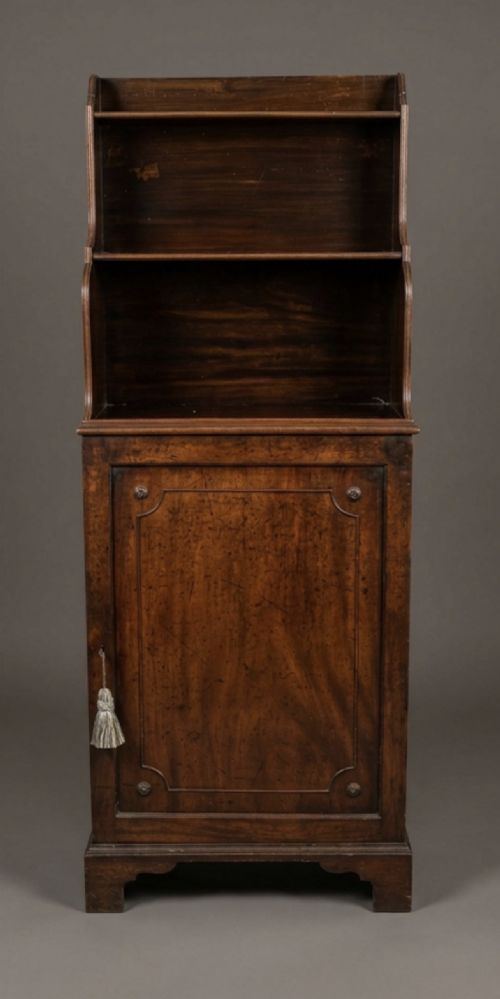
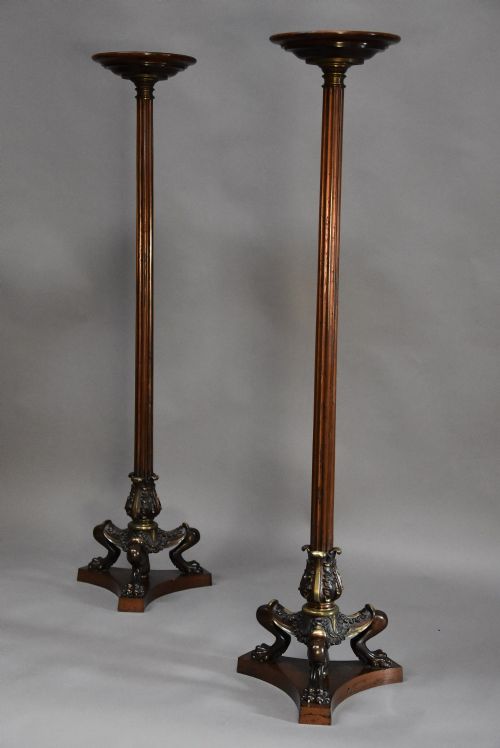
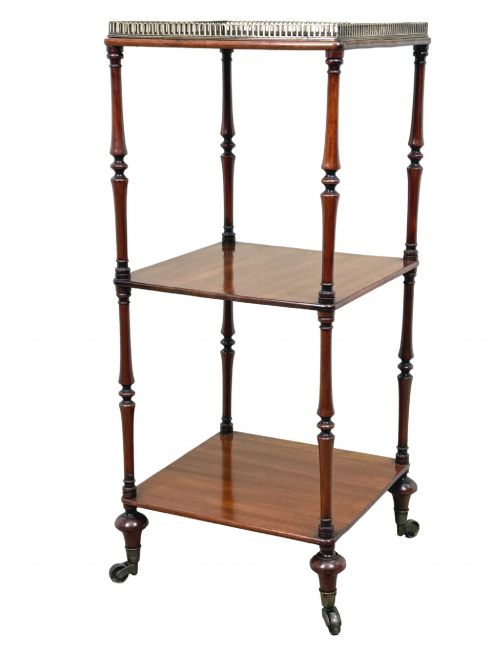
When you search for a regency mahogany display stand, you encounter a variety of elevated furniture forms designed to present objects or organise books. These pieces span from multi-tiered what-nots and etageres to tall torcheres, waterfall bookcases, and floor-standing corner cupboards.
The objects stem predominantly from the Regency, Georgian, and William IV periods, alongside later revival iterations from the Victorian and Edwardian eras. Their primary purpose is vertical display, utilising shelves, tiers, and stands to hold everything from music folios to tapestries.
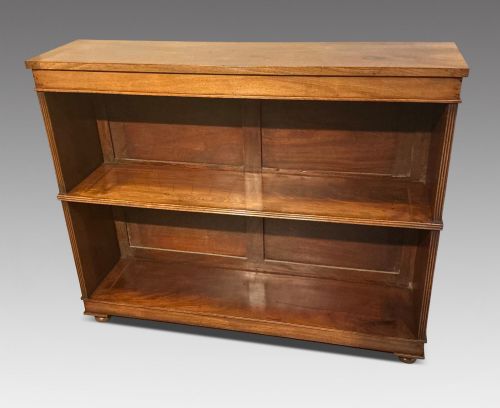
You are most likely to meet multi-tiered open bookcases, whatnots, and display shelves on this page. These pieces balance utility with elegance, providing open access for curation while maintaining the clean lines characteristic of the style.
How they were made
Cabinetmakers constructed these stands primarily using solid mahogany and flame mahogany veneers, often enhanced by satinwood, rosewood, and plum pudding mahogany for visual depth. The timber was selected for its rich grain, providing a dark, warm foundation for the displayed items.
Structural integrity relied on precise joinery, with brass hardware, castors, and trim frequently incorporated to accent the timber and aid mobility. Certain pieces also feature delicate inlays, grain-painted pine columns, or bronze mounts, reflecting the decorative vocabulary of the period.
Among the stands is a designated night watch holder from eighteen twenty, ready to keep the small hours orderly.
What varies in quality
The distinction between tiers rests upon the choice of timber and the handling of the grain. Flame mahogany and plum pudding varieties command attention through their rich figuration, whereas standard mahogany provides a more subdued surface.
Proportion and structural harmony dictate the overall success of a stand. Pieces exhibiting refined turning on supports, crisp detailing, and balanced vertical tiers separate themselves from utilitarian items made without decorative ambition.
The Regency Mahogany Display Stand Glossary
- Whatnot
- A piece of furniture consisting of open shelves for books or ornaments, popular from the late eighteenth century onwards. It is designed specifically for display and easy access.
- Torchere
- A tall stand designed to support a lamp or candle, often taking the form of a slender column or pedestal. In later periods, these served equally well as plant stands.
- Waterfall bookcase
- A set of open bookshelves where each successive shelf is set back from the one below, creating a stepped profile. This form gained popularity during the Regency period.
- Folio stand
- A hinged stand designed for holding large books, prints, or music sheets. They allow oversized documents to be viewed upright or stored flat.
Regency Mahogany Display Stand: Frequently Asked Questions
What is a regency mahogany display stand?
A regency mahogany display stand is an elevated piece of furniture designed for holding books, decorative items, or textiles. These pieces typically feature tiered shelves or pedestals constructed from rich mahogany timber.
They reflect the classical proportions and clean lines associated with the Regency era, functioning equally well in sitting rooms or studies for curated presentation.
How were these stands used historically?
Historically, these stands served various practical functions in domestic interiors, ranging from holding sheet music and folios to displaying needlepoint and tapestries. Tiers allowed households to organise small ornaments or books within easy reach.
Larger variations, such as corner cupboards and etageres, provided secure or open storage respectively, adapting to the specific needs of the room.
How do I live with a display stand?
Living with a display stand involves using its tiers to showcase collections of books, ceramics, or small sculptures without overcrowding the surfaces. Their vertical orientation makes them ideal for corners or narrow wall spaces.
Keep them away from direct heat sources and strong sunlight to protect the mahogany finish and prevent the timber from drying out over time.
How can I tell the period apart?
Dating these stands depends on observing subtle shifts in design vocabulary, timber selection, and hardware. Earlier pieces from the Georgian and Regency periods tend to feature crisper turnings and select mahogany veneers.
Revival pieces from the Edwardian era or the early twentieth century often adopt these earlier classical motifs while exhibiting construction methods and timber finishes characteristic of their own time of manufacture.