




Edwardian Style Etagere
An Edwardian style etagere brings tiered display space and light timber work to a room, offering multiple shelves for objects without crowding the floor.
Edwardian Style Etagere
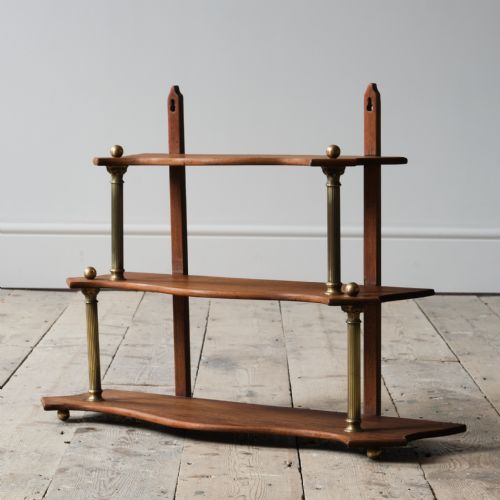
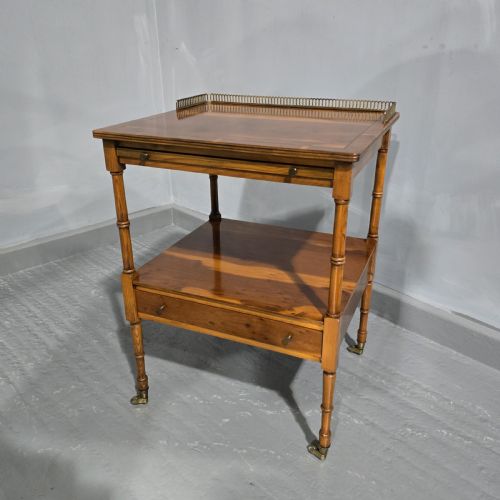
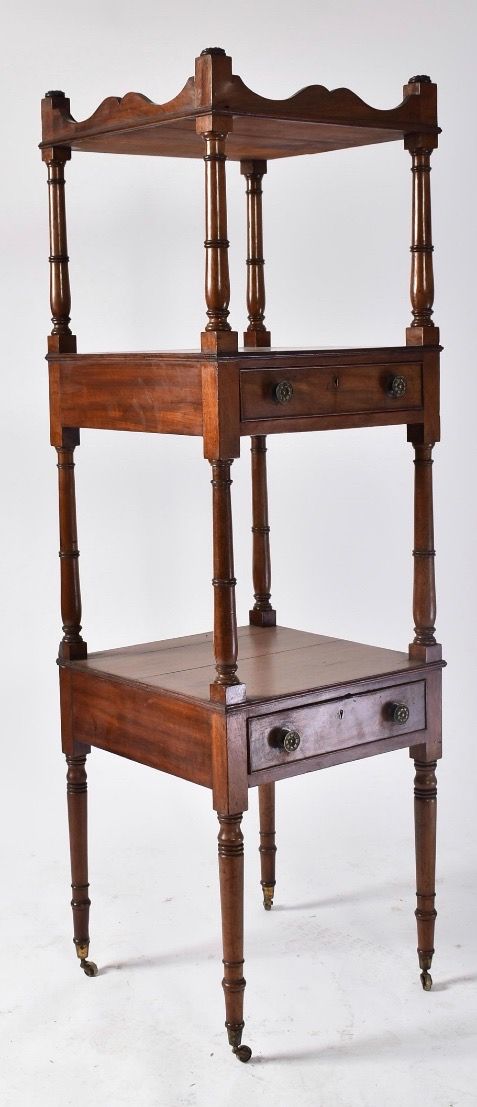
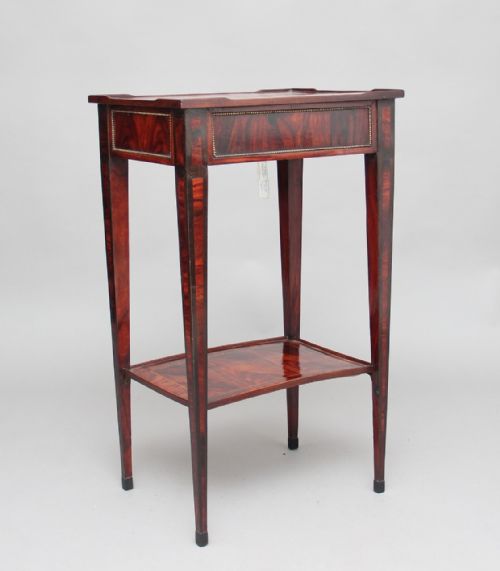
An edwardian style etagere is a multi-tiered shelving unit or table designed for display and small items, appearing in forms such as wall hanging shelves, tray-top tables, and standing whatnot display cabinets. These pieces serve practical needs in drawing rooms and parlours by elevating ornaments while taking up minimal ground area.
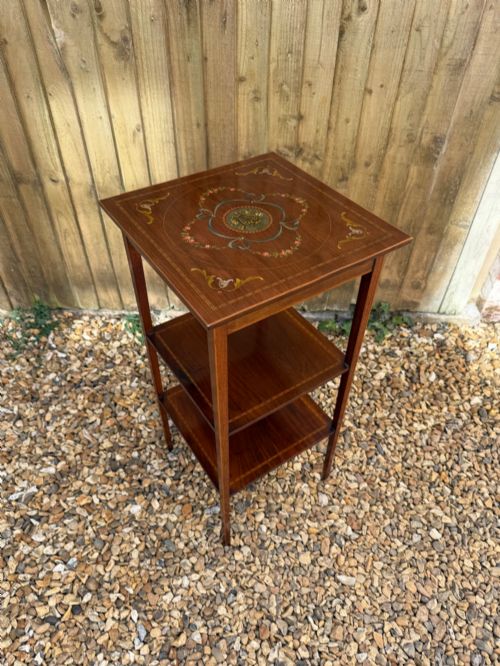
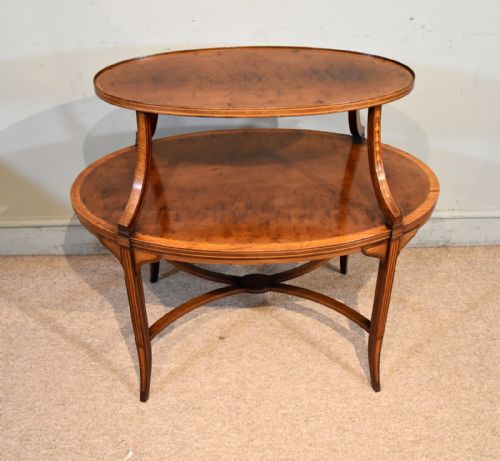
The versions most commonly met on this page span the nineteenth century into the early twentieth century, drawing heavily on revival aesthetics. They range from simple painted mahogany etageres to elaborate marquetry-inlaid two-tier designs and tiered tables featuring boxwood inlay.
Origins and styles recorded in these listings point towards revival movements including Sheraton Revival, Regency Revival, and French Revival, alongside Aesthetic Movement influences. Buyers encounter everything from wall shelves to occasional tables configured with shelves, reflecting the varied domestic requirements of the period.
What Varies in Quality
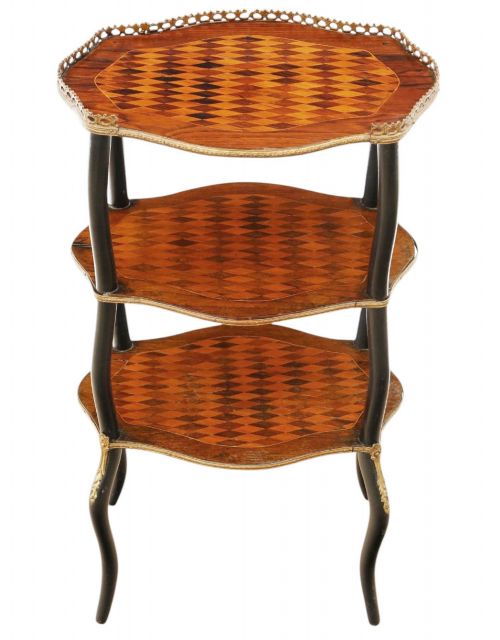
The refinement of the timber and the precision of the inlay set apart finer examples from simpler production. Subtle variations in the grain of the mahogany or satinwood, alongside crispness in the boxwood inlay and parquetry, distinguish master craftsmanship.
Proportion and structural grace dictate the standing of an individual piece within its type. Pieces that balance multiple tiers with delicate uprights and clean joinery demonstrate greater design success than heavier or purely utilitarian constructions.
Listings feature periods spanning from the Georgian era through the Victorian period, Edwardian style, and into the nineteen-twenties.
The Edwardian Style Etagere Glossary
- Etagere
- A piece of furniture consisting of a set of open shelves for displaying small objects or ornaments. It often takes freestanding or wall-hanging forms.
- Parquetry
- Geometric mosaic woodwork used for floors or furniture decoration, made by fitting together small blocks or veneers of various coloured timbers. This technique appears on tabletops and shelf surfaces.
- Marquetry
- Decorative veneer applied to furniture in which pieces of different woods, shell, or ivory are arranged in pictorial or ornate patterns. It provides ornamental detail across drawer fronts and tiers.
- Sheraton Revival
- A late nineteenth and early twentieth century design movement drawing inspiration from the neoclassical furniture of George Sheraton. Pieces typically feature light mahoganies, satinwood, and delicate inlay.
- Whatnot
- A nineteenth-century multi-shelved piece of furniture used for displaying ornaments and bric-a-brac. It shares close functional ties with the etagere.
Edwardian Style Etagere: Frequently Asked Questions
What is an etagere?
An etagere is a standing or wall-mounted shelving unit designed primarily for the display of ornaments, porcelain, and small decorative objects. The form prioritises vertical storage space with multiple open tiers.
These pieces developed to showcase prized possessions in domestic settings, offering visibility from all angles while maintaining an open, airy profile in a room.
How do I use an etagere today?
An etagere functions effectively in modern interiors as a display surface for books, small plants, ceramics, and collections. Its tiered structure helps break up blank wall spaces or corner areas.
Placing one in a living room or hallway provides accessible surface space for decorative items without introducing heavy, enclosed cabinetry into the layout.
What is Sheraton Revival style?
Sheraton Revival refers to a period of furniture design that reinterprets eighteenth-century neoclassical forms, popular around the late nineteenth and early twentieth centuries. It is characterised by lighter timbers and refined decorative motifs.
Pieces from this movement often utilise satinwood, mahogany, and contrasting stringing or inlay, echoing the neoclassical principles of symmetry and elegance.
How do I identify different timber types?
Distinguishing timbers involves observing the grain pattern, natural colour, and weight of the wood. Mahogany typically exhibits a reddish-brown hue with a straight grain, while satinwood offers a pale, golden sheen.
Inlaid pieces frequently combine these primary woods with darker ebonised elements or boxwood to create geometric contrasts and decorative borders across the tiers.