






Mahogany What Not Table
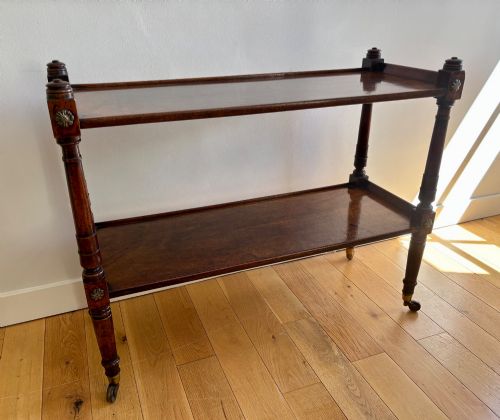
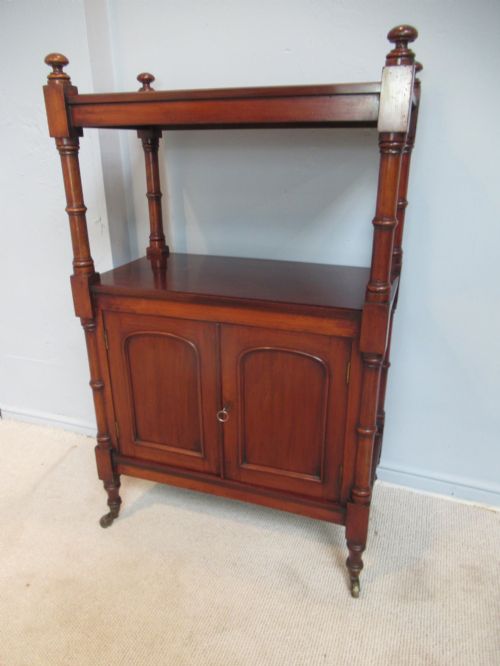
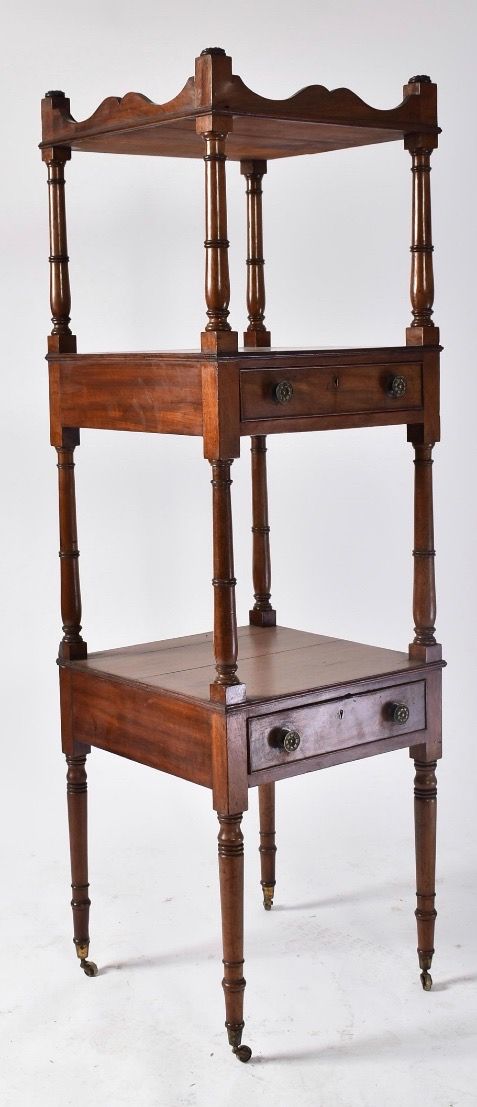
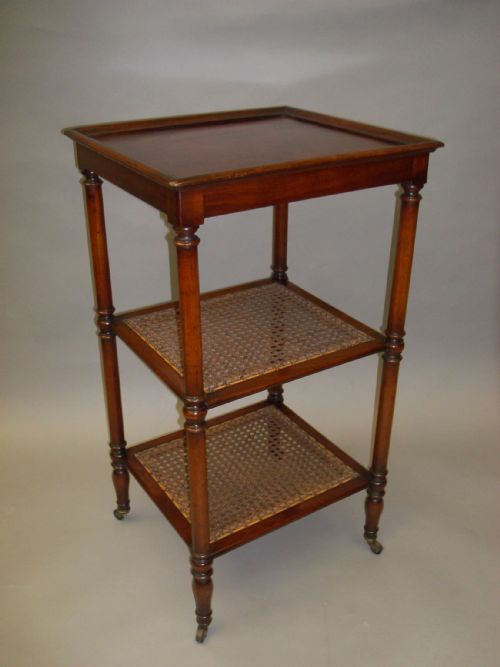
A mahogany what not table provides tiered open shelving for displaying books or ornaments.
Mahogany What Not Table
A mahogany what not table brings tiered shelving and compact utility to a room. Buyers seek these pieces for vertical display space that fits neatly into corners or alongside seating.
The versions met most often on this page take the form of multi-tiered etageres and dumb waiters. They span Georgian, Regency, and Victorian periods, utilising rich timber grains and turning.
Makers designed these items as multi-level storage stands for books, china, or decorative objects. Their open construction sets them apart from enclosed cabinets.
How they were made
Cabinetmakers constructed these pieces primarily from solid mahogany and veneers, often incorporating brass castors and fittings on the upright supports. Timber selection focused on rich figuring and deep natural tones.
Joinery techniques included delicate turning for vertical posts and secure tier seating. Some examples include marquetry veneers and ebonised details to enhance the surface appearance.
Some tables feature folding tiers or adjustable reading slopes for when the dining room gets too clever.
What varies in quality
The distinction between tiers and the refinement of the turned uprights define the higher end of the range. Better examples display careful timber matching across each shelf and precise joinery.
Proportion and scale separate standard items from superior pieces. Pieces with adjustable reading slopes or multiple balanced tiers demonstrate greater ambition in design.
The Mahogany What Not Table Glossary
- Whatnot
- A set of open shelves standing one above another, used for displaying ornaments or books. They first appeared in the late eighteenth century.
- Etagere
- A piece of furniture consisting of a set of open shelves for holding ornaments. The term is often used interchangeably with whatnot.
- Dumb waiter
- A tiered stand traditionally used for holding food or tableware without servants present. Many examples feature revolving or folding tiers.
- Marquetry
- Decorative inlay work using various woods to create pictorial patterns on a surface. It adds visual complexity to table tops and tiers.
- Regency
- An English stylistic period dating from the early nineteenth century. Furniture from this era often shows classical restraint and clean lines.
Mahogany What Not Table: Frequently Asked Questions
What is a mahogany what not table used for?
These tables provide tiered open shelving for holding books, papers, or decorative objects in a living space. Their compact footprint allows them to fit easily beside seating or in corners.
Historically, similar tiered furniture functioned as dumb waiters in dining rooms or display stands in parlours. Today they serve practical storage and display roles in modern interiors.
How do I tell a Georgian piece from a Victorian one?
Georgian and early nineteenth-century pieces tend to show cleaner classical proportions with restrained timber turning. They often emphasise the natural grain of the mahogany.
Victorian examples frequently introduce heavier timber sections, ebonised finishes, or decorative marquetry veneers. They can also include more complex mechanisms like adjustable reading slopes.
Are these tables sturdy enough for daily use?
The multi-tiered construction relies on upright supports and secure shelf fixings for stability. Most designs handle normal placement of books and ornaments without issue.
Care should be taken when moving taller four-tier examples to avoid straining the vertical joints. Placing heavier items on the lower shelves maintains a low centre of gravity.
What is the difference between a whatnot and an etagere?
Both terms describe tiered open shelving units used for display and storage. In practice, etagere often implies a slightly more decorative or French-influenced design.
Regardless of the label, both forms rely on stacked horizontal surfaces supported by vertical posts. The terminology frequently depends on the maker or region of origin.