
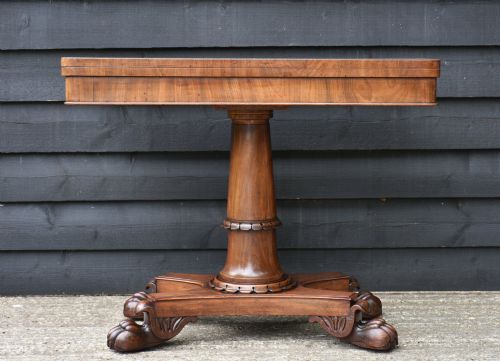
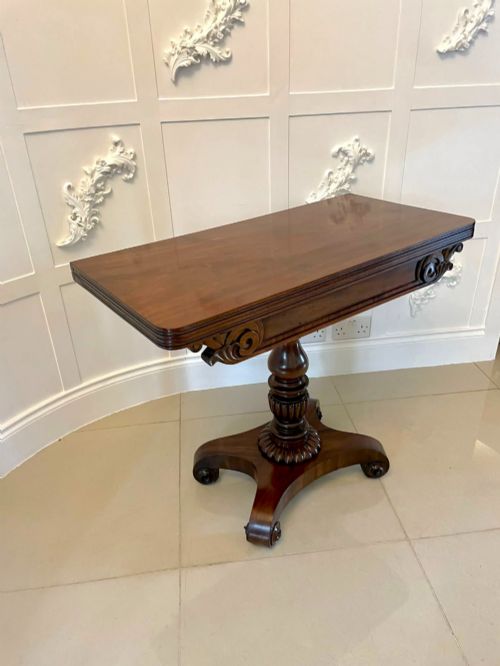
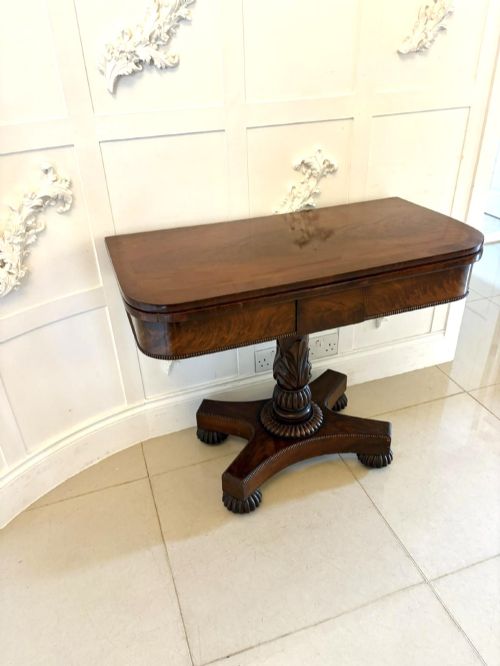
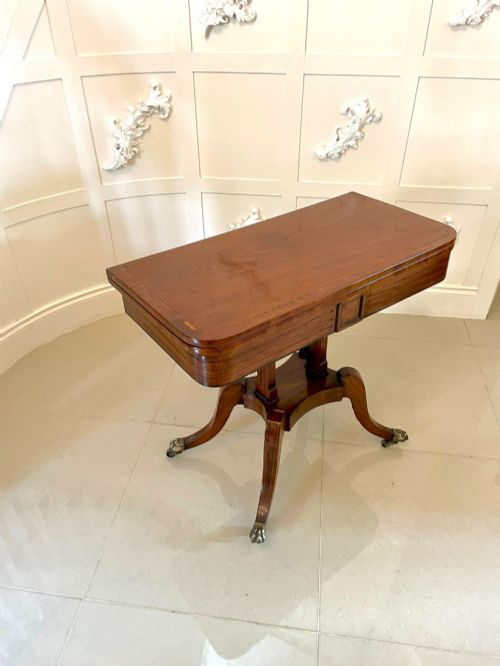


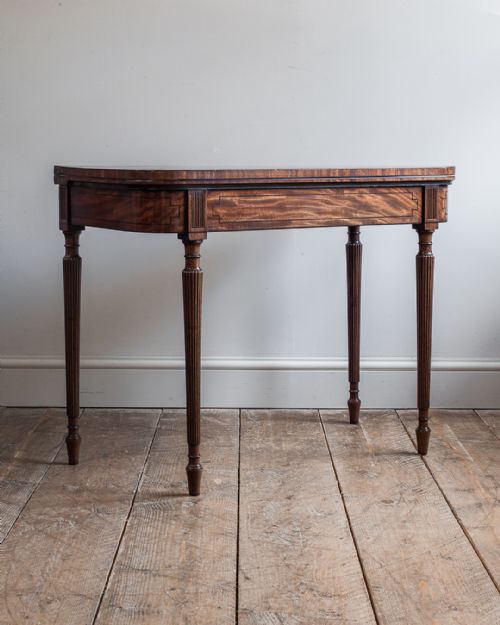
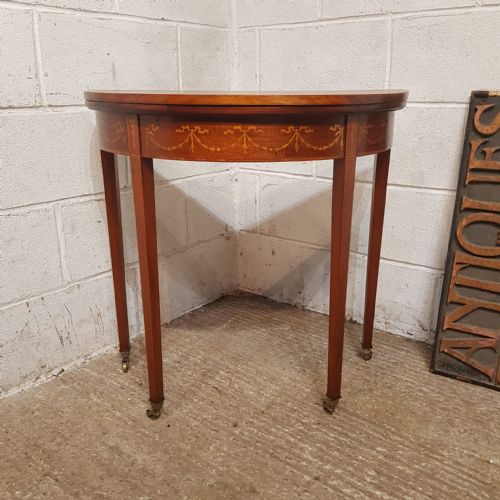
Regency Mahogany Card Table
A regency mahogany card table combines clever folding mechanics with rich cabinet timber, designed to transform from a sleek console into a green baize games surface.
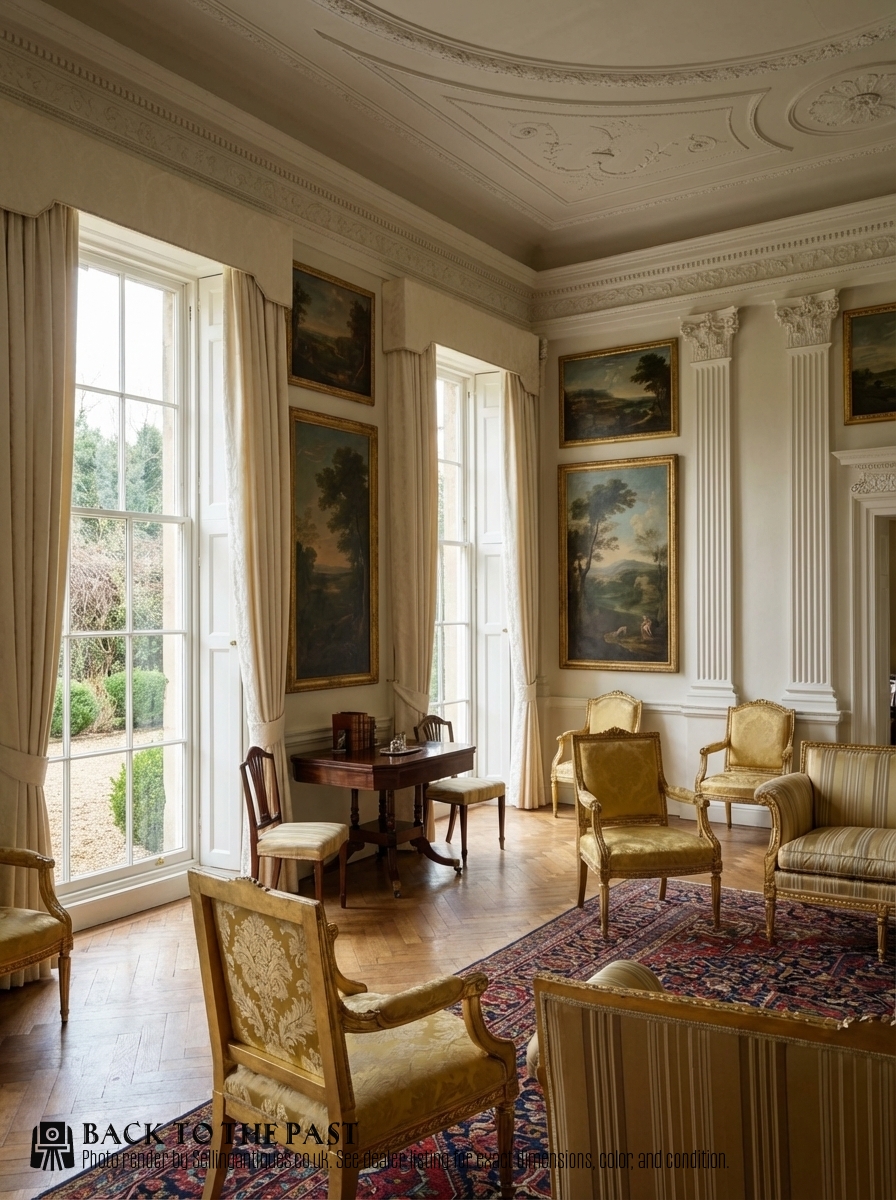
Regency Mahogany Card Table
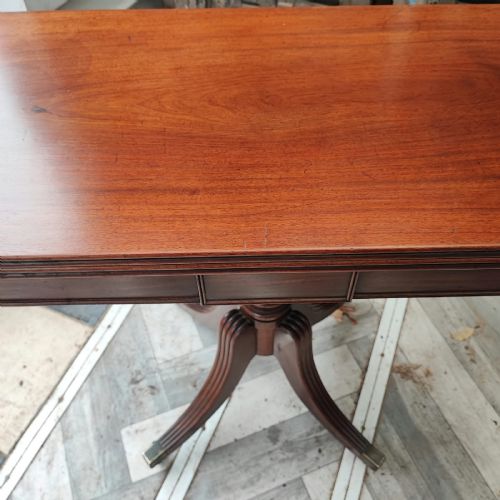
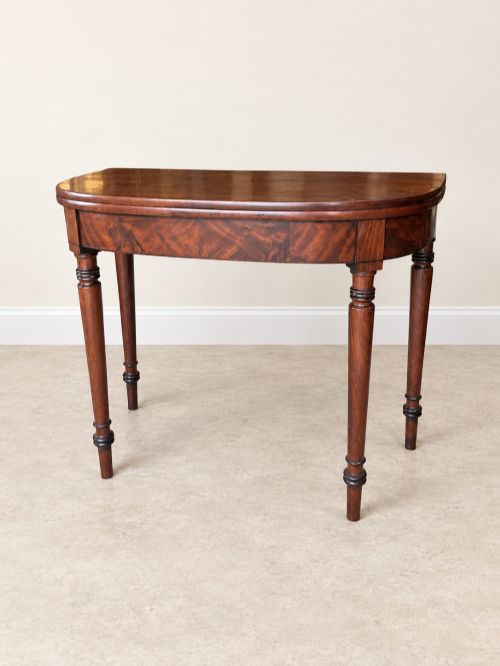
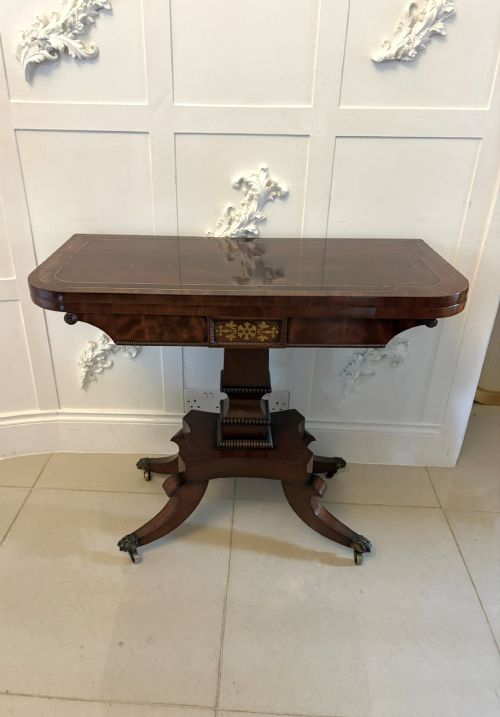
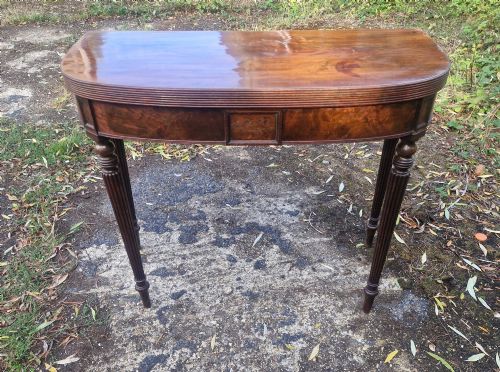
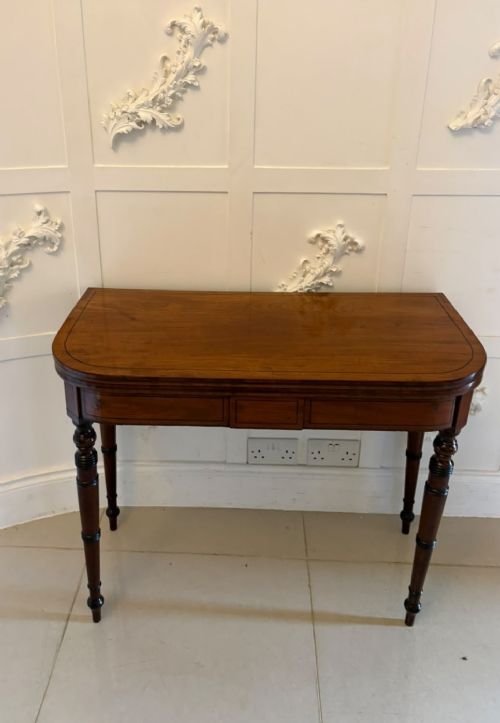
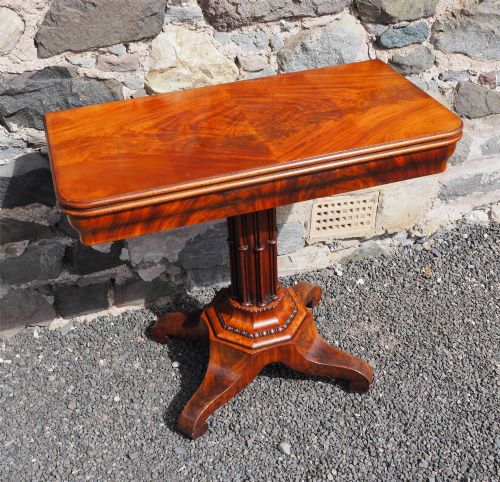
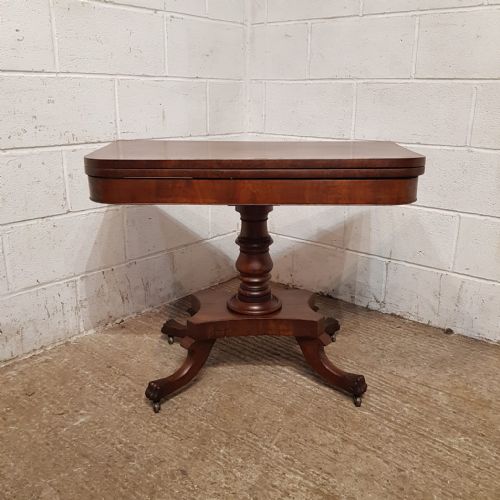
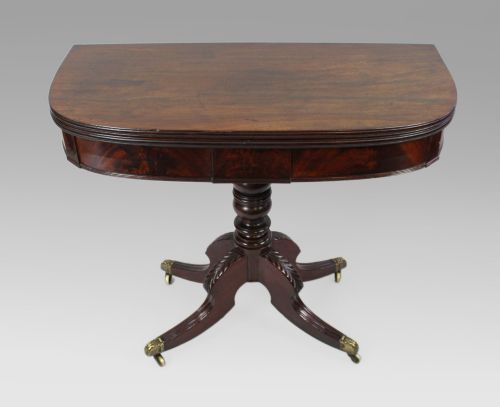
A regency mahogany card table is a multi-purpose furniture form built for parlor entertainment, functioning primarily as a console or side table when folded against a wall. The user most often meets pieces from the early nineteenth century bearing D-shaped or demi-lune tops that pivot or flip open to reveal a baize-lined playing surface. Examples span the Georgian, Regency, William IV, and George IV eras, showing stylistic shifts from plain geometry to heavier pedestals and carved paw feet.
Makers utilised versatile timber constructions, frequently pairing solid mahogany with flame mahogany veneer or incorporating contrasting satinwood, rosewood, ebony, and boxwood. Some variants include fitted compartments for game pieces or double as tea and work tables. They appear singly or occasionally as matched pairs, transitioning seamlessly from formal halls to functioning living spaces.
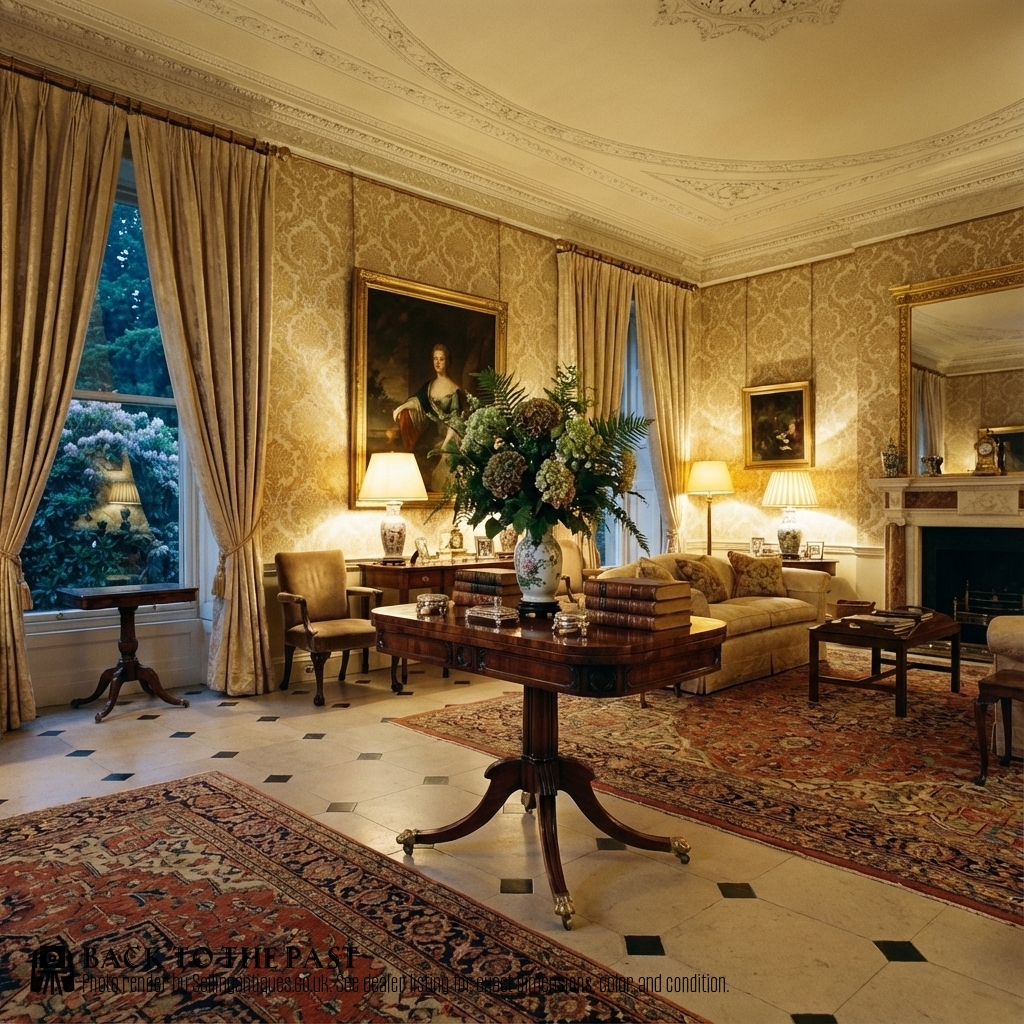
Materials and construction
Cabinet makers built these tables using dense tropical timber, applying figured flame mahogany veneer across the fold-over tops to create dramatic grain patterns. Structural frames relied on solid mahogany, fruitwood, and secondary supports designed to bear the weight of the pivoting leaf.
Decoration often involved intricate brass inlay, brass mounts, and stringing lines formed from contrasting light woods such as satinwood, ebony, and boxwood. Mechanical ingenuity defined the internal joints, utilising concertina actions, pivoting table-tops, and sturdy pedestal bases anchored by sabre legs or carved paw feet.
Regency Mahogany Card Table Retail Price Guide 2026
Typical asking prices for regency mahogany card table among the pieces listed under this phrase on Sellingantiques today, from the lower quarter to the upper quarter. They describe what is for sale here now, not the wider market.
Materials recorded across current and past inventory include solid mahogany, flame mahogany veneer, satinwood, rosewood, ebony, boxwood, brass, and fruitwood.
Judging the work
Quality rests upon the choice of timber and the precision of the cabinetmaker's joinery, particularly in how seamlessly the grain aligns when the top unfolds. Superior specimens exhibit exceptional flame mahogany veneer selection, crisp brass inlay, and finely carved details rather than purely mechanical assembly.
The stability of the folding mechanism and the integration of internal concertina frames or pedestal supports distinguish fine workshop output from standard commercial production. Balanced proportions and crisp execution of elements like brass mounts elevate an ordinary piece into a collector's item.

The Regency Mahogany Card Table Glossary
- Flame mahogany veneer
- A decorative wood slicing chosen for its fiery, swirling grain pattern. Craftsmen laid this expensive veneer over stable secondary timbers to create striking optical movement on table tops.
- Concertina action
- An expandable frame mechanism that allows the table base to stretch outward when the top unfolds. This complex engineering supports the open leaf evenly without sagging.
- Demi-lune
- Half-moon in shape, describing tables designed to sit flat against a wall. When opened, the top reveals a full circular or serpentine gaming surface.
- Stringing
- Fine inlay work using thin strips of contrasting timber like boxwood or ebony. It outlines panels and edges to provide linear contrast against dark mahogany.
- Sabre leg
- A curved, outwardly splayed furniture leg that tapers toward the foot. It provides stable floor support while maintaining the slender silhouette characteristic of the period.
Regency Mahogany Card Table: Frequently Asked Questions
How do you open a folding card table?
The hinged top rotates on a central pivot or flips entirely over to rest upon the extended framework. Supporting legs or concertina frames pull outward simultaneously to hold the double-density surface level.
Users should check the alignment of internal wooden hinges and pivot pins before moving the top. Forcing a stiff mechanism risks splitting the mahogany veneers near the rear joint.
Were these tables only used for cards?
While specifically engineered for card games with baize-lined interiors, many functioned interchangeably as tea, console, or side tables. Their dual-purpose nature made them practical items for daily parlor use.
When closed against a wall, they served as decorative furniture displaying porcelain or clocks. Opening the leaf transformed the room instantly for evening entertainment.
How do I tell a Regency table from a William IV one?
Regency models tend to feature slender proportions, brass inlay, delicate satinwood stringing, and graceful sabre legs or pedestal bases with delicate feet. They emphasise linear elegance and classical restraint.
William IV examples shift toward heavier, sturdier constructions with robust pedestals, bolder carved paw feet, and darker figured mahogany veneers. The overall aesthetic becomes more substantial and less linear.
Where should I place a card table in a modern home?
These tables fit naturally against entrance hallway walls or living room perimeters in their closed console configuration. The shallow depth prevents them from obstructing walkways while offering a practical surface for lamps or ornaments.
Opening the top requires clearance around the base, making occasional use as a games table or impromptu desk possible in larger studies or dining spaces.