

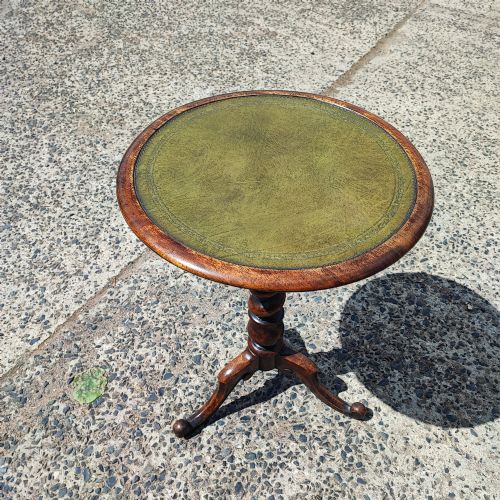
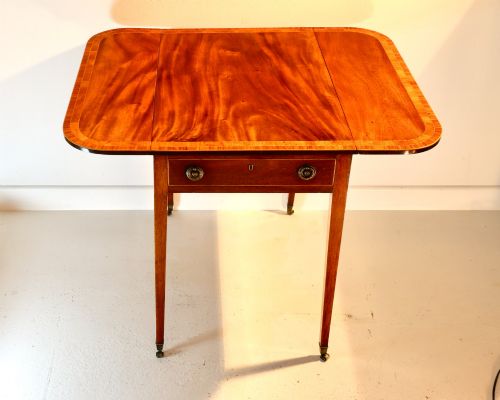
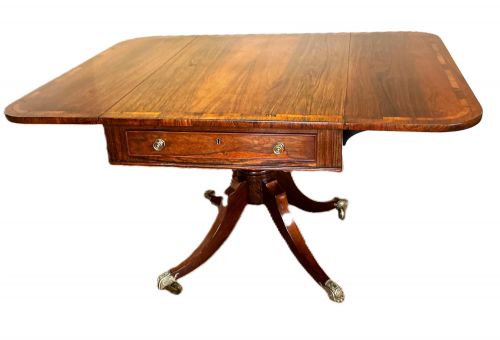
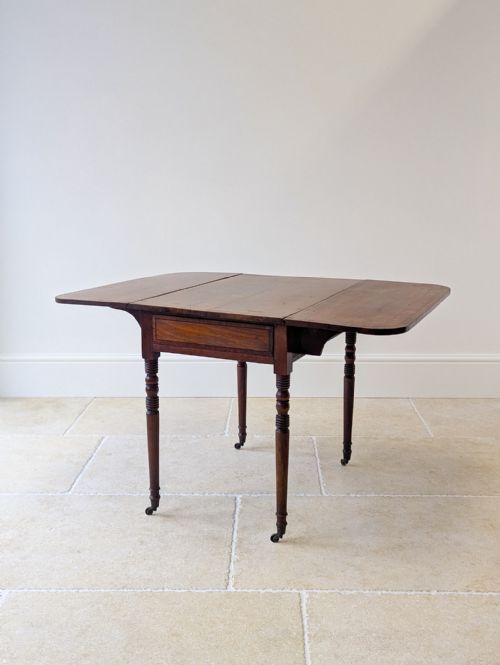




Regency Mahogany Accent Table
A regency mahogany accent table brings architectural discipline and warm timber figures to a room, serving as a functional surface with enduring presence.

Regency Mahogany Accent Table
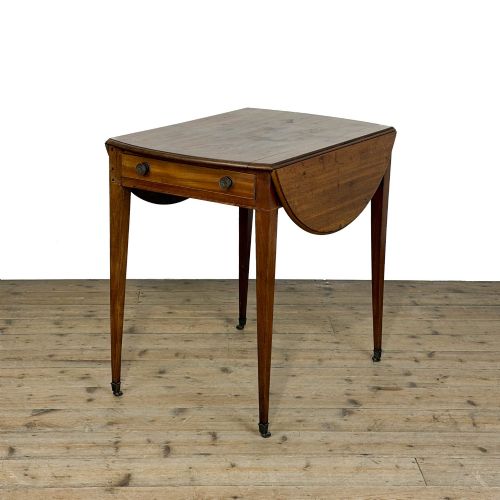
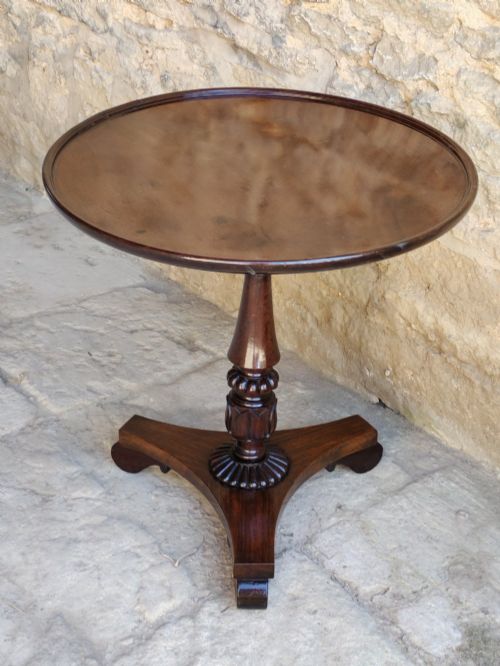
A regency mahogany accent table encompasses forms designed for flexible utility, from drop-leaf pembroke tables and pedestal wine stands to compact side and occasional tables. These pieces originate primarily from the nineteenth century, capturing Georgian, Regency, and William IV design idioms.
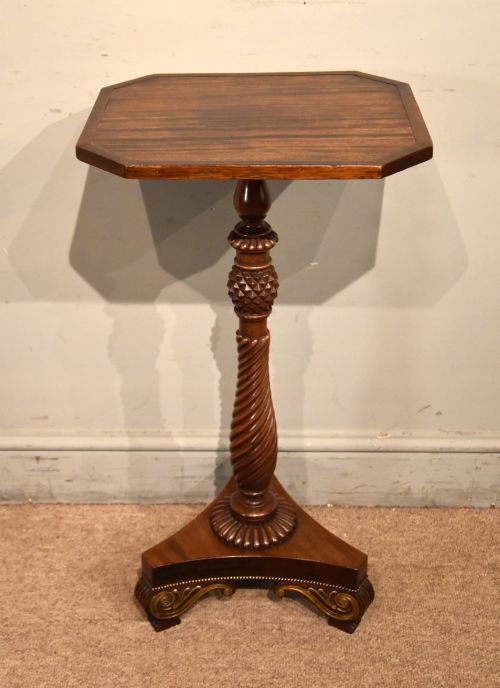
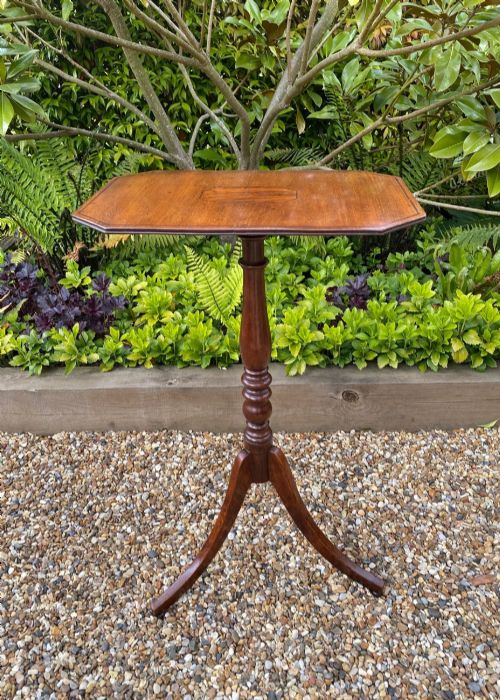
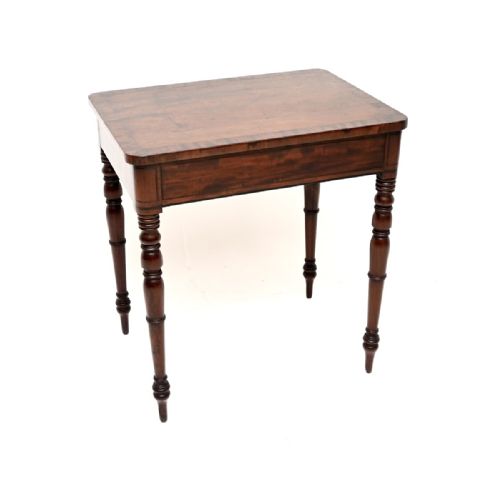
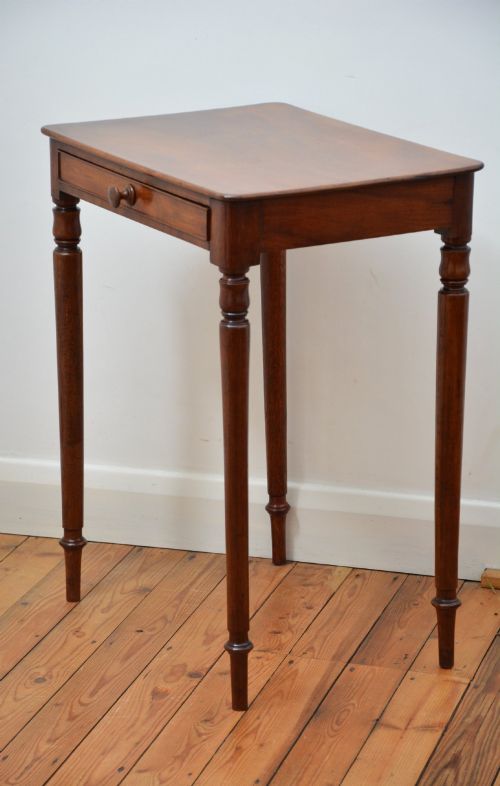
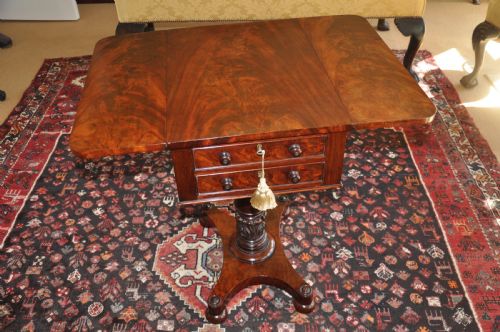
The versions most commonly met on this page include pembroke tables with folding flaps, tripod wine tables for small spaces, and rectangular occasional tables equipped with single drawers. They appear in diverse proportions, ranging from diminutive end tables to grander centre and library tables.
Makers of this era utilised dense, dark timbers shaped to suit formal entertaining and private library use alike. The selection reflects domestic British furniture production alongside later revival pieces that emulate the restrained classical lines of the period.
Materials and Construction
Cabinetmakers built these tables primarily using solid mahogany and figured mahogany veneers, valued for deep reddish-brown tones and natural lustre. Workshops frequently incorporated secondary timbers and added contrasting details in satinwood, rosewood, or wood inlay.
Functional elements involved precise joinery, with drop leaves supported by swinging brackets and drawers constructed with hand-cut joints. Pedestal bases often terminate in tripod legs, sometimes finished with brass castors to allow smooth movement across carpets and floorboards.
The inventory includes specialised designs such as sewing tables with removable baskets and multi-tiered nest tables.
Distinctions in Quality
The standard of a regency mahogany accent table rests upon the choice of timber figure, where finely grained or figured mahogany displays superior depth and warmth. Plain boards yield a more utilitarian appearance, whereas book-matched veneers and subtle string inlay denote deliberate workshop ambition.
Structural integrity and proportion separate standard utilitarian pieces from exceptional examples. Finer tables maintain balanced turning on pedestals, crisp mouldings around drawers and flaps, and original brass fittings that sit flush against the timber.
The Regency Mahogany Accent Table Glossary
- Pembroke table
- A small rectangular table with hinged drop flaps on either side, often fitted with a single drawer. It was designed to stand against a wall when closed and move into the centre of a room when opened.
- Wine table
- A compact occasional table with a circular or octagonal top raised on a central pillar and tripod base. It served originally for holding glassware and decanters during evening assemblies.
- Sofa table
- A rectangular occasional table traditionally placed in front of or behind a sofa, featuring drop leaves at the short ends. These tables often incorporate double pedestals connected by a stretcher.
- Drum table
- A circular library table with a deep frieze containing alternating drawers and dummy drawers. It rotates upon a central pillar supported by a sturdy multi-footed base.
- Tripod base
- A support structure consisting of three spreading legs radiating from a central column. This design provides stability on uneven floor surfaces without requiring a four-cornered frame.
Regency Mahogany Accent Table: Frequently Asked Questions
What is a pembroke table?
A pembroke table is a versatile small table featuring two hinged drop leaves on opposite sides. It typically includes one or two drawers and was easily moved around a room for writing or breakfast.
During the nineteenth century, these tables sat beside seating areas or against walls, expanding when extra surface space was required for reading materials or needlework.
Where should an occasional table go?
An occasional table suits placement beside a reading chair, at the end of a sofa, or freestanding in a hallway. Its compact footprint allows it to occupy corners or transitional spaces where larger furniture would crowd the floor.
These pieces function effectively to hold a lamp, display decorative objects, or provide a convenient temporary surface in living spaces and studies.
How do I spot a Regency table?
Regency tables typically display classical architectural influences, including reeded legs, sabre supports, brass paw feet, and dark mahogany surfaces. Proportions remain clean and balanced, often drawing inspiration from ancient Roman and Greek designs.
Cabinetmakers of this era favoured rich timber grains and minimal carving, letting the natural figure of the mahogany provide decorative contrast.
What is a William IV table?
William IV furniture dates from the 1830s and leans towards heavier, bolder proportions than earlier Regency pieces. Tables from this transitional phase often feature robust central pillars, melon-carved pedestals, and substantial plinth bases.
The timber used is typically dark, dense mahogany, frequently paired with concealed castors and generous circular or rectangular tops designed to show off figured grain.