


Regency Lidded Tureen
These regency lidded tureen pieces bring sophisticated service to the table, offering the refined presence collectors seek.
Regency Lidded Tureen
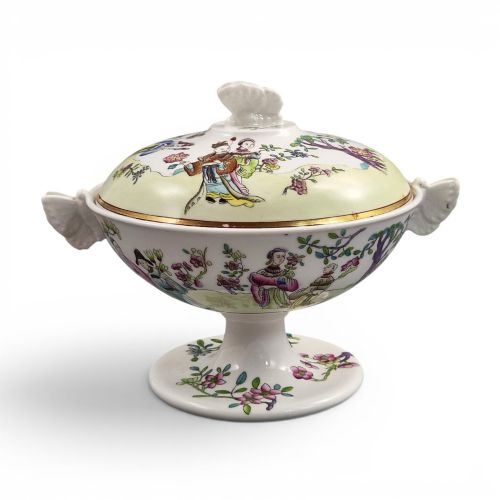
A regency lidded tureen is a covered serving vessel designed for soups, sauces, or vegetables at formal meals. The examples on this page span the Georgian, Regency, and nineteenth-century periods, capturing an era of elegance.
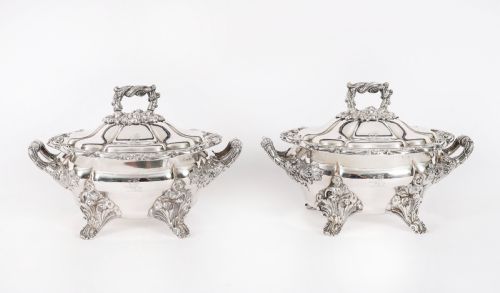
You will encounter various forms here, including sauce tureens, entree dishes, vegetable tureens, and large covered bowls. Ceramic items sit alongside gleaming silver plate and Old Sheffield plate vessels.
Origins trace directly to English makers and potteries working in the early decades of the nineteenth century. These objects function equally well as decorative centrepieces or working elements of historic tableware.
What Varies in Quality
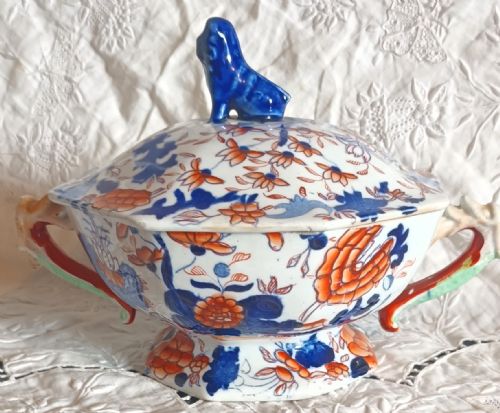
Quality rests heavily on the crispness of the moulded ornament and the precision of hand-painted or printed transfer designs. Superior ceramic examples show clean enamel colours and well-defined Chinoiserie details.
In silver-plated items, the integrity of the fused metal surface and the subtlety of applied borders dictate distinction. Maker attribution through impressed marks or crests also elevates the standing of an individual tureen.
The object forms range from sauce tureens and vegetable dishes to warming dishes and large covered bowls with intricate handles.
Mason·Flight Barr and Barr·Matthew Linwood·Cresswick·Spode
The Regency Lidded Tureen Glossary
- Old Sheffield plate
- A composite material made by fusing a thin sheet of silver to a thicker copper base. This technique creates durable tableware with the appearance of solid silver.
- Ironstone ceramic
- A dense, heavy earthenware patent developed in the early nineteenth century. It resists chipping and provided a durable canvas for colourful Chinoiserie decoration.
- Felspar porcelain
- A refined ceramic body introduced in the Regency period. It allowed for thinner vessel walls and crisp moulded handle designs.
- Chinoiserie pattern
- European decorative motifs inspired by Chinese art and landscape painting. These designs frequently appear on early nineteenth-century ironstone tureens.
- Entree dish
- A shallow covered serving vessel designed for side dishes during multi-course meals. They often feature removable handles for versatile arrangement.
Regency Lidded Tureen: Frequently Asked Questions
What were regency lidded tureens used for?
These vessels held soups, sauces, or warm vegetables on formal dining tables during the nineteenth century. The fitted lids kept contents hot between the kitchen and the dining room.
Today, they serve as striking decorative elements on sideboards or dining tables, continuing their tradition of elegant presentation.
How can I tell a Regency tureen from a later piece?
Regency and early nineteenth-century pieces display specific stylistic traits such as classical proportions, specific Chinoiserie transfer prints, and characteristic ironstone or Old Sheffield plate weights. Markings on the base often point to known periods or workshops.
Comparing glaze textures and handle forms against documented examples helps confirm the date of manufacture.
Can I use antique tureens for serving food?
Many ceramic and silver-plated tureens remain structurally sound for serving dry foods or warmed dishes during special meals. Care must be taken with older glazes and delicate handles.
Using them for display is often preferred by collectors to preserve their historic condition and finish.