

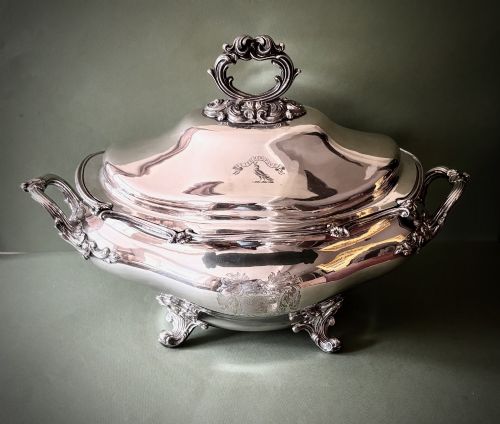
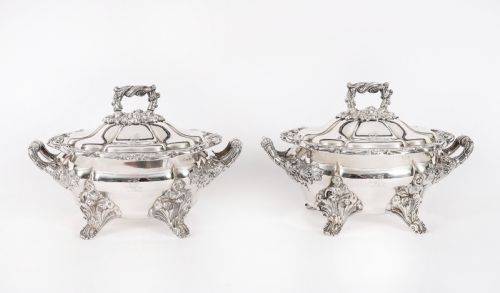


Georgian Silver Plated Tureen
A georgian silver plated tureen brings substantial dining splendour to the table, fashioned from fused metals to hold soups and sauces with genuine period weight.
Georgian Silver Plated Tureen
When you search for a georgian silver plated tureen, you encounter serveware designed for grand dining tables during the Georgian, Regency, and nineteenth century periods. These items include souptureens, sauce tureens, entree dishes, and warming dishes intended for formal service.
The most common examples on this page date around eighteen hundred to eighteen twenty, often manifesting as oval lidded sauce tureens or larger soup vessels. Alongside standard silver plate, the selection includes pieces incorporating porcelain, glass, and ebony elements.
Many survivors carry specific heraldic crests or individual family markings, demonstrating their original status in wealthy households. The forms range from single grand vessels to matched pairs and complex supper sets.
Materials and construction
The manufacture of these items relies on copper fused with silver, creating the durable base known as Old Sheffield Plate. Makers worked this sheet metal into elegant oval and lidded forms, occasionally integrating porcelain, glass, and ebony handles or liners.
The combination of copper and silver required specialist smithing techniques to shape the body without revealing the base metal underneath. Artisans applied applied borders, cast handles, and detailed crests to finish each serving vessel.
Georgian Silver Plated Tureen Retail Price Guide 2026
Typical asking prices for georgian silver plated tureen among the pieces listed under this phrase on Sellingantiques today, from the lower quarter to the upper quarter. They describe what is for sale here now, not the wider market.
Dining guests in the Georgian era occasionally spun their food choices in circles using a lazy susan integrated into a porcelain supper set.
Distinctions in execution
The standard of a piece rests upon the crispness of the chased or applied ornament and the preservation of the original plated surfaces. Superior examples retain their heft and balance, with lids and bases fitting together precisely without distortion.
Makers who invested greater labour in cast handles and detailed heraldic crests produced vessels of higher visual impact. The presence of makers' marks or specific workshop attribution elevates the standing of an item within the category.
Cresswick
The Georgian Silver Plated Tureen Glossary
- Old Sheffield Plate
- An early method of fusing a thin sheet of silver to a thicker copper ingot before rolling them into sheets for smithing. This technique preceded modern electroplating.
- Sauce Tureen
- A small lidded vessel designed to hold and keep warm gravies or sauces at the dining table. They frequently appear as matched pairs.
- Entree Dish
- A shallow serving dish with a fitted lid, utilised for presenting individual courses during elaborate dinners. These often coordinate with larger tureen sets.
- Supper Set
- A collection of multiple serving dishes arranged together, sometimes revolving around a central lazy susan for easy communal dining. They represent the pinnacle of dining convenience in the period.
- Warming Dish
- A specialised vessel featuring a compartment to hold hot water, ensuring food remained at temperature throughout extended meals.
Georgian Silver Plated Tureen: Frequently Asked Questions
What is a georgian silver plated tureen?
A georgian silver plated tureen is a covered serving vessel created during the Georgian and Regency eras to hold soups, sauces, or entrees at formal meals. These items utilise fused copper and silver plates to achieve the appearance of solid silver at a different scale.
Craftsmen shaped these vessels into graceful oval forms complete with fitted lids, decorative handles, and occasionally matching stands or warming compartments. They served both a practical culinary function and a display of household wealth.
How were these tureens used originally?
These tureens held hot liquids and prepared dishes at the centre of dining tables during substantial banquets and family suppers. Servants brought them filled from the kitchen to maintain food temperature during service.
Smaller sauce tureens sat near individual places or hosts for the distribution of gravies, while larger soup tureens remained stationary for the head of the table. Warming dishes and entree versions allowed multi-course meals to proceed at a leisurely pace.
How do I care for Old Sheffield Plate?
Caring for Old Sheffield Plate requires gentle cleaning with non-abrasive silver polishes to protect the thin layer of silver over the copper core. Aggressive scrubbing can expose the base metal underneath, particularly on high points and edges.
Store these vessels in stable humidity environments and handle them by their main bodies rather than delicate applied handles or finials. Regular, careful maintenance preserves the soft lustre characteristic of early nineteenth-century metalwork.
Are these pieces marked by makers?
Some pieces bear maker's marks or stamps, though many survive unsigned or display only retailer or quality symbols from the period. Researching specific crests or stylistic quirks helps attribute unmarked items to particular workshops.
The absence of a maker's signature does not detract from the historical authenticity of an Old Sheffield Plate object, as many fine items left workshops unmarked.