




Antique Silver Meat Dish
An antique silver meat dish is a substantial dining table piece designed for serving joints, offering both practical utility and period elegance.
Antique Silver Meat Dish
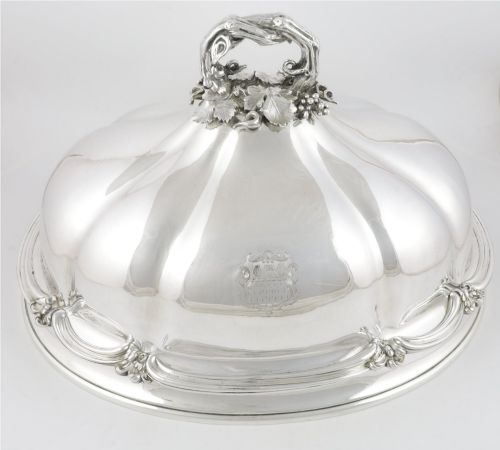
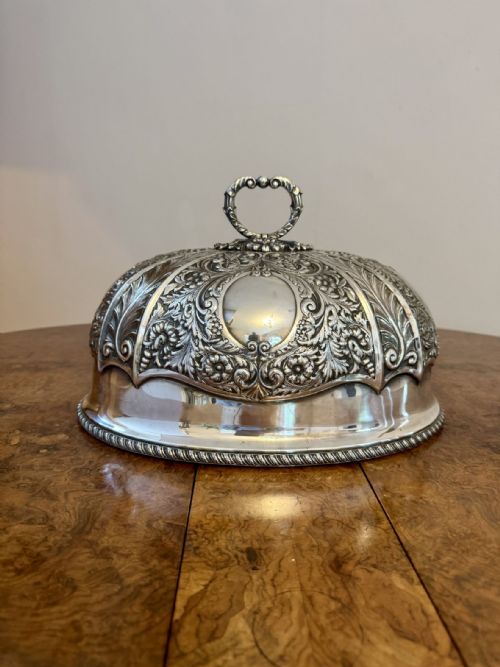
When you search for an antique silver meat dish, you encounter a variety of forms including large platters, warming dishes, mazarines, and domed covers designed for grand dining. These pieces originate from the eighteenth and nineteenth centuries, spanning Georgian, Victorian, and Edwardian periods.
The most common examples on this page are Old Sheffield plated meat domes and warming dishes, alongside solid sterling silver platters and silver plated serving trays. Makers utilised copper, base metal, and wood alongside silver to construct these heavy dining table items.
How they were made
Makers produced Old Sheffield plate by fusing a sheet of silver to a thicker copper core, a technique visible along cut edges where the base metal shows. Solid silver platters and dishes relied on traditional silversmithing methods such as raising from a flat sheet and hand hammering.
Plated items from later periods often utilised electroplating onto a base metal or EPNS, replacing the older fusion process. Workshops applied applied cast silver mounts, handles, and borders to these bodies to provide decorative definition.
Listings span the eighteenth, nineteenth, and early twentieth centuries, including Georgian, Victorian, and Edwardian periods.
What varies in quality
The weight of the metal and the thickness of the silver layer determine the durability and standing of a piece. Substantial gauge silver and deep Old Sheffield plate demonstrate superior manufacture compared to lighter electroplated alternatives.
The crispness of chased decoration, the integrity of applied crests or borders, and the quality of maker marks indicate the skill involved in production. Well-preserved surfaces with minimal base metal bleed through show careful historical maintenance.
Roberts Cadman·Henry Wilkinson·Robert Breading·Boulton·Puiforcat·Dan Holy·Paul Storr·Hukin and Heath
The Antique Silver Meat Dish Glossary
- Old Sheffield plate
- A composite material made by fusing silver to a copper ingot before rolling them into sheets together. This technique predates nineteenth-century electroplating methods.
- Mazarine
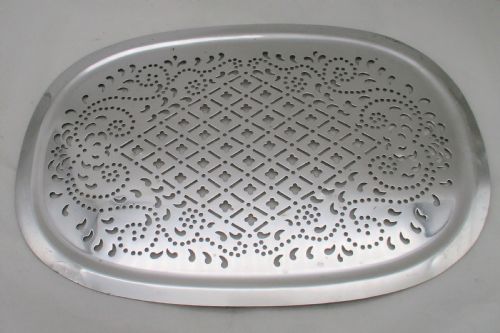
- A pierced draining plate or insert placed inside a platter to keep meat elevated from its juices. These inserts match the contour of the serving dish.
- Meat dome
- A large domed cover, also called a cloche, used to keep large joints of meat warm on the table. They often feature an insulated handle at the top.
- Warming dish
- A double-walled vessel designed to hold hot water beneath the serving surface to keep food warm. Some examples include compartments or separate bases.
- EPNS
- Electroplated nickel silver, a base metal alloy coated with a thin layer of silver using an electrical current. This method became widespread during the Victorian period.
Antique Silver Meat Dish: Frequently Asked Questions
What was a meat dome used for?
A meat dome covered roasted joints on the dining table to retain heat between the kitchen and the dining room.
Servants lifted the dome when carving at the table during formal meals.
What is the difference between solid silver and plate?
Solid silver consists entirely of precious metal throughout the piece, usually marked with standard silver hallmarks.
Plated items have a core of copper, nickel, or base metal covered with a protective layer of silver.
How do I date an antique meat dish?
Examine the hallmarks on solid silver pieces to identify the assay office, date letter, and maker.
Old Sheffield plate relies on style, construction methods, and engraved crests for dating.