
Regency Library Cabinet
A regency library cabinet organises serious collections through refined proportions, architectural detailing and rich timbers.
Regency Library Cabinet
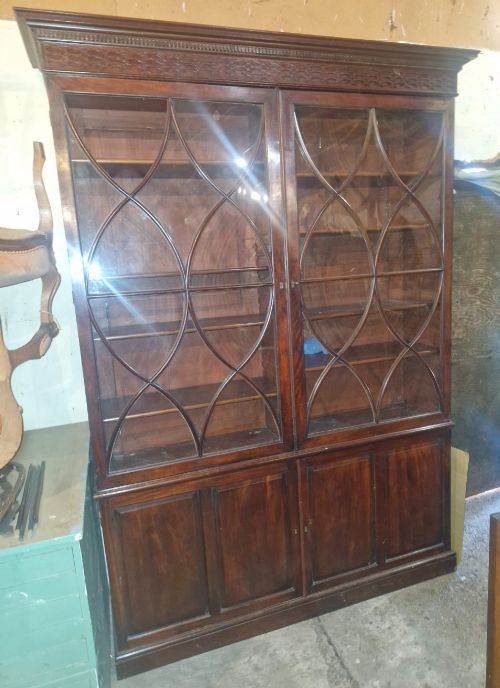
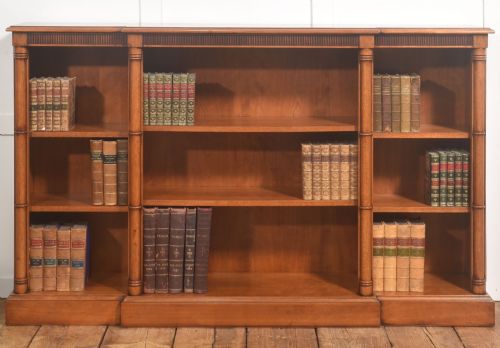
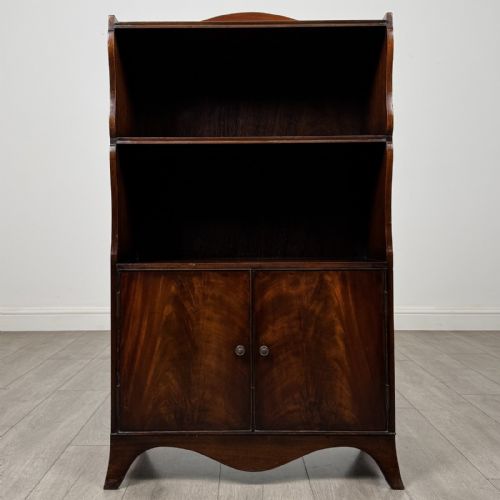
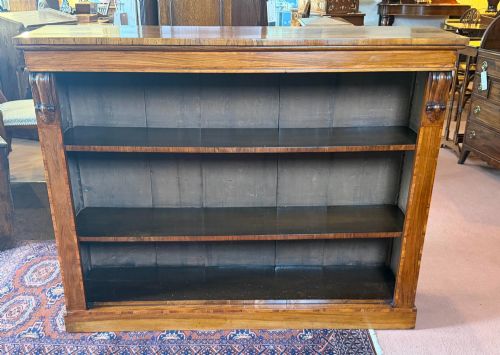
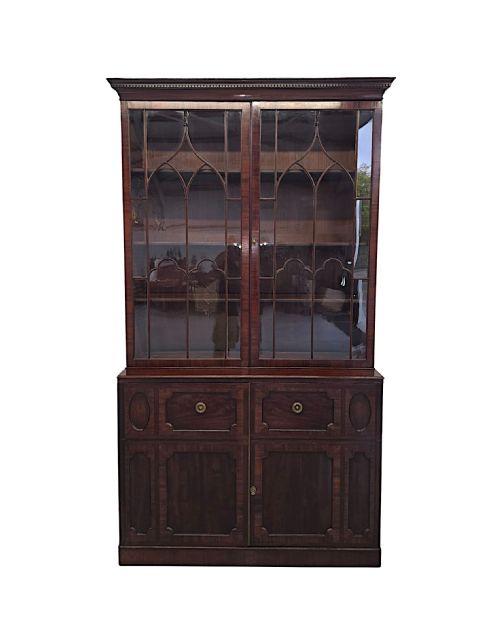
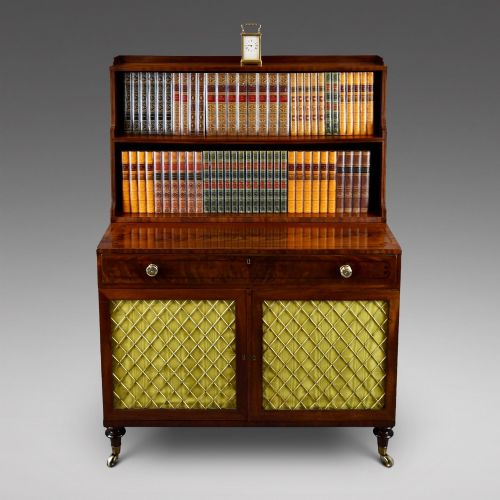
A regency library cabinet serves as a sophisticated piece of furniture designed to house books, papers and scientific instruments within domestic studies or grand libraries. These pieces emerge primarily from the nineteenth century, spanning periods from George III through to William IV and the broader Regency era. You are most likely to encounter mahogany and rosewood constructions, often featuring glazed upper doors or open shelving configurations.
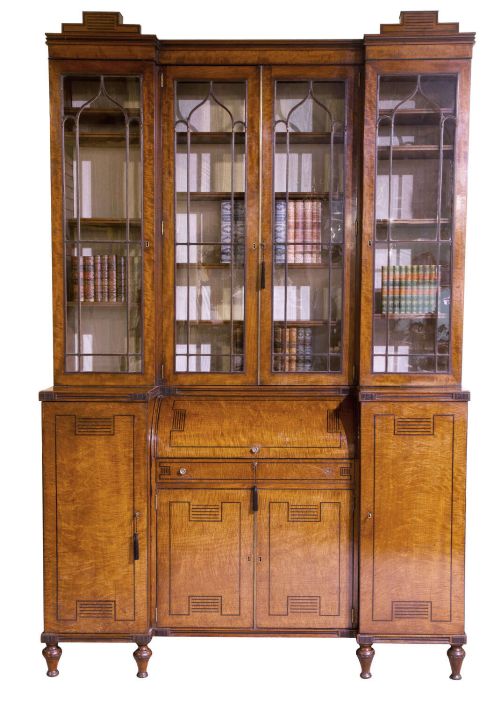
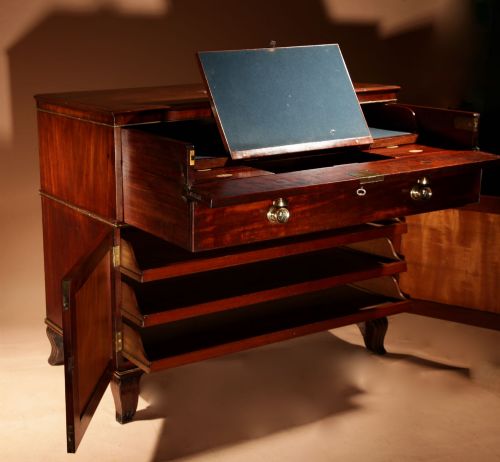
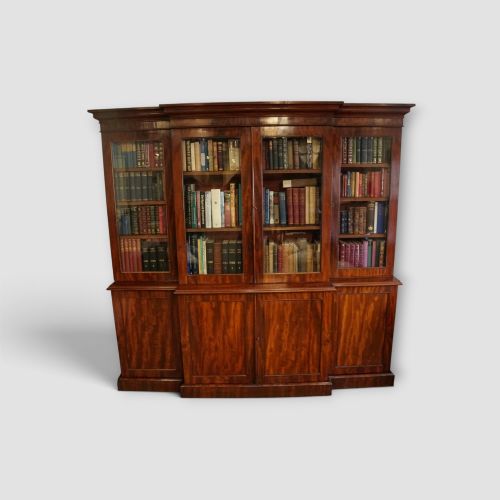
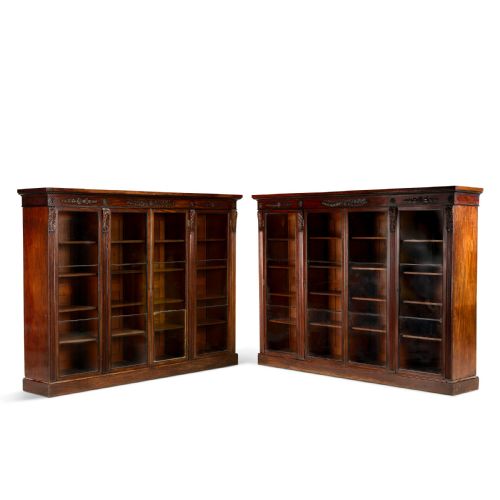
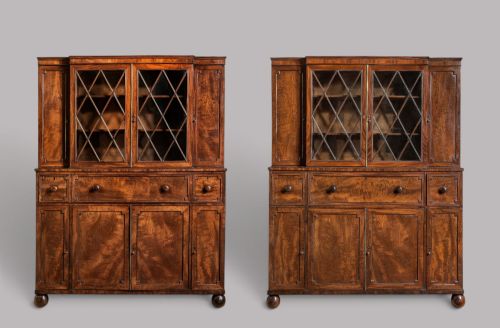
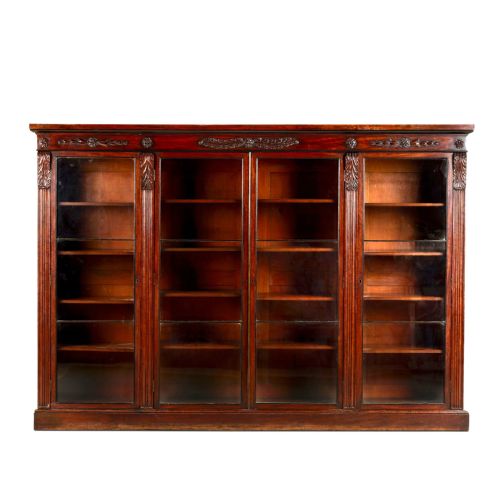
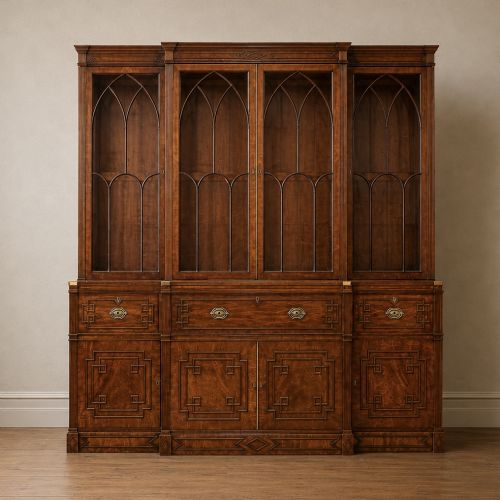
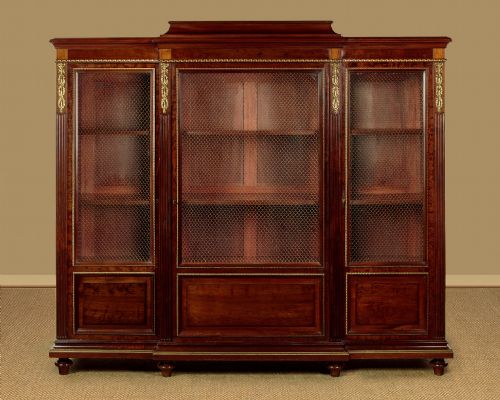
The layout typically combines upper display sections with lower enclosed cupboards, drawer units, or dedicated writing compartments known as secretaires. Variations include breakfront silhouettes, concave curves, and diminutive proportions suited to smaller chambers as well as expansive multi-door breakfronts. Workshops frequently integrated brass mounts, adjustable shelving, and finely figured veneers to elevate the functional storage into a display of status.
Materials and Technique
Cabinetmakers relied heavily upon solid mahogany and exotic rosewood, frequently applying flame mahogany veneer across broad surfaces to create striking grain patterns. Satinwood and walnut also appear in specific iterations, providing lighter contrast or rich dark tones respectively. Timber selection governed both the structural stability and the visual rhythm of the piece.
Joinery techniques combined traditional carcase construction with delicate decorative elements such as brass inlay, ormolu mounts, and glazed door framing. Brass gallery rails and adjustable shelf mechanisms demonstrate precision engineering tailored for scholarly utility.
Collector variants include specialised cabinets fitted with twenty-four tiny drawers intended strictly for housing specimens.
Judging Quality
Quality rests upon the selection of timber veneers and the precision of architectural proportions rather than mere size. Finer cabinets display harmonious grain matching across large breakfront doors and disciplined restraint in their brass or carved enrichment.
Internal engineering distinguishes workshop standards, visible in smoothly operating secretaire drawers, well-fitted adjustable shelving, and original glass panes. Pieces carrying attributed provenance to prominent makers demonstrate superior hand-finishing in structural joints and secondary timbers.
Gillows·Marsh & Tatham
The Regency Library Cabinet Glossary
- Breakfront
- A cabinet design where the central section projects forward from the flanking wings, creating a pronounced architectural rhythm. This format allows for varied interior depths and imposing elevations in larger libraries.
- Secretaire
- A cabinet incorporating a pull-down writing flap that conceals a fitted interior of small drawers and pigeonholes. It merges desk functionality with bookcase storage.
- Waterfall
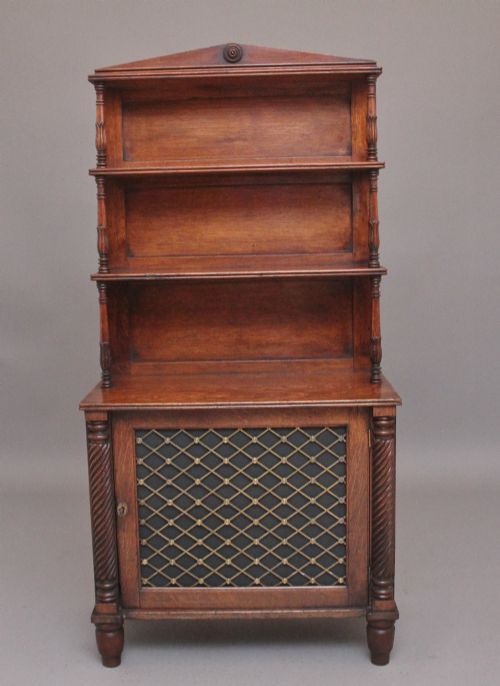
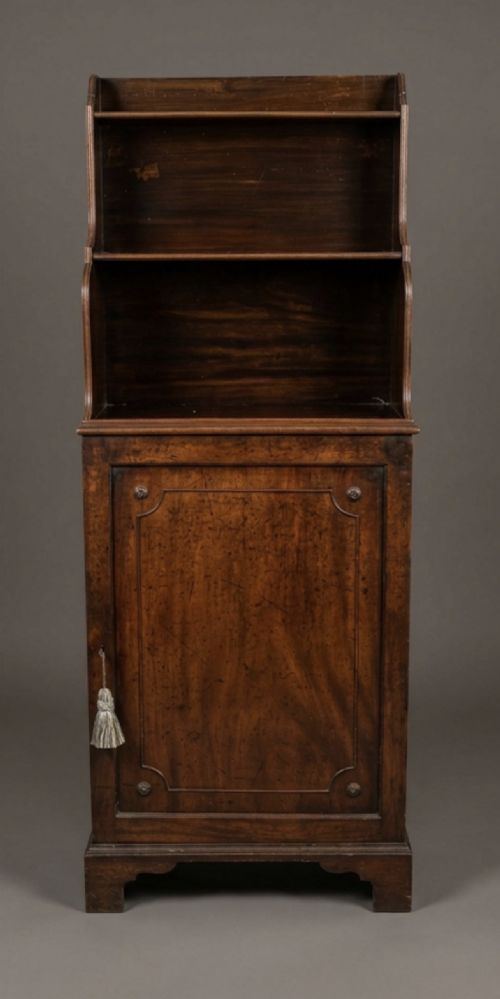
- A bookcase featuring stepped, cascading open shelves that recede progressively from bottom to top. This form offers a lighter silhouette than traditional enclosed cabinets.
- Ormolu
- Gilded bronze mounts applied as decorative highlights to furniture carcases. They provide metallic contrast against dark rosewood and mahogany surfaces.
Regency Library Cabinet: Frequently Asked Questions
What is a regency library cabinet?
A regency library cabinet is a refined nineteenth-century storage piece designed to hold books and papers, combining display shelves with lower cupboards or writing drawers.
These pieces reflect neoclassical design principles, utilising rich timbers like mahogany and rosewood alongside architectural proportions suited for scholarly spaces.
How do I use a library cabinet today?
These cabinets suit modern home studies, living rooms, or hallways for organising book collections, displaying ceramics, or storing stationery.
Adjustable shelving allows flexibility for varying book heights, while enclosed lower sections conceal everyday items out of sight.
How do I tell Regency periods apart?
Regency and George IV pieces often feature restrained classical lines, rosewood veneers, and delicate brass inlay reflecting early nineteenth-century tastes.
Later Victorian interpretations tend towards heavier proportions, darker patination, and more robust carving compared to the crisp geometry of the Regency era.