



Lattice Door Bookcase
These lattice door bookcase pieces offer glazed storage rooted in nineteenth century cabinet making, built for holding a library with elegance.
Lattice Door Bookcase
A lattice door bookcase brings together timber framework and glass panels to house books while keeping dust at bay. This selection focuses primarily on nineteenth century examples, encompassing Regency, Victorian, and Edwardian periods.
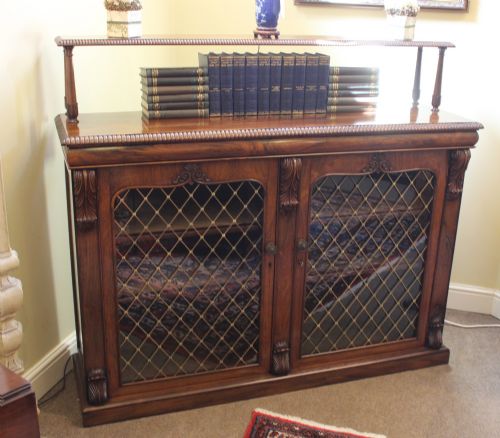
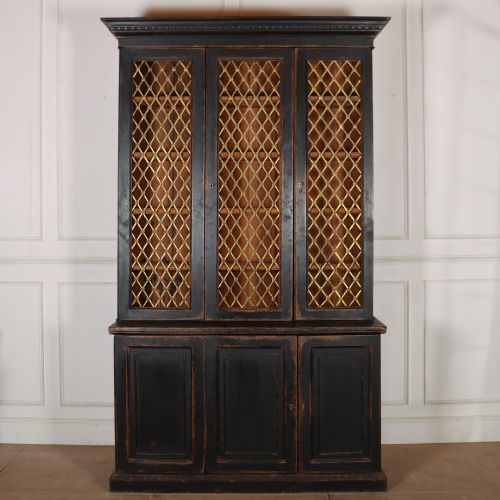
The forms span from dwarf bookcases and side cabinets to taller bookcase and display cabinet combinations, often featuring adjustable display shelves. Scottish painted examples and country house pieces also appear within the selection.
Buyers encounter timber varieties such as mahogany, walnut, pollard oak, and rosewood, frequently enhanced by brass details or mirror elements. These items serve both as practical storage and as focal points within a room.
How they were made
Cabinet makers utilised dense hardwoods like mahogany, walnut, and rosewood, often pairing them with contrasting pollard oak or ebony inlay. Timber frames were constructed to support glazed lattice doors that required precise joinery.
Brass fittings and hardware secured the doors and allowed for adjustable shelving inside the cabinets. Glass panes were fitted carefully into the wooden lattice framework to create the signature front panels.
Period styles represented across the selection include Regency, Victorian, and Edwardian eras from the nineteenth century onward.
What varies in quality
The standard of timber selection and figure dictates the visual impact of each cabinet, with rarer woods like pollard oak sitting at a higher tier than standard plain mahogany. Precision in the lattice woodwork and the integration of fine brass details further separate superior examples.
Construction methods and the presence of original adjustable shelving influence how well a piece functions as a practical library. Coherence of period details, such as ebony accents or painted finishes, marks the distinction between ordinary utility and finer craftsmanship.
The Lattice Door Bookcase Glossary
- Lattice door
- A door framework intersected by wooden bars that create a geometric pattern around glass panes. This design keeps books visible while offering secure enclosure.
- Pollard oak
- Timber taken from trees that have been pollarded, producing a richly figured grain pattern with dense knot clusters. Cabinet makers used it to create striking decorative surfaces.
- Dwarf bookcase
- A low shelving unit designed to sit beneath window height without blocking light. These pieces often double as side cabinets.
- Chiffonier
- A low sideboard or cabinet developed during the nineteenth century, sometimes incorporating enclosed shelving behind glazed or panelled doors.
Lattice Door Bookcase: Frequently Asked Questions
What is a lattice door bookcase?
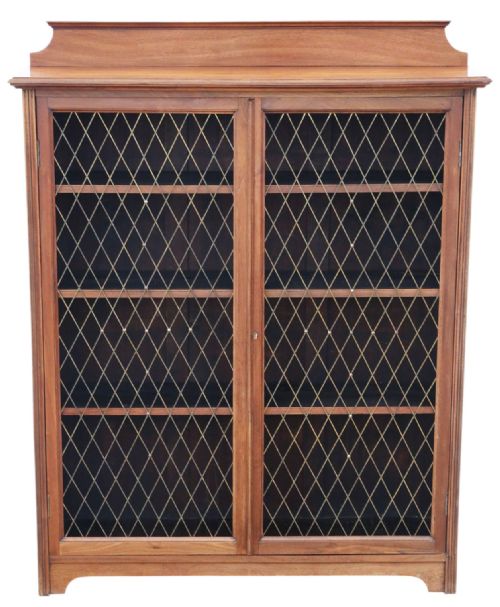
A lattice door bookcase is a cabinet featuring glazed doors divided by wooden framing into geometric patterns. These pieces were designed to store books while displaying spines behind glass.
They appear in various timber finishes across the nineteenth century, serving as functional library furniture.
How do I date a bookcase?
Dating relies on identifying timber choices, construction techniques, and stylistic markers associated with specific periods. Regency and Victorian pieces show distinct proportions and wood selections compared to Edwardian examples.
Hardware and shelf adjustment mechanisms also provide clues to the era of manufacture.
Where should I place a dwarf bookcase?
Dwarf bookcases suit smaller spaces or rooms where maintaining natural light from windows is important. Their low profile allows surface display on top while housing books below.
They work well in studies, living rooms, and hallways alongside other period furniture.
What woods were used?
Cabinet makers relied primarily on dense hardwoods such as mahogany, walnut, and rosewood for structural stability and rich colour. Exotic veneers and contrasting timbers like pollard oak and ebony added decorative detail.
Brass hardware and glass completed the material palette.