
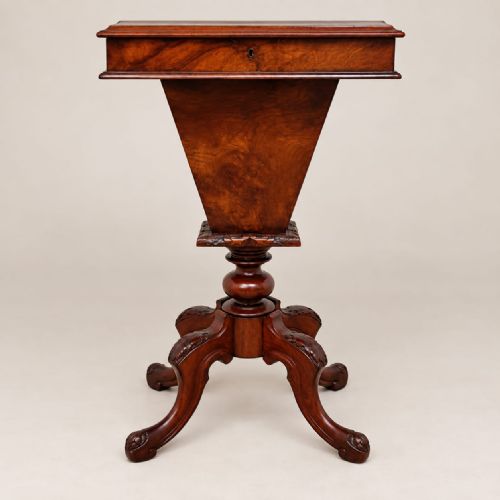
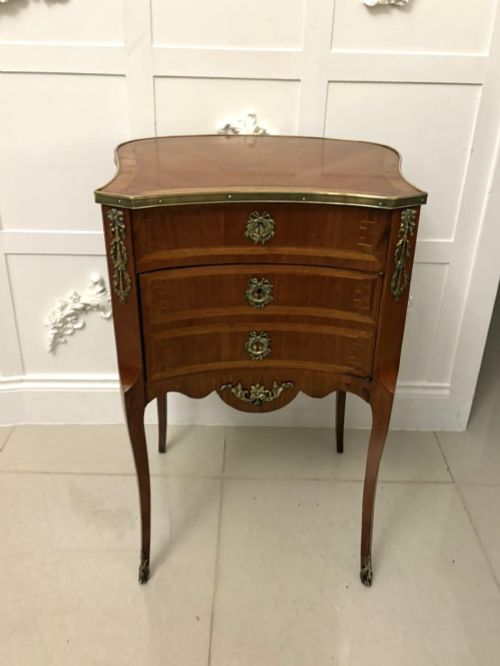
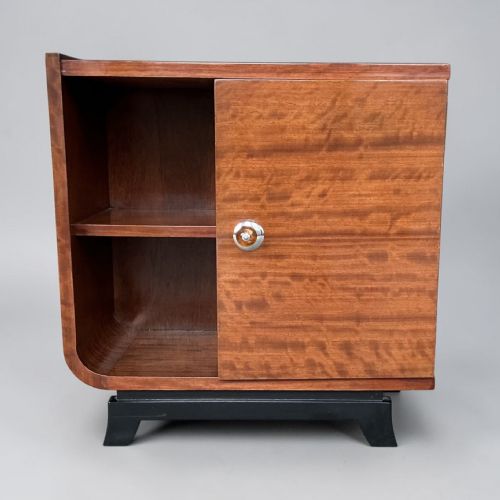
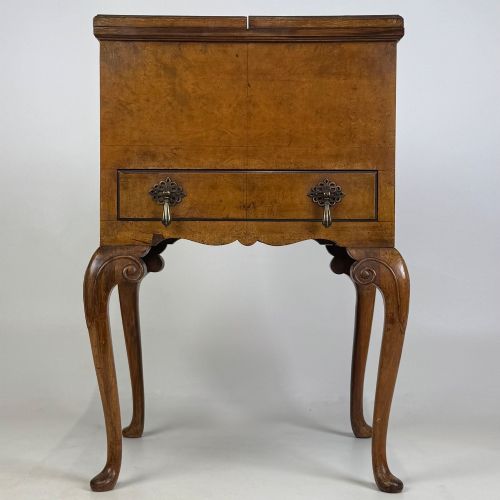
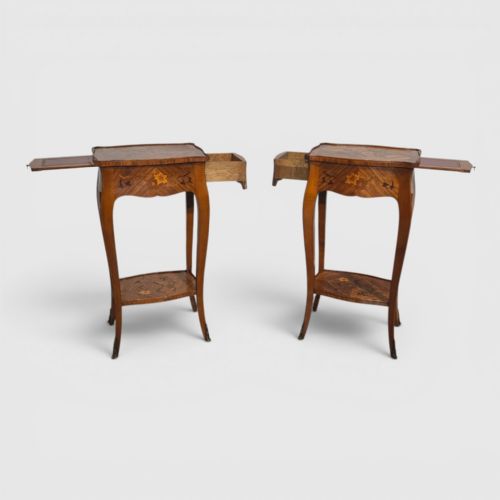


Walnut Accent Cabinet
These walnut accent cabinet pieces combine rich timber grain and compact storage, offering a practical way to bring period character into a modern interior.
Walnut Accent Cabinet
A walnut accent cabinet serves as a compact storage piece, appearing in forms such as side cabinets, bedside chests, and cabinets on stand. These items range across periods from the seventeenth century through to the art deco era, showing diverse regional influences.
Earlier examples include seventeenth-century oyster veneer pieces and eighteenth-century Italian Tuscan models. These diverse forms share a common reliance on walnut timber to create focal points within a room.
How they were made
Cabinet makers utilised solid walnut, burr walnut, and walnut veneer applied over secondary woods like oak and mahogany. Artisans often arranged veneers in quartered patterns or intricate marquetry designs to highlight the natural figure of the timber.
Mounts in cast brass and ormolu appeared on continental revival and art deco pieces to accent corners and door frames. Surfaces were finished with polished veneers or oyster cut sections, showing meticulous attention to grain alignment.
Listings span periods from the seventeenth century through the regency and Edwardian eras up to nineteen-thirty art deco.
What varies in quality
The refinement of the timber selection dictates much of the visual distinction across these pieces. Cabinets utilising matched burr walnut or detailed marquetry demonstrate a higher level of artisan skill than plain veneer surfaces.
Hardware integration and structural joinery also define the tier of a piece. Original brass mounts, well-fitted doors, and precise quarter veneer layouts separate standard utility items from finer decorative examples.
The Walnut Accent Cabinet Glossary
- Burr walnut
- A figured wood grain derived from the warted growths on walnut trees. It produces swirling patterns prized for decorative cabinet fronts.
- Marquetry
- The art of applying small pieces of veneer to a structure to form decorative patterns. Artisans use various tinted woods to create pictorial designs.
- Oyster veneer
- Small circular or oval pieces cut transversely from small branches. These sections are arranged side by side to resemble oyster shells.
- Ormolu
- Gilded bronze mounts applied to furniture edges and feet. This technique gained widespread use on eighteenth-century and revival French pieces.
- Pedestal cupboard
- A single-door storage unit standing on a raised base or pedestal. These compact items function well as bedside or side units.
Walnut Accent Cabinet: Frequently Asked Questions
What is a walnut accent cabinet?
A walnut accent cabinet is a small storage unit made from walnut timber, designed to function as a side table, bedside chest, or display piece.
These items range from antique revival styles to art deco designs, offering compact storage while highlighting rich wood grains.
How do I date a walnut cabinet?
Dating involves examining the construction methods, veneer types, and stylistic motifs present on the piece. Seventeenth-century items often feature oyster veneers, whereas art deco examples from the 1930s utilise geometric lines and simpler silhouettes.
Hardware such as brass mounts and ormolu also provides clues to the manufacturing period, alongside the underlying secondary timbers used in the carcase.
Where should I place a side cabinet?
Side cabinets and bedside chests suit living rooms, hallways, and bedrooms where floor space is limited. Their compact proportions allow them to fit into corners or act as lamp tables next to seating.
Placing them away from direct sunlight and strong heat sources protects the walnut veneer and polished surfaces from drying out.
What is burr walnut?
Burr walnut refers to wood taken from a tree growth that produces intricate, swirling grain patterns. Cabinet makers prized this figured timber for creating decorative focal points on drawer fronts and cabinet doors.
Because of its irregular growth, burr walnut is typically sliced into thin veneers rather than used as solid timber.