



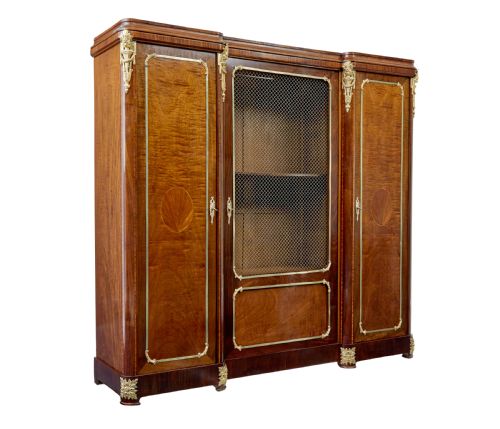

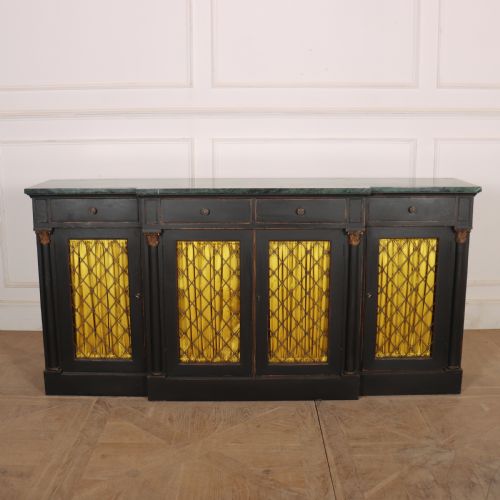


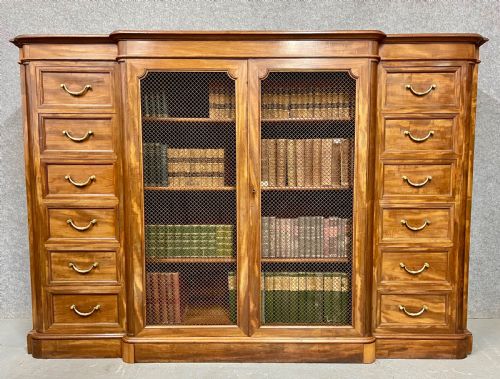


Wire Door Bookcase
A wire door bookcase brings architectural dignity and visible storage to a room through fine timber and woven mesh.
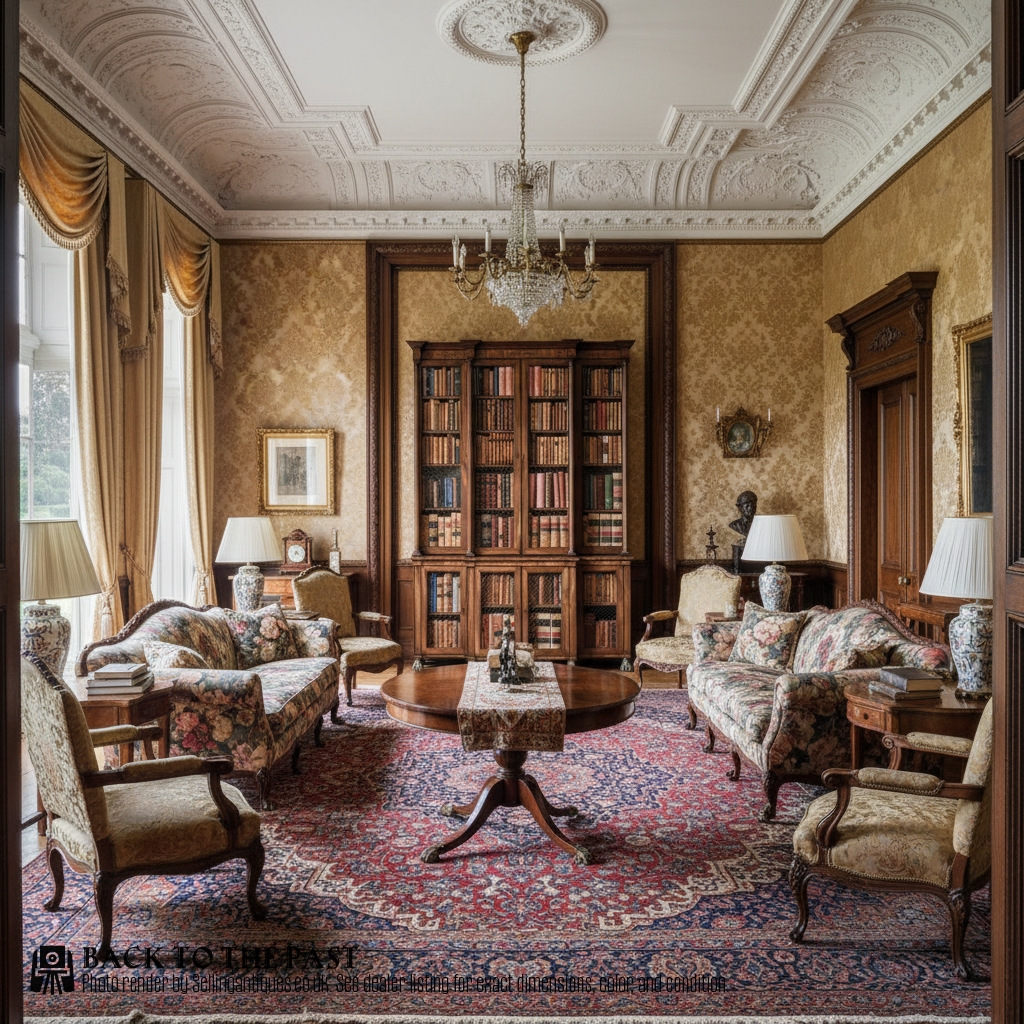
Wire Door Bookcase
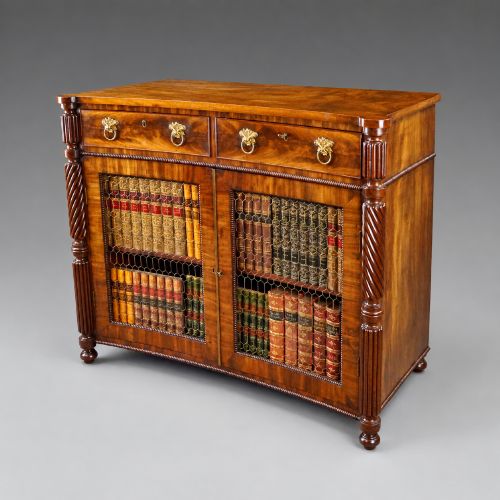
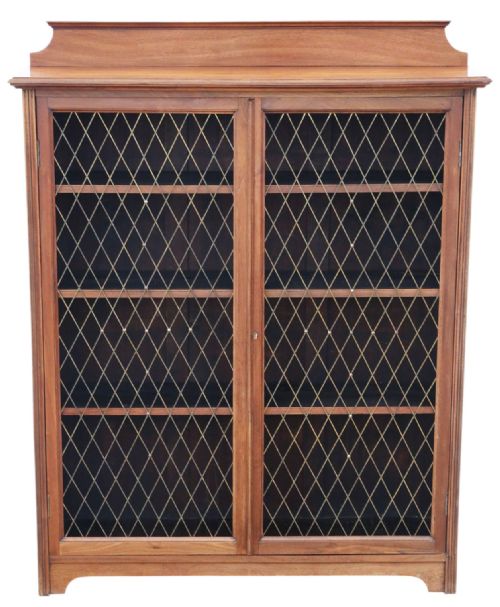
When you search for a wire door bookcase, you are looking at substantial timber storage furniture designed to hold libraries while keeping volumes visible. These pieces combine closed lower cabinetry or open upper shelving with mesh panels that protect delicate bindings without blocking sightlines.
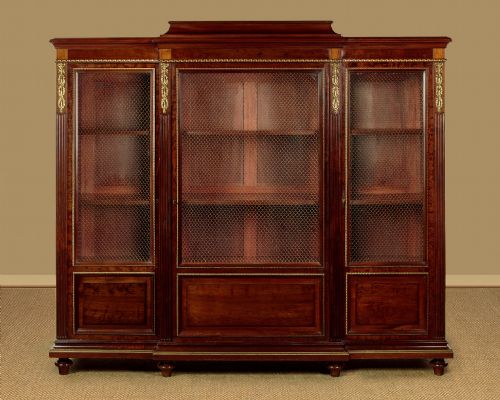
On this page, you are most likely to meet Regency, William IV, and Edwardian examples formed from mahogany, walnut, and rosewood. Forms range from compact two-door side cabinets and chiffoniers to massive breakfront library bookcases and kitchen dressers.
The origins span English country houses and continental workshops influenced by French Louis XV and Empire styles. Each piece serves primarily to organise books or display collections while anchoring the proportions of a study or drawing room.
How they were made
Cabinetmakers constructed these pieces using dense hardwoods such as mahogany, walnut, and satinwood, often laid over sturdy oak or pine carcases. Timber selection determined how well the frame resisted seasonal movement and supported heavy rows of volumes.
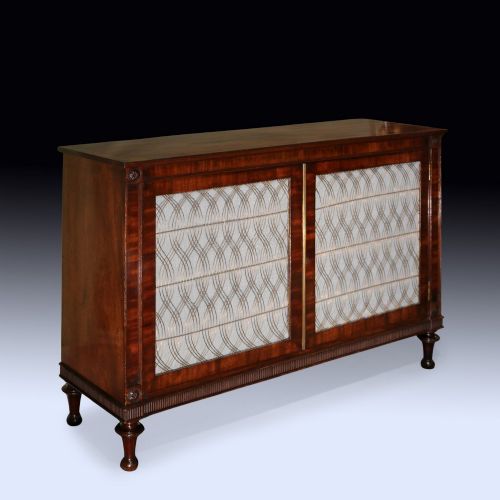
Brass formed a critical component of construction, appearing as fine wire mesh panels set into wooden doors, structural mounts, and delicate inlay lines. Fabric linings occasionally backed the mesh panels to soften the interior light behind the books.
Some wire door cabinets hide secret silk linings behind their brass mesh, placed there to keep curious insects away from the vellum.
What varies in quality
Quality in these items rests upon the precision of the timber matching and the refinement of the brasswork. Fine examples display carefully chosen grain patterns across large cabinet doors and seamless integration of brass grilles into the wooden frames.
The distinction between standard utility pieces and exhibition-grade furniture lies in the depth of proportion, the subtlety of neoclassical or French-influenced carving, and the overall architectural presence the cabinet holds in a room.
The Wire Door Bookcase Glossary
- Breakfront
- A cabinet design where the central section projects forward from the flanking wings. This configuration adds architectural depth to large bookcases.
- Chiffonier
- A low sideboard or cabinet developed in the nineteenth century, frequently fitted with doors and interior shelving. It serves smaller spaces than a full library bookcase.
- Grille
- A lattice framework of brass wire set into cabinet doors to protect contents while maintaining visibility. It replaces standard glass panes in many formal library pieces.
- Kingwood
- A dense, heavily figured exotic timber with dark veining used for decorative veneers on high-status furniture. It appears on quality continental and English cabinets.
- Satinwood
- A pale, lustrous hardwood prized for its golden colour and smooth grain. Cabinetmakers utilised it for fine inlay work and occasional decorative panels.
Wire Door Bookcase: Frequently Asked Questions
How are wire door bookcases cleaned?
Dust the timber surfaces regularly with a soft, dry cloth to protect the polished finish from abrasion. Clean the brass wire mesh gently using a dry brush to dislodge trapped particles without disturbing the underlying fabric linings.
Avoid liquid polishes that contain silicones or heavy waxes, which build up over time and dull the grain of mahogany or walnut. Feed dry hardwoods periodically with a suitable conservation wax applied sparingly.
Can shelves be adjusted easily?
Many nineteenth-century library bookcases and cabinets feature adjustable wooden shelves supported by rack-and-pinion mechanisms or traditional wooden pegs. These systems allow you to alter shelf heights to accommodate folio volumes or smaller octavos.
Exercise care when shifting heavy mahogany or walnut boards within older carcases to avoid damaging the interior veneer or side linings. Ensure the shelf supports sit securely in their slots before loading books back onto them.
Where should I place a cabinet?
Position your cabinet against an interior wall away from direct sunlight and strong heat sources like radiators. Direct thermal fluctuations cause dense hardwoods like rosewood and mahogany to warp or split.
Allow sufficient clearance around doors so they open fully without catching on skirting boards or nearby furniture. Stable environmental conditions preserve both the timber structure and the delicate brass wire mesh.
What styles are available here?
The selection includes Regency, William IV, and Edwardian pieces alongside French Louis XV and Empire influenced designs. Woods range from rich mahogany and walnut to satinwood and kingwood.
Forms vary from modest side cabinets and chiffoniers to grand breakfront bookcases and country kitchen dressers. Each style reflects the interior taste of its original period.