

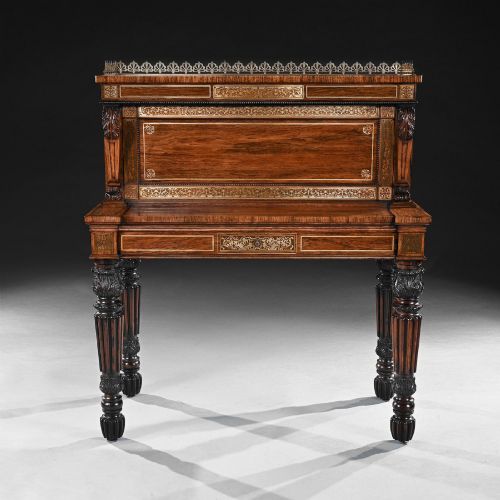
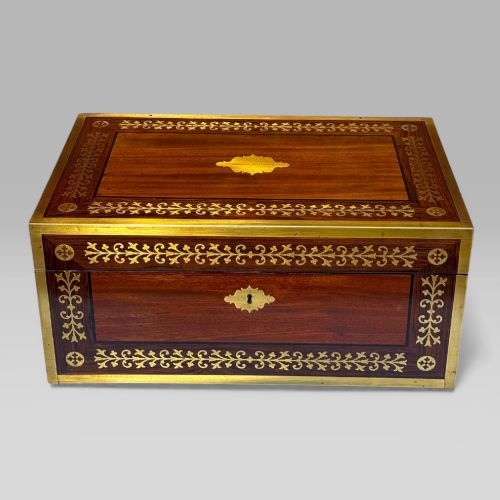
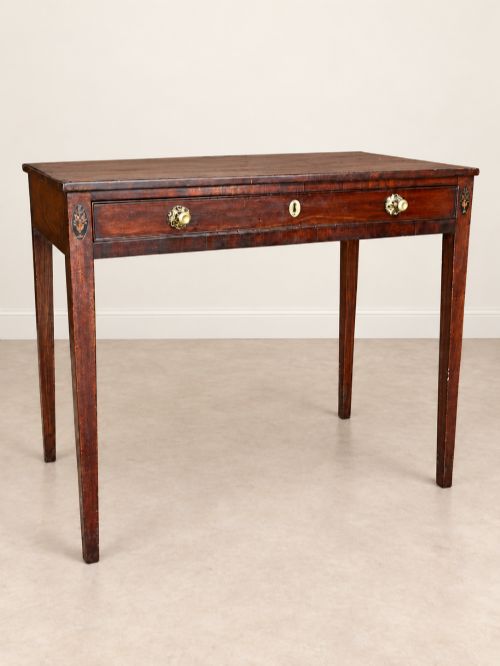
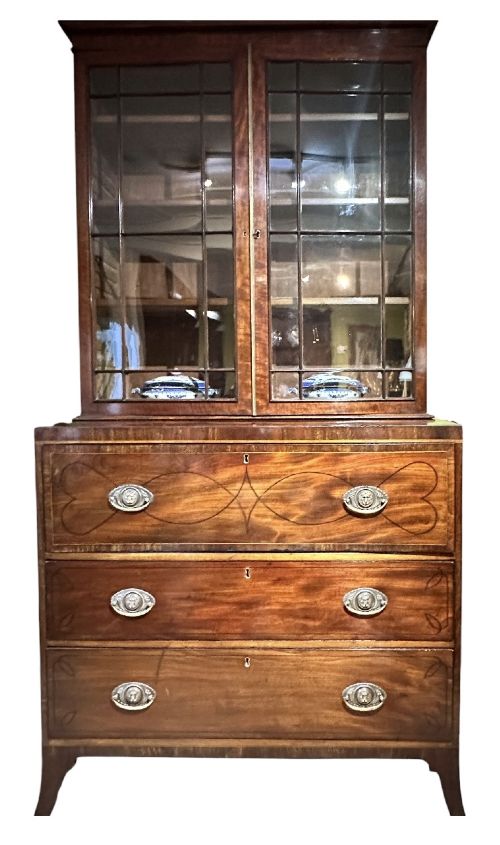
Regency Inlaid Writing Desk
A regency inlaid writing desk brings precise cabinetwork and rich timbers together for the daily task of correspondence.
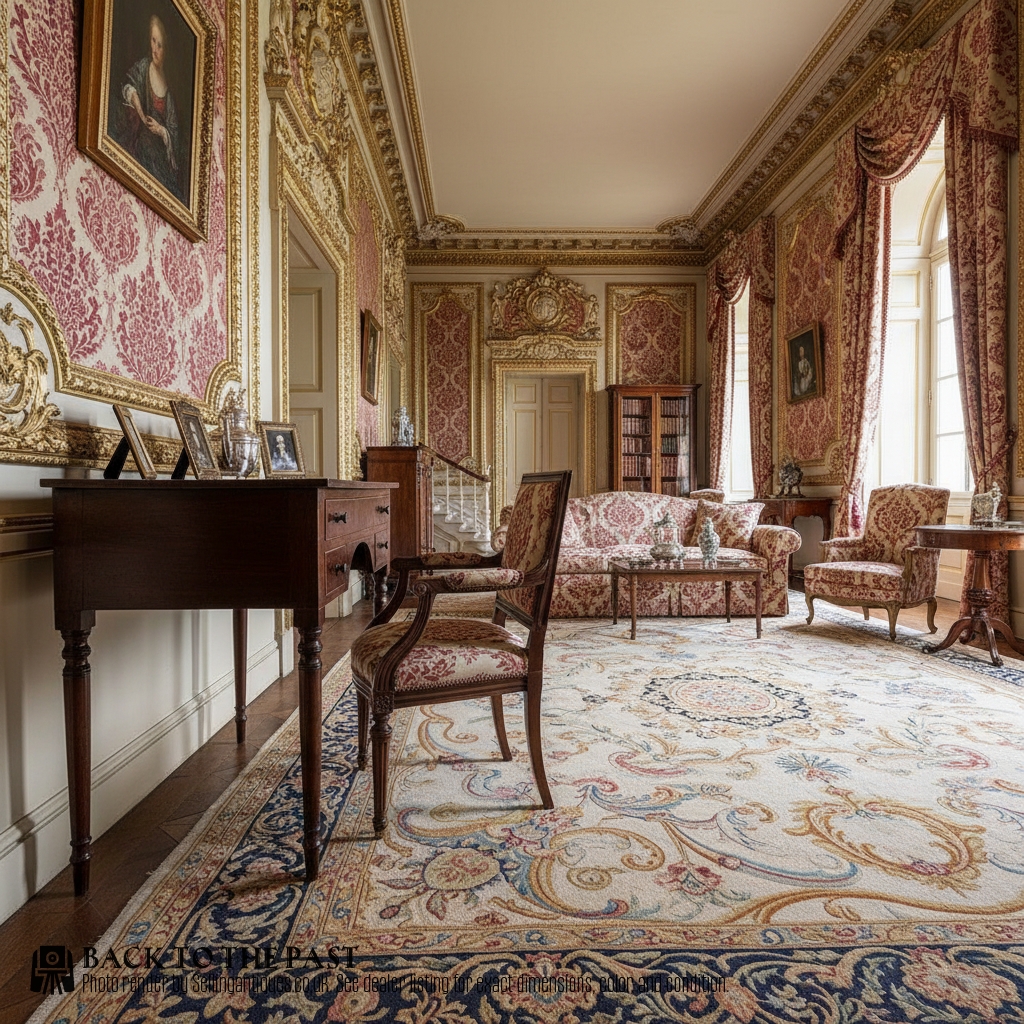
Regency Inlaid Writing Desk
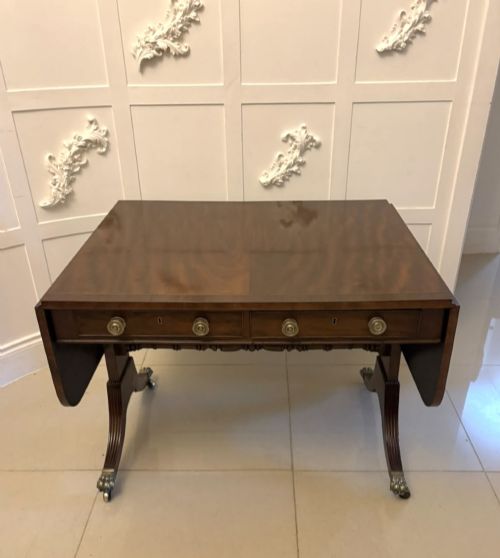
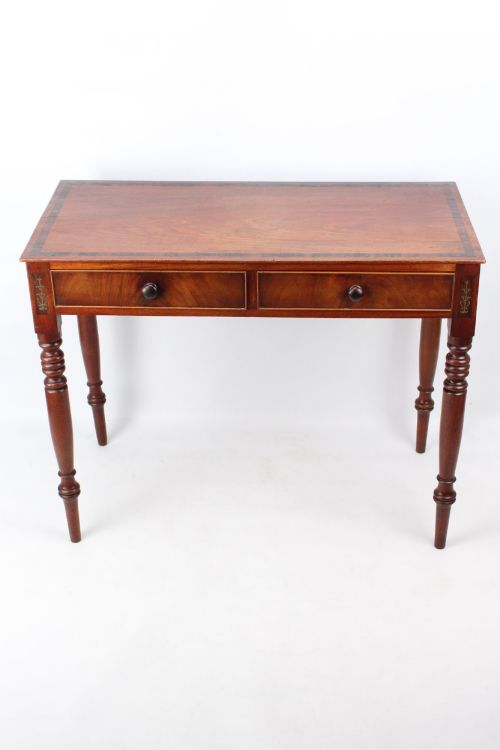
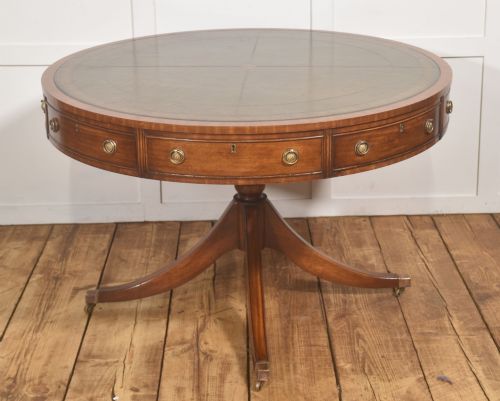
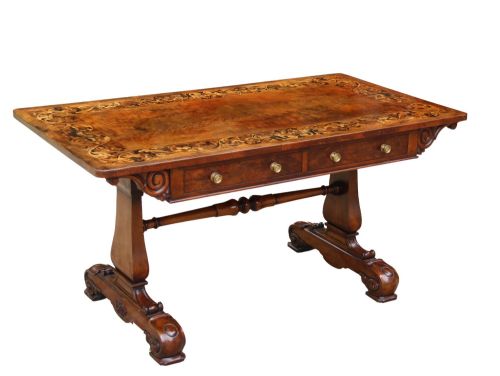
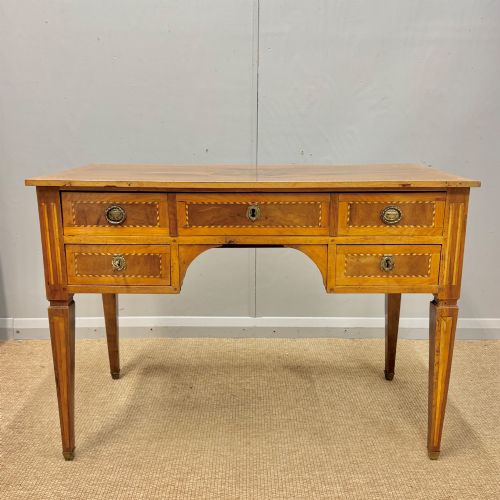
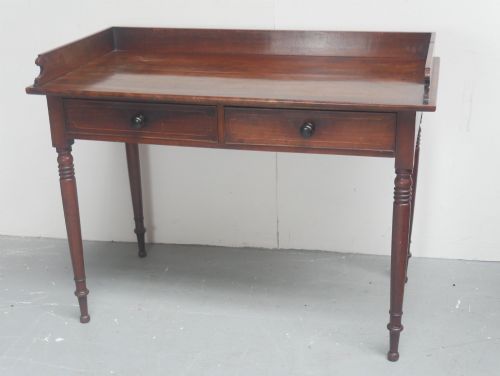
A regency inlaid writing desk encompasses freestanding library tables, sofa tables, and compact writing slopes originating primarily across the nineteenth century. Cabinetmakers shaped these pieces during the Georgian, Regency, and William IV periods using substantial timbers.
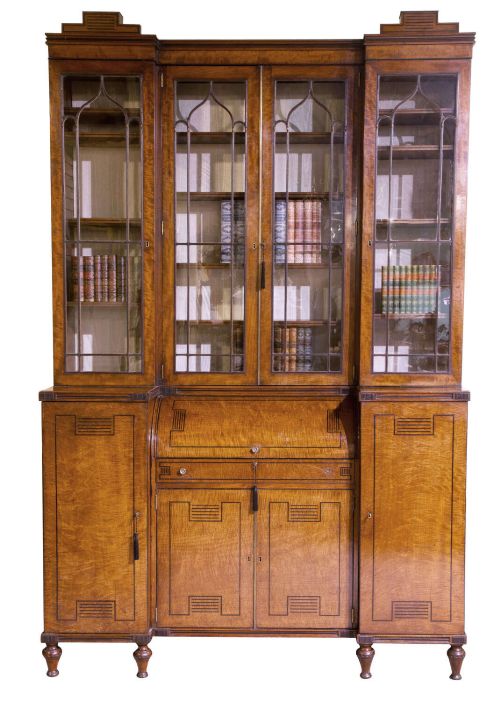
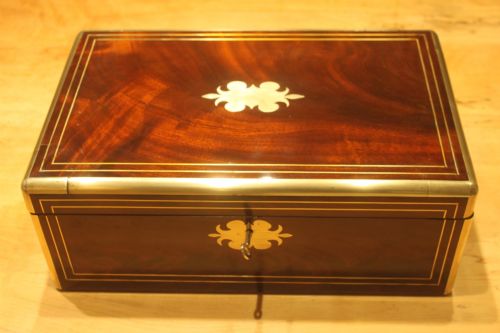
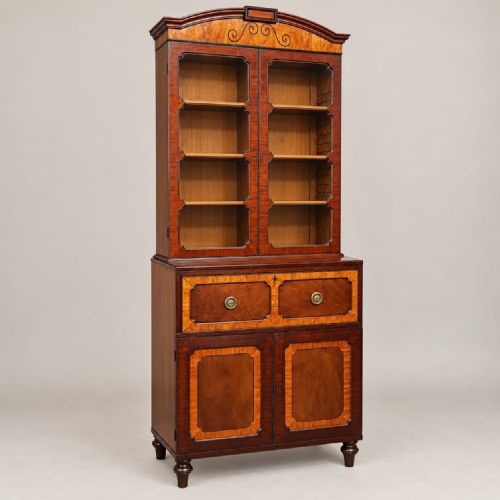
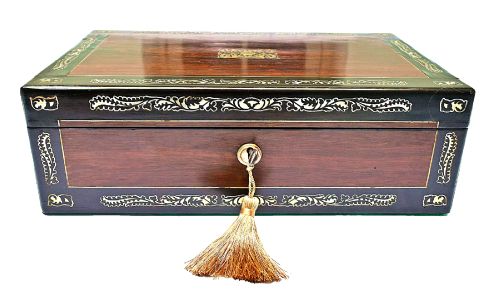
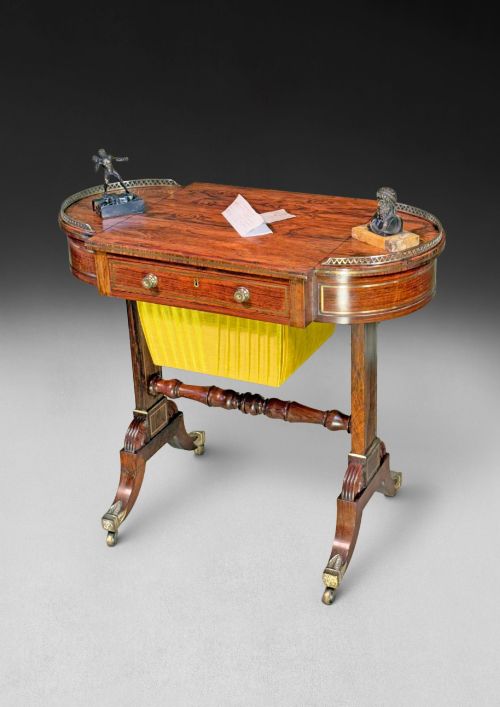
The version most commonly encountered on this page is the rosewood or mahogany writing table, frequently mounted with brass inlay and fitted with leather writing surfaces. Alongside these tables, smaller portable writing boxes and larger secretaire bookcases appear within the listings.
These forms reflect the domestic and library requirements of the period, ranging from portable campaign boxes designed for travel to substantial pedestal desks intended for private studies.
Materials and Technique
Timbers such as mahogany and rosewood form the primary carcases, complemented by contrasting decorative elements in satinwood, boxwood, and ebony. Cabinetmakers laid these timbers over sturdy structural woods to create stable writing surfaces and cabinetry.
Brass inlay and foliate cut brass mounts enrich the surface design, often set flush into rosewood panels alongside detailed marquetry and wood inlay work. These decorative metals and lighter woods trace intricate linear patterns across tabletops and slope fronts.
Regency Inlaid Writing Desk Retail Price Guide 2026
Typical asking prices for regency inlaid writing desk among the pieces listed under this phrase on Sellingantiques today, from the lower quarter to the upper quarter. They describe what is for sale here now, not the wider market.
Several portable writing slopes preserve hidden compartments designed to guard secret letters from curious eyes.
Design and Execution
The caliber of a regency inlaid writing desk depends upon the precision of the brass and wood inlay and the selection of figured timbers like flame mahogany or rosewood. Sophisticated execution involves seamless integration of brass stringing into dense grain without disrupting the primary surface.
Proportion and structural honesty separate standard utilitarian furniture from exceptional cabinetwork attributed to prominent workshops. Details such as secret drawers within writing slopes and well-figured grain across large surfaces indicate higher standards of production.
Gillows Oxford Street Workshop·S & H Jewell of London
The Regency Inlaid Writing Desk Glossary
- Writing Slope
- A portable box with a hinged sloping lid that opens to reveal a writing surface and compartments for ink and pens. These slope boxes were frequently fitted with brass inlays and secret drawers.
- Sofa Table
- A freestanding table designed to stand in front of a sofa, featuring drop leaves on either side and usually two small drawers. They are commonly constructed in rosewood or mahogany with brass mounts.
- Secretaire
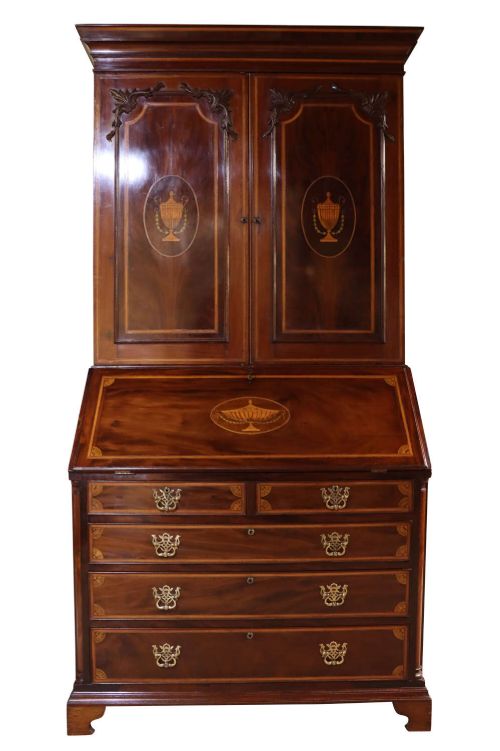
- A piece of furniture containing a writing drawer or drop-front writing compartment that conceals pigeonholes and small drawers. These integrated desks appear within cabinets and chests of drawers.
- Marquetry
- Decorative patterns formed by the insertion of pieces of wood, shell, or ivory into a veneered surface. This technique creates pictorial or geometric designs across tabletops and cabinet doors.
- Brass Inlay
- Thin strips or motifs of brass embedded flush into the wooden surface of furniture to create geometric or floral borders. It is a defining characteristic of Regency decorative style.
Regency Inlaid Writing Desk: Frequently Asked Questions
How do I identify a Regency writing desk?
Look for distinct stylistic indicators such as brass inlay, rosewood or mahogany timbers, and classical proportions originating from the early nineteenth century.
Examine the secondary woods and construction methods inside the drawers to confirm the period of manufacture.
Were these desks used for travel?
Portable writing slopes and campaign boxes were specifically built for travel, featuring brass bound edges and fitted compartments for inkwells.
Larger library tables and pedestal desks remained stationary in private studies and homes.
How do I care for rosewood and brass inlay?
Keep wooden surfaces nourished with appropriate furniture wax and avoid placing pieces in direct sunlight or near heat sources.
Gentle dusting preserves both the polished timber grain and the delicate flush-fitted brass stringing.