

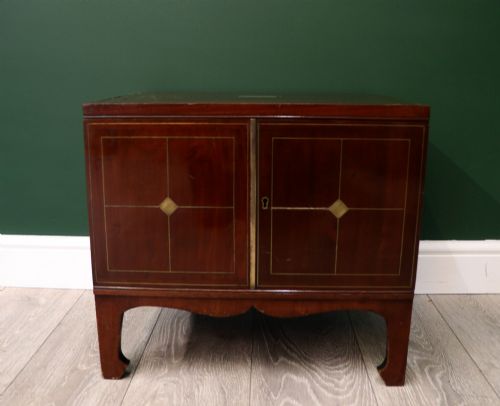
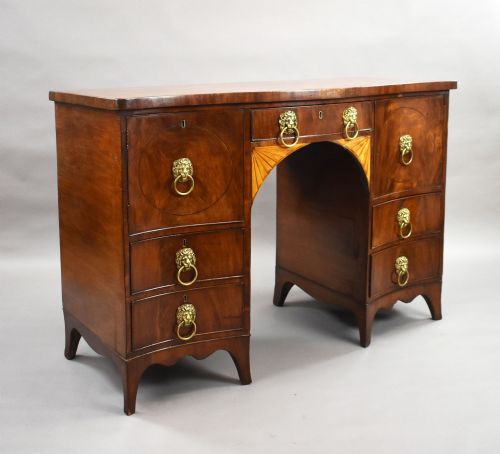
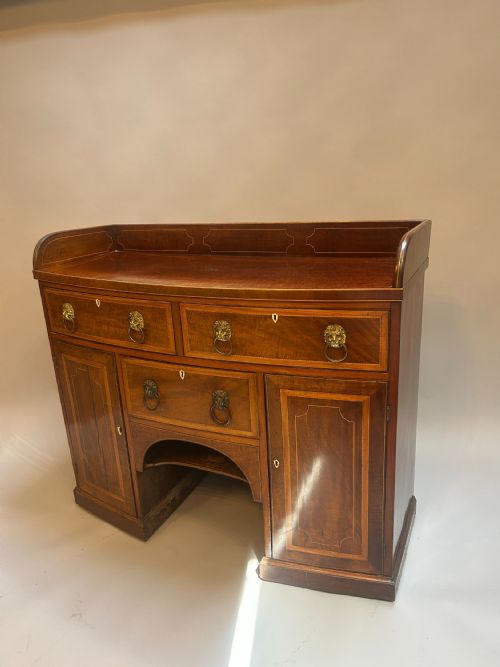

Regency Inlaid Mahogany Sideboard
A regency inlaid mahogany sideboard brings crisp architectural lines and rich cabinet timber into a dining room or hall.
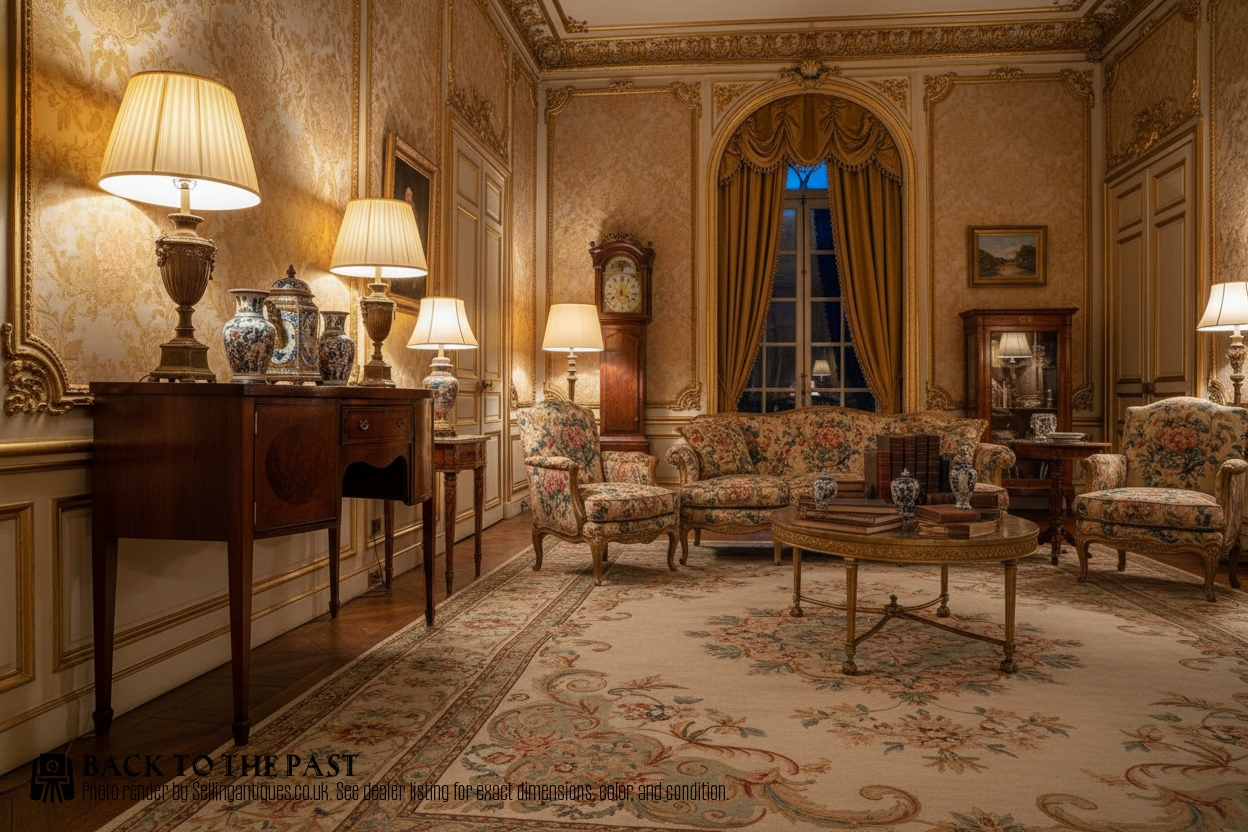
Regency Inlaid Mahogany Sideboard
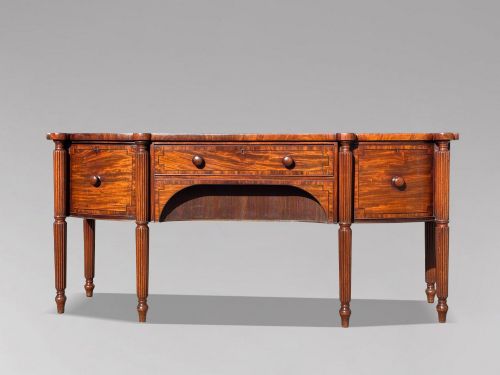
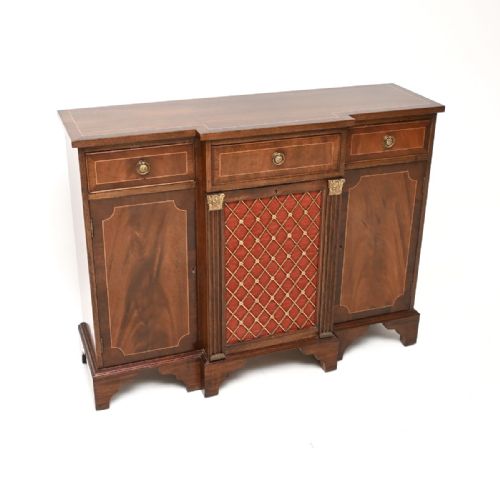
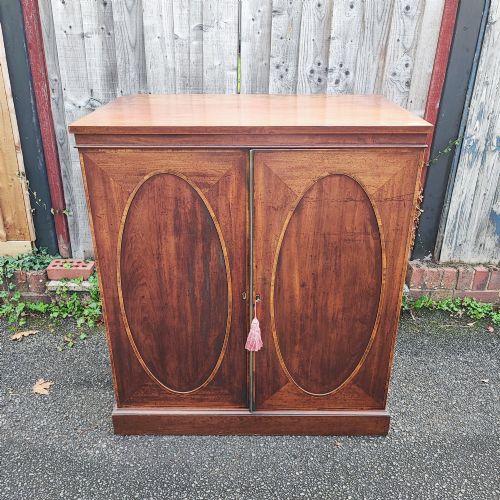
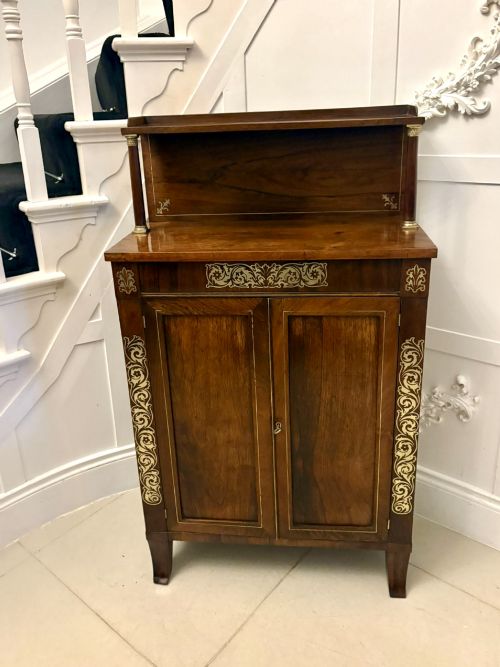
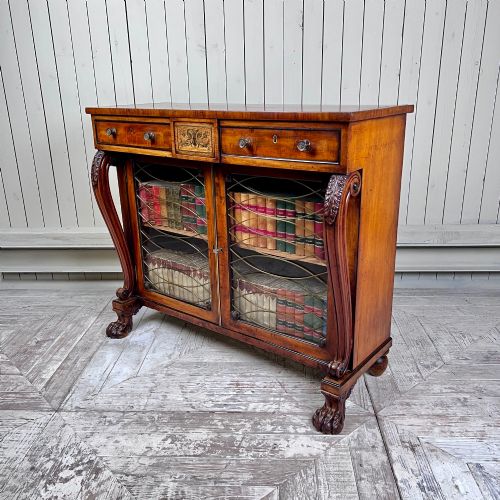
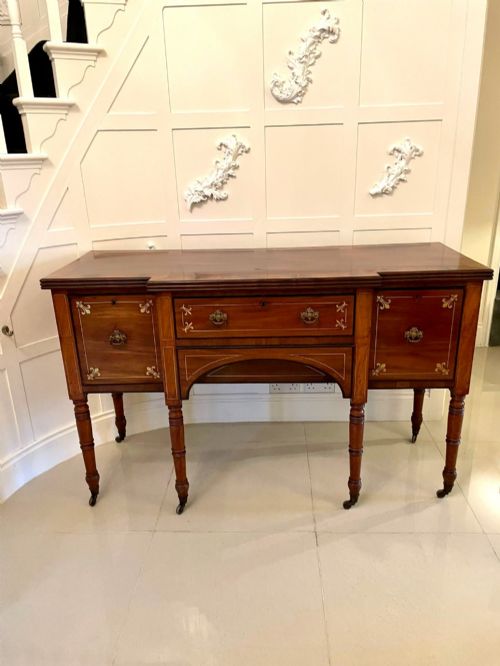
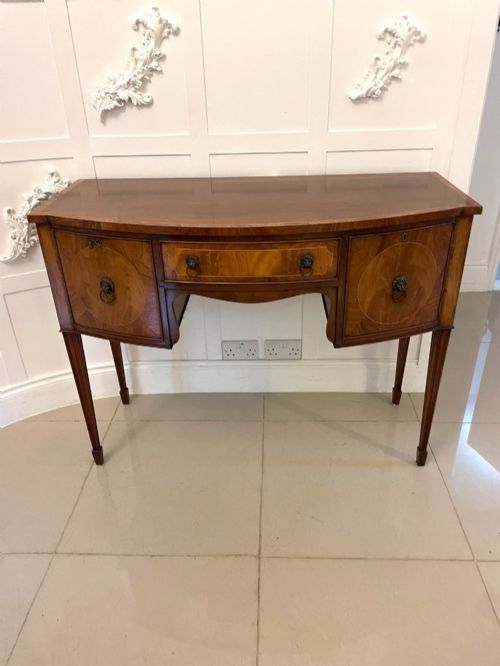
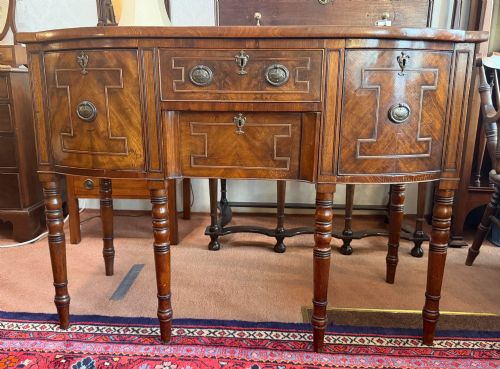
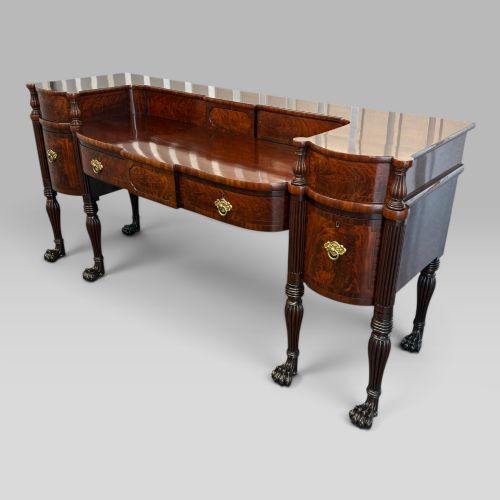
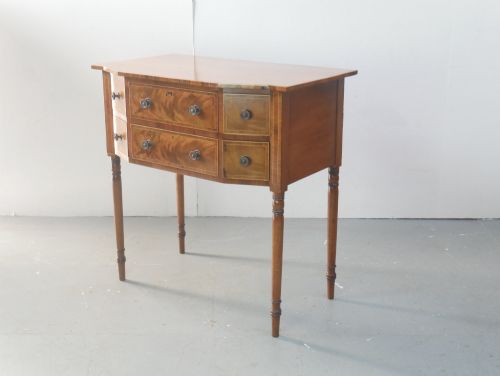
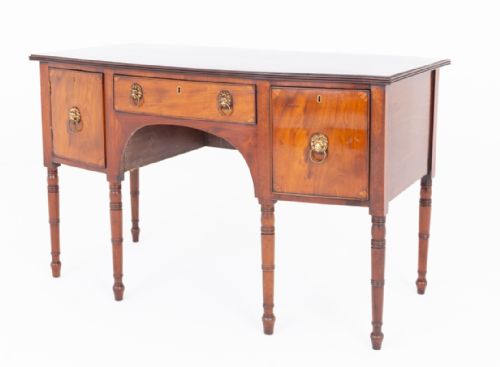
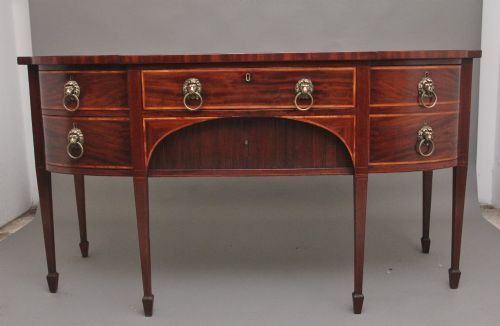
A regency inlaid mahogany sideboard is a formal dining room serving piece designed to hold silver, linen, and wine during the Georgian and Regency periods. The forms appearing on this page range from straight-front and bow-front designs to breakfronts, pedestal formats, and related side cabinets.
The primary examples date from the Regency and wider nineteenth century, alongside later revival pieces produced in the Victorian and twentieth-century eras. Cabinetmakers built these pieces using solid timbers and veneers, incorporating drawers and cupboards tailored to the demands of nineteenth-century dining.
How they were made
Makers constructed the primary carcase using mahogany and flame mahogany veneers over secondary timbers such as oak, applying contrasting stringing and banding in boxwood and ebony. Many pieces incorporate elaborate brass inlay, particularly in Greek key and scroll motifs set directly into the mahogany surfaces.
Structural elements include dovetailed drawer construction, oak linings, and turned or carved supports, such as lion paw feet on pedestal bases. Workshops formed curved fronts using steam-bent wood or blocked construction to achieve the characteristic bow and serpentine shapes.
Regency Inlaid Mahogany Sideboard Retail Price Guide 2026
Typical asking prices for regency inlaid mahogany sideboard among the pieces listed under this phrase on Sellingantiques today, from the lower quarter to the upper quarter. They describe what is for sale here now, not the wider market.
At least one regency side cabinet on record spent time at Harrods, proving that department store luxury has a remarkably long history.
What varies in quality
The tier of a piece depends on the choice of timber and the precision of the cabinetwork. Finer examples display carefully matched flame mahogany veneers and intricate, tightly fitted brass or boxwood stringing rather than painted substitutes.
Structural integrity and proportion also separate standard production from exceptional work. Pieces attributed to prominent workshops demonstrate superior internal framing, carefully selected secondary woods like oak, and crisp carving on feet and mounts.
Gillows·George Oakley·Harrods
The Regency Inlaid Mahogany Sideboard Glossary
- Bow-front
- A cabinet front that curves outward in a convex arc. This shape gained popularity during the Georgian and Regency periods to soften the room's angles.
- Breakfront
- A piece of furniture where the central section projects forward from the flanking outer sections. It creates depth and visual rhythm across the length of the sideboard.
- Inlay
- A technique where pieces of contrasting material are inserted into recessed cavities in the wood base. Boxwood, ebony, and brass are common materials used for linear stringing.
- Pedestal sideboard
- A form featuring two separate pedestals flanking a central serving table or recessed cupboard section. These often stand on substantial feet, including carved lion paws.
- Flame mahogany
- A veneer cut from the fork of the mahogany tree where the branch meets the trunk. This produces a distinctive flickering wave pattern prized by cabinetmakers.
Regency Inlaid Mahogany Sideboard: Frequently Asked Questions
What is a regency inlaid mahogany sideboard used for?
These pieces served primarily in the dining room for storing silver, serving dishes, and wine bottles during formal meals. They provided a wide top surface for laying out food and drinks before service.
Today, they function as striking focal points in dining rooms, hallways, and living spaces while offering generous storage capacity within their drawers and cupboards.
How do I identify a genuine regency piece?
Examine the construction methods and materials visible inside the drawers and at the back. Genuine period examples typically feature hand-cut dovetails, oak secondary woods, and hand-rubbed wax finishes rather than modern adhesives or machine-tooled joints.
Stylistic markers such as brass stringing, ebony banding, and flame mahogany veneers help distinguish authentic early nineteenth-century work from later revival pieces.
How do I care for antique mahogany furniture?
Maintain the wood by applying high-quality beeswax periodically and buffing it gently with a soft cloth. Avoid placing the piece in direct sunlight or near heat sources to prevent the mahogany and veneers from drying out.
Keep humidity levels in the room stable to protect the historic timbers, joints, and delicate brass or wood inlay from shifting.