

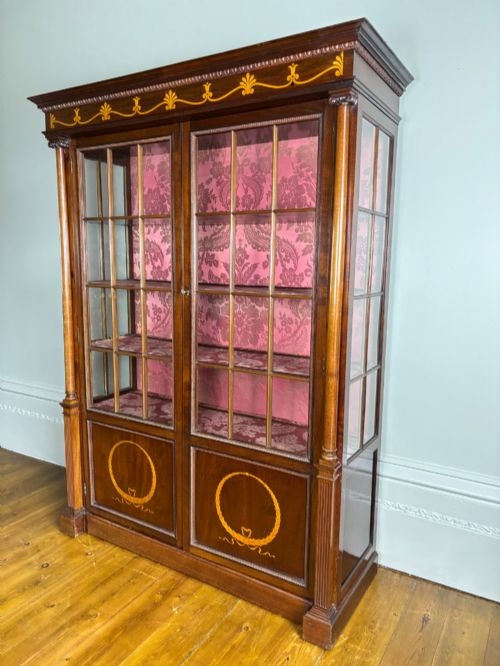
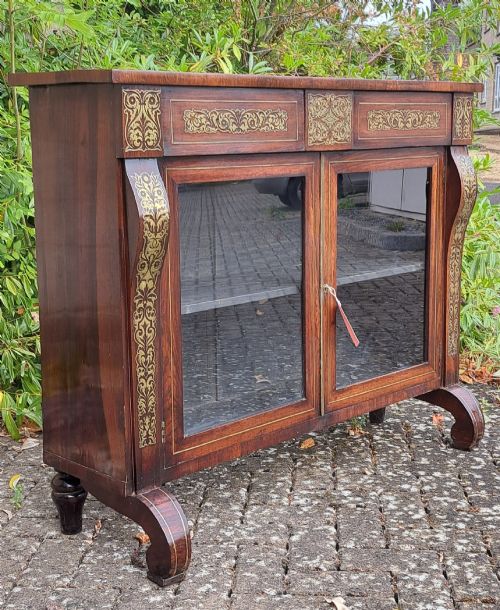
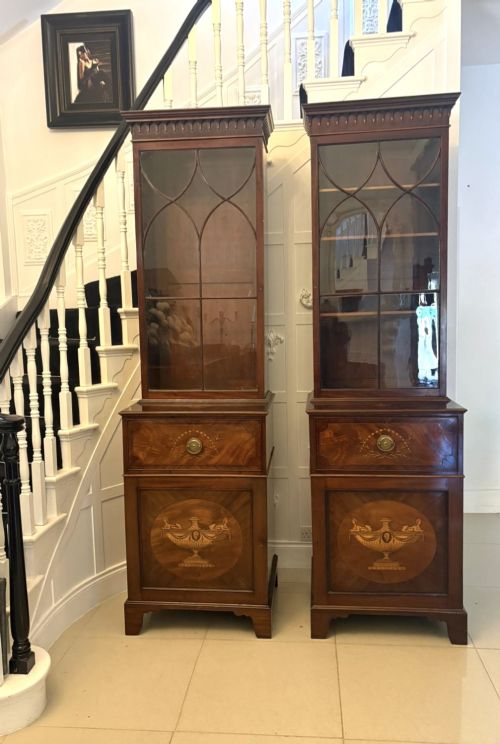
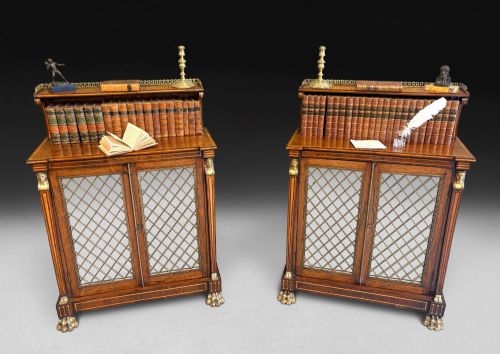
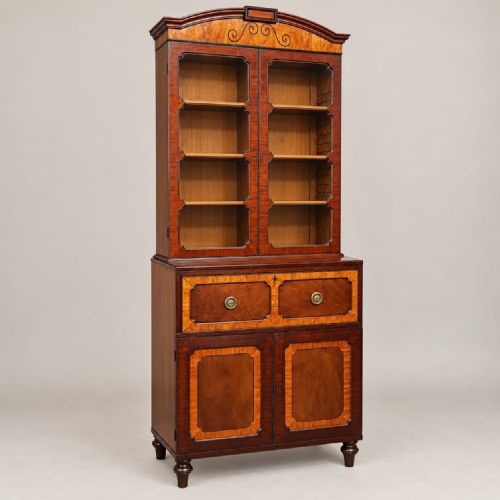
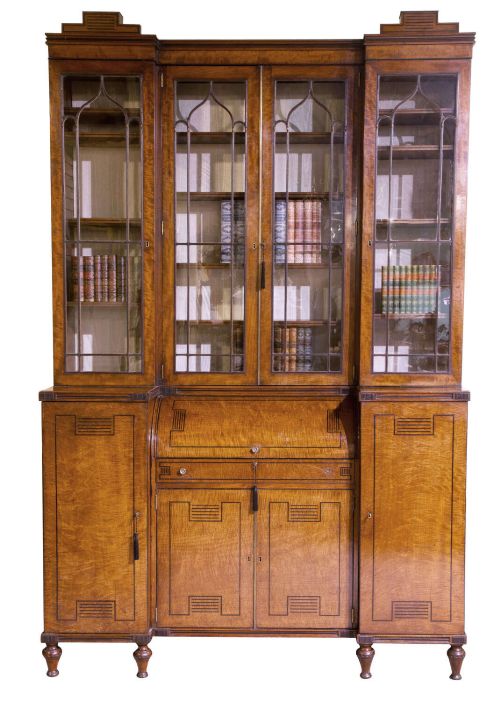
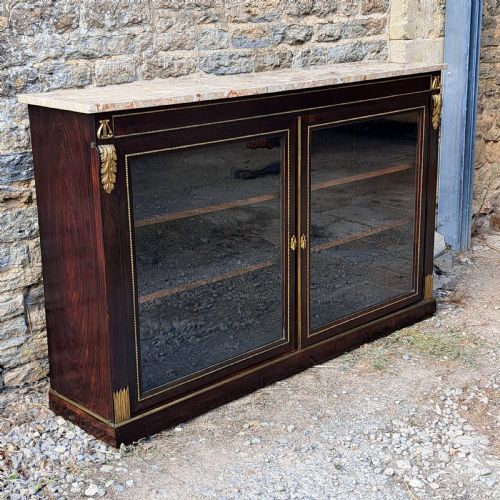
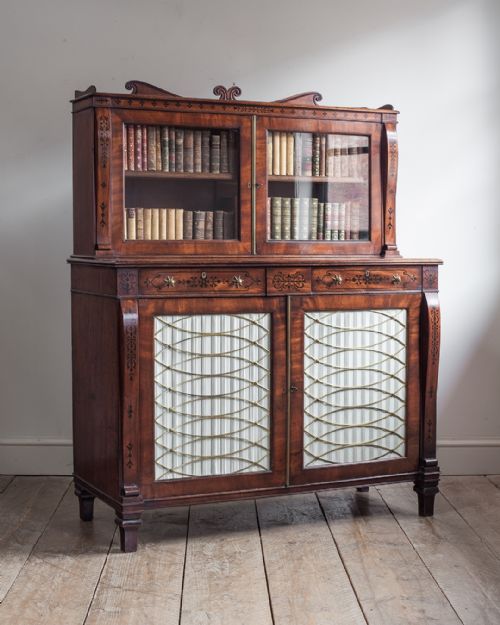


Regency Inlaid Display Bookcase
These pieces of regency inlaid display bookcase bring together disciplined cabinet-making and fine timbers to house a library in style.
Regency Inlaid Display Bookcase
A regency inlaid display bookcase combines enclosed storage or glass-fronted shelving with decorative woodwork, serving as a principal piece for a formal room. You will frequently encounter forms in mahogany and rosewood, often featuring astragal glazing or brass inlay.
The selection ranges from tall breakfront library bookcases down to smaller pier cabinets and chiffoniers. Most examples date from the early nineteenth century, spanning the Regency and Georgian periods with occasional later revivals.
How they were made
Cabinet-makers relied upon dense timbers such as mahogany and rosewood as foundational carcase materials, frequently applying contrasting veneers like satinwood, boxwood, ebony and amboyna. These pale and dark woods created sharp geometric contrasts along the friezes and door panels.
Metal detailing played a structural and decorative role, with brass inlay set flush into the timber and ormolu mounts added to enhance the facade. Glass was held within delicate wooden astragal bars to form the display doors of the upper sections.
Regency Inlaid Display Bookcase Retail Price Guide 2026
Typical asking prices for regency inlaid display bookcase among the pieces listed under this phrase on Sellingantiques today, from the lower quarter to the upper quarter. They describe what is for sale here now, not the wider market.
Listings span multiple materials including mahogany, rosewood, walnut, satinwood, ebony, brass, ormolu and fabric.
What varies in quality
The ambition of the design dictates much of the distinction, separating standard library storage from breakfront bookcases with complex timber selections. Finer pieces employ meticulous contrasting inlays of satinwood and brass that follow the structural lines precisely.
The Regency Inlaid Display Bookcase Glossary
- Astragal
- A small moulding profile, often used in a intersecting lattice pattern to divide the panes of glass in a bookcase door. These bars provide structural support while keeping the visual weight light.
- Breakfront
- A cabinet front where the central section projects forward from the flanking wings. This architectural arrangement creates depth and shadow across the facade.
- Chiffonier
- A low cabinet featuring shelving or enclosed storage, frequently topped with a superstructure or mirror. They emerged as versatile side pieces in Regency interiors.
- Ormolu
- Gilded bronze applied as decorative mounts to furniture. It provides a bright metallic accent against dark tropical hardwoods.
- Secretaire
- A desk drawer that pulls out and drops down to reveal a writing surface and small pigeonholes. It integrates a hidden workspace into the upper or middle section of a bookcase.
Regency Inlaid Display Bookcase: Frequently Asked Questions
Where should I place a regency inlaid display bookcase?
These tall and substantial cabinets demand a prominent wall in a principal room, away from direct sunlight and steady moisture changes that affect antique timbers.
Allow enough clearance around breakfront models so the projecting central section and opening doors function without obstruction.
How do I care for rosewood and mahogany surfaces?
Maintain the polish by dusting regularly with a soft, dry cloth and applying traditional wax sparingly only when the timber appears dry. Avoid modern silicone sprays that build up and dull the grain.
Keep the room at a stable temperature to prevent the fine boxwood and brass inlays from lifting out of their channels.
What is the difference between a pier cabinet and a bookcase?
A pier cabinet is generally lower and designed specifically to stand against the wall space between windows. They often feature a single glazed door for display.
Bookcases are taller structures intended for extensive libraries, frequently combining lower panelled cupboards with upper glazed display shelves.
How can I distinguish Regency from William IV pieces?
Regency pieces dating from the early nineteenth century typically favour slender proportions, delicate brass stringing and restrained classical lines. The subsequent William IV period leans towards heavier architectural forms and bolder mahogany grains.