
Regency Display Bookcase
These pieces bring architectural precision and rich timber grains into a room, offering refined storage for collections and volumes.
Regency Display Bookcase
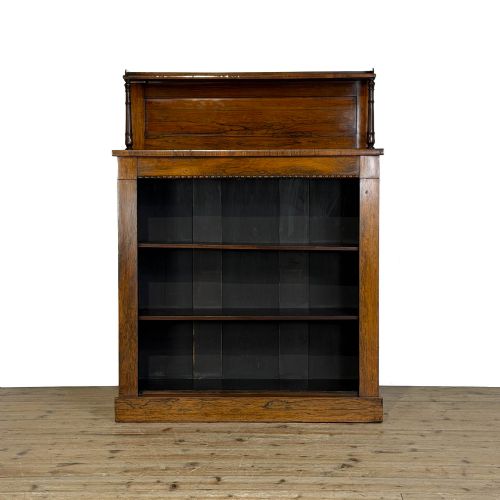
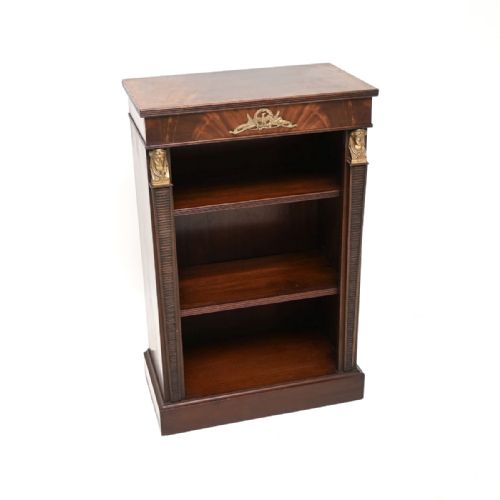
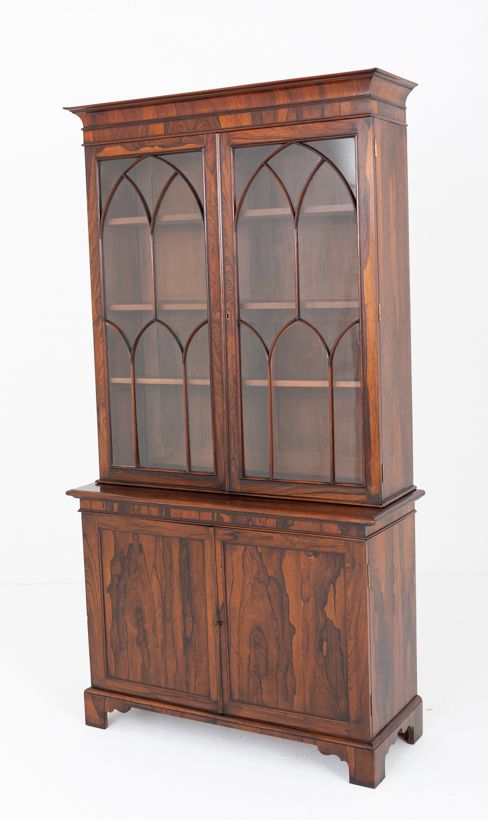
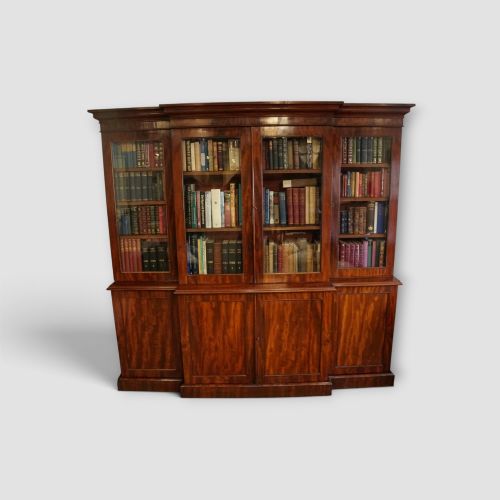
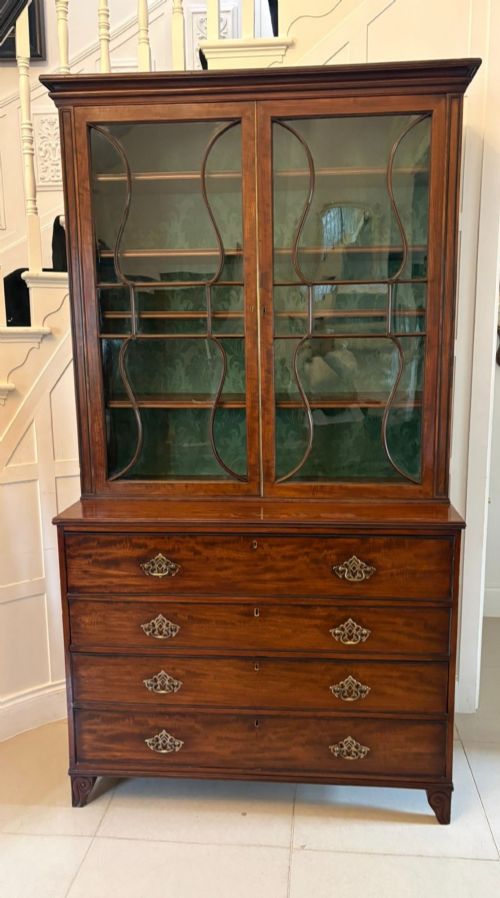
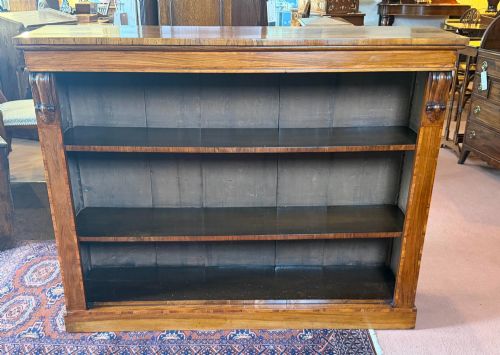
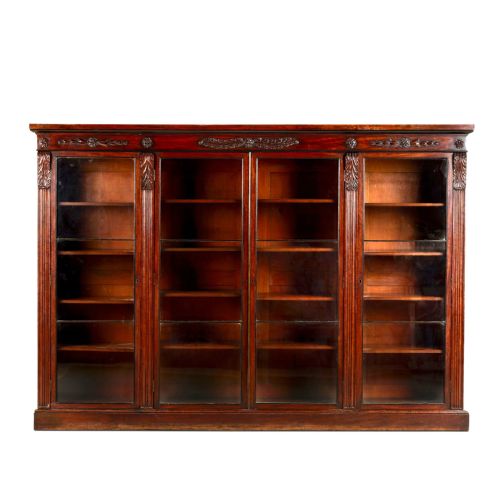
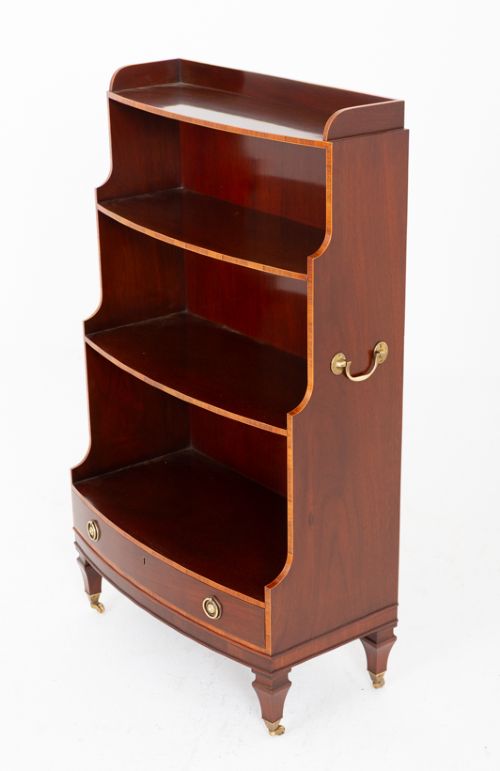
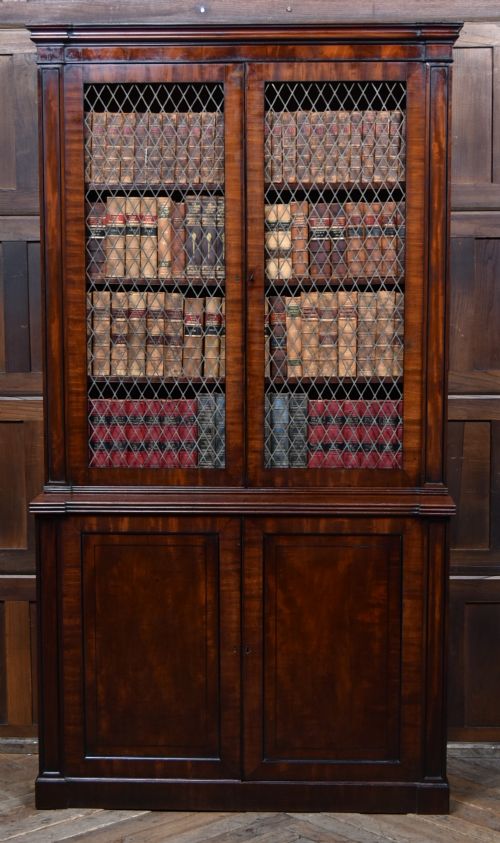
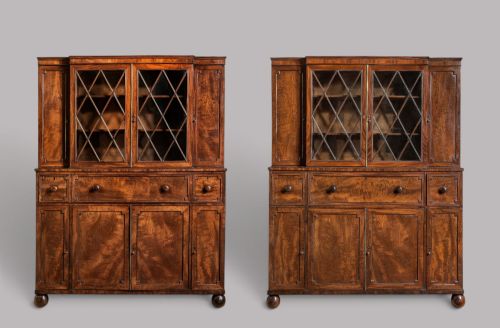
A regency display bookcase combines shelving for books with glass doors, open tiers or mirrored backs to showcase valued objects. The form spans tall breakfront libraries, open waterfall shelves and glazed cabinets designed for drawing rooms and libraries.
Most examples appearing here date from the nineteenth century or follow regency and georgian revival styles from later periods. Mahogany and rosewood dominate the selection, often accented with brass or bronze mounts.
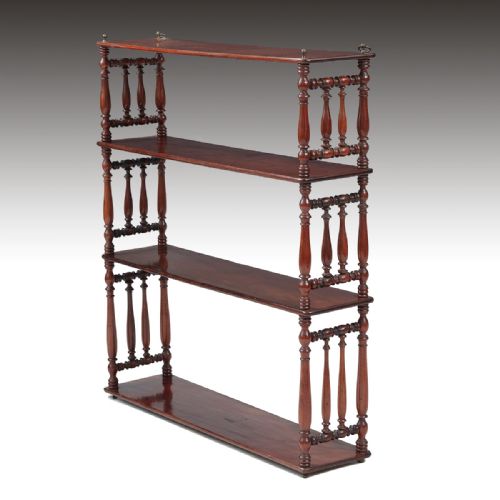
Makers utilised architectural elements such as glazing bars, breakfront proportions and tiered shelving to create balance and vertical emphasis. Buyers find variations ranging from small wall hanging shelves to large library pieces.
Materials and construction
Cabinet makers built these pieces using solid timbers and decorative veneers such as mahogany, rosewood and satinwood over pine or secondary woods. Surfaces often display figured grain patterns chosen specifically for the principal doors and panels.
Glazing required delicate timber astragal bars to hold individual panes of glass securely within the door frames. Metalwork appeared as brass inlay, wire mesh panels, or ormolu and bronze mounts that framed the timber structure.
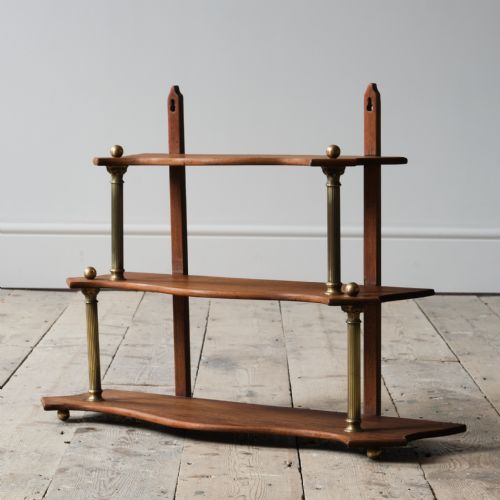
Available forms range from compact wall hanging shelves and open waterfall bookcases to large glazed breakfront libraries.
Standards of craftsmanship
Quality rests on the selection of timber veneers, the precision of the joinery and the finesse of any carved or cast mounts. Finer pieces display continuous grain matching across drawer fronts and doors, alongside well-proportioned architectural cornices.
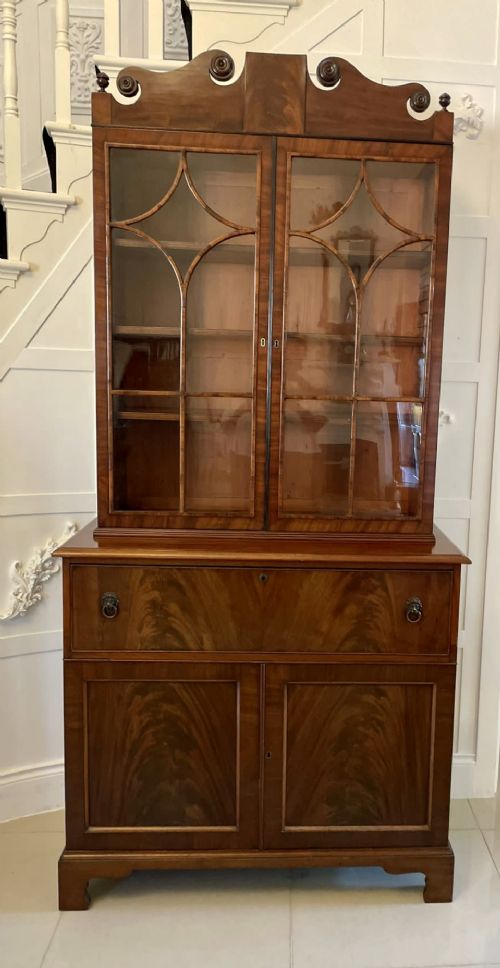
The sophistication of internal fittings, such as adjustable shelving systems and fitted secretaire drawers with pigeonholes and small cupboards, distinguishes more ambitious cabinet work from standard production.
Gillows
The Regency Display Bookcase Glossary
- Breakfront
- A piece of furniture with a central section that projects forward from the flanking wings. This configuration creates visual depth and breaks the flat line of a long library wall.
- Secretaire
- A cabinet incorporating a pull-down writing drawer that conceals a fitted interior of small drawers and pigeonholes. It merges the function of a desk with that of a bookcase.
- Astragal
- A moulded strip of timber used to hold panes of glass within a glazed door frame. Fine astragal bars create geometric patterns that lighten the appearance of large cabinet doors.
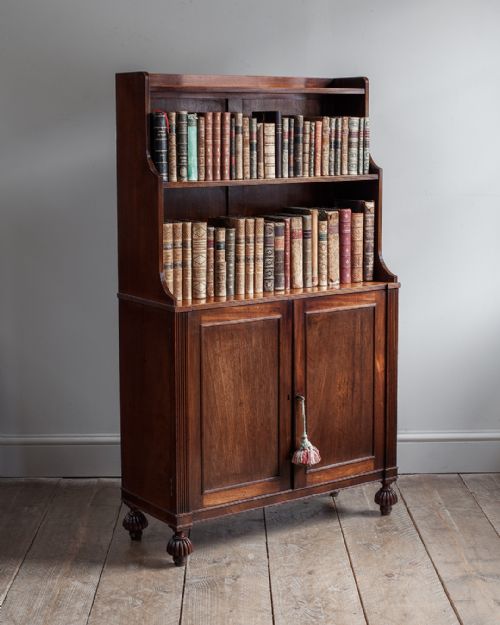
- Waterfall bookcase
- A set of open shelves that steps back progressively from bottom to top in a cascading profile. These pieces typically offer compact storage for smaller volumes.
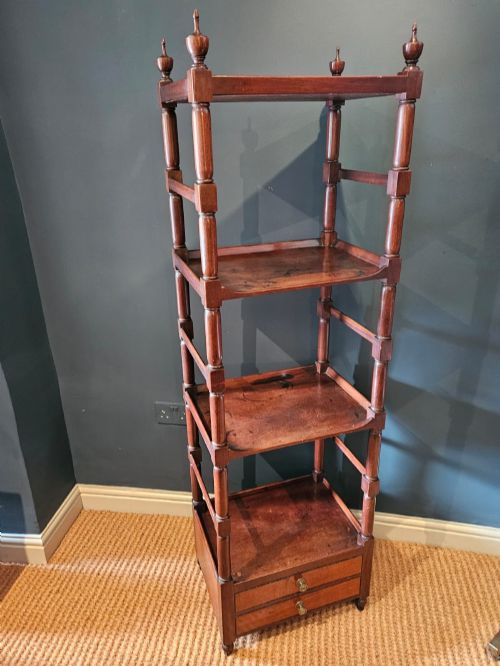
- What-not
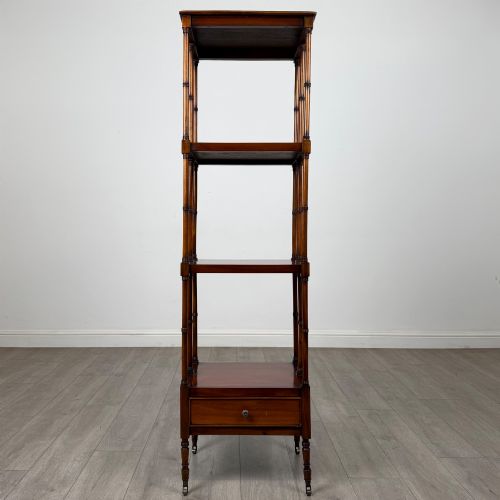
- An open shelving unit with multiple tiers supported by slender upright posts. It served to display ornaments and books in principal rooms.
Regency Display Bookcase: Frequently Asked Questions
How are these bookcases cleaned?
Dust surfaces regularly with a soft, dry cloth to prevent accumulation in carved details and around glazing bars. Apply traditional beeswax polish occasionally to nourish timber veneers without building up heavy residues.
Avoid placing these cabinets near direct heat sources or strong sunlight, which can dry out rosewood and mahogany timbers. Ensure glass panels are cleaned with standard glass cleaner applied to a cloth rather than sprayed directly onto the wood.
Can shelves be adjusted?
Many examples feature adjustable shelving supported by wooden bearer strips or metal ratchets. This allows owners to accommodate volumes of varying heights.
Earlier pieces sometimes relied on fixed shelving integrated into the structural carcass. Review specific descriptions to confirm shelf adjustability before arranging collections.
Where were they placed?
These cabinets traditionally occupied libraries, drawing rooms and morning rooms of substantial residences. They served to house both working libraries and ornamental collections.
Modern interiors utilise them in living spaces and studies as focal storage furniture. Their glazed doors protect volumes from dust while maintaining visibility.
How do I spot a revival piece?
Revival items from the Edwardian era or early twentieth century often employ machine-cut veneers and standardised hardware fittings. Timber conditioning and interior construction methods generally reflect later manufacturing techniques.
Nineteenth-century originals display hand-cut dovetails, older secondary woods like pine or oak behind the carcase, and timber shrinkage consistent with age. Examining drawer linings and backboards clarifies the period of manufacture.