
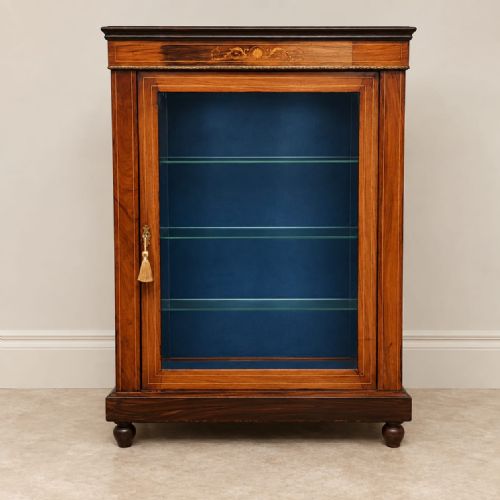
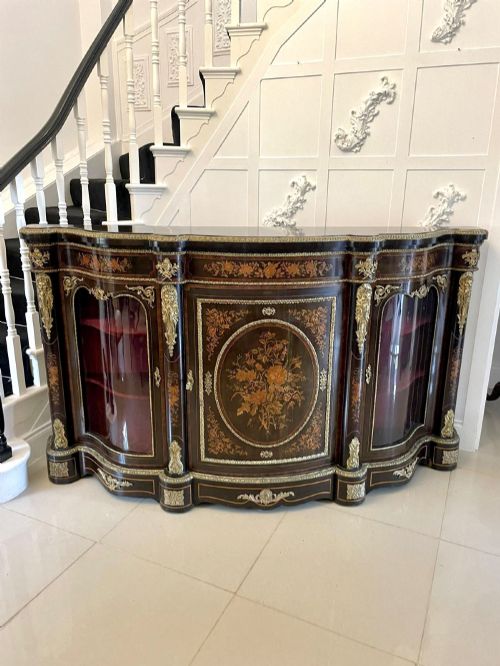
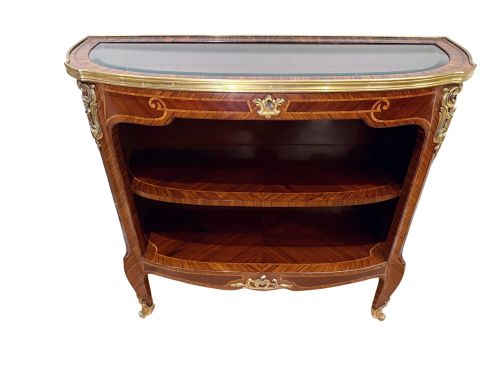
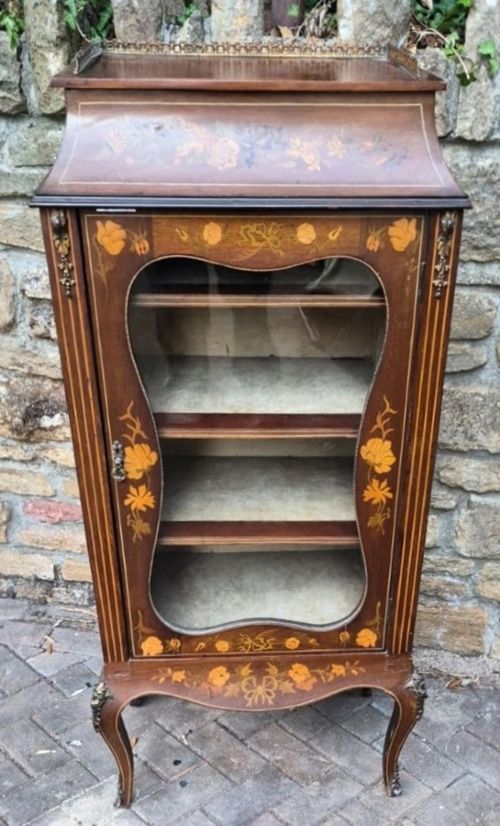

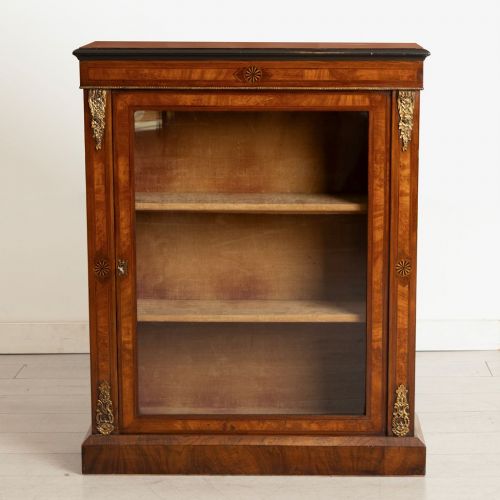
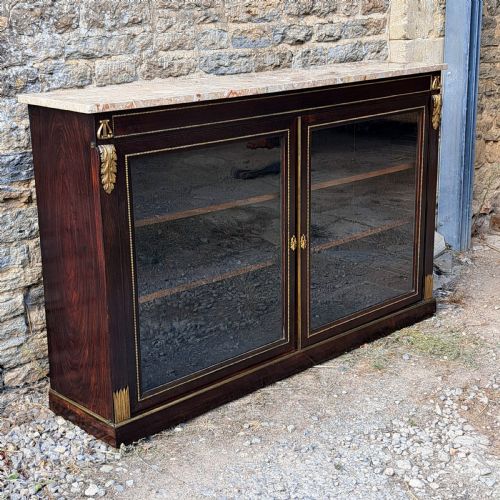


Rosewood Glass Cabinet
A rosewood glass cabinet brings warmth and polished transparency to a room, framing collections behind glazed doors within rich dark timber.
Rosewood Glass Cabinet
A rosewood glass cabinet spans several distinct forms designed to display and store treasured objects, including tall bookcases with vitrine tops, compact pier cabinets, and corner display units. These pieces emerge from the nineteenth century, encompassing Victorian, Regency, and Edwardian periods alongside continental revivals.
Makers and workshops across England and France produced these glazed storage units to anchor formal rooms, utilising rich timbers suited to intricate marquetry and gilt mounts. Pieces range from serpentine credenzas and sideboards to refined hanging corner cabinets and freestanding display furniture.
Materials and Technique
Construction relies upon dense rosewood carcasses, frequently enhanced with contrasting veneers such as satinwood, kingwood, burr walnut, and ebony. Timber frames support large expanses of glass for doors and side panels, creating illuminated enclosures for objects.
Metal ornamentation plays a structural and decorative role, employing cast ormolu, gilt-bronze, and inlaid brass details. Cabinets often incorporate intricate floral marquetry, mother of pearl inlay, or carved wood motifs, particularly within French rococo and Chinoiserie styles.
A tiny clock hides among the grand timber vitrines, keeping time with five glass panels.
Distinctions in Execution
Quality rests upon the crispness of the cabinetwork and the integration of decorative elements like hand-chased ormolu mounts and precise marquetry. Superior examples exhibit seamless timber matching and structurally sound glazed doors that align flush without distortion.
The provenance and attribution to recognised workshops, such as Edwards and Roberts or François Linke, elevate certain pieces through exceptional execution of French and English revival styles.
Edwards and Roberts·François Linke·Thomas Justice and Sons
The Rosewood Glass Cabinet Glossary
- Vitrine
- A glass-panelled cabinet specifically built for displaying porcelain, curiosities, and fine objects. These glazed enclosures protect contents from dust while offering all-around visibility.
- Pier Cabinet
- A low cabinet designed to fit narrow wall spaces between windows or doors. Victorian examples often feature single glazed doors and inlaid timber surfaces.
- Marquetry
- Decorative patterns formed by inserting thin slices of coloured wood, ivory, or shell into a solid wooden background. This technique creates intricate floral and geometric designs across cabinet doors.
- Ormolu
- Gilt-bronze mounts applied to furniture for decorative accent and edge protection. Skilled metalworkers cast and chase these bronze fittings before applying gold gilding.
- Bijouterie Table
- A glazed display table with legs, created for holding small personal ornaments and jewels. These pieces place small collections at viewing height under glass.
Rosewood Glass Cabinet: Frequently Asked Questions
How do I clean the rosewood?
Dust surfaces regularly with a soft, dry cloth to prevent accumulation within carved details and inlay lines.
Avoid harsh modern sprays, applying a quality beeswax sparingly when the timber appears dry to preserve the natural grain.
Where should I place a vitrine?
Position these glazed cabinets away from direct sunlight to protect fragile interior displays and prevent timber fading.
Ensure placement in rooms with stable humidity levels to maintain the stability of rosewood veneers and glass mountings.
How do I identify Victorian pieces?
Look for distinct design markers such as floral marquetry, burr walnut accents, and heavy ormolu mounts.
Check construction details behind the cabinet for period joining techniques and original hardware associated with nineteenth-century workshops.
Can I adjust the internal shelves?
Many nineteenth-century display pieces feature fixed wooden or glass shelving integrated directly into the cabinet carcass.
Check the interior construction carefully before attempting modifications, as older joinery is not built for frequent adjustment.