
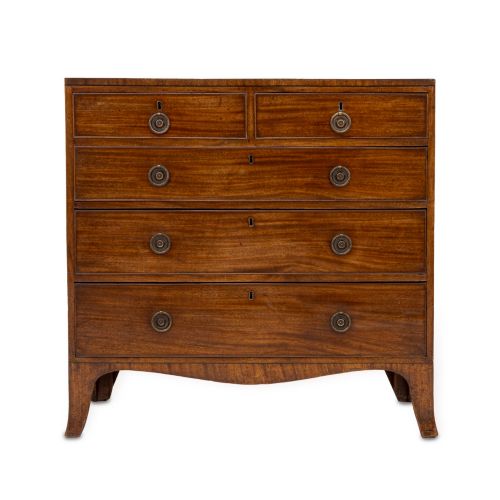
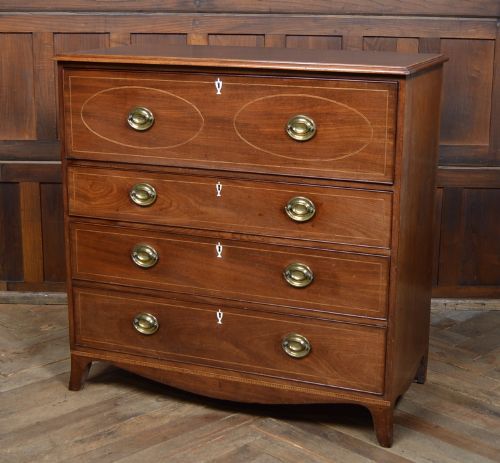


Regency Inlaid Chest Drawers
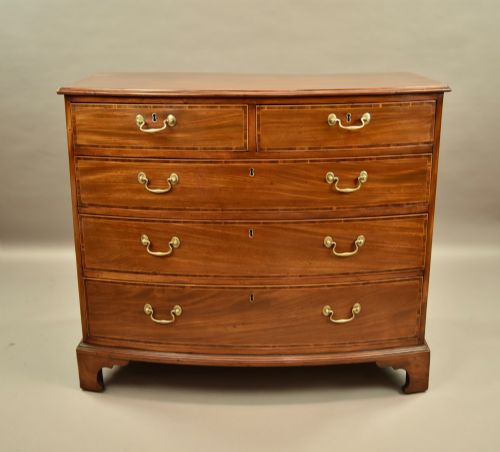
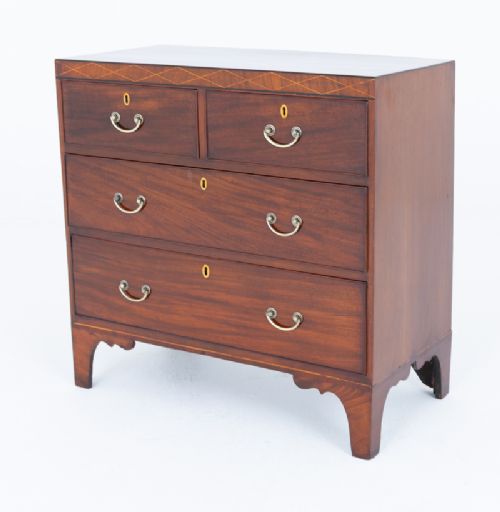
When seeking a regency inlaid chest drawers, buyers encounter substantial mahogany carcases finished with crisp contrasting stringing and geometric banding.

Regency Inlaid Chest Drawers
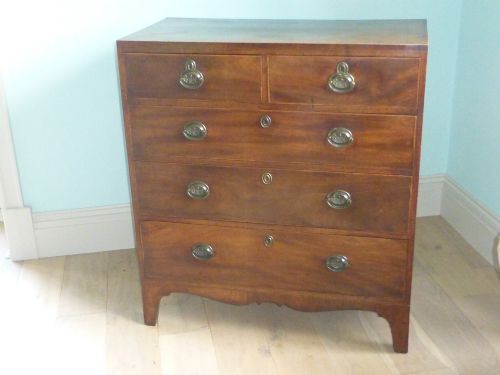
A regency inlaid chest drawers typically presents as a bowfront or straight-front case piece originating from the late Georgian and Regency periods, spanning into later revival dates. The most common format met here relies on figured mahogany surfaces accented by lighter wood details.
Beyond standard drawer configurations, variations include secretaire variants with fitted writing interiors, tallboys, and bedside cabinets. These storage forms reflect both formal drawing room requirements and provincial cabinet-making traditions.
How They Were Made
Cabinet-makers constructed these pieces primarily from solid and veneered mahogany, incorporating secondary timbers such as oak for drawer linings. Surfaces received contrasting details through the insertion of boxwood, satinwood, and ebony line inlay.
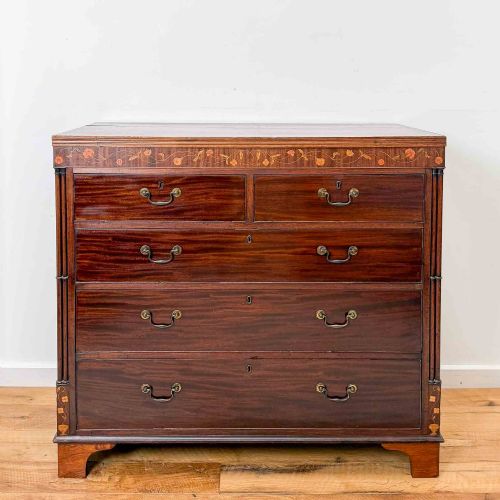
Drawer construction relied on hand-cut dovetails, paired with brass handles and occasional bracket or swept feet. Wood inlay techniques created delicate floral motifs, geometric banding, and stringing along the edges of drawer fronts and tops.
Form variations recorded here include bowfront chests, tallboys, secretaire desks, bedside cabinets, and miniature furniture.
What Varies in Quality
The degree of figuring in the mahogany veneer dictates much of the visual depth, with flame and plum pudding patterns marking superior examples. Crispness in the execution of the contrasting line inlay and satinwood banding further separates standard production from finer cabinet work.
Structural integrity shows in the retention of original brass hardware, uncompromised oak drawer linings, and the smoothness of the drawer action within the carcase.
Gillows
The Regency Inlaid Chest Drawers Glossary
- Bowfront
- A convex curved front profile popular on case furniture of the Regency period. This shape softens the corners of the room and showcases figured wood veneers.
- Inlay
- A decorative technique where contrasting materials are inserted into recessed cavities in the wood surface. Line inlay and stringing are common variations seen on these pieces.
- Secretaire
- A chest or cabinet featuring a fitted pull-out writing drawer containing small compartments and pigeonholes. It combines storage with a functional writing surface.
- Caddy top
- A raised, moulded tabletop profile resembling the lid of a tea caddy. This detail often appears on late eighteenth and early nineteenth-century chests.
Regency Inlaid Chest Drawers: Frequently Asked Questions
What is a secretaire chest?
A secretaire chest incorporates a specialised top drawer that pulls down to reveal a fitted writing desk complete with small drawers and pigeonholes. This dual-purpose design allowed owners to write letters without requiring a separate desk.
Externally, these pieces maintain the appearance of standard drawer arrangements to preserve clean architectural lines.
What woods were used for inlay?
Craftspeople utilised lighter contrasting timbers such as satinwood, boxwood, and ebony to create fine lines, geometric borders, and floral motifs. These materials stood out sharply against dark mahogany and rosewood carcases.
The precision of the contrasting timber insertion indicates the skill level of the original workshop.
Where were these pieces used?
These chests served primarily as principal bedroom storage for clothing and linens, while smaller variants functioned as bedside cabinets or drawing room pieces. Secretaire versions bridged the gap between bedroom storage and private study spaces.
Their decorative line inlay ensured they suited reception rooms as well as private chambers.