






Regency Small Commode
A regency small commode offers compact proportions and fine timber, bringing practical storage to smaller rooms.
Regency Small Commode
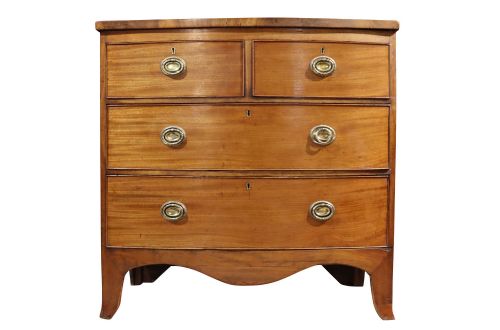
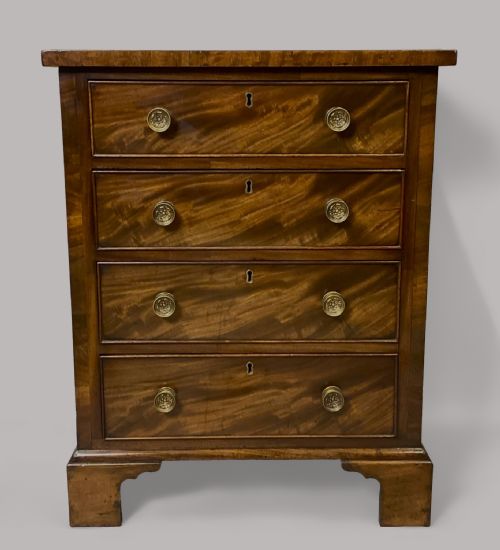
A regency small commode brings together compact chests of drawers and miniature forms created during the Georgian and Regency periods. These pieces serve as practical drawer units or smaller cabinets designed for tight spaces without losing traditional cabinet-making standards.
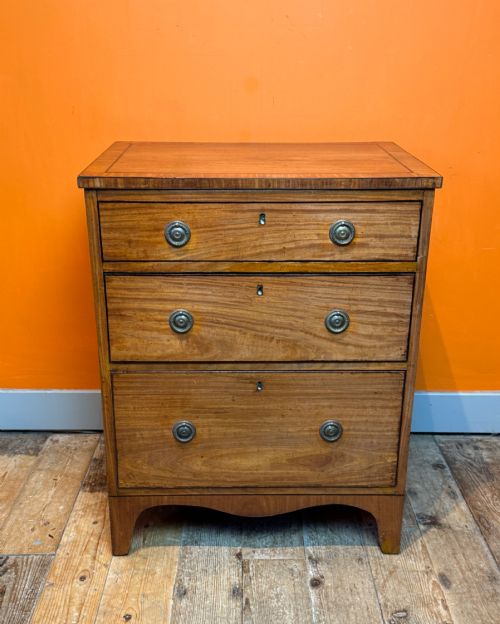
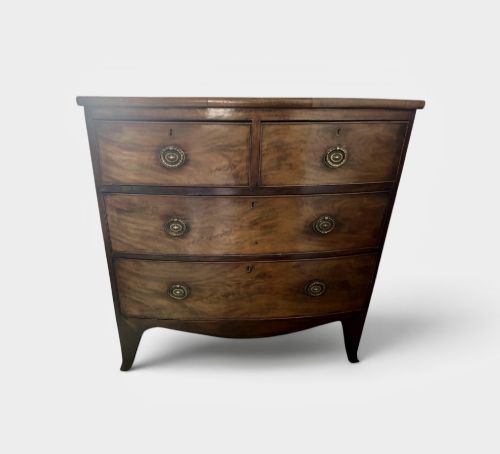
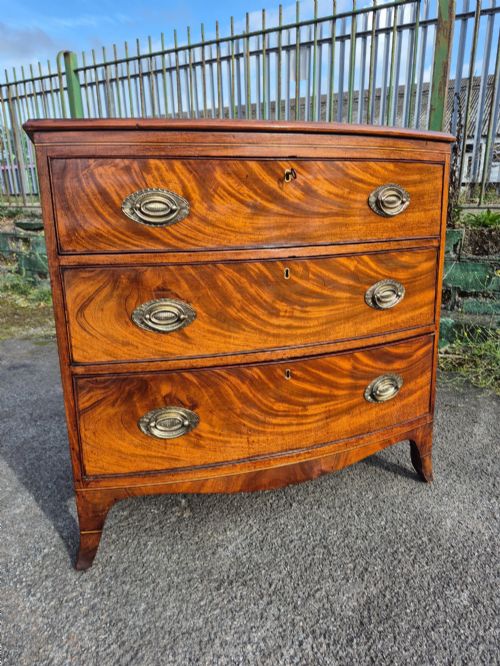
The versions most commonly met on this page include bow front chests and figured mahogany designs alongside smaller elm and pine pieces. Miniature chests and apprentice pieces also appear, offering identical proportions on a reduced scale.
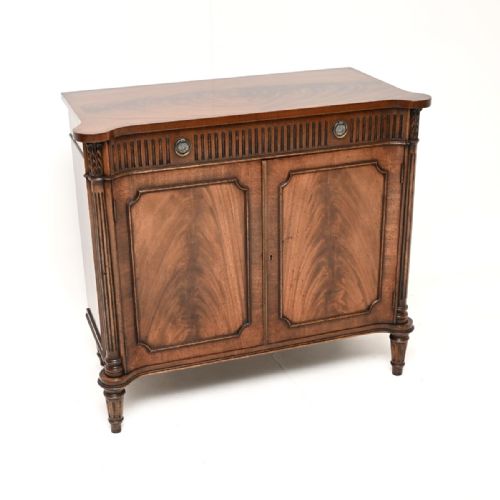
Makers of the period utilised various formats, ranging from narrow four-drawer chests to concave fronted commodes and dwarf linen cupboards. Each item reflects the restrained elegance and functional design characteristic of early nineteenth-century domestic furniture.
How they were made
Cabinet-makers relied on solid timbers such as mahogany, elm, and pine as the structural foundation for each regency small commode. Finer decorative surfaces incorporated veneers of satinwood, rosewood, burr yew, and amboyna to create striking grain patterns across the drawer fronts and tops.
Inlay work played a central role in the decoration, often featuring boxwood and ebony line stringing to define the edges and borders. Brass handles and escutcheons completed the construction, fastened securely to drawers built with traditional dovetail joints.
Regency Small Commode Retail Price Guide 2026
Typical asking prices for regency small commode among the pieces listed under this phrase on Sellingantiques today, from the lower quarter to the upper quarter. They describe what is for sale here now, not the wider market.
Apprentice pieces let young craftsmen practice dovetails on a tiny scale, proving they could build a full-sized chest without wasting expensive mahogany.
What varies in quality
The selection of timber grain and veneer figure dictates much of the visual standard across these pieces. Highly figured mahogany or exotic veneers such as satinwood and rosewood elevate the presence of a regency small commode.
Precision in the joinery and inlay work distinguishes finer examples from simpler vernacular pieces. Crisp boxwood and ebony lines, tightly fitted drawers, and well-balanced proportions separate standard utilitarian storage from master cabinet-making.
The Regency Small Commode Glossary
- Bow front
- A cabinet front that curves outward in a convex shape, common on Regency chests of drawers. This curved profile softens the silhouette of the furniture.
- Commode
- A low cabinet or chest of drawers designed for domestic use. The term often describes refined pieces standing on short legs or feet.
- Veneer
- A thin layer of figured wood applied to a secondary timber base to create decorative surfaces. Cabinet-makers used rosewood and satinwood veneers for visual depth.
- Line inlay
- Narrow strips of contrasting timber inserted into shallow grooves on the furniture surface. Boxwood and ebony frequently provided the dark and light contrast.
- Apprentice piece
- A miniature model demonstrating a craftsman's skill to attain master status. These small chests replicate full-sized construction methods in precise detail.
Regency Small Commode: Frequently Asked Questions
What is a small commode used for?
A regency small commode provides practical storage for smaller living spaces where standard furniture proves too bulky. They function well as bedside tables, hallway drawer units, or decorative accent pieces.
Their compact footprints hold personal items while adding period character to a room through figured timber and traditional brass hardware.
How do I identify a Regency period piece?
Regency furniture typically displays restrained classical lines, architectural proportions, and contrasting timber inlay. Look for clean drawer fronts accented with boxwood or ebony stringing.
The use of solid mahogany, curved bow fronts, and specific brass handle styles helps date these cabinets to the early nineteenth century.
Are miniature chests the same as commodes?
Miniature chests and apprentice pieces share the same construction methods and timber choices as larger commodes. They were built on a reduced scale either as cabinet-makers' display samples or precise domestic items.
While smaller in capacity, they feature identical dovetailing, drawer configuration, and decorative veneers found on full-sized furniture.
How do I care for a mahogany chest?
Keep wooden furniture away from direct heat sources and strong sunlight to prevent the timber and veneer from drying out. Regular dusting with a soft, dry cloth maintains the polished surface.
Occasional application of appropriate wax polish nourishes the mahogany and protects the antique finish without building up heavy residue.