

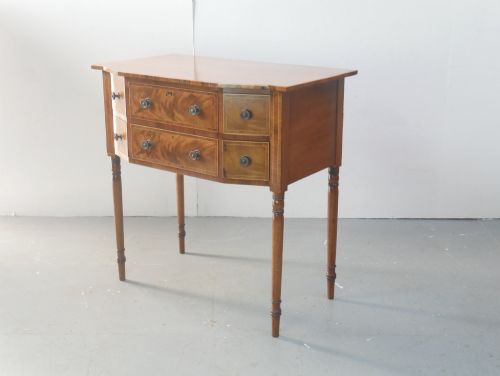
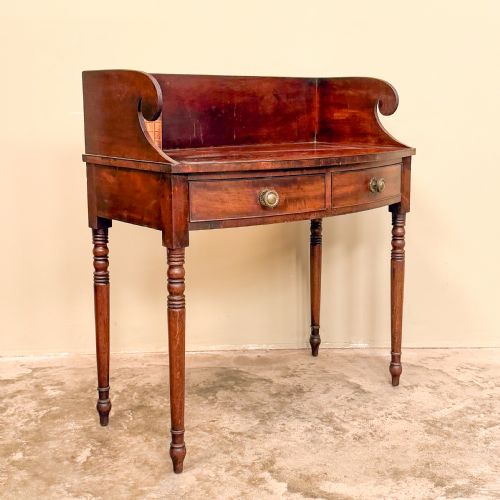
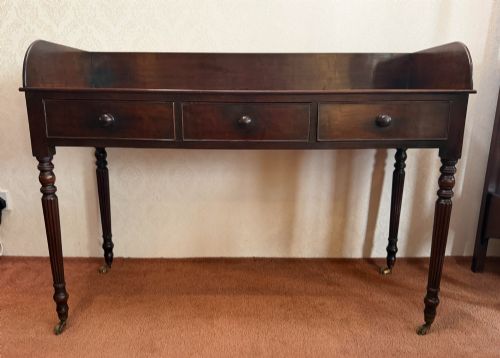
Regency Hall Console Table
A regency hall console table brings architectural presence into an entrance, offering a surface designed to anchor a hallway.

Regency Hall Console Table
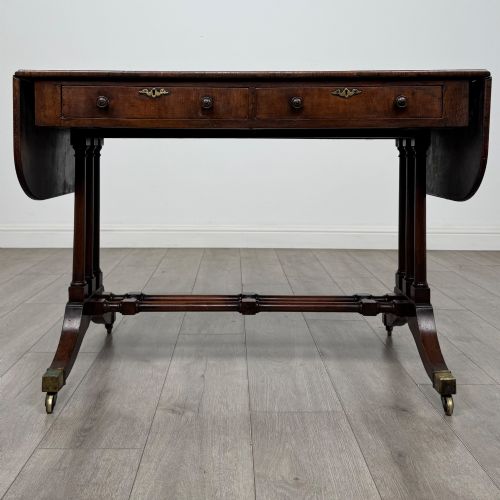
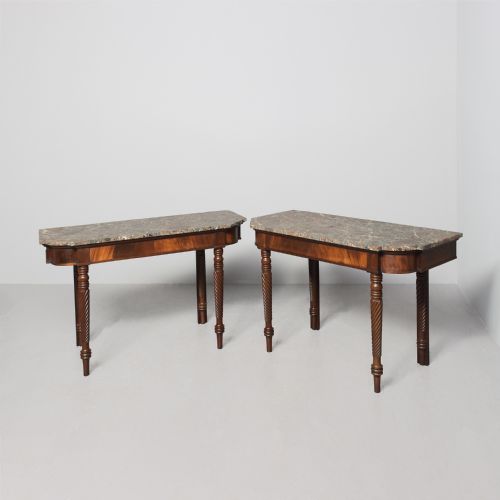
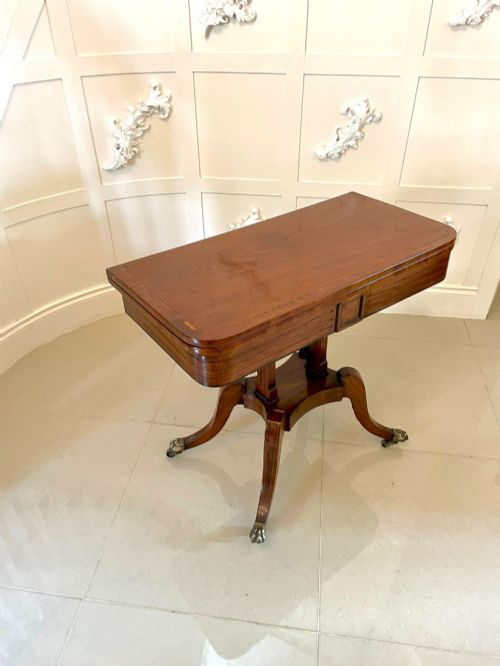
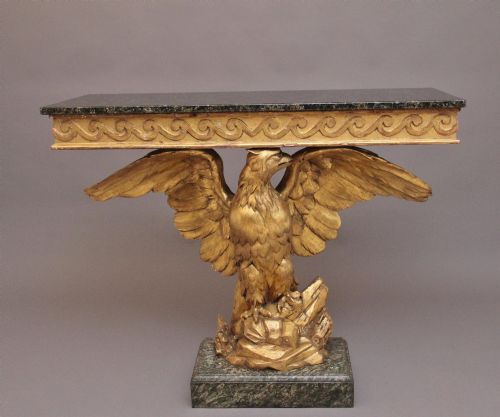
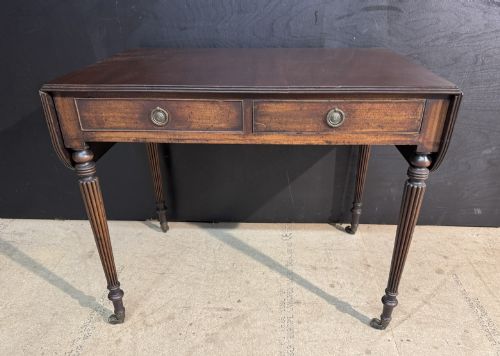
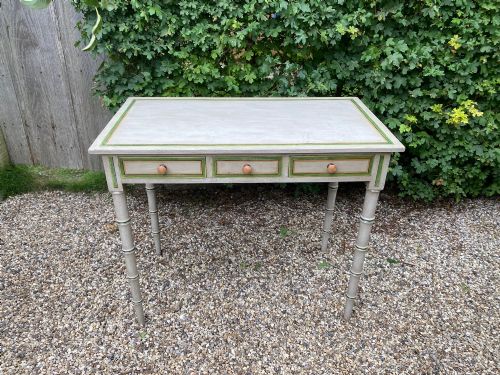
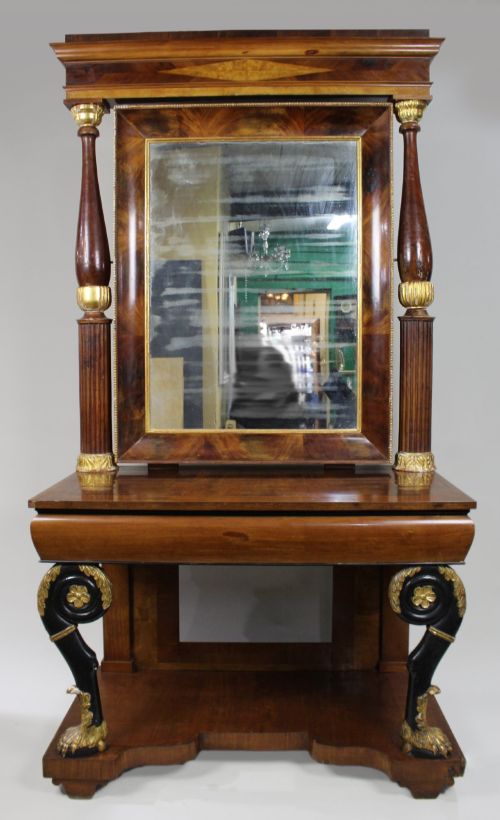
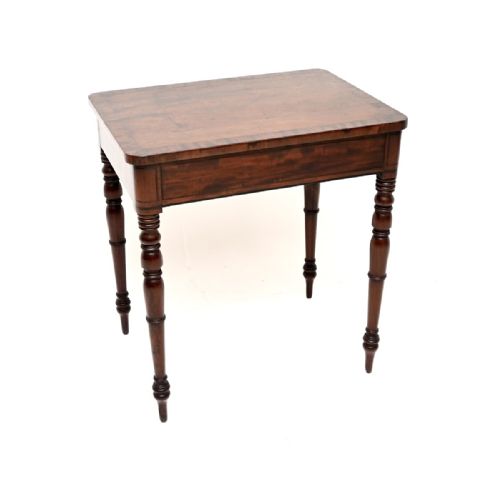
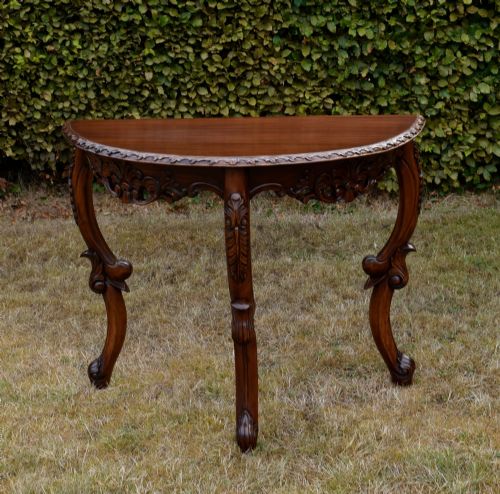
A regency hall console table is typically encountered as a narrow, wall-abutting surface originating from the nineteenth century, Georgian, and Regency periods. These forms frequently incorporate marble tops, break-front designs, and demi-lune shapes intended for narrow circulation spaces. Examples span mahogany, rosewood, oak, and painted finishes reflecting styles such as William IV, George IV, and Neoclassical.
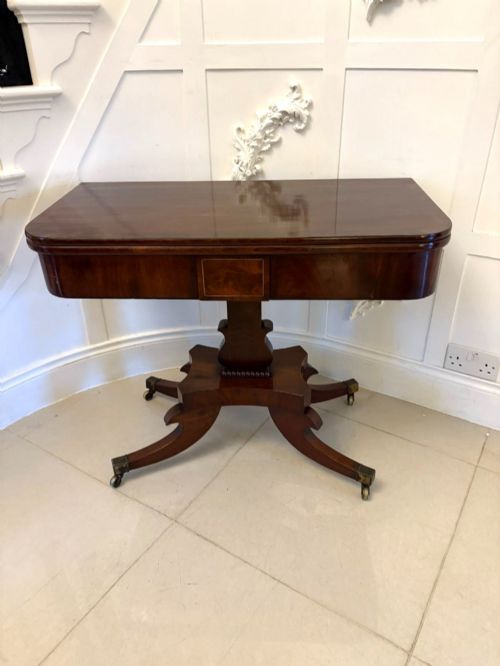
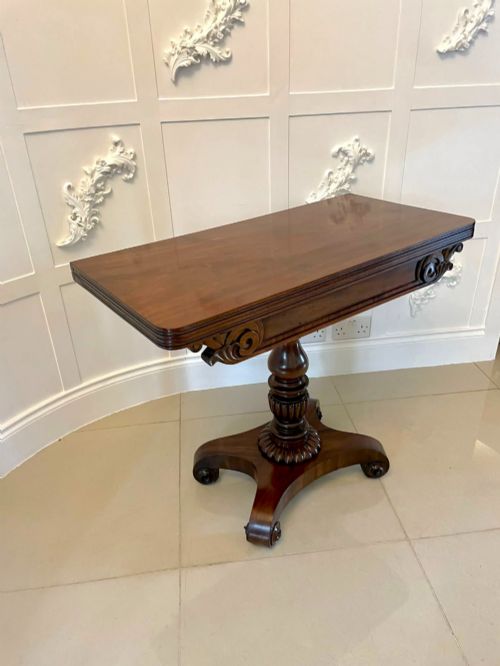
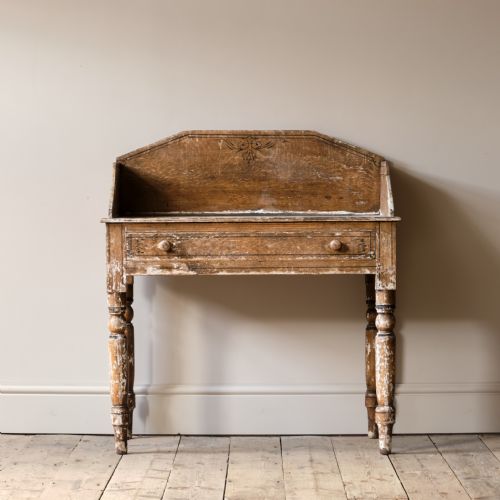
Makers and workshops of the era produced these forms alongside related side tables, sofa tables, and card tables, sometimes adapting them with mirror backs or parcel gilding. The listings reflect both formal townhouse console pieces and robust country house variants executed in pine or fruitwood. Buyers encounter pairs as well as single monumental console tables designed for grand halls.
What varies in quality
The selection of timber veneers determines visual depth, with highly figured flame mahogany and richly grained rosewood sitting at the upper end of the scale. Cabinetmaking execution is evident in the sharpness of carved mouldings, the precision of brass inlay work, and the integration of substantial marble tops.
Attribution to known workshops or distinctive regional cabinetmakers elevates certain examples, while simpler country house pieces in oak or pine rely on proportion and honest construction rather than decorative excess.
Some console tables feature faux bamboo painted frames, proving that nineteenth-century decorators loved a bit of botanical theatre.
Gillows·James Mein of Kelso·Gillingtons of Dublin
The Regency Hall Console Table Glossary
- Demi-lune
- A half-moon shape used for table tops and frames designed to sit flush against a wall. This profile was particularly favoured for console and card tables in narrow hallways.
- Break-front
- A cabinet or table front where the central section projects forward from the flanking wings. This architectural arrangement adds depth and shadow to hall furniture.
- Parcel gilt
- Woodwork decorated with partial applications of gold leaf to accentuate carved details, mouldings, or turned elements. It creates a striking contrast against dark woods like mahogany.
- Flame mahogany
- Timber cut from the fork of a mahogany tree to produce a distinctive, flickering grain pattern resembling flames. Cabinetmakers reserved this prized veneer for prominent table tops and drawer fronts.
Regency Hall Console Table: Frequently Asked Questions
Where do you put a console table?
These tables are traditionally positioned in entrance halls against a flat wall, often paired with a matching pier mirror above to complete an architectural ensemble.
They also serve effectively in narrow corridors or reception rooms where a deep surface would impede movement.
How do I spot a Regency piece?
Look for classical proportions, architectural motifs such as reeded legs or paw feet, and the use of dark tropical timbers like mahogany and rosewood.
Details like brass inlay and parcel gilding are also strong indicators of the taste prevalent during the early nineteenth century.
Can I use a card table in a hall?
Many fold-over card tables and tea tables from the period were built with dimensions suitable for hallway placement when closed.
Their hinged tops allow them to double as compact console surfaces that can be opened out when extra tabletop space is required.
Are marble tops original to these tables?
Numerous nineteenth-century console tables were constructed specifically to carry heavy marble slabs, particularly those designed in the grand neoclassical taste.
White and coloured marble surfaces provided durability and a formal aesthetic well suited to high-traffic entrance areas.