

Carved Mahogany Library Table
A carved mahogany library table brings solid timber, leather surfaces and substantial proportions to a room.

Carved Mahogany Library Table
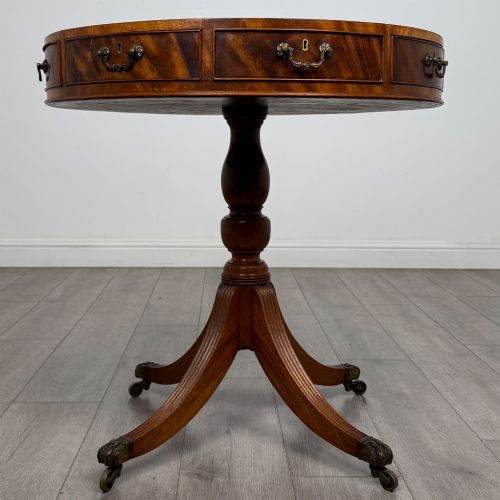
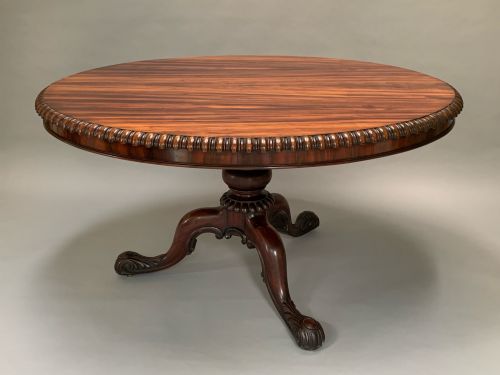
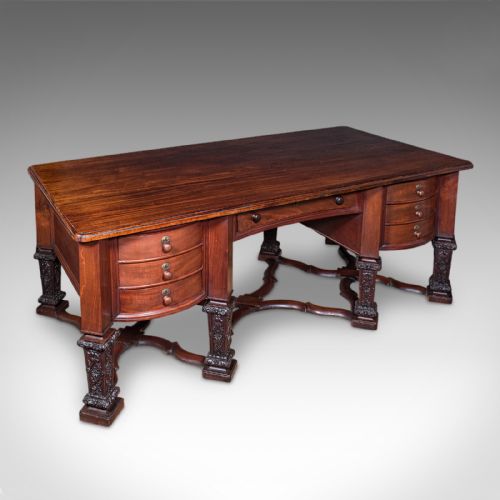
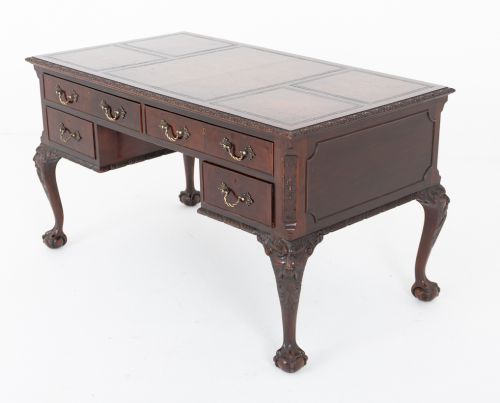
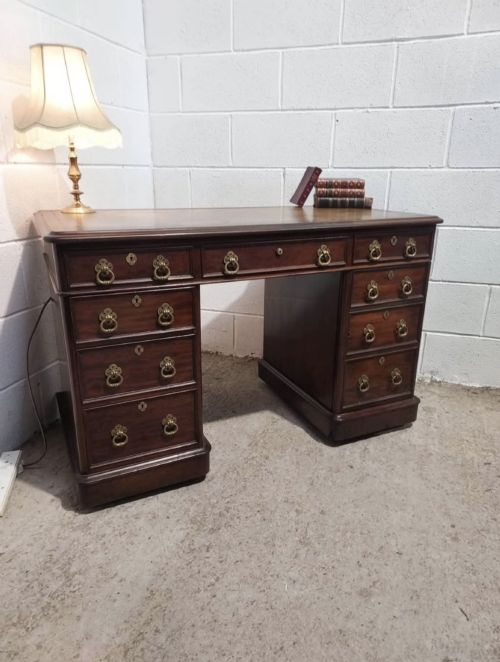
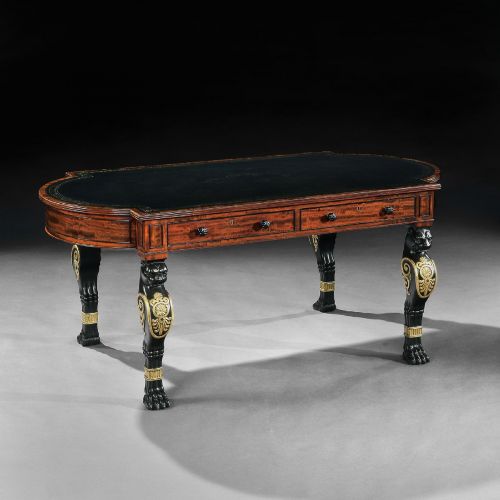
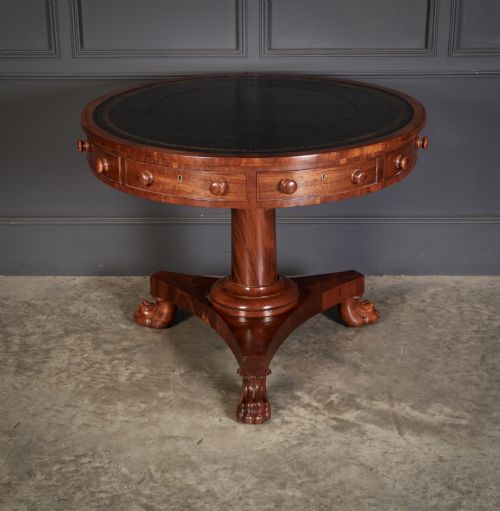
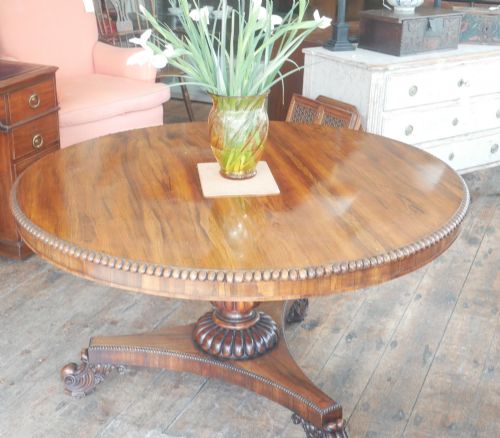
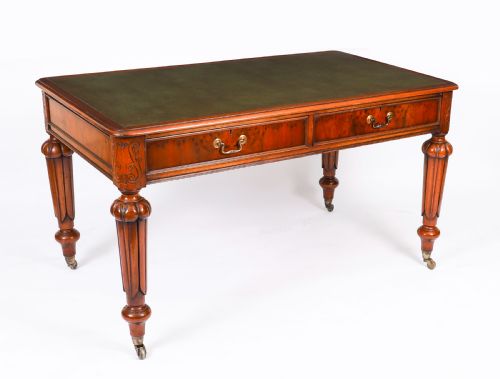
A carved mahogany library table serves as a substantial writing and working surface, drawing on Georgian, Regency, William IV and Victorian design traditions. Pieces seen on this page range from early nineteenth-century examples to Edwardian revivals, taking the form of freestanding centre tables, drum tables and partners desks.
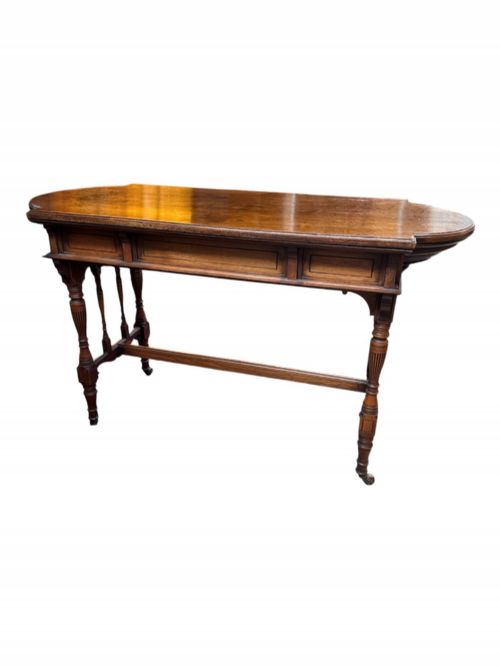
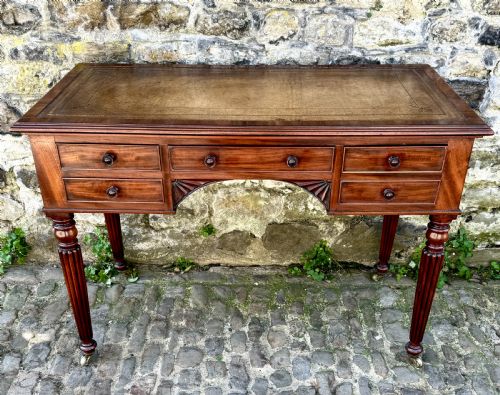
The most common versions met here date from the nineteenth century, utilising dense tropical timber and often incorporating inset leather writing surfaces. Forms vary from pedestal bases with banks of drawers to four-legged tables with stretcher supports and rotating mechanisms.
Materials and Construction
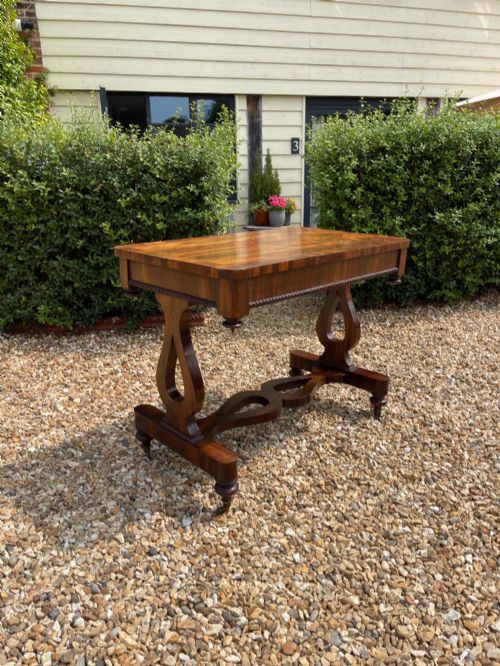
Cabinetmakers constructed these tables primarily from solid and veneered mahogany, frequently selecting figured or flame mahogany for top surfaces to display rich grain patterns. Secondary timbers provided internal framing for drawers, while brass castors allowed heavy library furniture to move across floorboards.
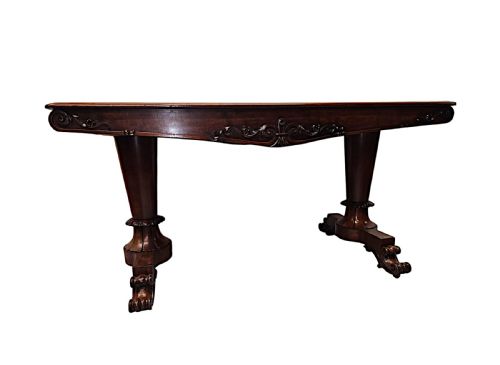
Carved details such as reeded legs, scrollwork and stretcher bases required skilled hand-tooling by makers using chisels and gouges. Leather inserts, often gold-tooled at the edges, were glued directly to timber writing beds.
Listings feature mahogany, rosewood, Albuera wood and Gonçalo Alves, alongside brass, glass and ormolu mounts.
Assessing Craftsmanship
Quality rests in the depth and crispness of the hand-carved ornamentation, where sharp undercutting distinguishes superior workshop output from softer, later machine work. The choice of mahogany veneer, particularly well-figured flame grain matched across wide table tops, separates standard production from exhibition pieces.
Internal construction, including dovetail joints on drawer linings and the stability of pedestal bases, determines the structural integrity of the table. Original brass hardware and patinated leather write surfaces indicate a higher degree of preservation.
Gillows·Williams and Gibton·Jean-Joseph Chapuis·Bush of London·Webster Cornhill London
The Carved Mahogany Library Table Glossary
- Mahogany
- A durable tropical hardwood imported for high-end British cabinetmaking, prized for its deep reddish-brown colour and stability. It resists warping better than many native timbers.
- Partners Desk
- A large double-sided desk designed for two people to work opposite each other, featuring drawers and cupboards on both faces. These pieces often incorporate inset leather tops.
- Drum Table
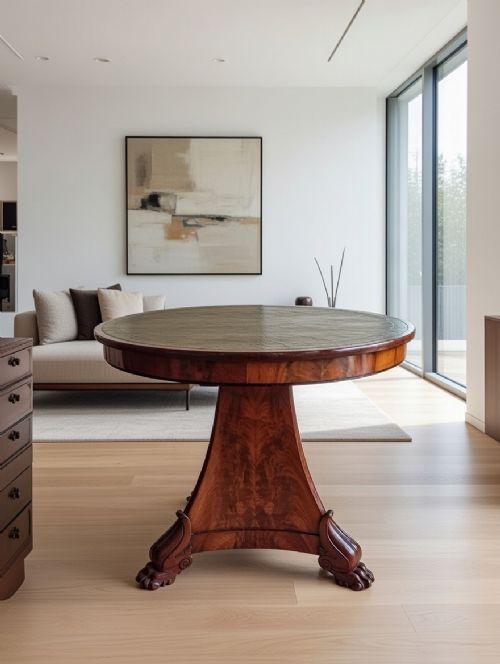
- A circular library table containing a revolving or stationary top surrounded by drawers, usually supported on a central pillar and tripod base. The design allows access to papers from any angle.
- Ormolu
- Gilded bronze mounted onto furniture as decorative feet, handles or banding. This technique adds metallic contrast to dark mahogany surfaces.
- Stretcher
- A horizontal timber rail connecting the legs of a table for added structural support. On library tables, stretchers frequently feature elaborate carving or central finials.
Carved Mahogany Library Table: Frequently Asked Questions
How were library tables used?
These tables functioned as heavy-duty writing desks and reading surfaces in large domestic libraries and studies. Users stored correspondence, reference books and writing equipment within their drawers.
Freestanding centre versions allowed people to sit away from walls, providing a stable platform for bound volumes, globes and scholarly papers.
Where should I place a library table?
A library table works best in the middle of a room as a central focal point, particularly freestanding pedestal and centre table designs. They require ample floor space to allow access to drawers and surrounding chairs.
Keep them away from direct sunlight and heat sources to prevent the mahogany timber from drying out and the leather top from cracking.
How do I tell Regency from Victorian pieces?
Regency tables, dating from the early nineteenth century, typically feature neoclassical restraint, brass inlay, reeded columns and sabre legs. Their proportions remain clean and architectural.
Victorian pieces, produced after eighteen thirty-seven, tend to be heavier with more robust carving, gothic or rococo revival motifs, and darker, denser mahogany finishes.
What is flame mahogany?
Flame mahogany is a veneer cut from the fork where a branch joins the main trunk of the tree, producing a distinctive fire-like ripple pattern in the grain. Cabinetmakers reserved this timber for prominent top surfaces.
Tables featuring matched flame veneer panels represent higher status commissions from leading nineteenth-century workshops.