


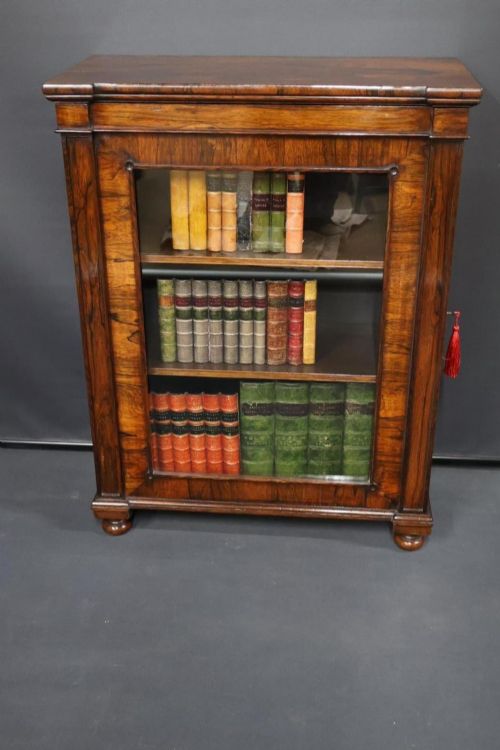

Regency Glazed Cupboard
A regency glazed cupboard brings refined timber and clear glass together to display books and porcelain with quiet elegance.
Regency Glazed Cupboard
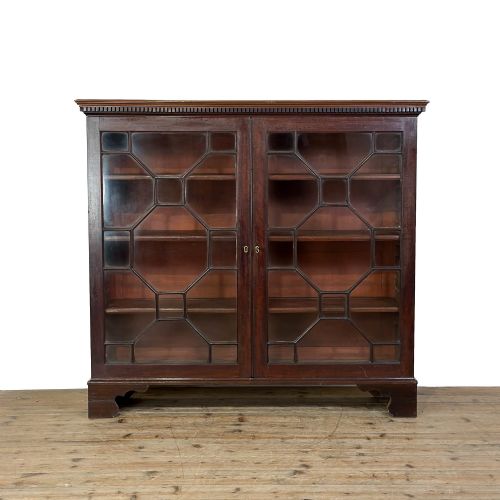
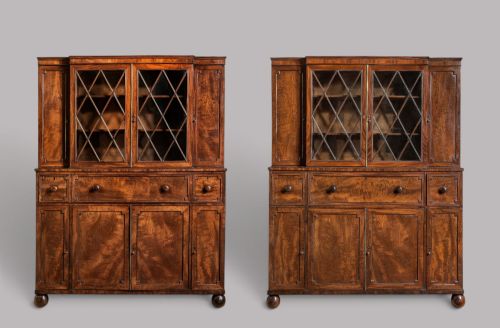
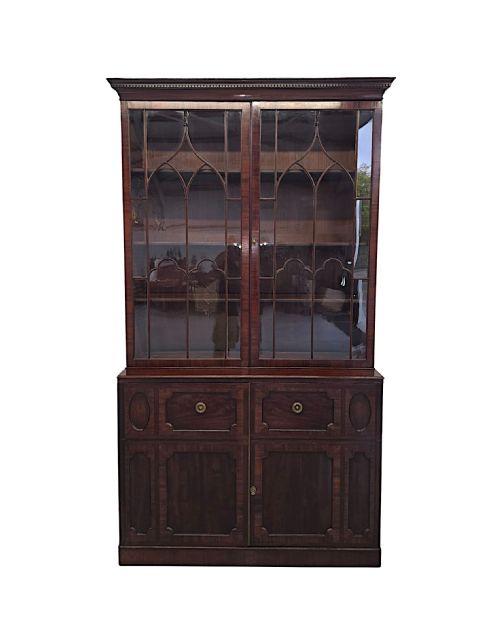
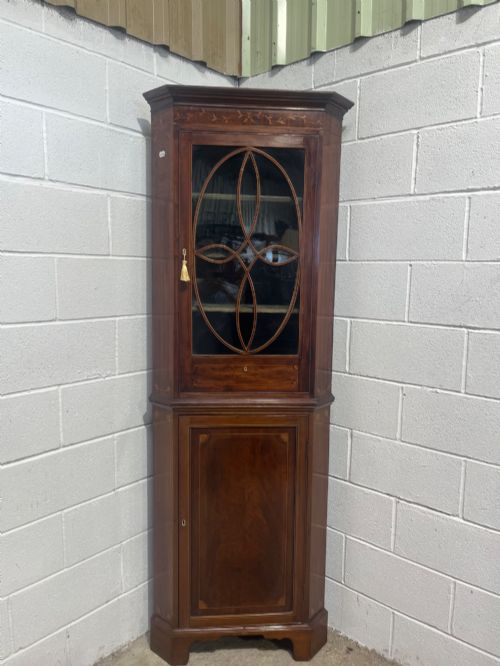
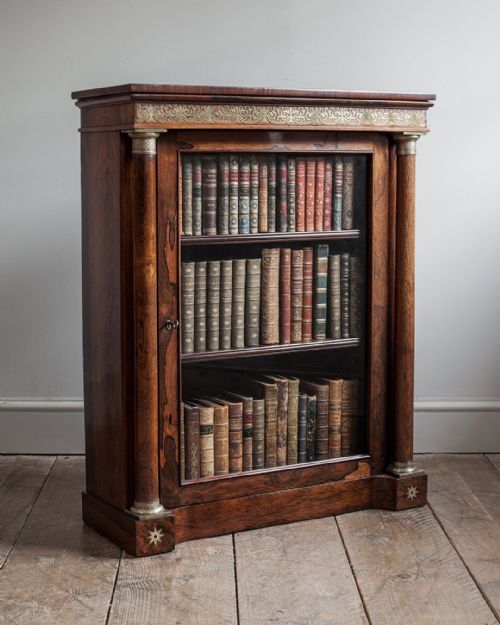
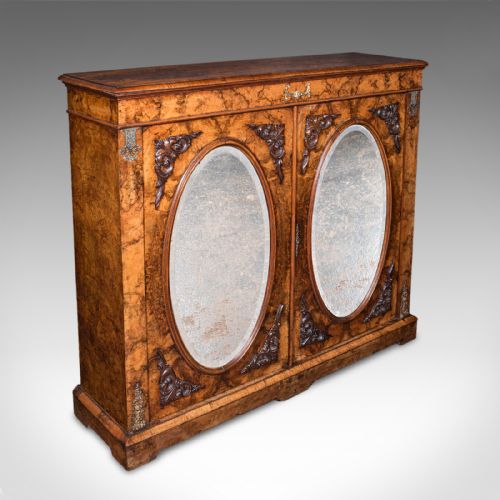
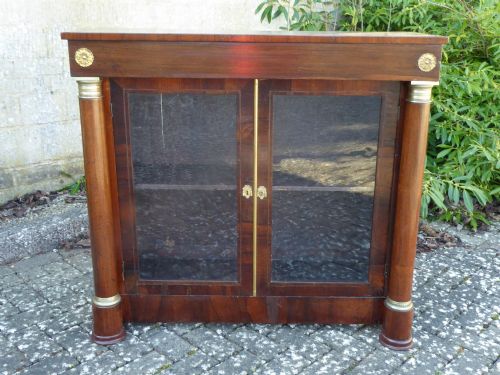
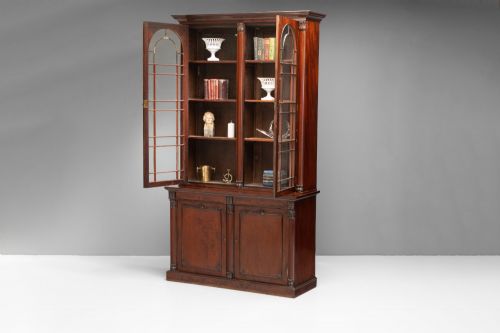
A regency glazed cupboard encompasses a variety of timber storage furniture designed with glass panels to showcase contents while protecting them from dust. These pieces span bookcases, library cabinets, corner cupboards, and pier cabinets originating primarily from the nineteenth century.
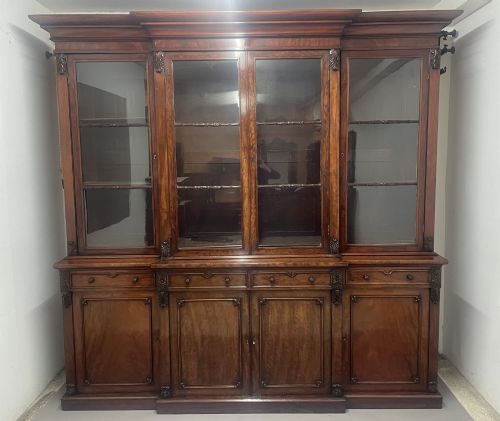
The version most commonly encountered in these listings is the mahogany bookcase or cabinet, often showing the warm figuring of flame veneers or the rich dark tones typical of the period. Alongside these stand smaller wall-hanging and floor-standing corner cupboards tailored to utilise domestic angles.
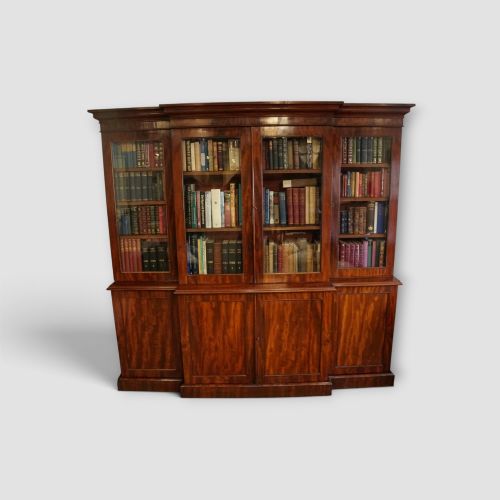
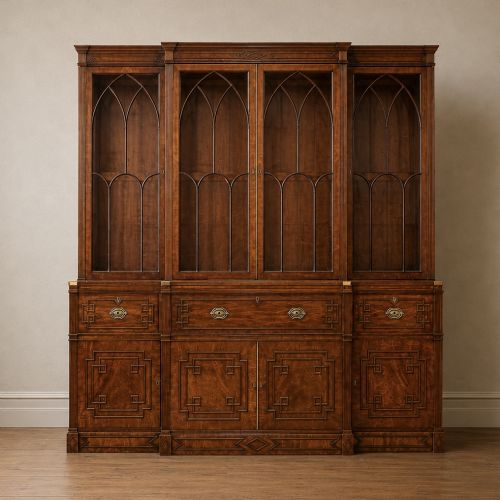
Makers of the era drew upon Georgian classical proportions while introducing lighter forms, reflected in breakfront library bookcases and compact side cabinets. Pieces frequently incorporate astragal glazing bars that divide the glass panes into geometric patterns.
Materials and Construction
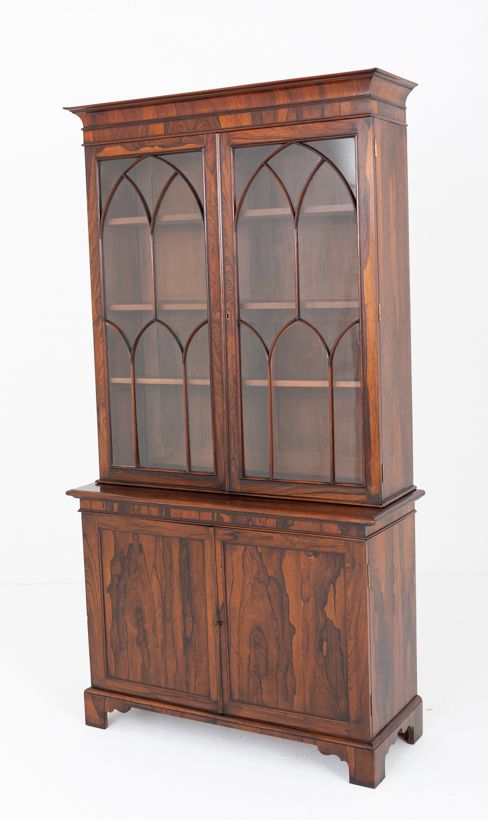
Cabinetmakers relied heavily upon solid mahogany and rosewood, occasionally incorporating walnut, satinwood, and pine for secondary framing or decorative inlay. Timber selection dictated the character of the piece, with flame mahogany and dense rosewood prized for their striking grain patterns.
Glass panes were held within slender timber doors using astragal bars, while brass mounts, handles, and occasional ormolu accents provided metallic contrast. Interior construction often included adjustable wooden shelving to accommodate books or display objects of varying heights.
Listings feature mahogany, rosewood, walnut, satinwood, and brass across nineteenth century forms.
Standards of Execution
Quality rests upon the selection of timber veneers and the precision of the joinery, particularly in the assembly of glazing bars and structural framing. Superior examples display consistent grain alignment across larger surfaces and sophisticated internal fittings such as secretaire drawers.
Proportion and scale distinguish finer workshops from standard production, with balanced breakfront facades and neat dimensions commanding greater attention. The crispness of carved details, inlay work, and original brass hardware further separates everyday utility items from superior cabinet work.
Gillows
The Regency Glazed Cupboard Glossary
- Astragal glazed
- Timber glazing bars dividing a glass door into smaller panes. These delicate wooden strips form geometric patterns across the front of the cabinet.
- Breakfront
- A piece of furniture where the central section projects forward from the flanking wings. This architectural arrangement creates depth and shadow on large library bookcases.
- Pier cabinet
- A low cabinet designed specifically to stand against the wall space between windows. They typically feature glazed doors to display porcelain or small collections.
- Secretaire
- A desk drawer that pulls out and drops down to reveal a writing surface and small pigeonholes. It integrates a writing desk into the upper section of a bookcase or cupboard.
Regency Glazed Cupboard: Frequently Asked Questions
Where should I place a corner cupboard?
A corner cupboard fits neatly into unused room angles, turning awkward junctions into practical display areas.
Smaller wall-hanging versions work well above side tables, while floor-standing models anchor empty corners in dining rooms or studies.
Can I adjust the shelves inside?
Many period bookcases and cabinets include adjustable shelving supported by wooden ratchets or brass shelf studs. This allows you to alter shelf heights for varying book sizes or display items.
Fixed shelves do appear in smaller corner cupboards and older structural carcasses.
How do I identify Regency style timber?
Regency timberwork relies heavily on dark mahogany and richly figured rosewood, often enhanced with satinwood inlay or brass stringing. Cabinets from this era emphasise clean architectural lines and balanced proportions.
Later Victorian interpretations often use heavier mouldings and denser, darker finishes.
Are these cabinets suitable for books?
Glass-fronted cabinets were originally designed to protect valuable library volumes from dust and moisture while keeping titles visible. Adjustable shelving makes them practical for housing modern collections.
Deep breakfront library bookcases accommodate large folios as well as standard volumes.