

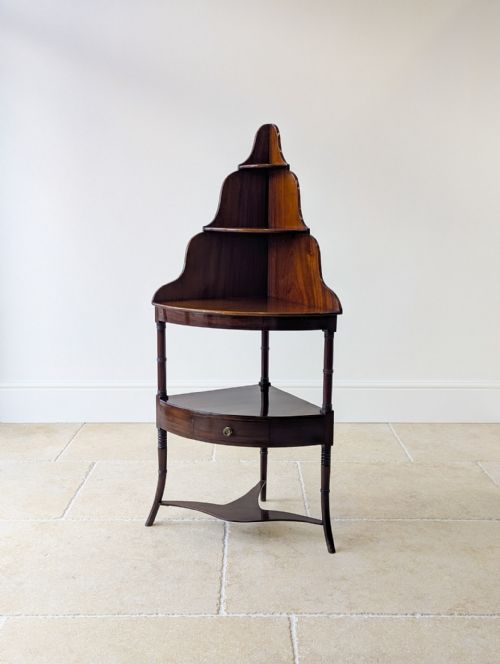


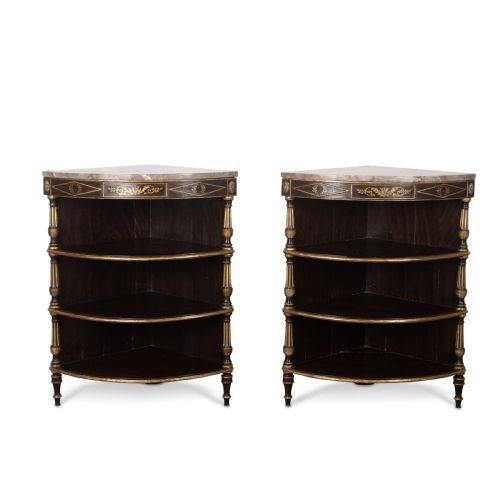


Regency Corner Cabinet
A regency corner cabinet provides clever storage while turning dead room space into a focal point through fine timber and glazing.
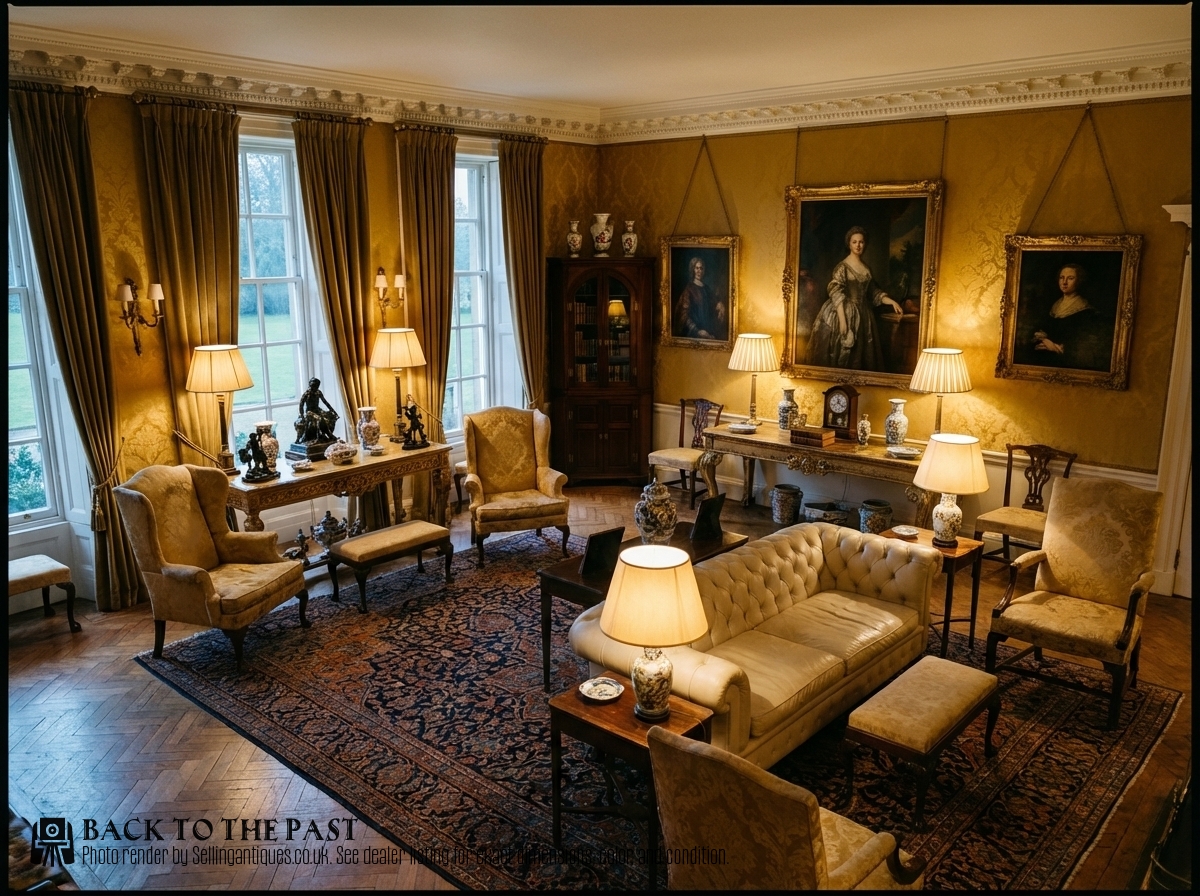
Regency Corner Cabinet
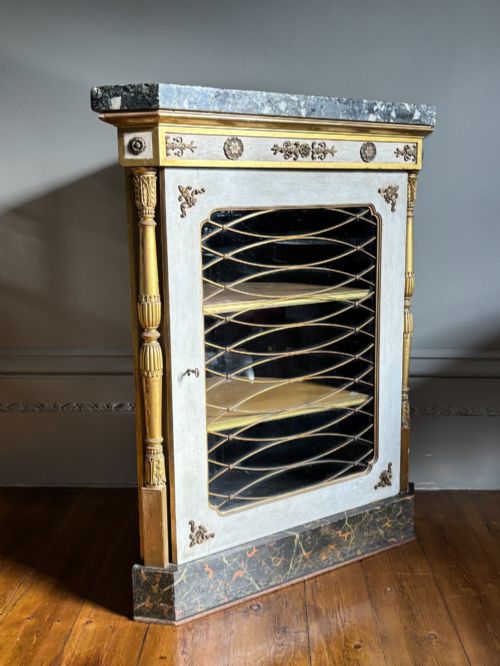
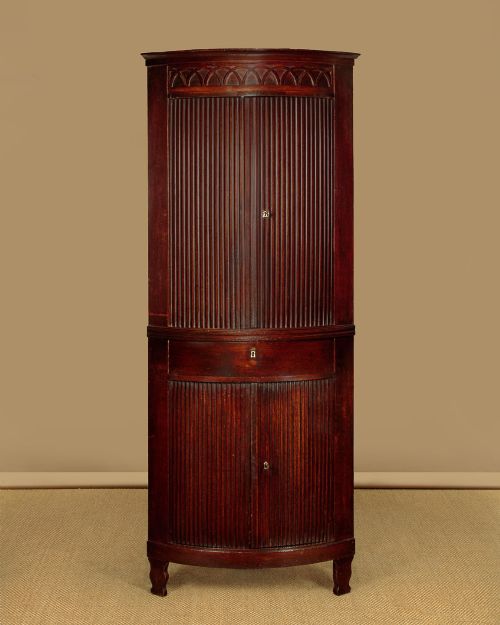
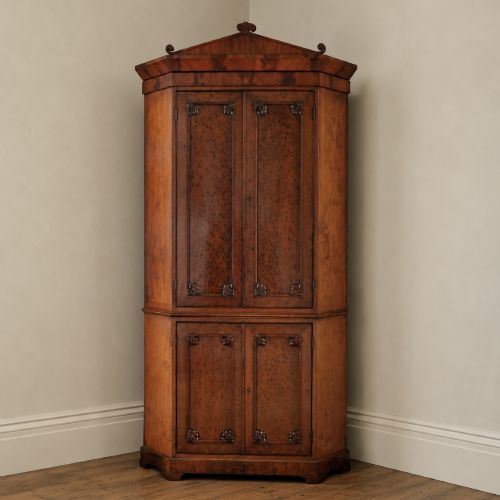
A regency corner cabinet is a fitted or freestanding piece designed to occupy the ninety-degree angle of a room. The selection spans floor-standing double height cupboards, low wall-hanging cabinets, and tiered stands.
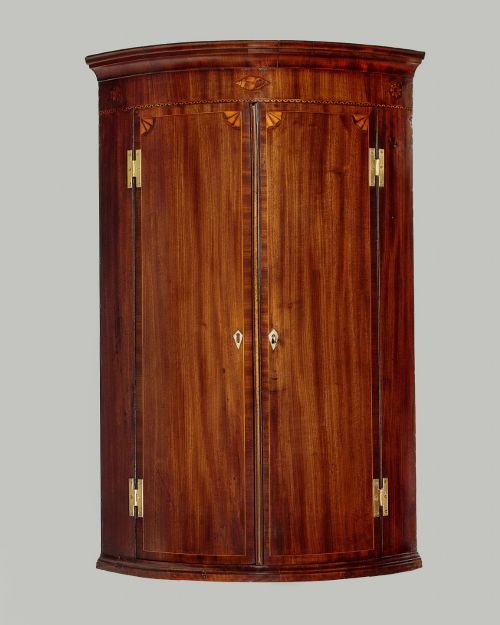
Mahogany remains the dominant wood found in these pieces, appearing alongside satinwood, plum pudding mahogany, and decorative lacquer finishes. Makers structured these cabinets with bow fronts, barrel fronts, and flat sides to fit various chamber layouts.
Origin examples include Scottish hanging glazed units, Italian provincial pieces, and country house storage items. Many incorporate glass doors with astragal bars to display porcelain or glassware stored within.
Materials and Construction
Cabinet makers utilised solid timber and veneers, selecting mahogany, rosewood, and satinwood for their grain patterns and stability. Brass fittings, including key escutcheons, hinges, and inlay lines, appear across numerous examples.
Glazing techniques involve individual glass panes held in place by wooden astragal bars, forming geometric patterns on upper doors. Inlay work incorporates lighter contrasting woods to frame door panels and cornices.
Regency Corner Cabinet Retail Price Guide 2026
Typical asking prices for regency corner cabinet among the pieces listed under this phrase on Sellingantiques today, from the lower quarter to the upper quarter. They describe what is for sale here now, not the wider market.
A medicine cabinet variation included internal compartments sized specifically for apothecary bottles.
Design and Material Depth
The choice of timber creates distinct grades of finish, moving from standard mahogany boards to figured flame mahogany and exotic timbers like goncalo alves and king-wood. Grain selection on curved bow fronts dictates the visual impact of the facade.
Detailing ranges from plain panelled doors to intricate brass inlay, hand-painted Chinoiserie decoration, and panelled marble tops. The crispness of the astragal glazing bars and the proportion of the cornice define the maker's hand.
The Regency Corner Cabinet Glossary
- Astragal
- Wooden glazing bars that divide a glass door into smaller panes. They form delicate geometric lattices on cabinet doors.
- Bow Front
- A convex curved cabinet front that projects outwards. This shape softens room angles and showcases figured wood grain.
- Full Height
- A tall floor-standing cabinet that reaches from baseboard towards the ceiling. These pieces often feature double-stacked cupboard doors.
- Barrel Front
- A strongly curved cabinet facade shaped like a section of a barrel. It offers a smooth, continuous sweep across the corner.
Regency Corner Cabinet: Frequently Asked Questions
How do I place a corner cabinet in a modern room?
These cabinets fit directly into unused ninety-degree wall angles, making them practical for smaller spaces where floor area matters.
They function well in dining rooms for dinnerware storage or in living spaces to display collections behind glass doors.
What is the difference between a wall hanging and floor standing model?
Wall-hanging cabinets secure directly to wall studs at eye level, freeing up the floor space beneath them for other furniture.
Floor-standing versions rest on the ground, offering greater internal storage capacity and often a two-part stacked construction.
How do I identify the wood used on my cabinet?
Inspect the grain pattern and colour under natural light to distinguish standard mahogany from figured varieties like flame or plum pudding.
Contrasting string lines and lighter borders usually indicate the presence of satinwood or inlaid boxwood.
What items were historically stored in these cupboards?
Upper glazed sections traditionally held valuable porcelain, glassware, and books protected behind locked doors.
Lower enclosed cupboards stored household linens, bottles, or specialised items such as medical supplies.