
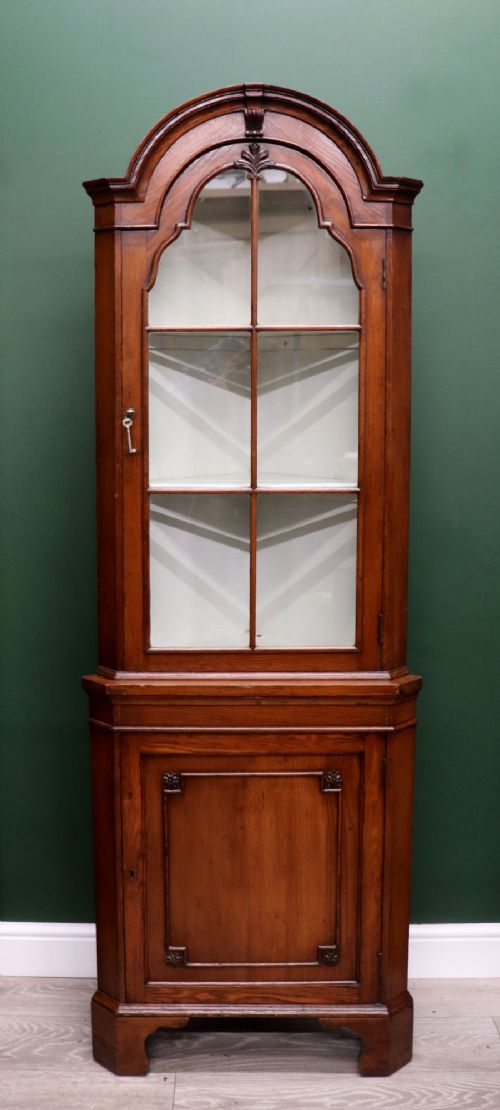


Brown Wooden Corner Display
Brown wooden corner display pieces organise awkward room angles cleanly, putting shelved display to work in timber forms from the Georgian period to the twentieth century.
Brown Wooden Corner Display
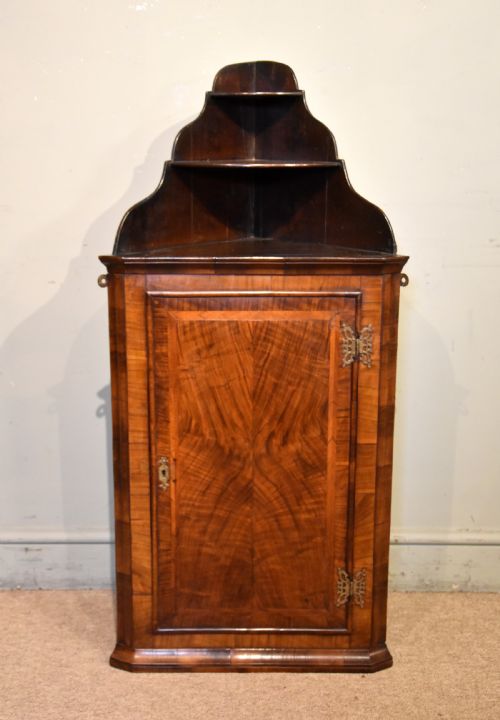
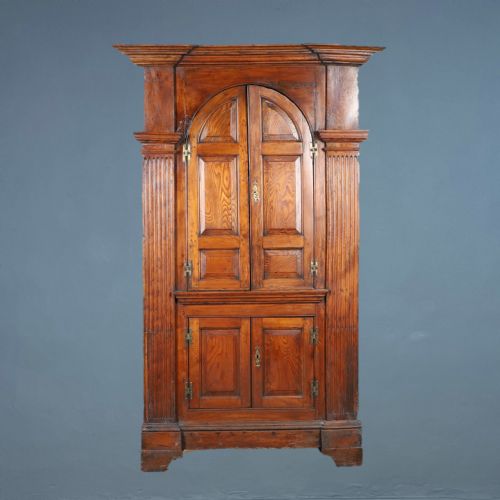
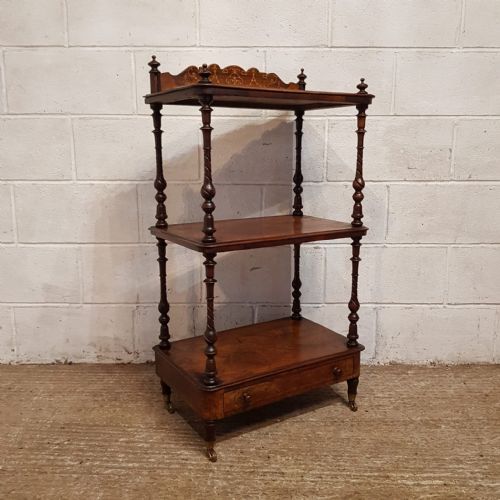
A brown wooden corner display piece turns unused room angles into storage and display, most commonly taking the form of hanging or standing corner cupboards and multi-tiered whatnots. The pieces found here span centuries of British and continental design, utilising the natural warmth of timber to fit neatly into domestic interiors.
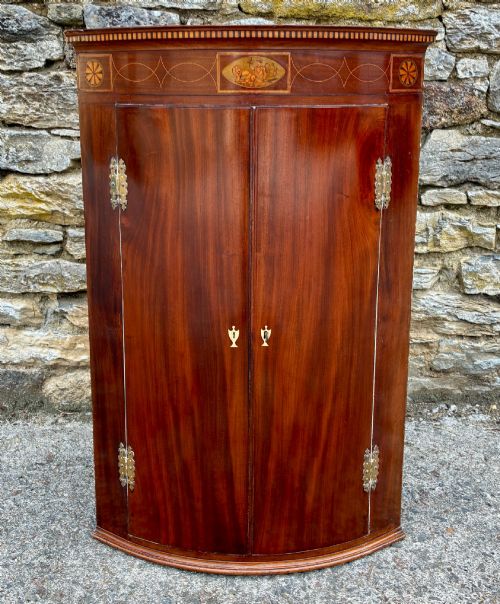
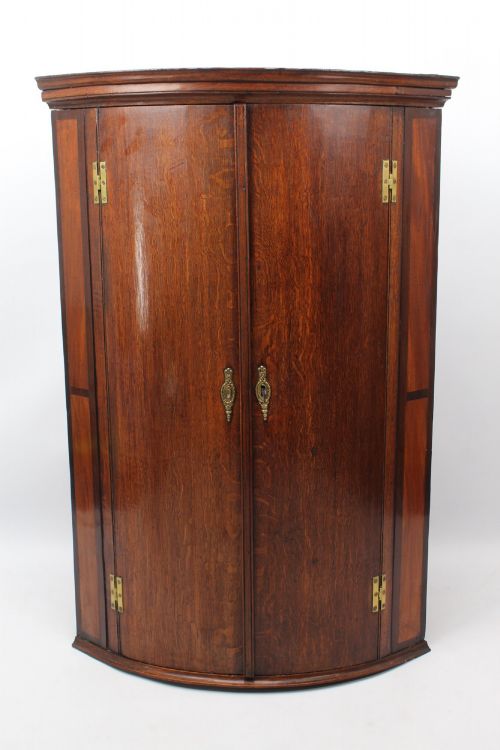
Georgian and Victorian examples dominate the selection, offering substantial oak, mahogany, and walnut builds designed to anchor room junctions. Buyers will encounter floor-standing cabinets alongside wall-hung bow front models and open shelving units meant for practical organisation.
Origins range from local country workshops to more formal urban cabinets, reflecting the changing domestic requirements for displaying ceramics, books, and household collections. Each version uses the geometry of the right angle to maximise floor space without crowding the room.
Assessing quality in timber corner furniture
Quality rests in the selection of timber veneers and the crispness of internal joinery, where finely figured mahogany or burr walnut indicates a piece intended for formal reception rooms. Lesser examples rely on plain domestic oak or beech with simpler regional construction suited to country houses.
The precision of the door fit, the retention of original brass hinges and locks, and the subtlety of inlaid stringing or marquetry separate standard utility cupboards from master cabinet work. Proportions also matter, as well-balanced cornices and clean bow fronts reveal the maker's eye for architectural symmetry.
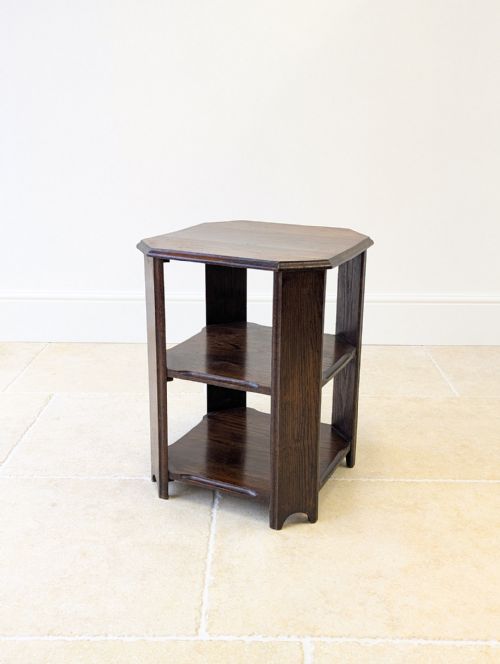
Formations range from wall-hanging bow front cupboards and architectural standing cabinets to multi-tiered whatnots, plant stands, and corner washstands.
Liberty & Co.
The Brown Wooden Corner Display Glossary
- Bow front
- A convex curved cabinet front that projects outward from the corner walls. This profile softens the hard angles of a room.
- Etagere
- A set of open shelves for displaying small objects. These tiered units stand freely or fit into corners to hold collections.
- Whatnot
- A movable stand with multiple tiers used for ornaments and books. Victorian and Georgian versions range from simple plant stands to elaborate corner units.
- Plum pudding mahogany
- A highly figured tropical hardwood showing dark circular markings resembling Christmas pudding. Cabinet makers reserved this timber for elite furniture fronts.
- Marquetry
- Decorative patterns formed by fitting contrasting veneer pieces into a wood background. This technique adds floral or geometric detail to cabinet doors.
Brown Wooden Corner Display: Frequently Asked Questions
What is a corner cupboard used for?
These cabinets housed valuable tableware, glassware, and household provisions while keeping them free from dust behind closed doors. Their wedge-shaped interiors made efficient use of wasted wall junctions in dining and drawing rooms.
Over time, owners transitioned from storing utilitarian items to exhibiting decorative ceramics and collectibles. Their enclosed shelving protected fragile pieces while adding architectural interest to empty corners.
How do I tell a hanging cabinet from a standing one?
Hanging versions feature sturdy mounting brackets or robust backboards designed to be secured directly to wall studs at eye level or above furniture. They leave the floor clear beneath them.
Standing models rest on plinths, bracket feet, or legs, carrying their weight down to the floor as a complete architectural unit. These floor-standing cabinets often provide much larger internal volumes and deeper shelf space.
Are these cabinets difficult to place in modern rooms?
The geometry of a corner cabinet makes it uniquely suited to awkward or tight angles where standard rectangular furniture will not fit. They draw the eye upward and anchor dead space effectively.
Careful measurement of the wall depth and door swing ensures the cabinet clears adjacent skirting boards and picture rails. Wall-hung versions allow you to adjust the height to match existing seating or side tables.
What distinguishes a whatnot from a corner cupboard?
A whatnot consists entirely of open shelves supported by upright pillars, designed strictly for the display of ornaments rather than concealed storage. They offer immediate visual access from all angles.
Corner cupboards rely on solid sides and lockable doors to enclose the contents, providing security and dust protection. Many examples combine these functions by placing glazed display doors above solid base cupboards.