
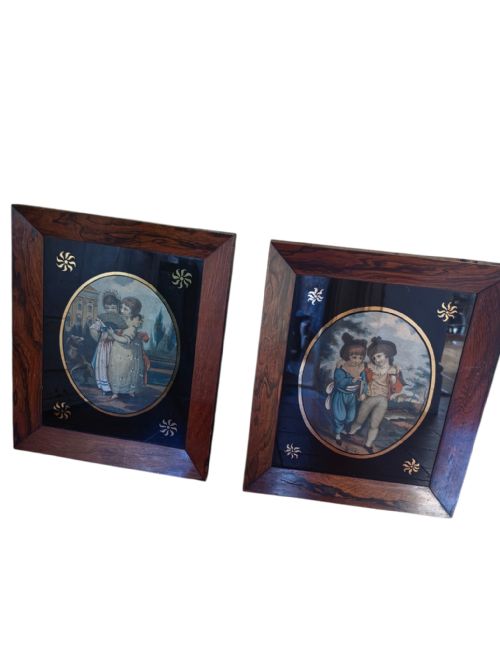


Regency Glass Print
These regency glass print pieces are delicate reverse-painted and engraved works housed in period timber frames, prized for their rich historic character and luminous surfaces.
Regency Glass Print
A regency glass print brings together reverse glass engravings, paintings, and chrystoleum works that capture early nineteenth-century portraiture, naval engagements, and allegorical subjects. These items are frequently encountered as individual framed wall art pieces or paired sets.
The objects span Georgian, Regency, and nineteenth-century periods, with subjects ranging from historical battles and royal figures like Queen Caroline to allegorical representations of the seasons. Buyers will find both single works and grouped sets mounted behind glass.
Most examples rely on specialised reverse application techniques where the imagery is applied directly to the glass plate before framing. This category includes mirror combinations and multi-section formats that pair decorative glass work with functional framing.
Materials and Construction
Makers utilised clear glass panels as the primary surface for applying fine oil paint, pigment, and reverse engravings. The delicate imagery was worked in reverse directly onto the glass before being sealed to protect the medium.
Frames play a structural and aesthetic role, constructed predominantly from richly grained rosewood or maple timbers. Gilt accents frequently highlight the interior edges of these timber mouldings to complement the imagery.
Early makers occasionally combined mirrors with naval battles, allowing homeowners to check their appearance while contemplating the Battle of Waterloo.
Assessing Quality and Execution
Quality rests upon the crispness of the reverse engraving and the preservation of the underlying pigment or oil paint. Finer examples display meticulous detail in facial expressions and historical uniforms without flaking or pigment loss.
The housing timber contributes significantly to the overall merit, with well-figured rosewood or maple frames adding structural integrity and period authenticity. The survival of original glass panels without modern replacement further distinguishes superior examples.
The Regency Glass Print Glossary
- Reverse Glass Print
- An image applied or engraved directly onto the reverse side of a glass sheet to be viewed from the front. This technique protects the delicate medium from atmospheric dust and surface damage.
- Chrystoleum
- A Victorian method of applying hand-colouring to a photograph or print mounted on glass. The paper backing was often rendered translucent with oil before additional pigment was applied.
- Maple Frame
- A timber moulding made from maple wood, noted for its distinct grain pattern. It provides a pale, durable border frequently utilised in nineteenth-century wall art.
- Rosewood Frame
- A dense, dark timber housing chosen for its prominent figuring and luxurious finish. It frames many Regency and nineteenth-century works.
Regency Glass Print: Frequently Asked Questions
What is a reverse glass print?
A reverse glass print is an artwork where the design is painted or engraved onto the back of a glass sheet and viewed through the front. This method creates a glossy, luminous surface finish unique to the period.
The technique requires the artist to work backwards, laying down fine details and highlights first before applying background colours and protective layers.
How do I hang these wall pieces?
These items require secure wall fixings suited to the weight of the timber frame and glass panel. Professional picture hangers ensure the structural security of rosewood and maple surrounds.
Keep the pieces away from direct sunlight and damp environments to protect the delicate pigments and paper elements sealed behind the glass.
How are Georgian pieces dated?
Dating relies upon the framing materials, the nature of the glass, and the specific historical subject matter depicted. Naval engagements, royal portraits, and allegorical figures often correspond to documented historical events.
Construction details within the timber frames and the chemical composition of the glass provide further clues to the manufacturing period.