





Reverse Painted Portrait
These reverse painted portrait pieces bring historical likenesses to life through delicate glass panels.
Reverse Painted Portrait
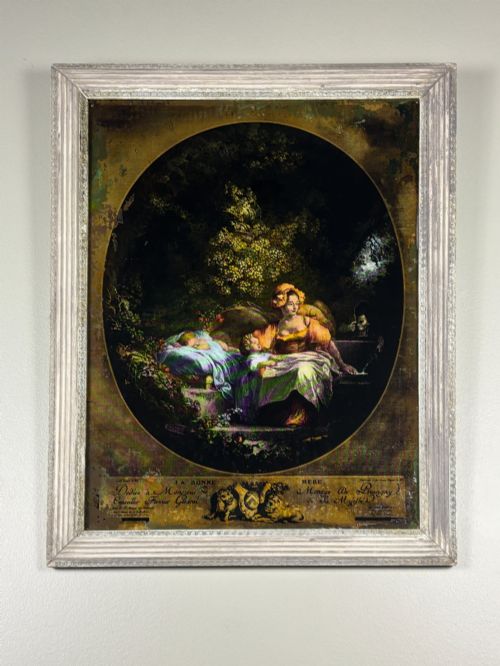
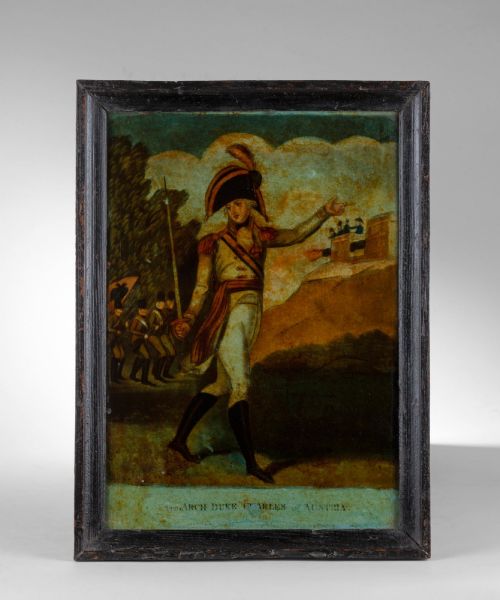
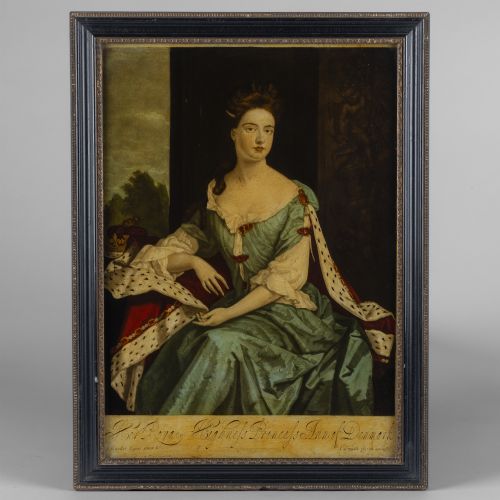
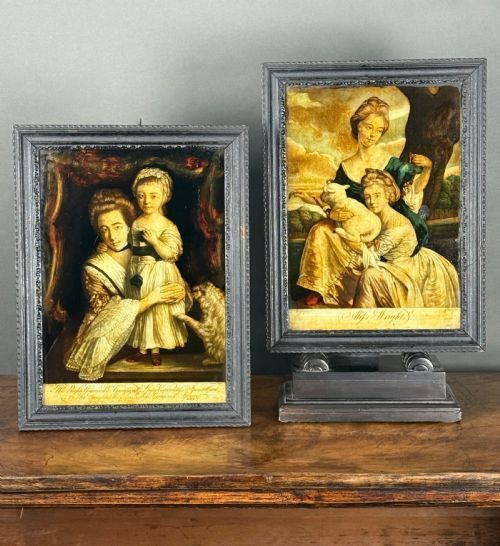
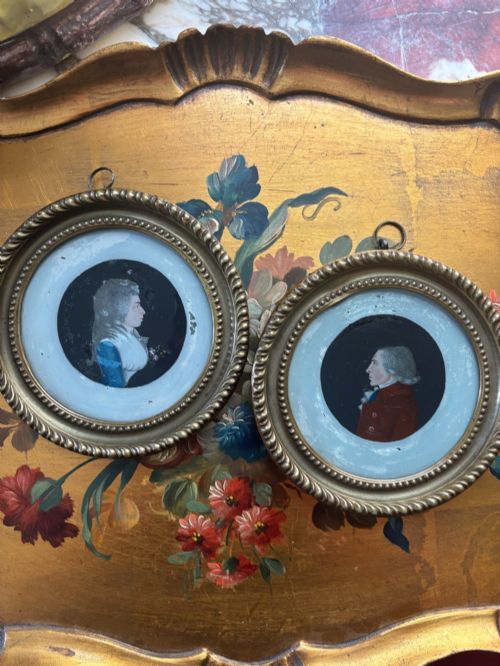
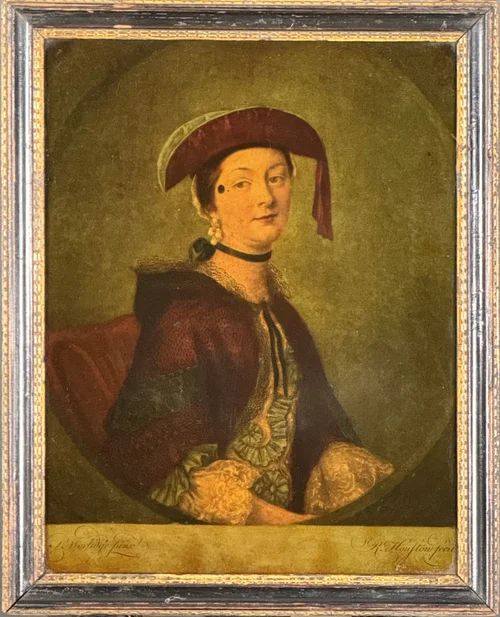
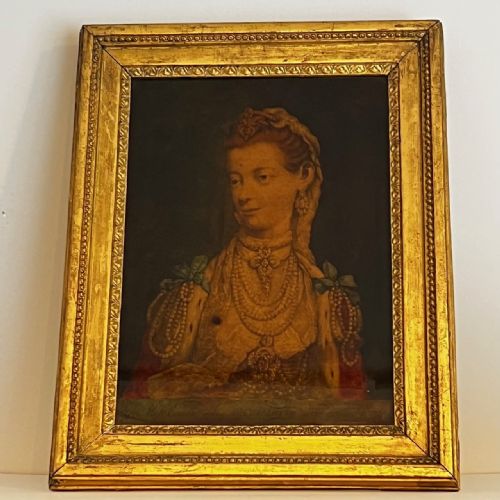
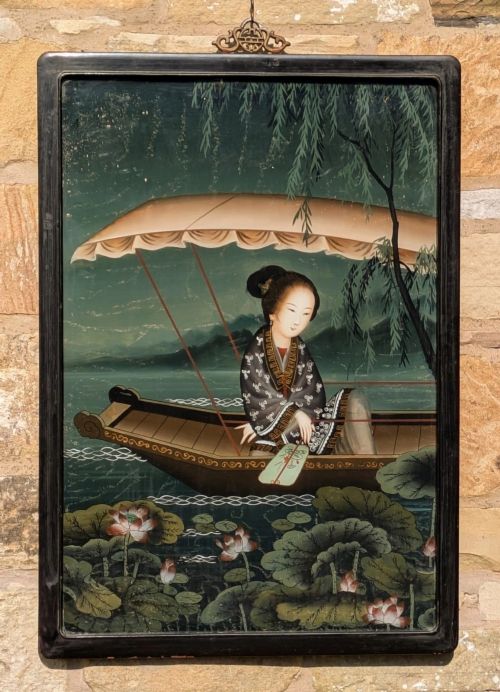
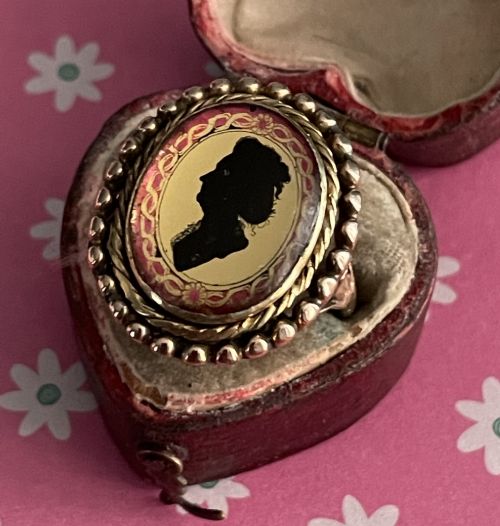
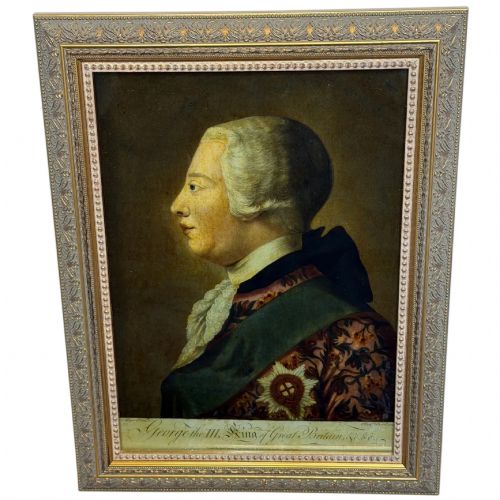
A reverse painted portrait is an artwork created directly on the rear surface of a glass panel so that the image is viewed through the front. The selection includes Georgian silhouette miniatures, 18th-century mezzotints, and Chinese export pieces depicting figures from history and literature.
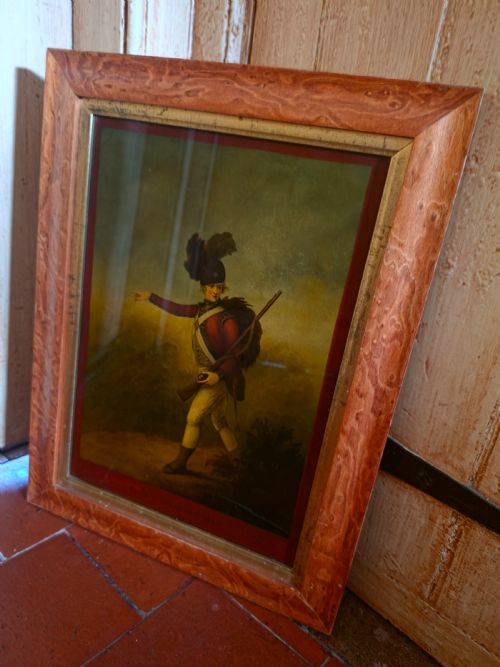
The format spans diverse origins, ranging from British Regency silhouettes to 17th-century portraits and 1920s Japanese glass paintings. Buyers encounter wall art, framed prints, and small oval portrait miniatures set in wood frames.
Makers and artists utilised varied techniques to render likenesses of monarchs, aristocrats, and literary figures. These works bridge printmaking and painting, requiring viewers to look through the clear medium to observe the pigment.
How they were made
Artisans framed these fragile compositions in materials such as pear wood, brass, and timber to protect the delicate rear paint layer. The combination of glass, paper, and pigment creates a luminous depth unique to this method.
Reverse Painted Portrait Retail Price Guide 2026
Typical asking prices for reverse painted portrait among the pieces listed under this phrase on Sellingantiques today, from the lower quarter to the upper quarter. They describe what is for sale here now, not the wider market.
Listings span multiple centuries, incorporating Georgian silhouettes, 18th-century mezzotints, and 20th-century Japanese glass paintings.
What varies in quality
The fineness of the brushwork and the precision of the transferred lines determine the visual impact of the portrait. Pieces featuring detailed gold leaf accents and carefully preserved pigment layers demonstrate superior craftsmanship.
The condition of the glass and the original framing contribute significantly to the integrity of the piece. Works that retain their historical inscriptions or original wood frames command greater interest from collectors.
Charles Spooner·Richard Purcell·William Denune·Frank Owen Salisbury·Takabatake Kasho
The Reverse Painted Portrait Glossary
- Verre eglomise
- A cold decoration technique where artists apply gold or silver leaf along with painting on the rear face of glass. This method produces a reflective, mirror-like finish surrounding the central portrait.
- Mezzotint
- A printmaking process of the intaglio family where the plate is roughened to achieve tones and shades. In these listings, mezzotints are transferred and painted behind glass.
- Silhouette
- A solid shape of a person's profile, typically filled in with a dark colour. Miniature silhouettes on glass often feature delicate painted details for costume and hair.
- Chrystoleum
- A method of applying hand-colouring to a photograph or print mounted on glass. This late technique added vibrant tones to historical portraits.
Reverse Painted Portrait: Frequently Asked Questions
Where were these portraits displayed historically?
Miniature silhouettes and small glass panels typically hung in private parlours or sat on writing desks. Larger mezzotints adorned the walls of Georgian and Regency drawing rooms.
Their reflective glass surfaces interacted well with candlelight, adding warmth and depth to period interiors.
How can I tell the period of a glass portrait?
Dating relies on the style of dress, hair, and framing materials. Georgian and Regency pieces often feature oval pear wood frames and hand-written inscriptions on the reverse.
Later Victorian and 20th-century examples utilise different mounting techniques and distinct printing methods visible through the glass.
Why is the paint applied to the back?
Painting in reverse creates a smooth, glossy finish on the front that protects the pigments from dust and fading. This technique gives the portrait a luminous quality as light passes through the glass.
Artists had to paint the finest details first, such as eyes and facial highlights, before applying background layers.