
Regency Gilt Porcelain
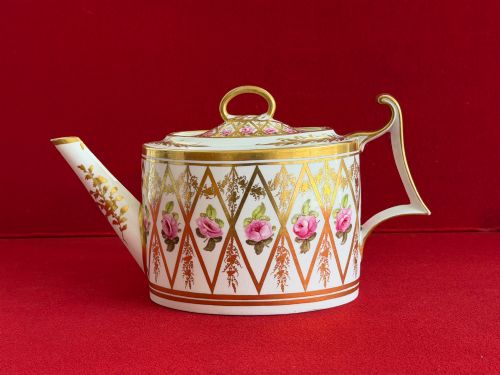
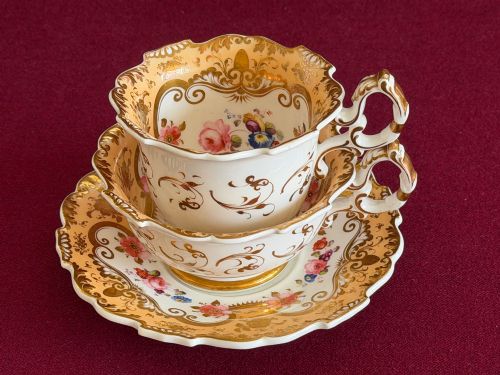
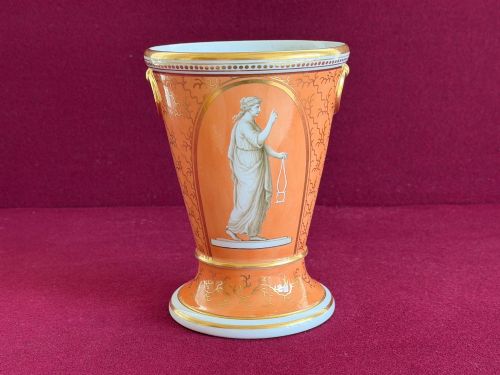
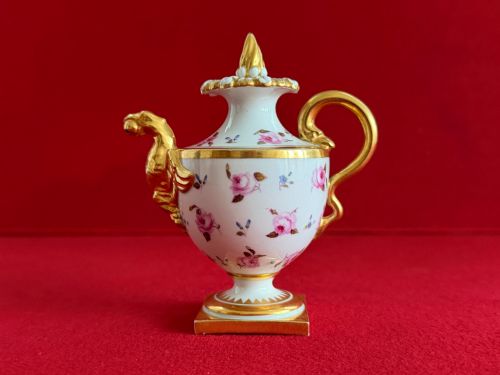
Regency gilt porcelain brings together bright glazes, metallic gold leaf, and classical forms from the opening decades of the nineteenth century.
Regency Gilt Porcelain
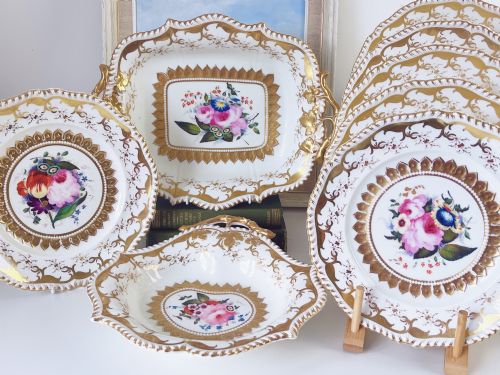
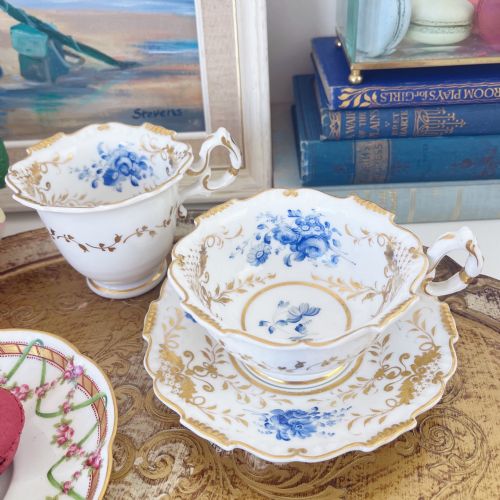
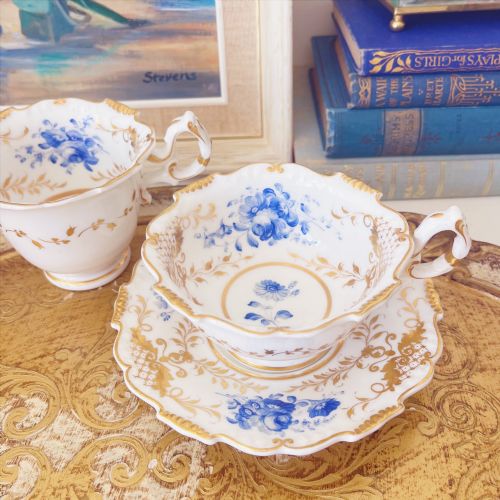
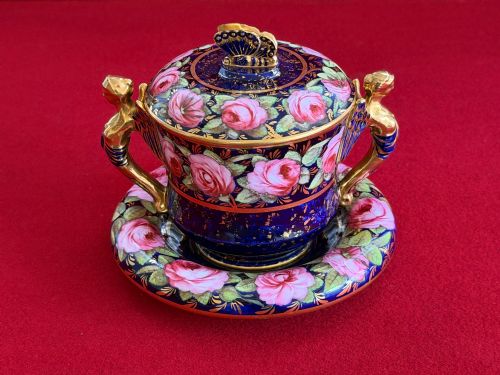
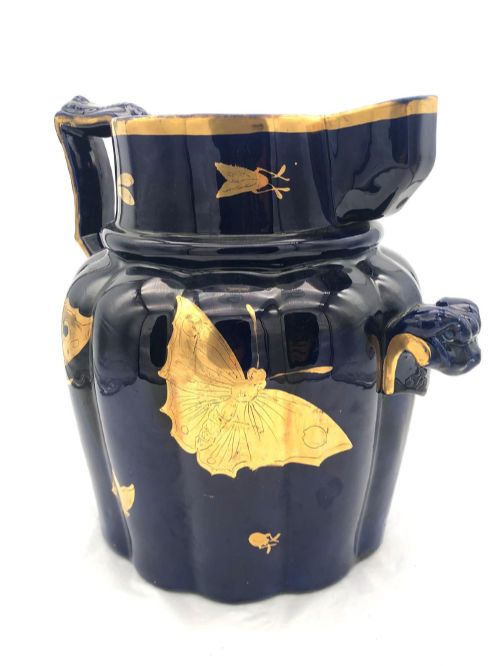
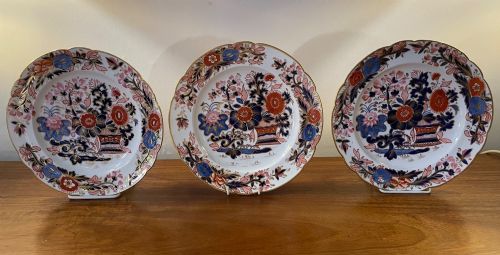
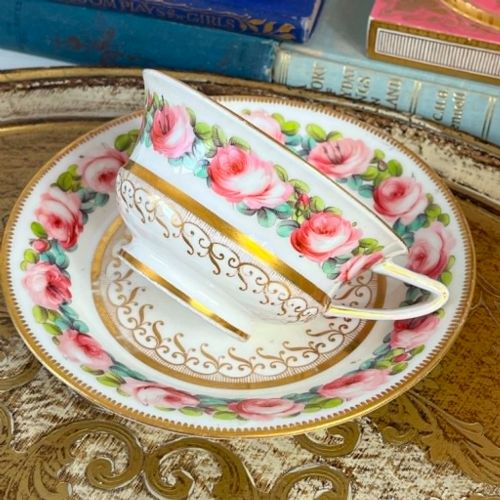
When searching for regency gilt porcelain, collectors look at ornamental and domestic vessels produced during the Georgian and Regency periods. Teacups, saucers, cabinet plates, and twin-handled vases dominate the forms available in these styles. Most examples date from the early nineteenth century, spanning manufacturers across England and continental Europe.
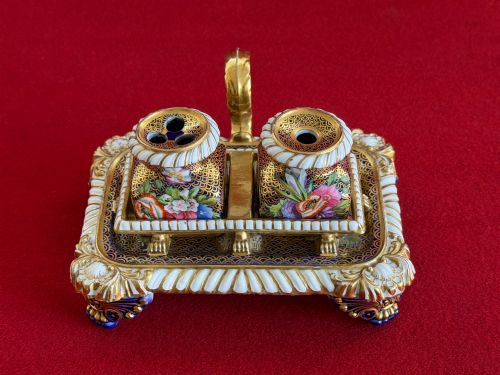
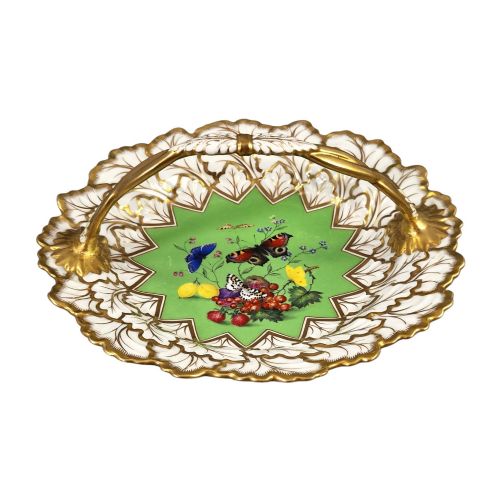
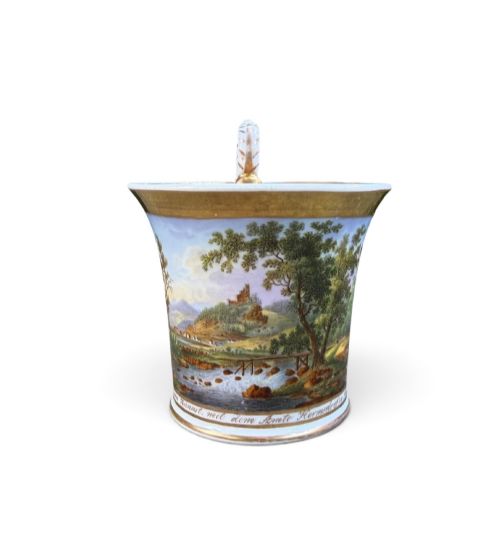
The objects combine functional utility with neoclassical ornamentation, often featuring handpainted flowers, landscapes, and topographical scenes. Pieces range from modest teaboeufs to large urns, jardinieres, and footbaths. Many items bear specific factory patterns or painter marks characteristic of the era.
Materials and manufacture
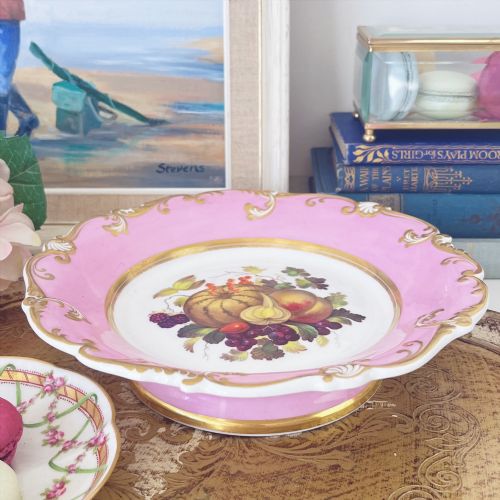
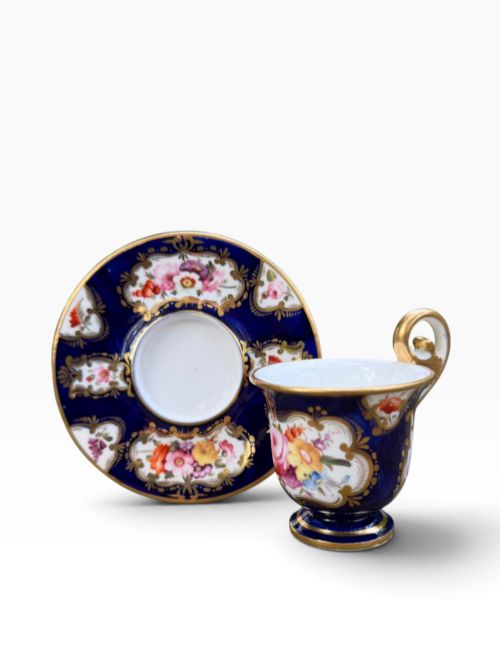
Potters utilised hard-paste porcelain, bone china, and ironstone as the foundation for these vessels, applying coloured enamel grounds in pink, blue, and white. Artisans then added details using gold leaf and heavier gilding to highlight handles, rims, and borders. Kiln firing fixed both the underglaze colours and the raised metallic layers onto the ceramic body.
Painting was executed by hand, employing fine brushes for botanical subjects, sepia putti, and orientalist motifs such as Chinoiserie. Manufacturers varied their paste recipes, producing heavier stone china bodies alongside translucent porcelain bodies suited to cabinet cups.
Current listings feature porcelain and ironstone forms spanning 1800 to 1910, including teacups, vases, inkstands, and jardinières.
Differentiating quality in the range
Quality separates through the precision of the handpainting and the execution of the gilding itself. Finer pieces display crisp, detailed botanical studies or topographical miniatures rather than repetitive transfer-printed outlines.
The weight and finish of the porcelain body also distinguish standard domestic wares from exhibition-grade cabinet pieces. Superior gilding remains thick and burnished, whereas lower-tier examples show thinning or rubbing across high-contact zones.
Flight Barr and Barr·H and R Daniel·Chamberlain Worcester·Grainger Lee and Co·John Davenport
The Regency Gilt Porcelain Glossary
- Bone china
- A type of porcelain incorporating bone ash, developed to provide a whiter and stronger ceramic body. It became widely utilised by English factories during the early nineteenth century.
- Coffee can
- A cylindrical cup without a handle, designed for drinking strong coffee during the breakfast service. These often accompany matching saucers in nineteenth-century trios.
- Comport
- A decorative footed dish or tazza used for serving fruit or sweets as part of a dessert service. They sit on a raised pedestal base.
- Felspar porcelain
- An innovative ceramic body introduced by Spode utilising feldspathic rock, producing an exceptionally durable and translucent material. It was patented in the early nineteenth century.
- Sucrier
- A small covered sugar bowl designed to match tea and coffee services. They frequently feature twin side handles and matching domed lids.
Regency Gilt Porcelain: Frequently Asked Questions
What is a porcelain trio?
A trio consists of a matching teacup, coffee cup, and saucer produced as a single set. They were utilised in formal tea and coffee services during the Georgian and Regency periods.
Collectors prize matched trios for their unified pattern work and complete factory markings.
Were these items meant for daily use?
Many vessels were designed for dining rooms and drawing rooms, ranging from functional teacups to purely decorative cabinet plates. Wealthy households utilised them during formal tea services and dessert courses.
Fine cabinet pieces were displayed on shelves rather than handled regularly.
What defines neoclassical style on porcelain?
Neoclassical pieces draw inspiration from ancient Greek and Roman art, featuring symmetrical forms and restrained motifs. Urns, vases, and inkstands often incorporate gilt borders and classical foliage.
This aesthetic dominated English porcelain production alongside Chinoiserie themes.