
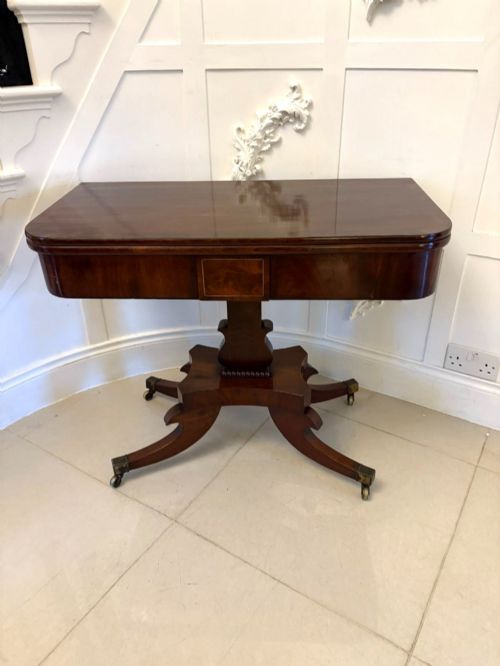
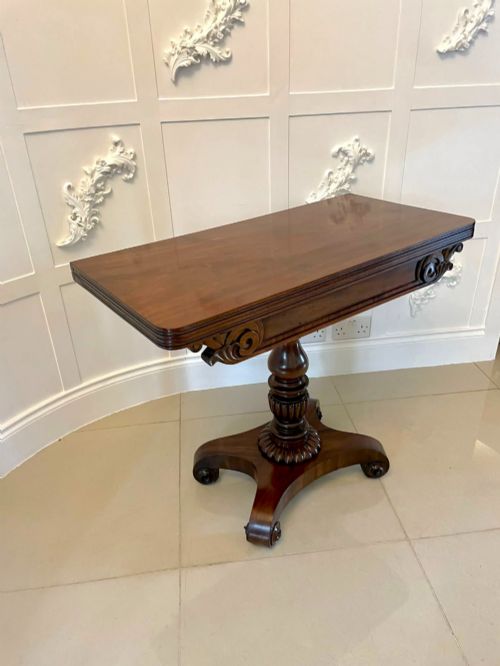
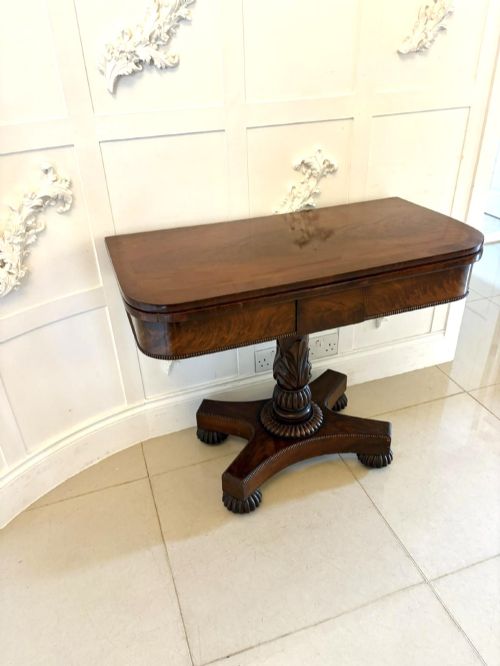
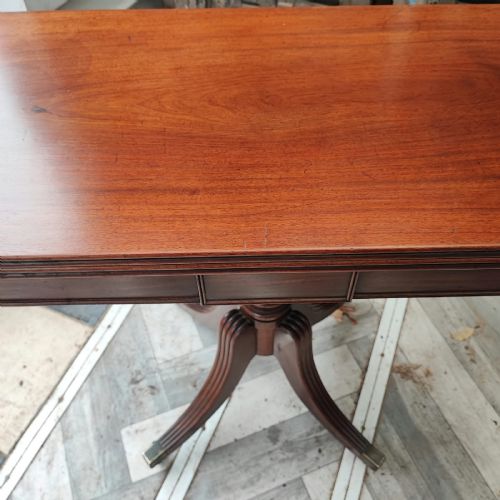
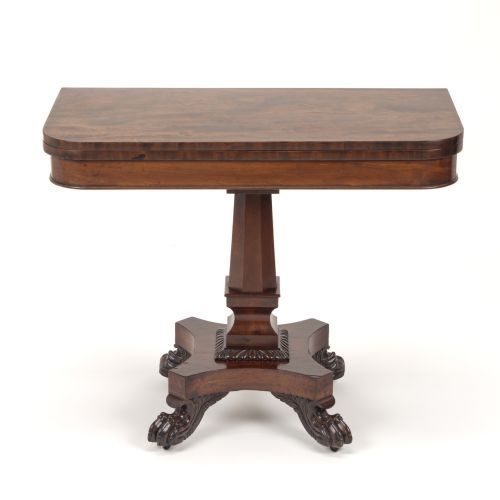


Regency Flip Top Table
A regency flip top table offers dual purpose function through a folding surface that transforms a console into a tea, card, or dining table.

Regency Flip Top Table
When you search for a regency flip top table, you encounter versatile furniture designed to sit against a wall before opening for evening use. The pieces on this page span the Regency, Georgian, and Victorian periods, with William IV and George III or George IV influences frequently appearing.
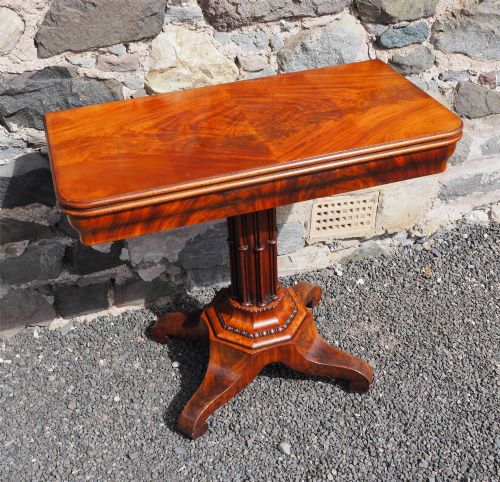
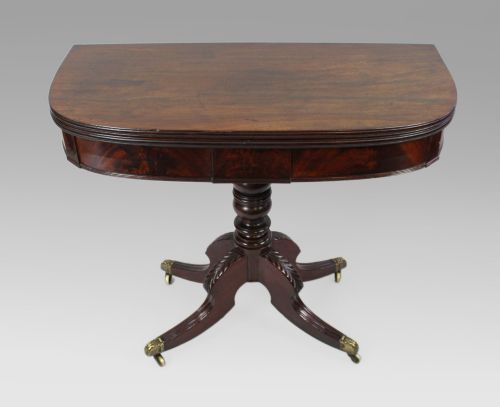
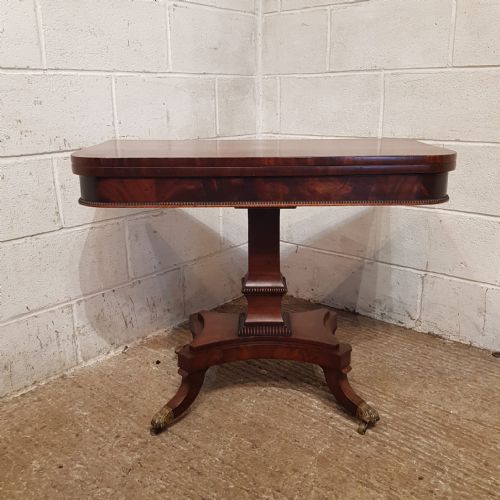
The primary forms you meet include tea tables, card tables, and side or console tables with folding leaves. Many examples take a D shape or utilise a turnover mechanism supported on pillars, pedestals, or swept legs.
Makers and origins occasionally point towards specific workshops, such as Scottish pieces by William Trotter of Edinburgh or pieces attributed to George Bullock. Most examples, however, remain unsigned works from the early nineteenth century showing distinct regional cabinet-making traits.
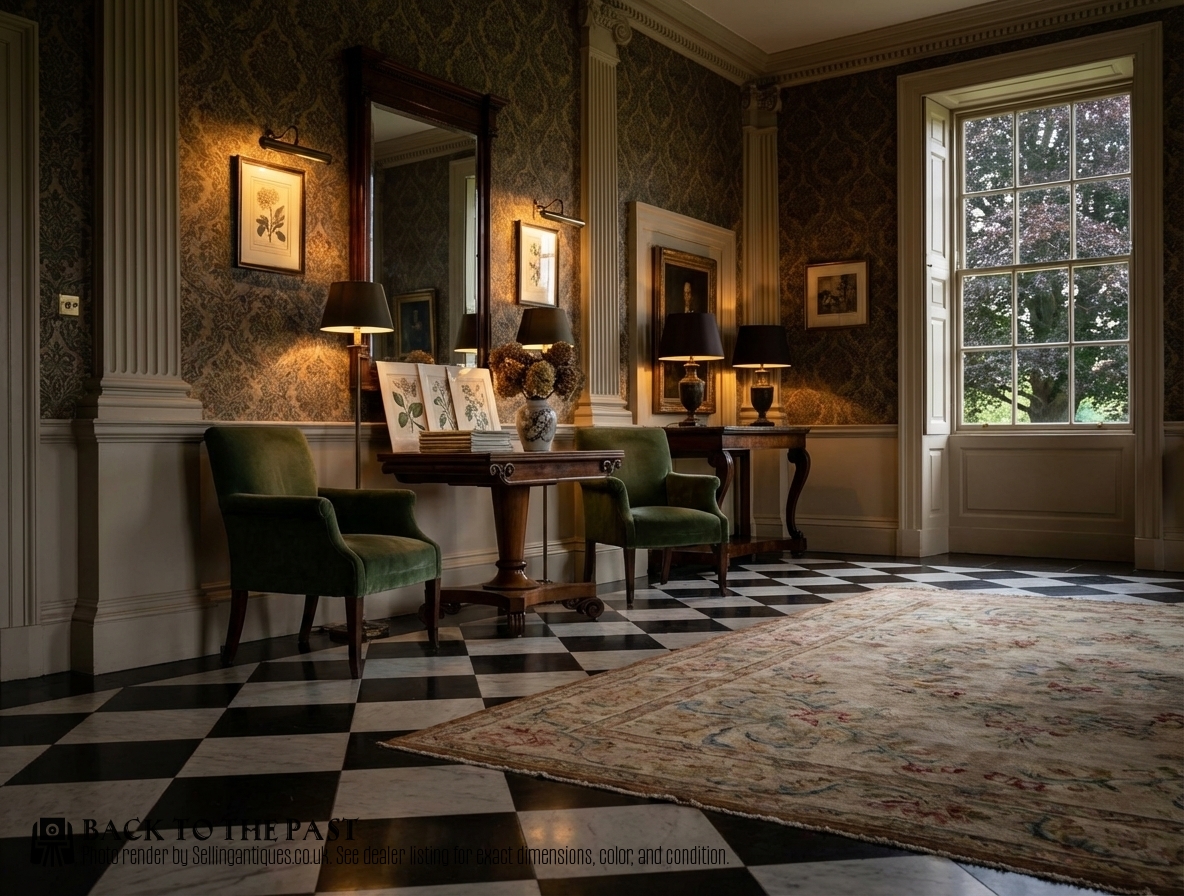
How they were made
Cabinet makers constructed these tables using solid timbers and carefully selected veneers over secondary woods. Mahogany and figured mahogany dominate the listings, alongside rich rosewood and contrasting satinwood.
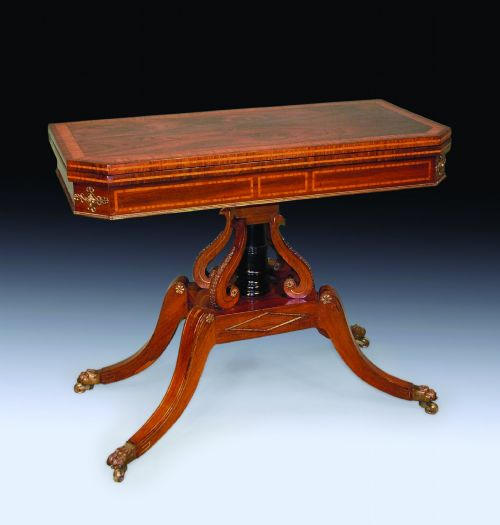
Surface decoration relies on skilled joinery and inlay rather than heavy carving, incorporating boxwood, ebony, and intricate wood inlay. Gilded brass mounts and carved paw feet or scroll pedestal bases provide structural support and decorative contrast.
Regency Flip Top Table Retail Price Guide 2026
Typical asking prices for regency flip top table among the pieces listed under this phrase on Sellingantiques today, from the lower quarter to the upper quarter. They describe what is for sale here now, not the wider market.
Some tables hide shallow wells beneath their folding tops once meant for storing stray card packs and ivory counters.
What varies in quality
The choice of timber sets the baseline for quality, moving from plain secondary boards to highly figured flame mahogany veneer and dense rosewood. Grain selection across the folding top dictates how successfully the matched panels align when open.
Construction rigour in the hinges, pivots, and pedestal joints determines whether the leaf remains stable in use. Superior examples integrate crisp carved detailing, brass mounts, and precise inlay without relying on excessive restoration.
William Trotter·George Bullock
The Regency Flip Top Table Glossary
- Flip top table
- A table with a hinged top that folds over to double its surface area when opened.
- Card table
- A specialist table designed for evening gaming, often featuring a baize-lined interior surface.
- Flame mahogany veneer
- A sliced timber finish displaying a distinctive flickering flame pattern derived from specific branch junctions.
- Scroll pedestal
- A curved central column support typical of late Regency and William IV furniture designs.
- Palisander
- A dense exotic hardwood resembling rosewood, utilised for dark and heavily grained cabinet surfaces.
Regency Flip Top Table: Frequently Asked Questions
How did people use a regency flip top table?
These tables stood against a parlour wall holding decorative items or lamps during the day. When evening arrived, they pulled out and unfolded to accommodate tea service or card games.
The folding action allowed households to maximise floor space in smaller reception rooms without sacrificing table surface when entertaining guests.
How do I tell Regency from William IV pieces?
Regency pieces generally exhibit slender proportions, restrained brass inlay, and classical lines influenced by Greek and Roman motifs. Sabre legs and delicate pedestal bases appear frequently in this phase.
William IV furniture tends towards heavier construction, chunkier scroll pedestals, and bolder rosewood veneers with less reliance on delicate brass stringing.
Where should I place this table at home?
A D-shaped or console version suits a hallway, landing, or living room wall where depth is limited. Keeping the leaf closed preserves walkway space while displaying the polished wood grain.
Opening the top requires clearance around the piece, so positioning them away from tight corners ensures the turnover mechanism functions smoothly.
What is palisander wood?
Palisander is a heavy, dark exotic timber akin to rosewood, favoured by nineteenth-century cabinet makers for its striking grain patterns. It provides a rich, contrasting surface on top leaves and pedestal bases.
Tables utilising this material often date towards the later Regency or William IV periods.