
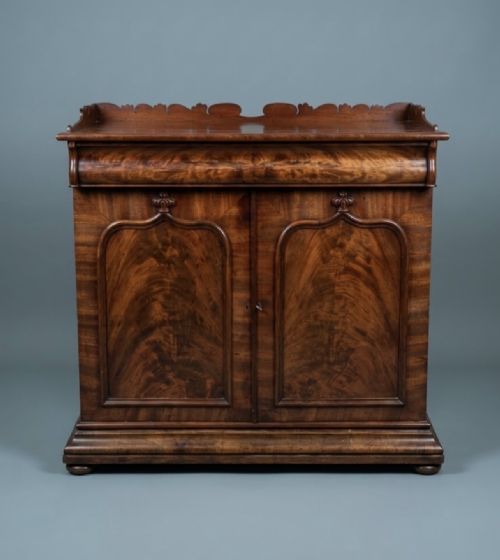
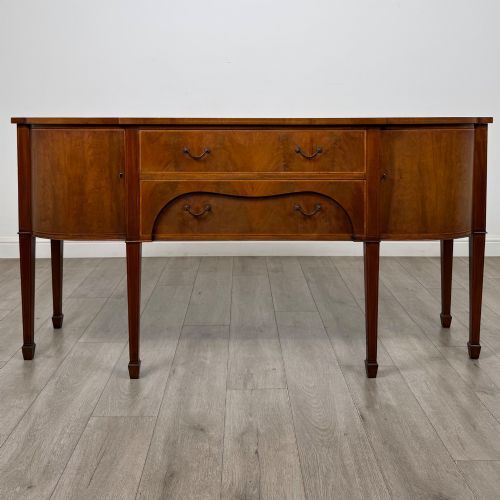
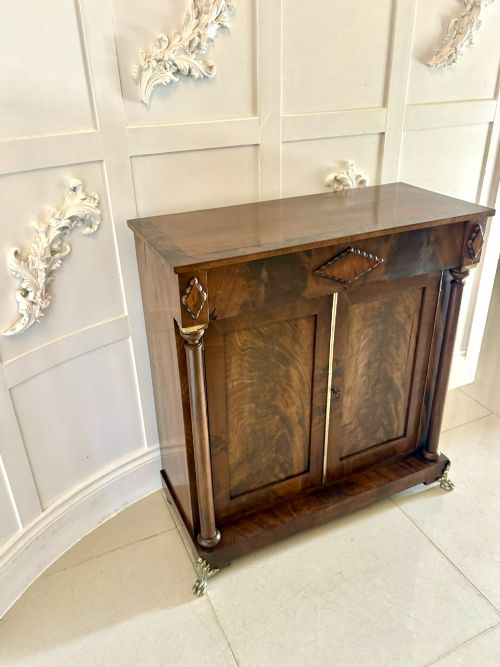
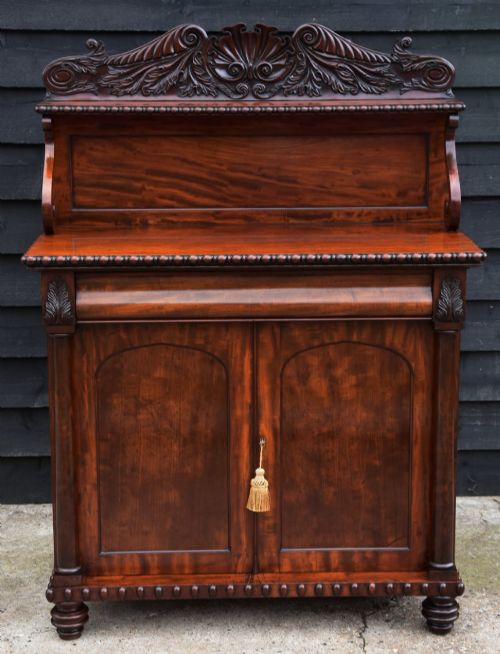
Regency Flame Mahogany Sideboard
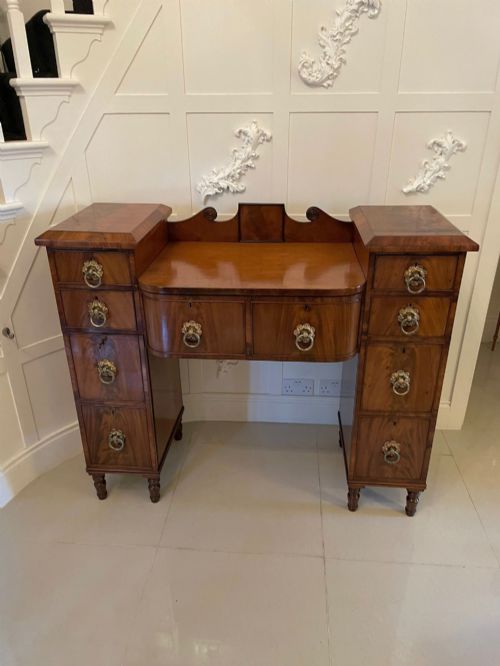
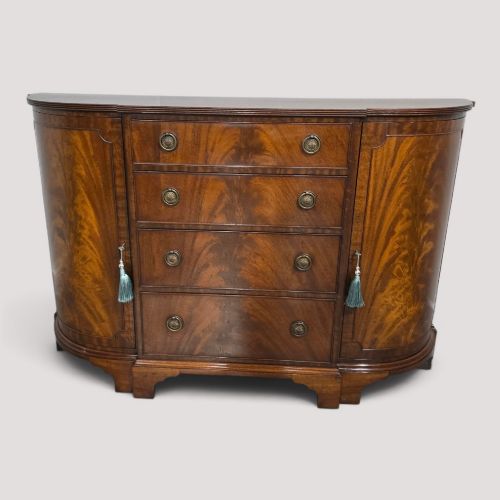
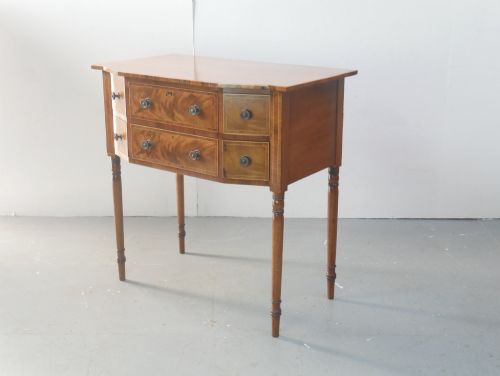
A regency flame mahogany sideboard brings striking grain patterns and grand architectural presence into a dining room or hallway.
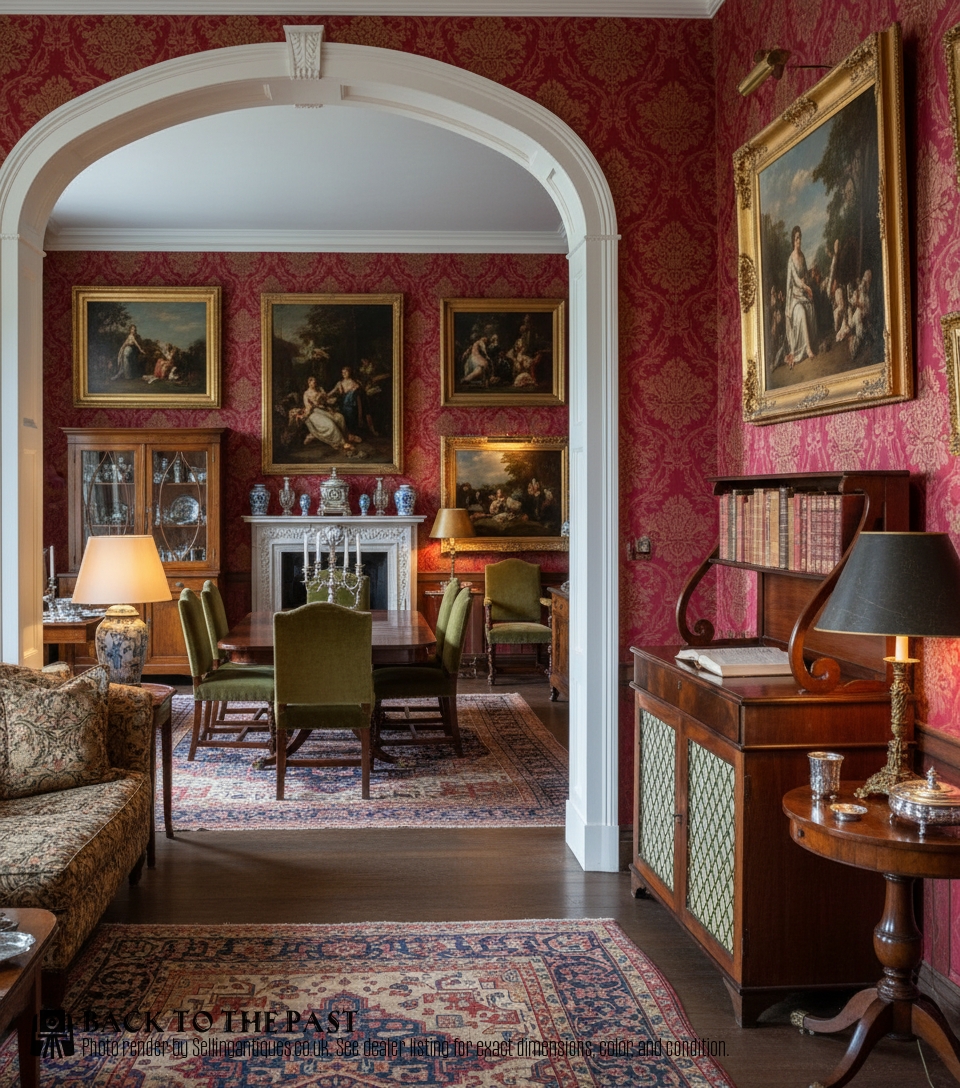
Regency Flame Mahogany Sideboard
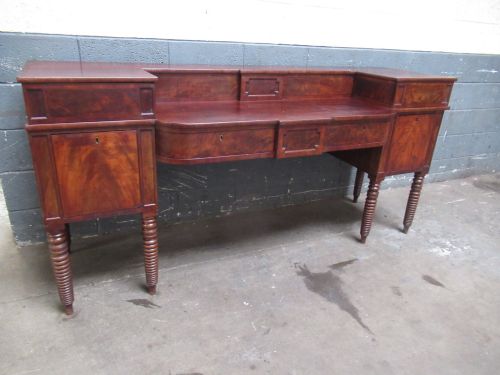
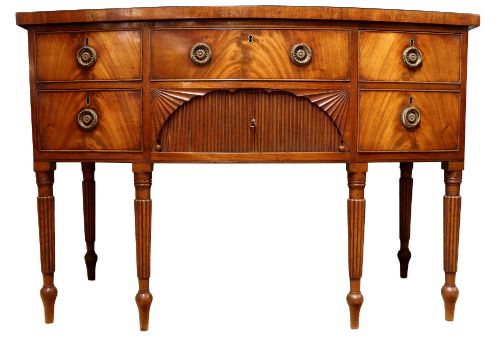
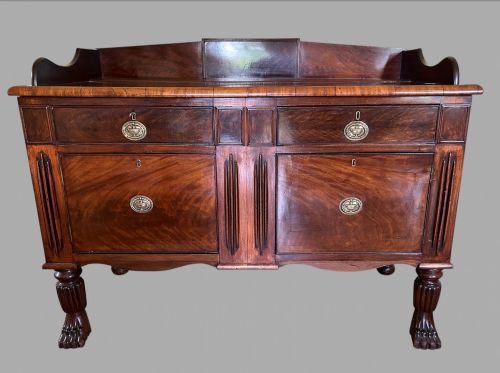
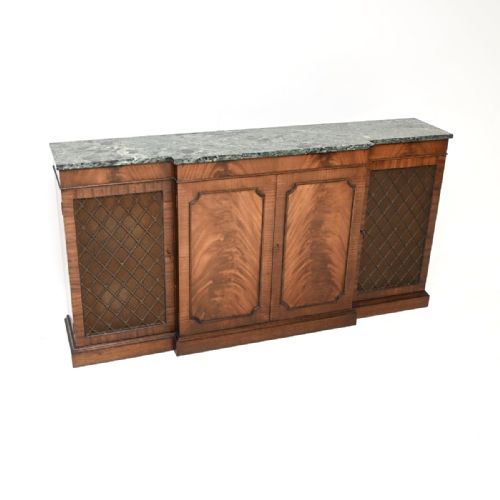
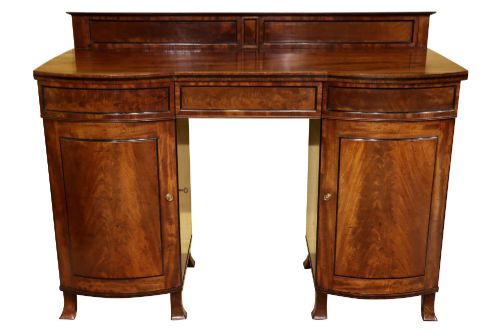
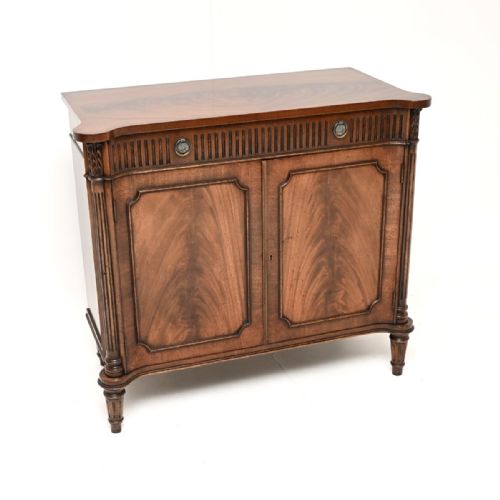
A regency flame mahogany sideboard is a substantial dining room serving piece defined by rich, figured timber and classical proportions. The evidence shows these items appearing predominantly from the nineteenth century, encompassing Regency, George IV, and William IV periods.
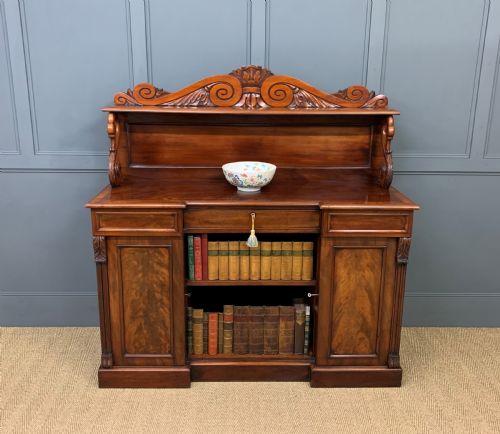
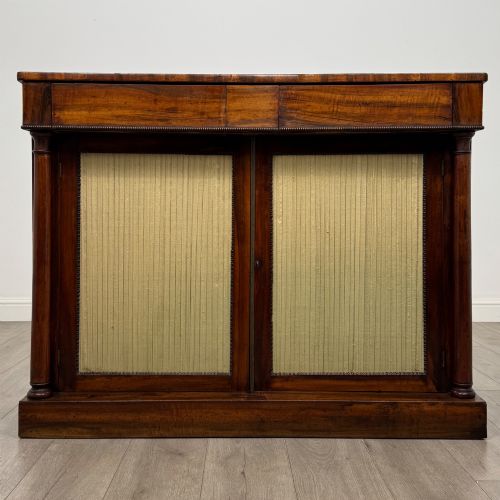
Buyers will most frequently encounter bow-fronted designs, pedestal formats, and chiffoniers. These variations offer deep storage drawers and cupboards suitable for dining silver and linen.
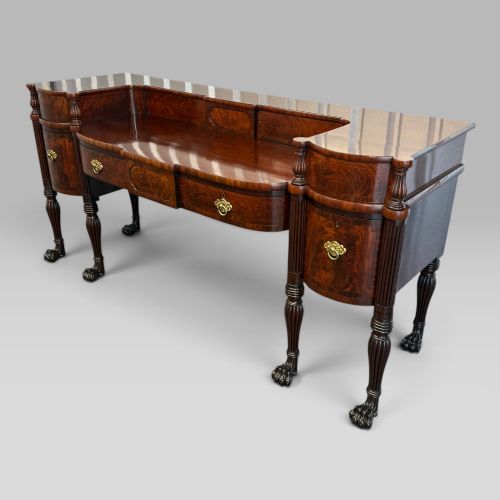
Alongside standard serving pieces, the inventory includes breakfront examples, servers, and console tables. These pieces draw on Georgian and Scottish Regency traditions to provide focal points for formal rooms.
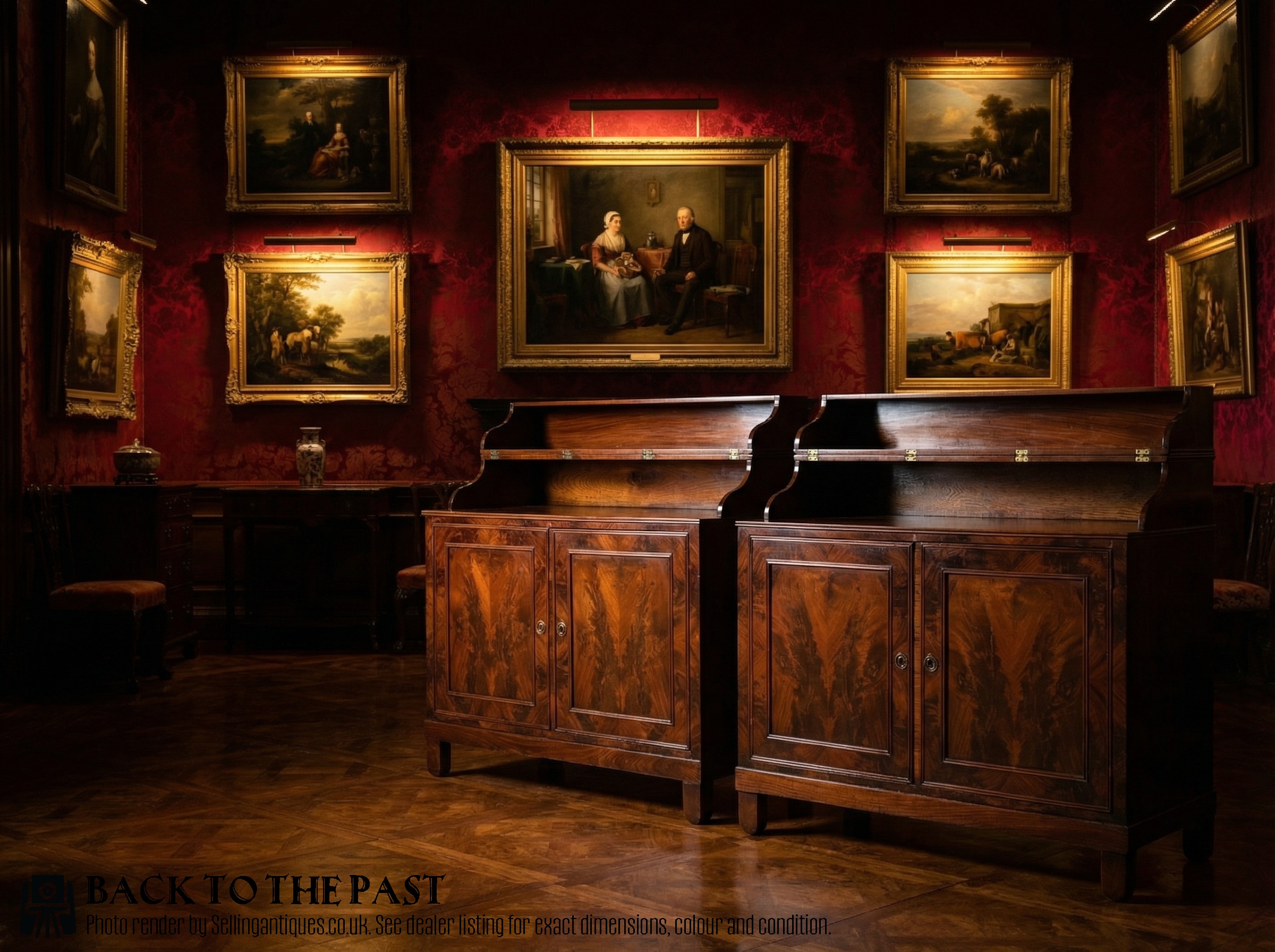
How They Were Made
Cabinet makers utilised solid mahogany and oak for structural frames, carcases, and drawer linings. Flame mahogany veneer was then applied across the primary surfaces to create dramatic, rolling grain patterns.
Details were enriched with brass mounts, inlay work, and carved elements such as lion paw feet. Secondary woods like oak provide durability within internal drawer construction.
Regency Flame Mahogany Sideboard Retail Price Guide 2026
Typical asking prices for regency flame mahogany sideboard among the pieces listed under this phrase on Sellingantiques today, from the lower quarter to the upper quarter. They describe what is for sale here now, not the wider market.
Listings feature items spanning the 18th century, 19th century, and 1920s, constructed primarily from mahogany, flame mahogany veneer, brass, and oak.
What Varies in Quality
Quality rests heavily on the selection and matching of the flame mahogany veneer across the front drawers and doors. Superior examples display symmetrical, highly figured grain patterns that catch the light.
The sophistication of the secondary detailing, including brass inlay, crisp carvings, and robust drawer construction, separates standard pieces from exceptional ones. Maker attribution, such as work associated with Gillows, also elevates a piece.
Gillows·Harrods
The Regency Flame Mahogany Sideboard Glossary
- Flame mahogany
- A veneer cut from the branch forks of the mahogany tree, producing a distinctive, fiery ripple effect. This figured wood defines the visual impact of high-end Regency case furniture.
- Pedestal sideboard
- A large dining room format featuring two distinct pedestal cupboards flanking a central serving section. These configurations often date from the early nineteenth century.
- Chiffonier
- A compact, low cabinet equipped with doors and sometimes upper shelving, used for serving or storing china. They frequently share the flame mahogany and brass detailing of larger sideboards.
- Bow front
- A convex, curved cabinet front that softens rigid architectural lines. This shape is especially common among Regency and Georgian sideboards.
- Breakfront
- A piece of furniture whose central section projects forward from the flanking wings. This format creates depth and architectural presence in larger dining rooms.
Regency Flame Mahogany Sideboard: Frequently Asked Questions
Where should I place a sideboard?
These pieces suit dining rooms, large hallways, or living spaces where they function as serving tables or display surfaces. Their substantial proportions demand adequate wall space to sit comfortably within a room.
Ensure the clearance allows cupboard doors and drawers to open fully without obstruction from surrounding furniture.
How do I care for flame mahogany?
Maintain the timber by dusting regularly with a dry, soft cloth and occasionally applying a traditional beeswax. Avoid placing the wood in direct sunlight or near heat sources to prevent the veneer from drying.
Keep moisture away from the surface by using coasters under glasses and wiping up spills immediately.
What is the difference between a chiffonier and a sideboard?
A sideboard is typically a long, low serving piece designed for dining rooms to hold tableware and food. A chiffonier is generally smaller and often incorporates enclosed shelving or a low bookcase superstructure.
Both pieces utilise similar flame mahogany veneers and classical Regency design motifs.
How can I identify the Regency period?
Regency furniture is characterised by classical architectural influences, balanced proportions, and refined brass or inlaid decorations. Pieces from this era often feature bold flame mahogany grain and carved supports like lion paw feet.
Construction methods, such as hand-cut dovetails in the oak drawer linings, further indicate early nineteenth-century origins.