

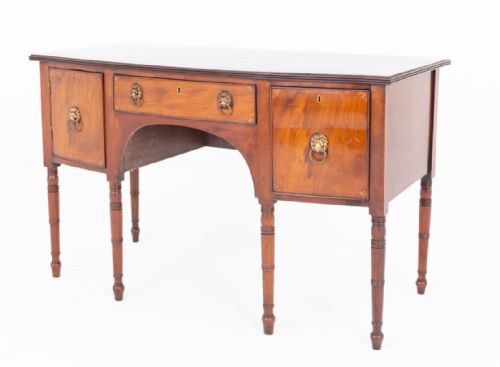
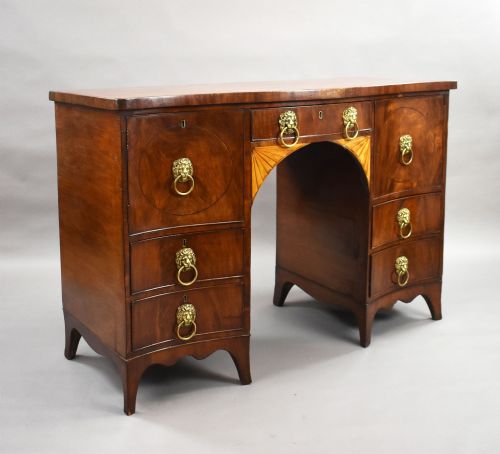
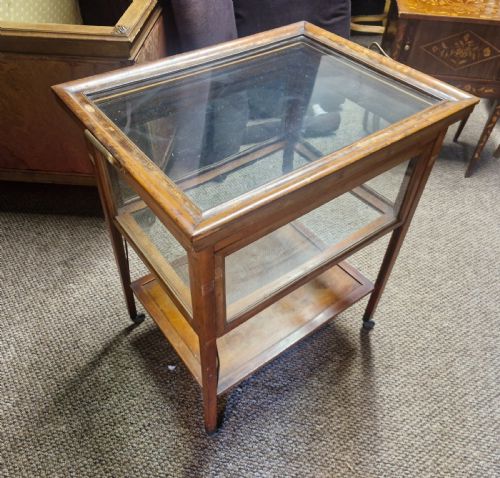


Vintage Wooden Serving Cabinet
A vintage wooden serving cabinet brings solid timber architecture into dining rooms, offering generous storage and deep historical character.
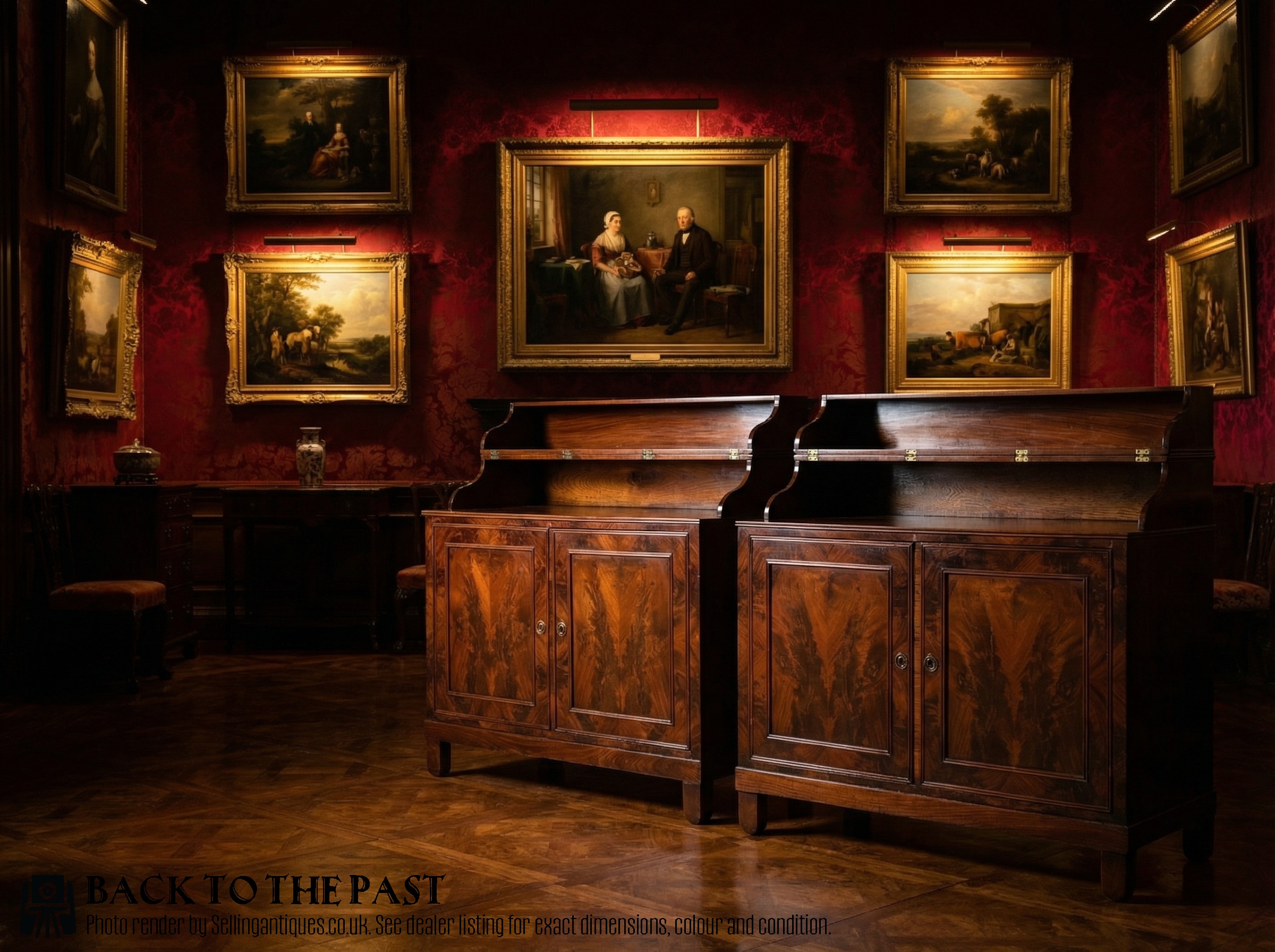
Vintage Wooden Serving Cabinet
A vintage wooden serving cabinet covers a wide range of dining room furniture designed for food preparation, tableware storage, and room service. When searching for a vintage wooden serving cabinet, buyers encounter large sideboards, compact tea trolleys, and dedicated serving cupboards spanning several centuries.
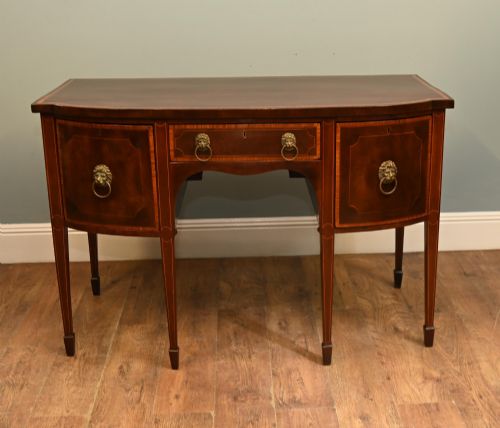
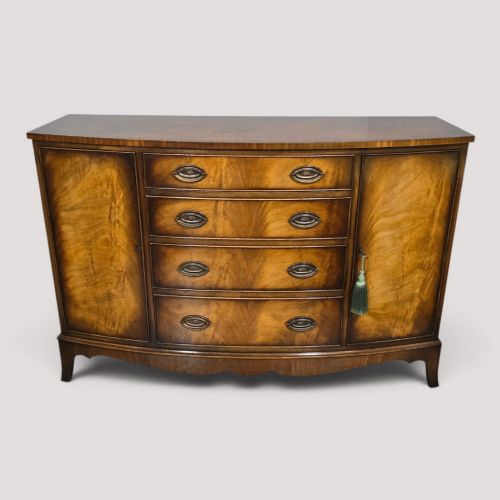
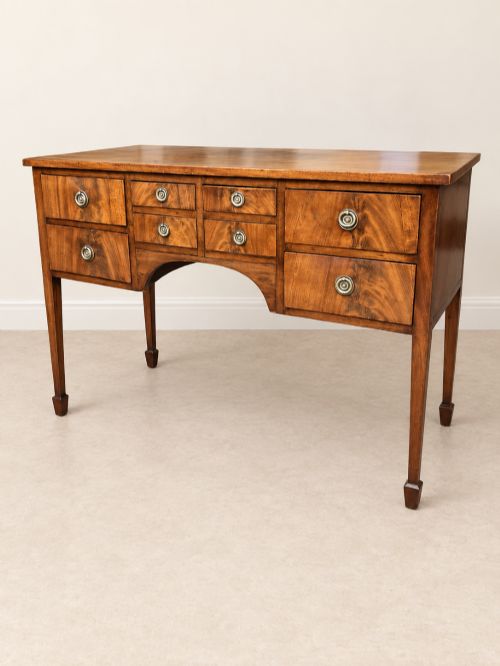
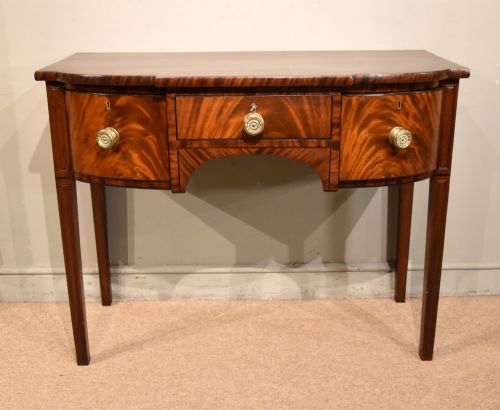
The selections on this page reach from the Georgian and Regency eras through the Victorian period and into the early twentieth century. Common configurations include bow fronts, serpentine shapes, drop-side tea trolleys, and brass-bound yew wood cabinets.
Makers utilised various timber types to construct these items, resulting in pieces finished with mahogany, walnut, ash, and yew wood. These variations in form ensure that a vintage wooden serving cabinet fits both grand dining spaces and smaller entertaining rooms.
Materials and construction methods
Cabinet makers built these pieces using dense hardwoods like mahogany, walnut, and ash, often applying flame mahogany veneers or boxwood stringing for decorative contrast. Structural stability relied on traditional joinery techniques combined with timber framing suited to heavy domestic service.
Metal hardware such as brass handles, hinges, and corner bindings provided both functional durability and visual contrast against the dark wood surfaces. Some items integrated glass panels and porcelain components, reflecting the diverse domestic requirements of their respective eras.
Vintage Wooden Serving Cabinet Retail Price Guide 2026
Typical asking prices for vintage wooden serving cabinet among the pieces listed under this phrase on Sellingantiques today, from the lower quarter to the upper quarter. They describe what is for sale here now, not the wider market.
Some tea trolleys feature folding drop sides specifically designed to squeeze past tight Victorian dining room doorways with the cake plates intact.
Distinguishing quality across the range
Quality in these pieces rests upon timber selection, evident in the choice of figured flame mahogany or burr walnut rather than plain secondary woods. Superior examples display precise inlay work, balanced proportions, and integrated original brass hardware that has aged naturally with the timber.
Construction integrity also separates standard utility furniture from finer items, seen in the smooth operation of drawers, the stability of drop-side mechanisms on tea trolleys, and the careful matching of wood grain across large surfaces.
Epstein
The Vintage Wooden Serving Cabinet Glossary
- Serpentine front
- A furniture front characterised by a concave central section flanked by two convex ends, creating a gentle wave shape. This curved design requires advanced woodworking skill to execute properly.
- Bow front
- A convex, outward-curving front profile commonly found on Georgian and Victorian sideboards. It maximises interior storage capacity while softening the room's geometric lines.
- Flame mahogany
- A veneer cut from the fork of a mahogany tree where the branch meets the trunk, producing a rippled, flickering flame pattern. Cabinet makers reserved this highly decorative grain for prominent exterior surfaces.
- Boxwood stringing
- A thin line of pale yellowish boxwood inlaid into contrasting darker wood surfaces to create geometric borders. It highlights the structural outlines of tabletops and drawer fronts.
- Drop side
- A hinged leaf on a table or trolley that folds down when not in use to save space. It provides flexible surface area for serving food and drinks.
Vintage Wooden Serving Cabinet: Frequently Asked Questions
What is a vintage wooden serving cabinet?
A vintage wooden serving cabinet is a piece of furniture built to hold dining room essentials, tableware, and beverages. These items range from large Georgian sideboards to compact twentieth-century tea trolleys.
They serve as both practical storage units and focal points for hosting meals, uniting sturdy timber construction with period decorative styles.
How do I date a wooden sideboard?
Dating a sideboard involves examining the timber species, construction methods, and hardware style. Earlier pieces from the Georgian and Regency periods often feature solid mahogany and hand-cut dovetails, while Victorian and Edwardian examples may show machine sawing or different veneer treatments.
Secondary woods inside drawers and the style of brass handles or inlays also offer reliable clues to the decade of manufacture.
How should I care for antique wood?
Antique wood surfaces require stable indoor humidity and protection from direct sunlight to prevent the timber from drying out or splitting. Regular dusting with a soft, dry cloth keeps the finish clean without damaging the patina.
Occasional application of appropriate wax polish nourishes hardwoods like mahogany and walnut, preserving their deep natural lustre over time.
Can I use a tea trolley for daily dining?
Drop-side tea trolleys and smaller serving cabinets function well for everyday dining and entertaining. Their wheeled bases and folding leaves offer practical mobility for moving dishes and drinks between rooms.
Care should be taken to protect antique wood surfaces from heat and moisture by using coasters and trays during use.