

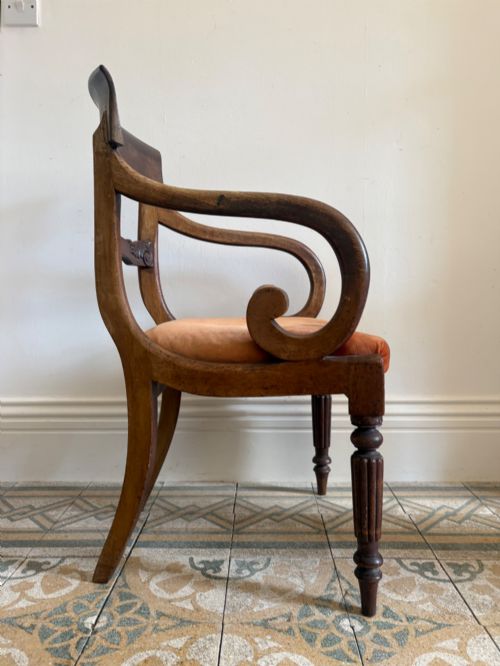
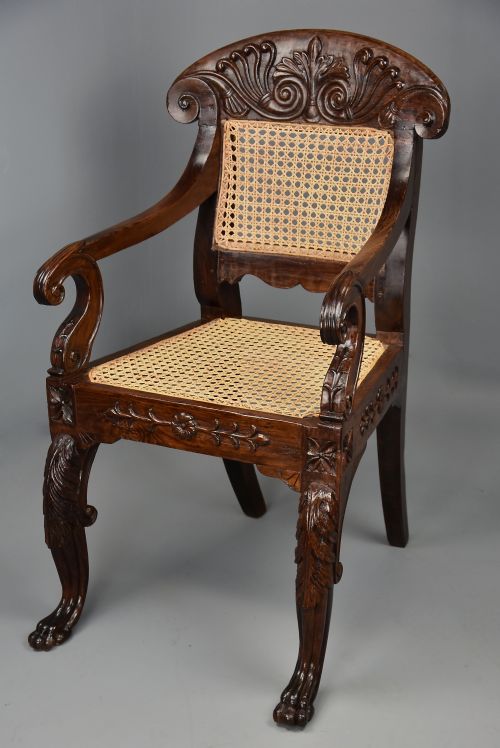


Regency Elbow Seats
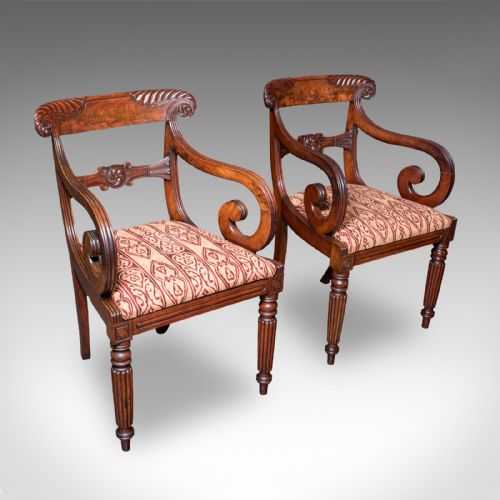
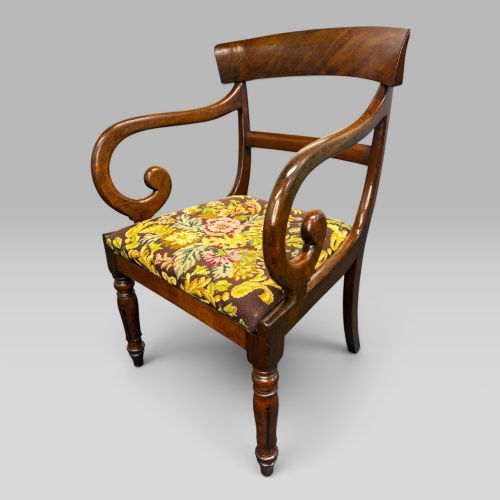
Regency elbow seats bring sculptural lines and firm support to a desk or drawing room, combining practical seating with architectural presence.
Regency Elbow Seats
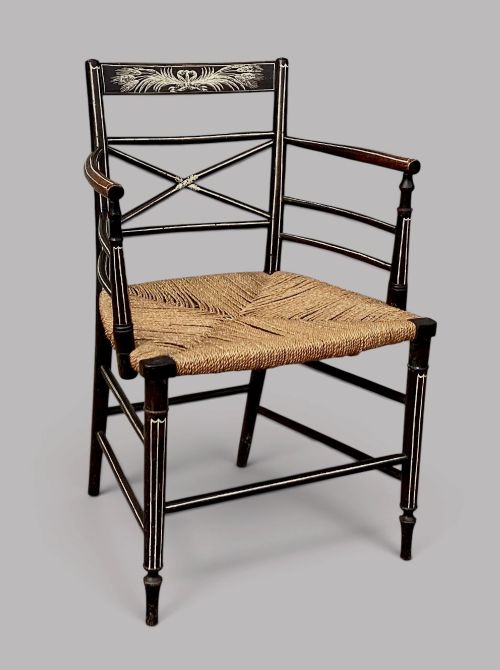
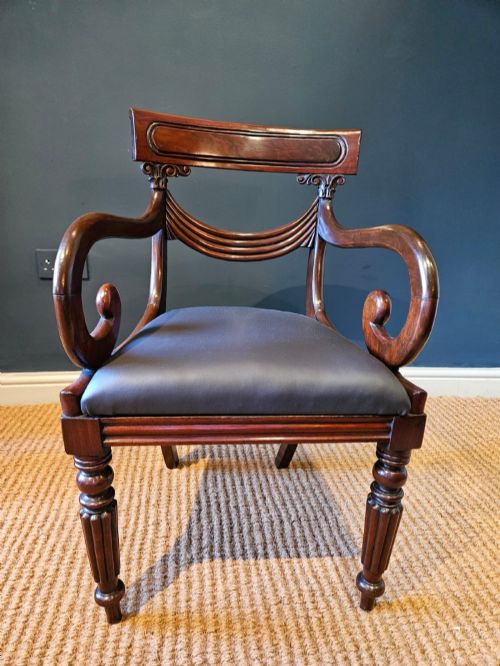
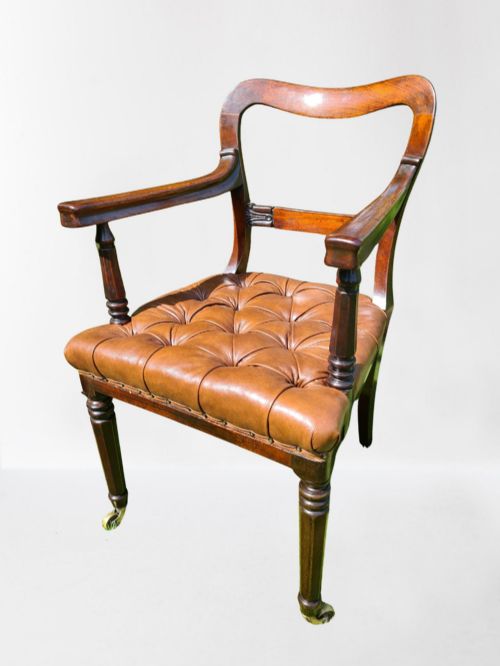
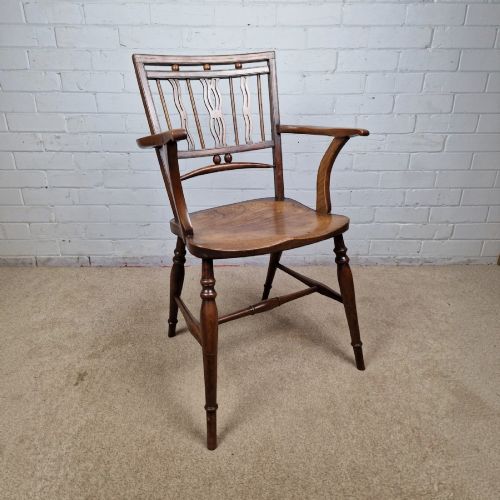
Regency elbow seats encompass armchairs, carver chairs, and desk chairs designed during the early nineteenth century and later replicated in subsequent Victorian and Edwardian decades. These chairs serve functional roles in libraries, morning rooms, and bedrooms, offering substantial arm support and defined backrests.
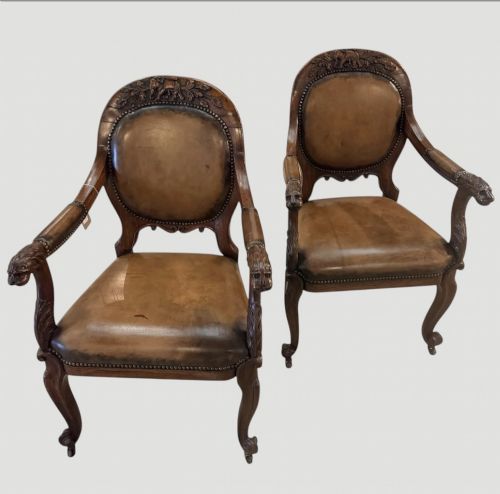
Mahogany forms the predominant timber across the selection, appearing alongside rosewood, padouk, ebony, and painted or ebonised surfaces. Regional variations include Scottish examples, East Anglian dish seat designs, and intricately carved Anglo-Indian pieces that blend British proportion with eastern detail.
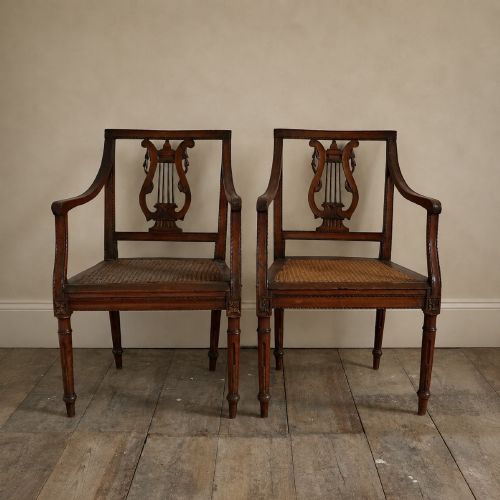
Common configurations range from caned seat armchairs and drop-in velvet pads to brass inlaid desk chairs and faux bamboo frames. Buyers encounter pairs and larger sets alongside singular childs chairs and library armchairs.
Materials and construction methods
Cabinet makers utilised solid mahogany, rosewood, and padouk, frequently employing ebonisation, parcel gilt, or paint to achieve the fashionable dark or decorated surfaces seen in the period. Turned and curved members required skilled steam bending and precise joinery to form the characteristic saber legs and scroll arms.
Seating areas rely on cane panels, drop-in pads, or upholstered foundations finished in leather, velvet, fabric, and needlepoint. Decorative accents incorporate brass inlay, faux bamboo turning, and detailed hand carving found particularly on Anglo-Indian imports.
Regency Elbow Seats Retail Price Guide 2026
Typical asking prices for regency elbow seats among the pieces listed under this phrase on Sellingantiques today, from the lower quarter to the upper quarter. They describe what is for sale here now, not the wider market.
Anglo-Indian pieces in padouk and ebony introduce exotic timbers to the standard British mahogany selection.
Assessing quality and proportion
The distinction between standard output and finer examples rests upon timber selection, the crispness of carved details, and the integrity of the frame construction. Superior pieces maintain harmonious proportions between the elbow supports and the rake of the back legs, whereas lesser items display rigid lines or heavy, unrefined joints.
Surface finish significantly dictates distinction, with original paint, untouched patination, and precise brass inlay commanding greater interest than later stripped or heavily restored alternatives.
The Regency Elbow Seats Glossary
- Carver chair
- An armchair designed to match a set of dining chairs, usually placed at the table ends. These items feature sturdy elbow supports for dining or desk use.
- Sabre leg
- A chair leg that curves outward in a concave sweep reminiscent of a cavalry sword. This form provides stability while lightening the visual weight of the frame.
- Drop-in seat
- A removable wooden frame upholstered in fabric, leather, or needlepoint that rests in a rebate within the chair seat rail. It allows for straightforward reupholstery without dismantling the main structure.
- Caning
- Woven rattan material used to form resilient, breathable seat and back panels. It requires careful tensioning across the frame during manufacture.
- Parcel gilt
- A decorative technique where specific carved details or mouldings are partially covered in gold leaf while the surrounding wood remains exposed or painted.
Regency Elbow Seats: Frequently Asked Questions
What is a regency elbow seat?
A regency elbow seat is an armchair or carver chair featuring distinct armrests, produced during the early nineteenth century or in later revival styles.
These pieces typically serve at desks, in libraries, or as drawing room seating.
How do I identify a genuine period piece?
Identification relies on examining timber ageing, joinery methods, and stylistic cues such as saber legs and brass inlay.
Comparing construction details against documented pieces from the Regency and William IV eras clarifies the date.
Where should I place these chairs?
These armchairs suit studies, bedrooms, and reception rooms where their architectural frames can stand visibly.
They function effectively as standalone desk chairs or paired beside a fireplace.
What maintenance do cane seats need?
Caned panels require occasional light dusting and should be kept away from direct heat sources to prevent the natural material from becoming brittle.
Maintaining moderate room humidity preserves the flexibility of the woven rattan.