

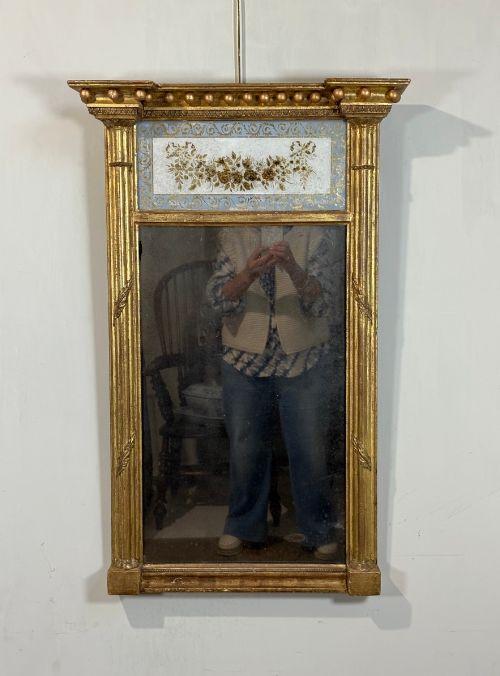
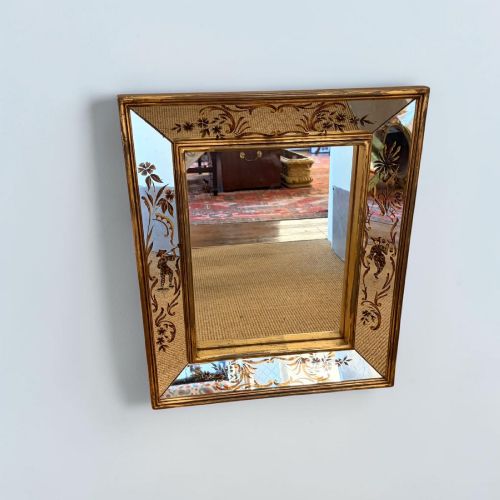
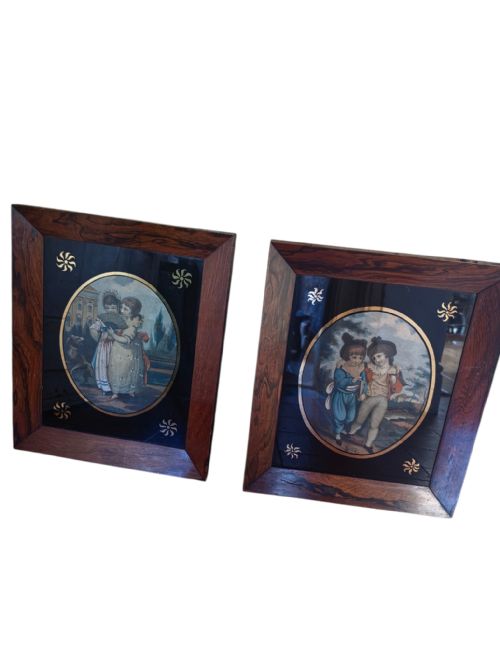


Regency Eglomise Frame
A regency eglomise frame surrounds mirrors, prints, and needlework with reverse-painted glass panels from the nineteenth century.
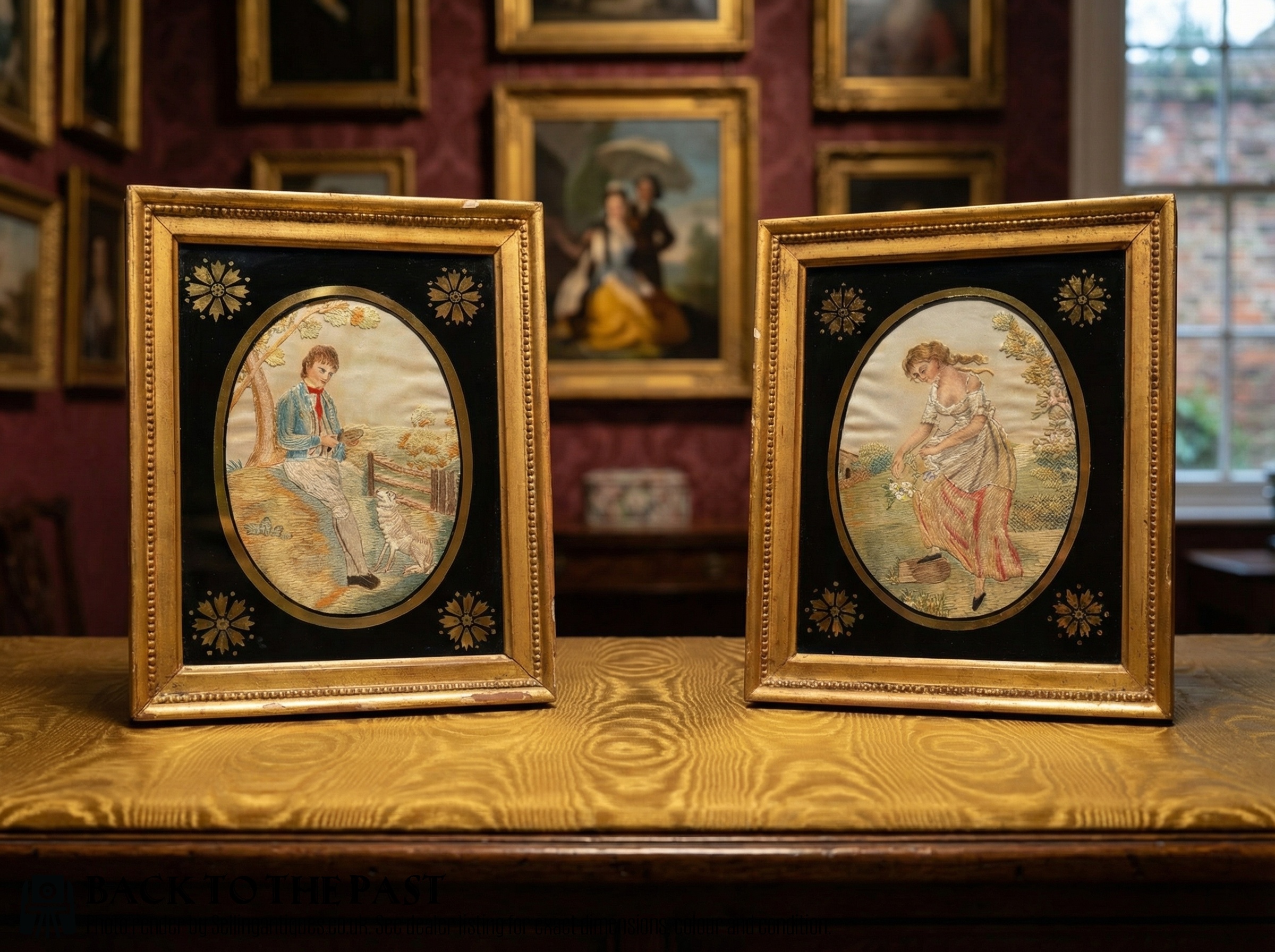
Regency Eglomise Frame
A regency eglomise frame brings together decorative woodwork and reverse-painted glass panels, most commonly seen around wall mirrors, pier glasses, and framed pictures. These pieces originate from the Regency, Georgian, and wider nineteenth-century periods, capturing a distinct neoclassical aesthetic.
The version most frequently met on this page is the giltwood pier mirror or framed woolwork picture featuring eglomise decoration. Alongside mirrors, buyers encounter silkwork embroideries, prints, and portrait miniatures housed in matching timber surrounds.
Materials and construction methods
Craftsmen built these frames using timber foundations of rosewood or general wood, applying layers of gesso before gilding the surface to achieve a bright metallic finish. Giltwood provides the primary structural border for many pier mirrors and picture surrounds.
Verre eglomise technique involves painting and applying gold or silver leaf onto the reverse side of glass panels, creating a glossy, protected image. This decorated glass sits within or alongside the frame, often accompanying silkwork embroideries, engravings, and mirror glass.
Regency Eglomise Frame Retail Price Guide 2026
Typical asking prices for regency eglomise frame among the pieces listed under this phrase on Sellingantiques today, from the lower quarter to the upper quarter. They describe what is for sale here now, not the wider market.
Several Victorian children and wandering birds found permanent homes inside nineteenth-century glass panels.
Factors influencing quality
The refinement of the carving on the giltwood and the preservation of the delicate reverse-painting on the glass panels set finer examples apart from simpler work. Intricate pier mirrors with intact eglomise panels demonstrate superior craftsmanship compared to plain timber surrounds.
Originality in the pairing of the frame with its mirror glass, engraving, or silkwork embroidery dictates the integrity of the piece. Surviving gilding and well-preserved painted glass sections indicate higher standard execution during the nineteenth century.
The Regency Eglomise Frame Glossary
- Verre eglomise
- The technique of cold painting and gilding on the reverse side of glass. This method produces a deep, reflective surface often used in decorative panels above mirror plates.
- Giltwood
- Timber covered with a thin layer of gold leaf applied over gesso. It forms the bright metallic finish seen on many Regency mirrors and picture frames.
- Pier glass
- A tall mirror designed to hang on the pier wall between two windows. These architectural mirrors frequently incorporate eglomise panels in the upper section.
- Silkwork
- Embroidery created using silk threads on a fabric ground, popular in the nineteenth century. These pictorial works appear frequently inside eglomise and gilt frames.
- Gesso
- A plaster mixture applied to wood frames to create a smooth surface for gilding. It allows artisans to carve crisp decorative details before applying gold leaf.
Regency Eglomise Frame: Frequently Asked Questions
What is a regency eglomise frame?
A regency eglomise frame is a nineteenth-century picture or mirror surround featuring reverse-painted glass panels alongside giltwood or rosewood mouldings. These decorative housings date primarily from the Regency and Georgian eras.
They often combine mirror glass or textile art with ornamental glass panels painted in black and gold tones, reflecting the neoclassical taste of the period.
How do I hang a pier mirror?
Pier mirrors were originally designed to hang on the narrow wall space between windows to reflect light into a room. Due to their weight and fragile eglomise panels, they require secure wall fixings.
Professional mirror hangers should assess the weight distribution across the giltwood and gesso structure before installation to ensure safe wall mounting.
How do I clean reverse-painted glass?
Cleaning eglomise panels requires extreme caution because the paint and gold leaf are applied to the reverse side of the glass. Moisture must be kept away from any exposed edges.
Use a dry, soft microfibre cloth to gently remove dust from the surface without applying pressure that could disturb the delicate painted layers.
Are these frames from the Regency period?
The listings include pieces from the Regency era, the wider nineteenth century, and the Georgian period. Many items date specifically from around eighteen hundred to eighteen fifty.
Craftsmen utilised traditional materials such as rosewood, gesso, and mirror glass across these overlapping stylistic periods, maintaining consistent manufacturing techniques.