


Regency Silk Embroidery
Regency silk embroidery brings framed needlework pictures and sewing tables into the room, offering needlework framed under glass in giltwood frames.
Regency Silk Embroidery
Buyers seeking regency silk embroidery encounter framed pictures, textile art, and needlework samplers alongside sewing tables fitted with silk work bags. These items span the Georgian, Regency, Grand Regency, and William IV periods, capturing early nineteenth century needlecraft.
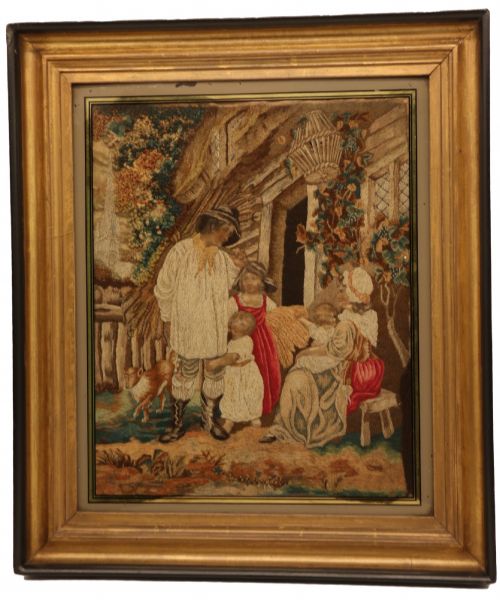
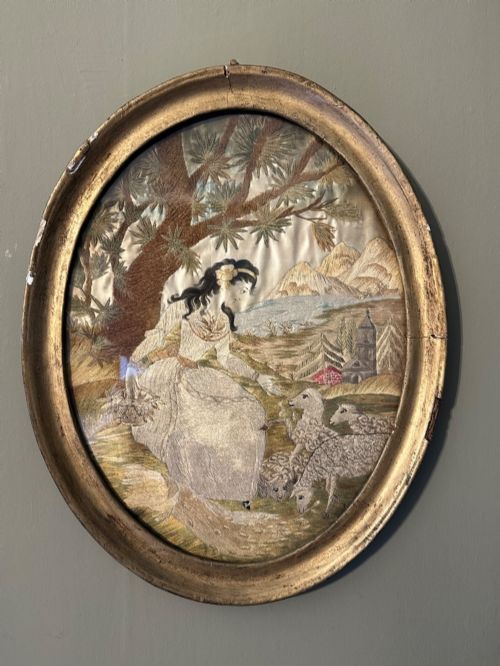
The most frequent pieces on this page include framed silkwork pictures, oval woolwork scenes, needlepoint maps of England and Wales, and embroidered panels depicting stories like Jack and the Beanstalk. Alongside wall art, mahogany and rosewood sewing tables with silk components represent the period's domestic craftsmanship.
What varies in quality
Visual distinction rests in the execution of the needlework and the preservation of the materials. Finely detailed long stitch work, intact hand-painted elements, and clear cartography on samplers separate accomplished pictorial pieces from simpler executions.
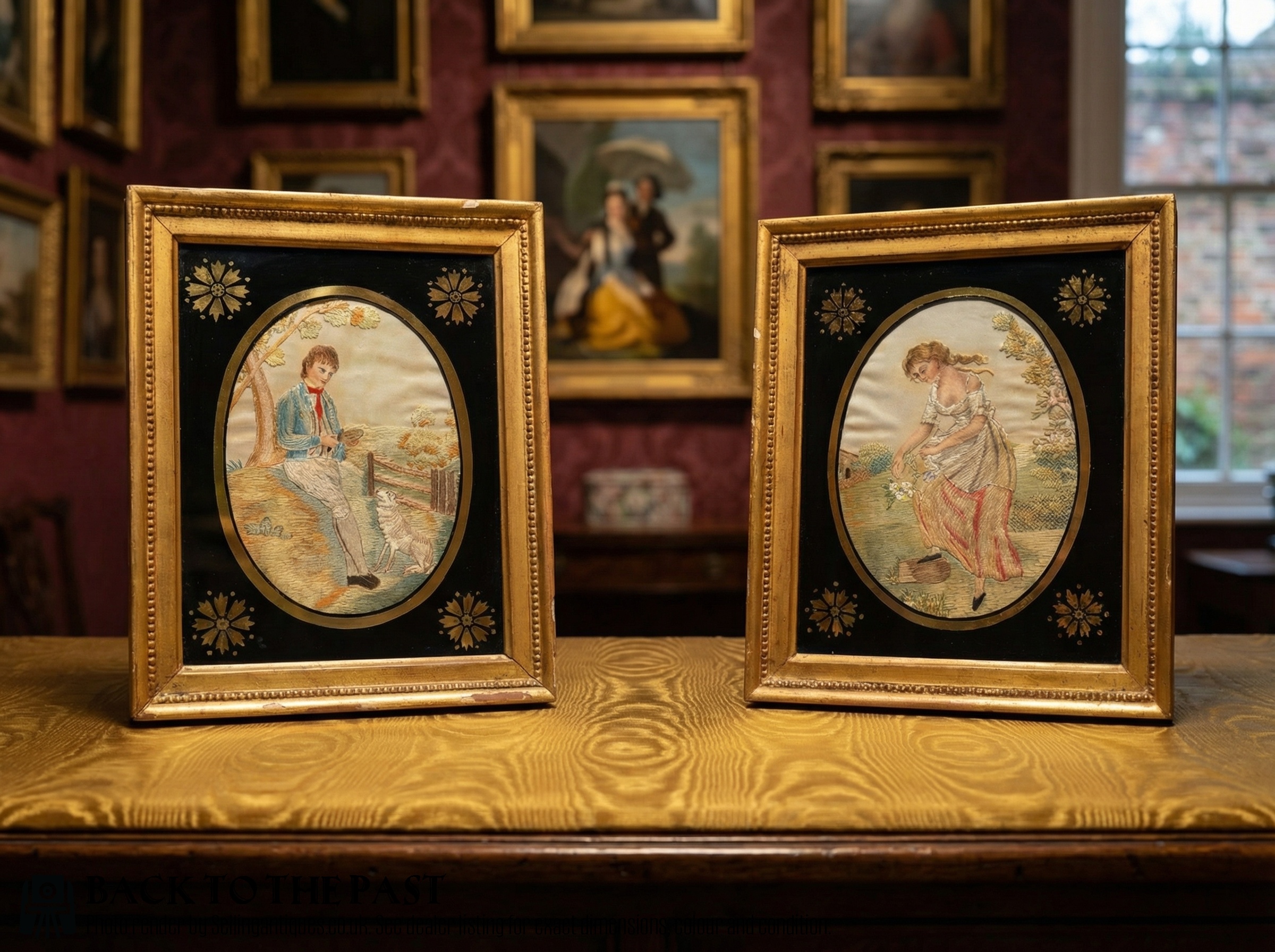
The surrounding frame and secondary materials elevate the object. Original giltwood frames, verre églomisé glass, and rosewood or mahogany furniture with intact brass inlay and original silk work bags indicate superior period survival.
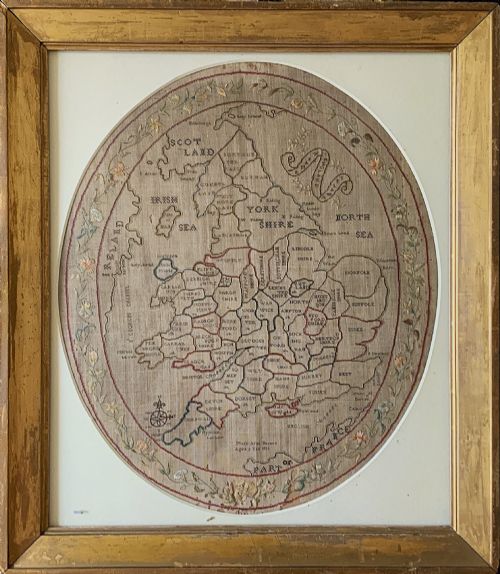
Young Mary Banion stitched an entire map of England and Wales at age nine, proving that homework used to involve significantly more thread.
Mary Banion·Sarah Baker·Martha Hall·Mary Pinfold
The Regency Silk Embroidery Glossary
- Verre églomisé
- A process of applying gold or silver leaf to glass along with painting and etching to create a decorated border. This technique frequently frames Regency and 19th-century pictures.
- Mezzotint black glass
- Darkened glass used in framing during the Georgian and Regency periods to enhance the contrast of surrounding gilt frames. It provides a dark border around silk pictures.
- Crewel work
- Embroidery using wool yarn on a linen or cotton ground fabric. This technique produces heavily textured historical and floral scenes.
- Needlepoint
- Stitches worked through an open-weave canvas mesh to completely cover the ground. Samplers and maps utilise this structured method.
- Long stitch
- An embroidery technique using parallel stitches of varying lengths to create smooth pictorial shading in silk pictures. It allows for realistic rendering of drapery and skin.
Regency Silk Embroidery: Frequently Asked Questions
What is regency silk embroidery?
Regency silk embroidery encompasses framed textile pictures, needlework samplers, and sewing furniture produced during the early nineteenth century. These works combine silk threads, hand-painted details, and woolwork to depict landscapes, figures, and maps.
Such pieces reflect the ornamental needlework practiced during the Georgian and Regency eras, preserved behind protective glass within original wooden frames.
How were needlework maps made?
Needlework maps were educational exercises stitched by young girls learning geography and needlecraft. Makers used canvas grounds and coloured threads to outline counties, towns, and borders.
Examples like the maps of England and Wales include detailed cartography alongside decorative floral borders and maker signatures with ages.
What is a sewing table?
A sewing table is a small occasional piece of furniture in rosewood or mahogany equipped with drawers and a hanging silk work bag. Ladies utilised these tables for storing threads, needles, and ongoing embroidery projects.
Many examples feature brass inlay, hinged tops, and fitted compartments designed for domestic needlework tasks.
How should I display silk pictures?
Silk pictures require placement away from direct sunlight to prevent the fading of delicate silk and wool threads. Maintaining stable indoor humidity protects both the textile fibres and the original wooden or giltwood frames.
Wall mounting should utilise secure fixings suitable for the weight of antique glass and timber framing.