
Antique Embroidered Art
These pieces of antique embroidered art bring textile history to walls through framed panels, samplers, and tribal hangings.
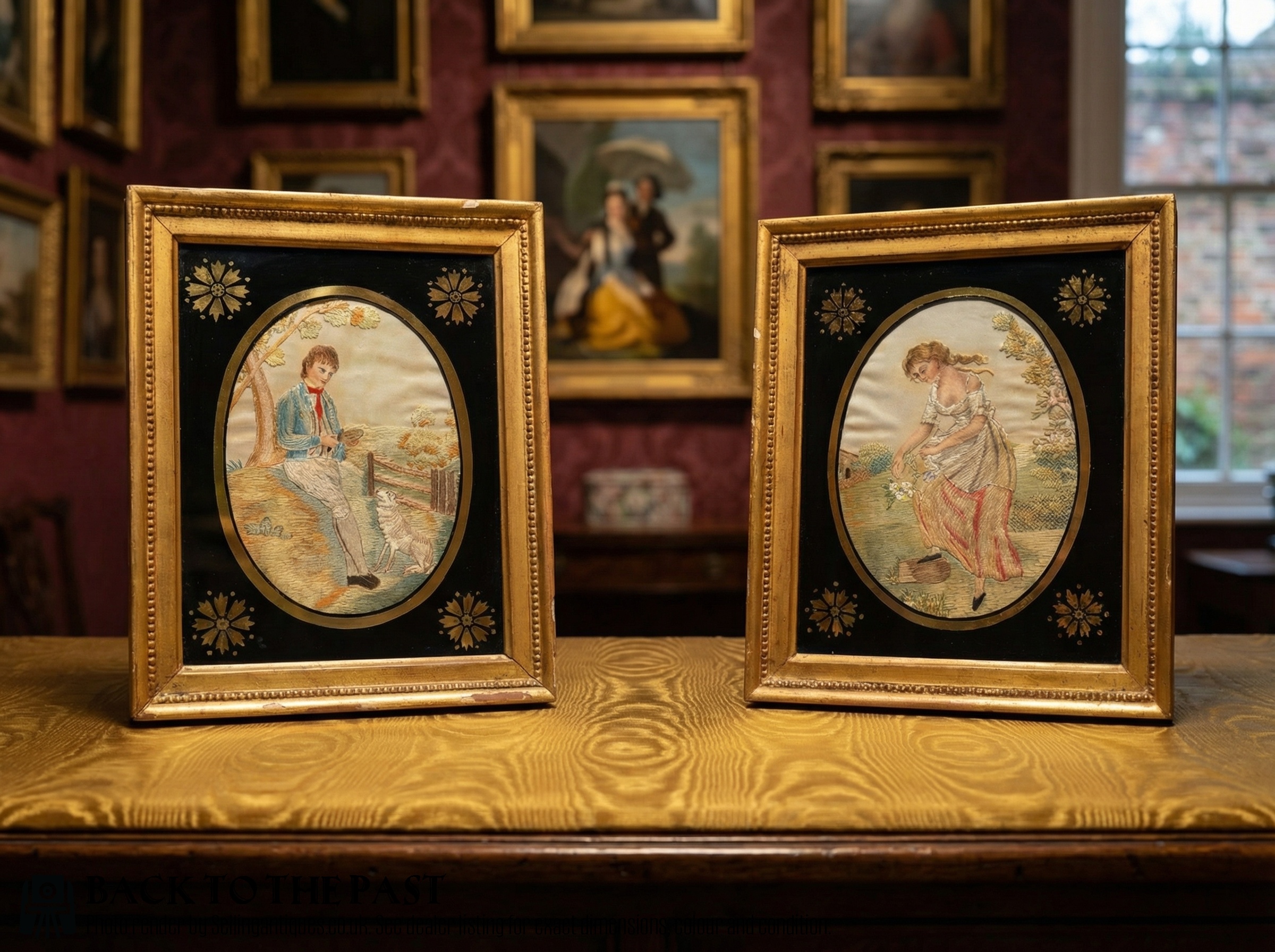
Antique Embroidered Art
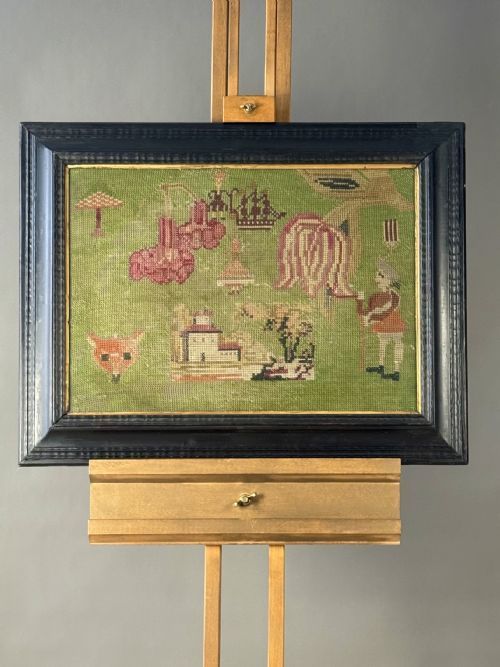
Antique embroidered art encompasses framed textile panels, samplers, and wall hangings created across multiple centuries. Buyers examine works ranging from English school needlework pictures and Georgian maps to Central Asian tribal dowry embroideries.
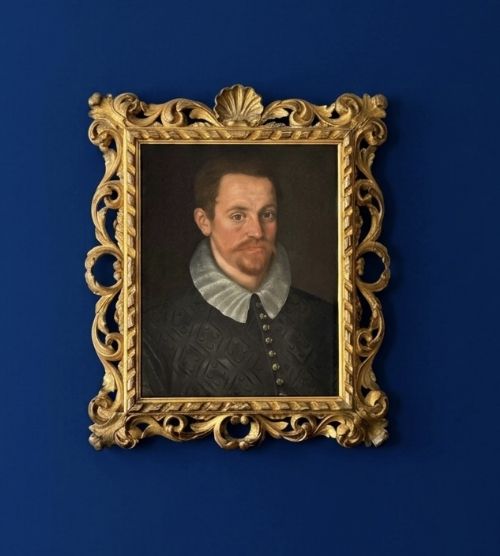
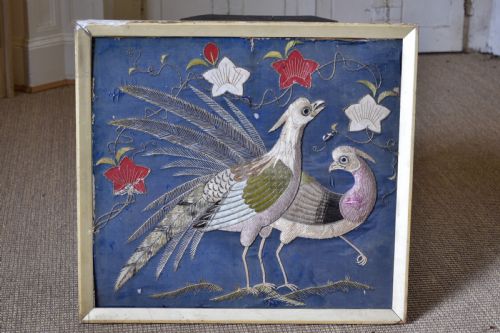
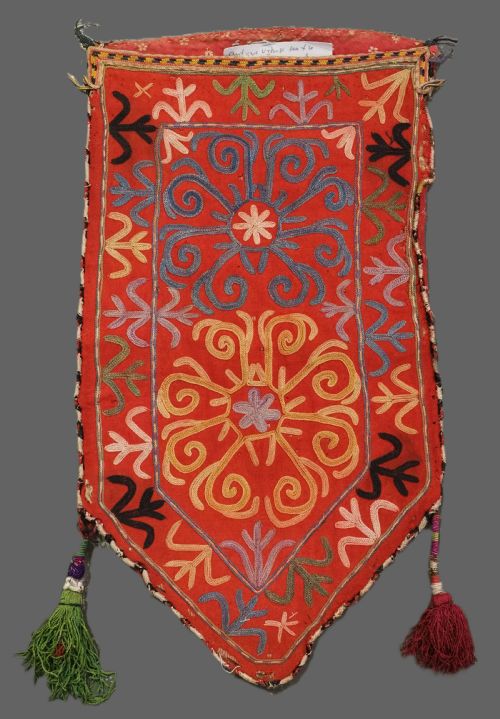
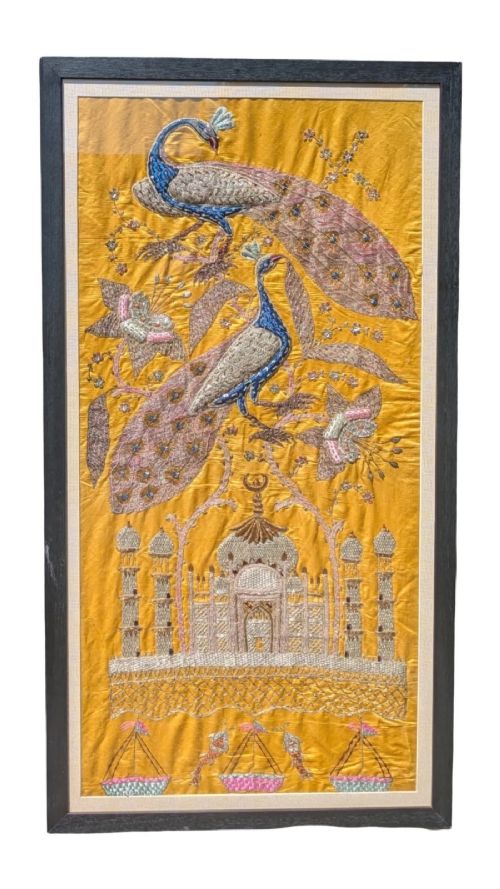
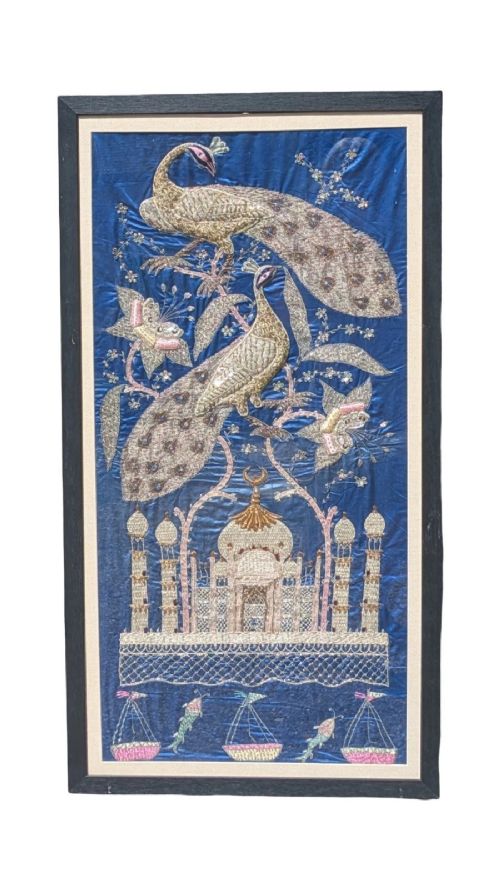
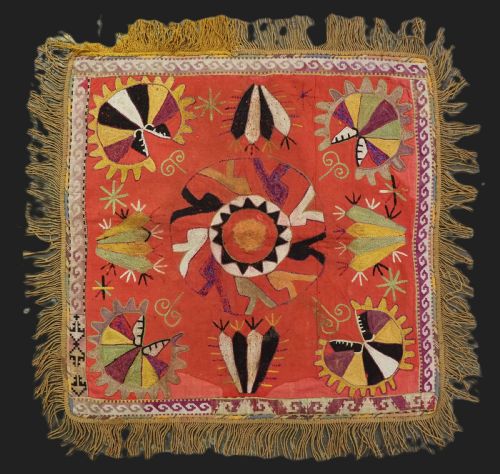
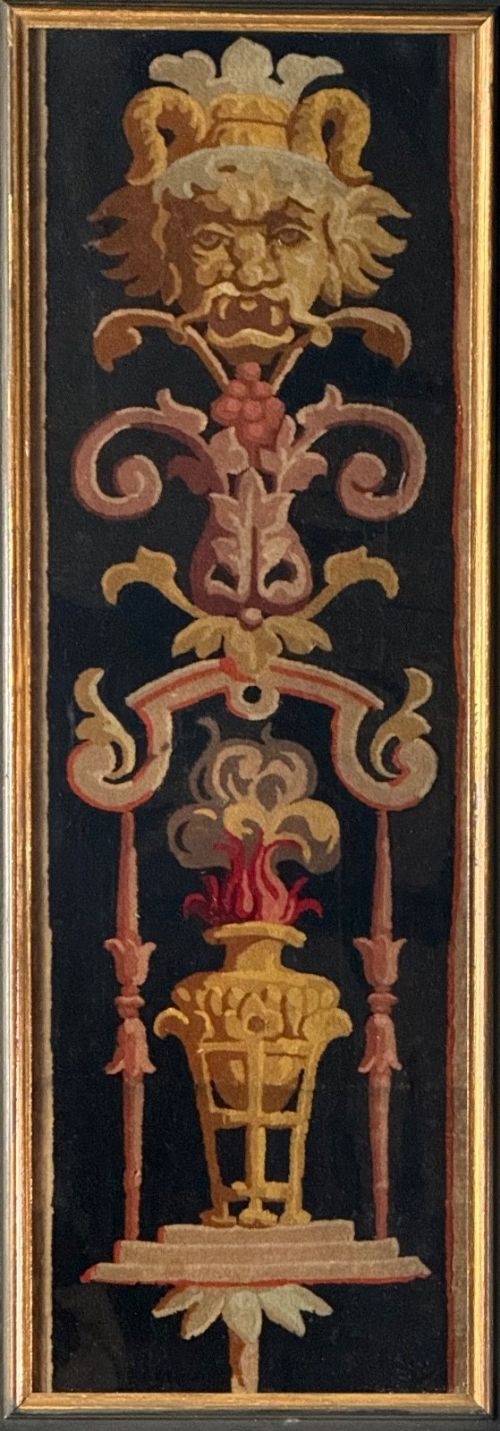
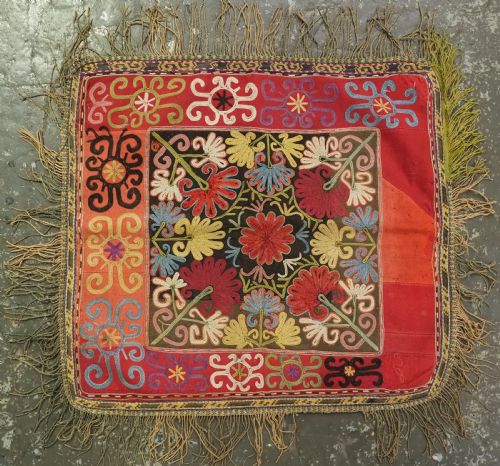
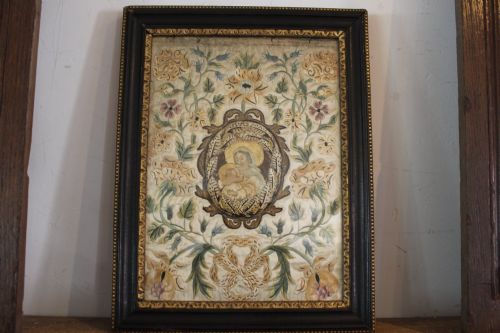
The selection includes 17th-century continental classical panels, Chinese silk rank badges, and Uzbek suzanis. These textile works function primarily as wall art, preserved under glass or mounted on fabric supports.
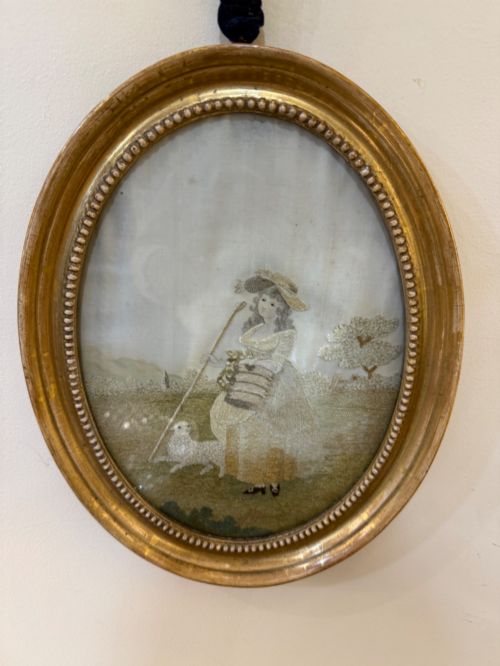
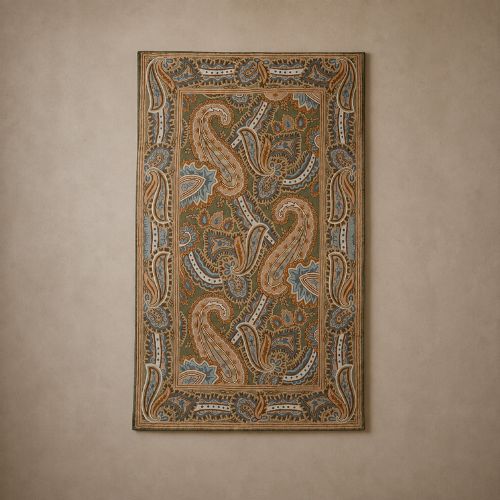
Makers utilised various traditional formats, from small needlework scenes to large crewelwork paisley panels. Each period brought distinct stylistic choices, from Stuart and Jacobean motifs to Victorian wool work.
How they were made
Materials span natural fibres including silk, wool, linen, and cotton, frequently combined with metallic thread. Artisans stitched these elements onto canvas or linen grounds, sometimes incorporating hand-painted silk sections.
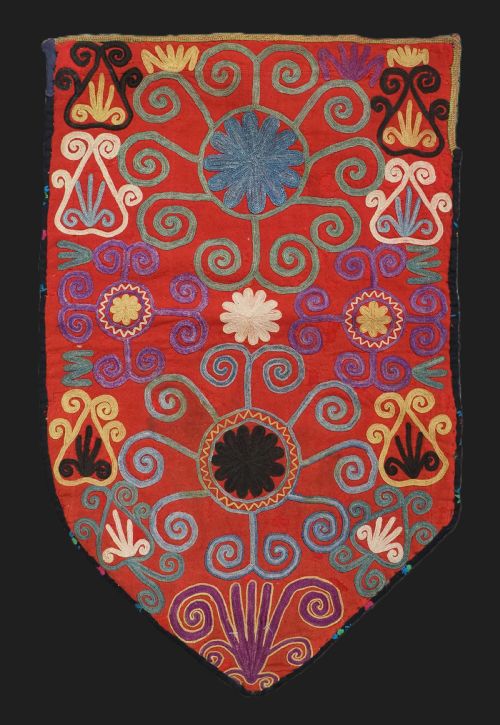
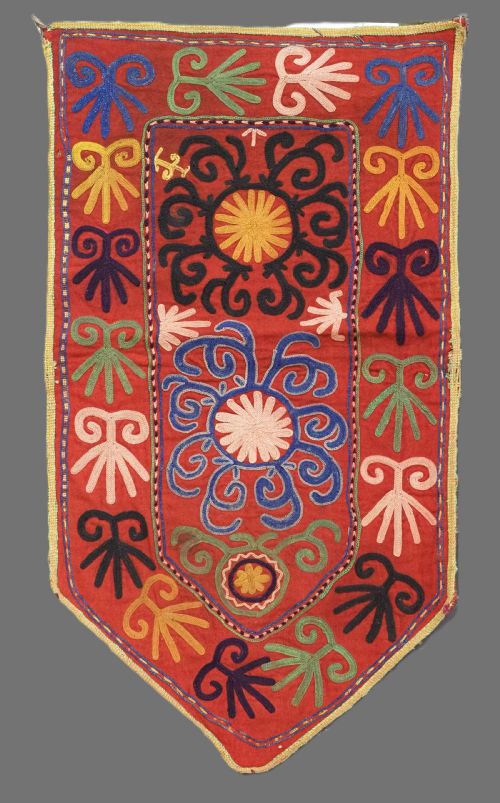
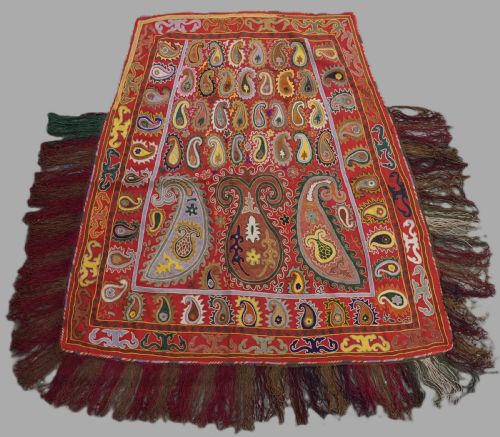
Makers mounted finished textiles in wood frames, often protected behind glass to shield delicate silk floss and wool work from environmental damage. Tribal pieces like Uzbek ilgich employ dense regional stitching techniques on local cotton or linen bases.
A fierce wool work tiger stares down viewers from the nineteenth century alongside delicate portraits of courting cockerels.
What varies in quality
Quality rests in the precision of the needlework and the preservation of the ground materials. Finer examples display intricate detail in silk floss or wool, maintaining structural integrity across centuries without extensive fibre loss.
The sophistication of the design and the clarity of the composition distinguish superior works. Pieces retaining original frames, such as faux tortoiseshell settings, add historical context to the textile art.
The Antique Embroidered Art Glossary
- Sampler
- A piece of needlework produced as a demonstration or test of skill in various stitches, often featuring alphabets, maps, or figures.
- Crewelwork
- A type of surface embroidery utilising wool yarn to create flowing floral and animal designs on heavy linen or twill fabrics.
- Rank badge
- An embroidered square or circle worn to denote official status in imperial China, later mounted and preserved as decorative art.
- Needlework picture
- A pictorial composition worked with a needle and thread on canvas or silk, designed specifically to be framed and hung as a painting substitute.
Antique Embroidered Art: Frequently Asked Questions
How should I hang antique embroidered art?
Keep textile art away from direct sunlight to prevent the fading of silk and wool fibres. Frame pieces behind glass if they lack protection, ensuring proper spacing between the fabric and the glazing.
Support larger wall hangings evenly across a backing board to avoid undue strain on the historic threads and canvas grounds.
What is an Uzbek suzani?
An Uzbek suzani is a large, hand-embroidered tribal textile originating from Central Asia. These pieces served as dowry items and wall decorations, featuring bold floral and botanical motifs.
Artisans stitched them using silk floss on cotton foundations, often joining multiple panels together.
How can I tell the age of a needlework picture?
Dating relies on material analysis, stitching styles, and subject matter relative to known historical periods. Georgian samplers and 17th-century panels often include specific dates, maker names, or ages stitched directly into the composition.
Backing materials, frame construction, and thread types further clarify the era of creation.