


Antique Pastoral Embroidery
Antique pastoral embroidery brings quiet rural scenes into the home through needlework, offering framed glimpses of country life crafted in silk and wool.
Antique Pastoral Embroidery
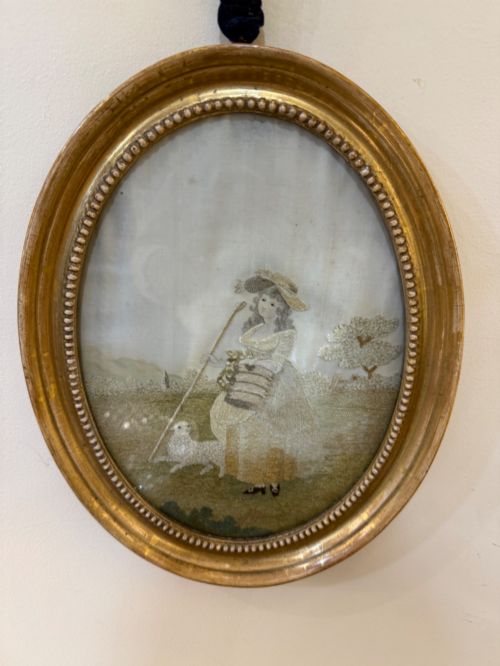
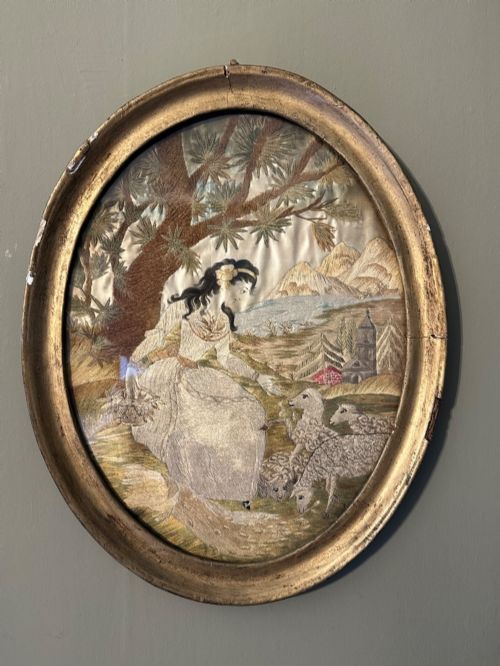
Antique pastoral embroidery comprises framed textile art and needlework pictures depicting rural subjects, shepherdesses, and garden scenes. These pieces capture historical ideals of country life through fine needlework created for domestic display.
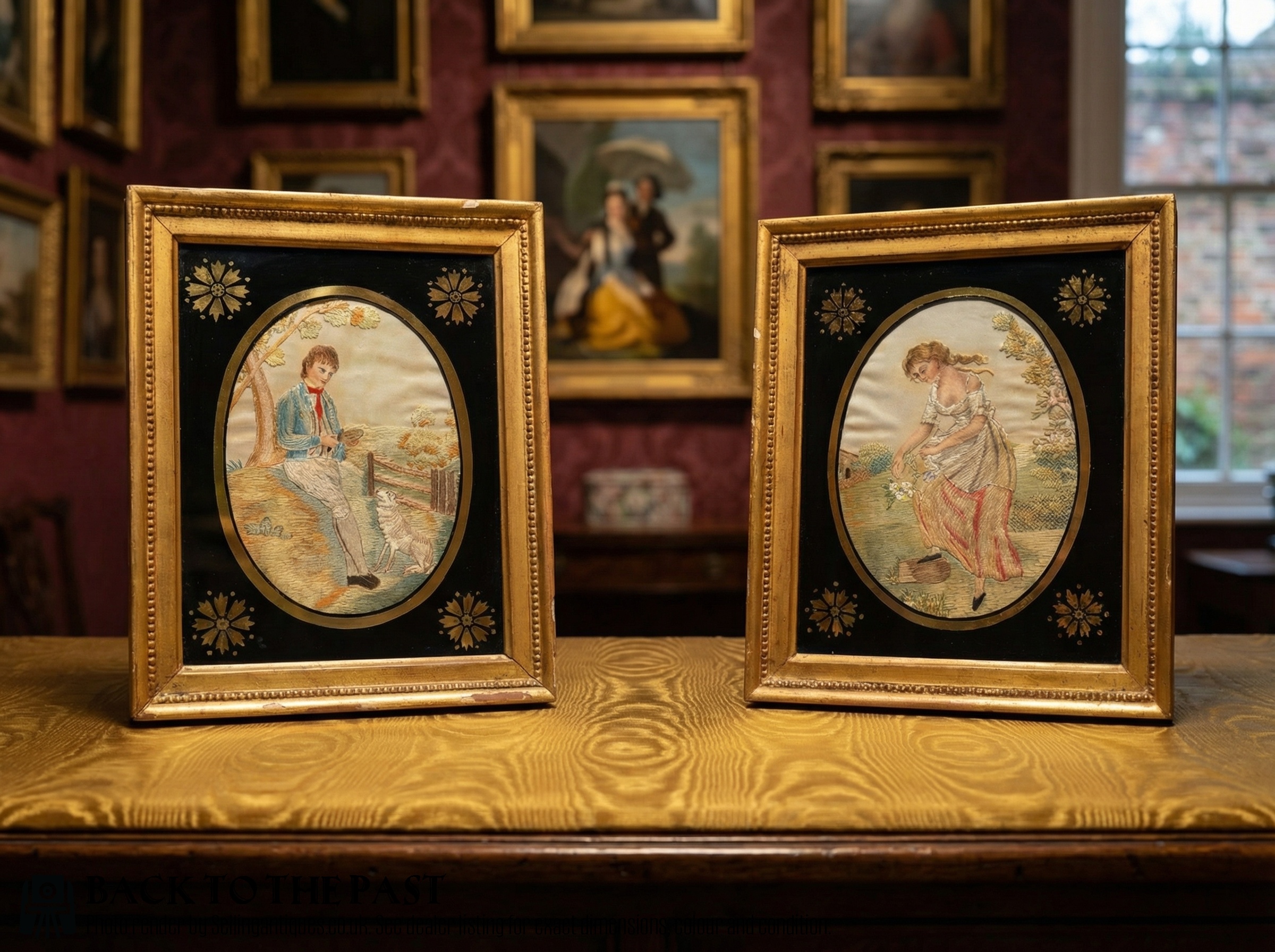
The versions most commonly met on this page span the eighteenth and nineteenth centuries, taking forms such as Georgian silk works and Regency woolwork pictures. Many retain their original frames, including giltwood and verre églomisé glass surrounds.
Materials and construction
These works rely upon natural textiles, principal among them being silk and wool stitched onto linen grounds. Stitchers used techniques ranging from fine silk work to gros and petit point, often combining wool threads for texture.
Presentation was integral to creation, with pieces housed in rosewood or giltwood frames. Several incorporate verre églomisé, a process of cold painting on glass with gold or silver leaf that frames the textile.
Antique Pastoral Embroidery Retail Price Guide 2026
Typical asking prices for pastoral embroidery among the pieces listed under this phrase on Sellingantiques today, from the lower quarter to the upper quarter. They describe what is for sale here now, not the wider market.
A nineteenth-century woolwork girl in a garden stares out from behind glass, watched over by a black glass frame.
Judging quality
Quality rests upon the finesse of the needlework and the survival of the materials. Silk threads hold colour differently over centuries, and the crispness of the stitchwork distinguishes finer artisan execution from simpler domestic efforts.
The housing contributes heavily to the overall standard. Pieces retaining period frames such as original giltwood or mezzotint glass demonstrate greater integrity than those later remounted.
The Antique Pastoral Embroidery Glossary
- Verre églomisé
- A method of applying cold paint and metal leaf to glass, frequently used for decorative borders on frames. This technique protects the inner view while adding reflective depth.
- Silk work
- Embroidery executed primarily using silk threads. It allows for delicate shading and luminous detail in pictorial scenes.
- Woolwork
- Needlework utilising wool threads, sometimes termed crewel work or gros and petit point. These stitches provide robust texture and heavier coverage on the linen ground.
- Needlework picture
- A framed textile created specifically as wall art rather than functional clothing or furnishings. They imitate paintings through the medium of thread.
Antique Pastoral Embroidery: Frequently Asked Questions
How were pastoral embroideries displayed?
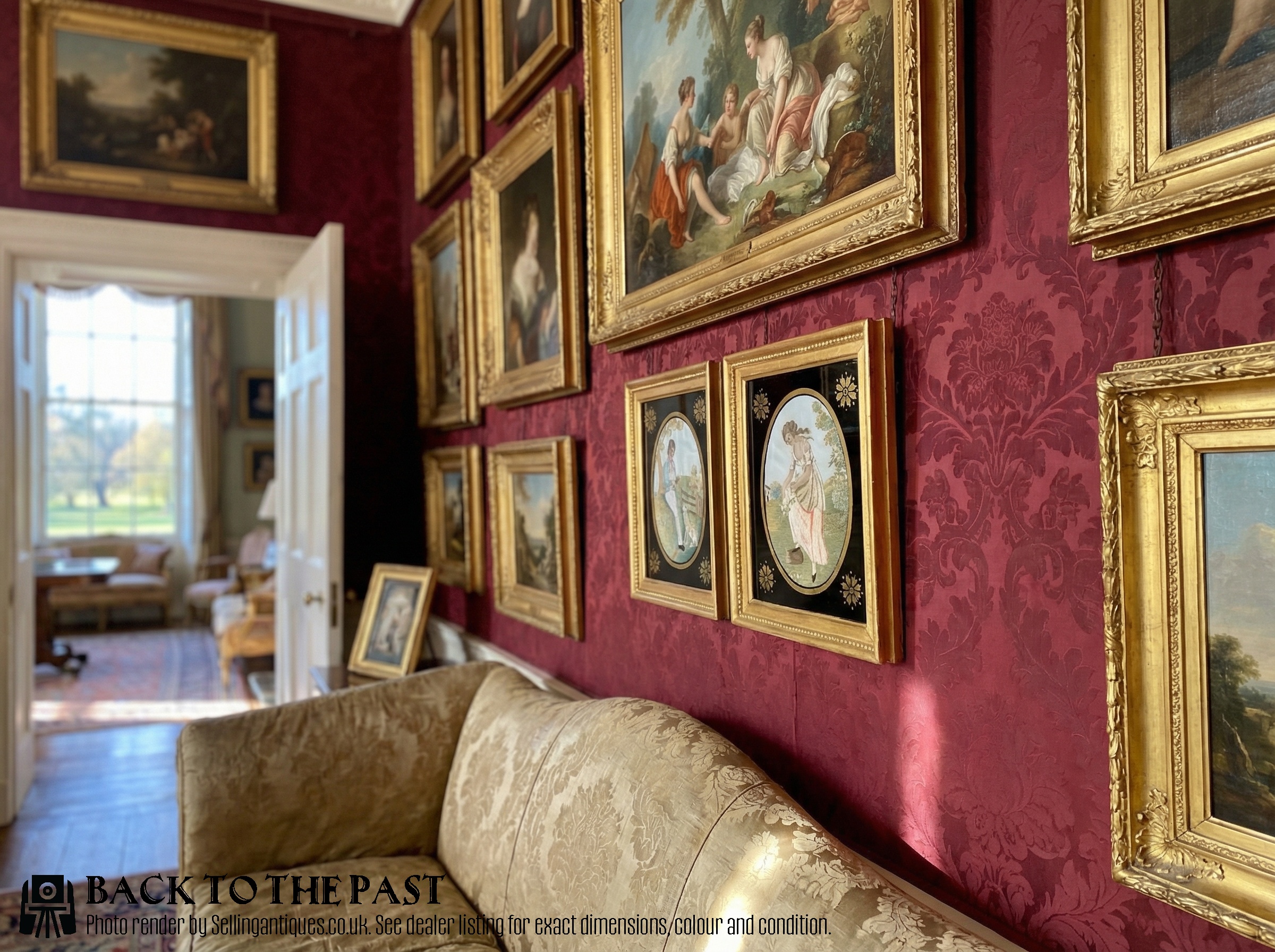
These textiles were framed as wall art to decorate principal rooms in Georgian and Regency houses. They hung alongside oil paintings and prints as part of polite interior decoration.
Most retain their original surrounds, which often include giltwood frames or decorative glass mats that protected the delicate silk and wool from dust and handling.
What subjects appear in these embroideries?
The imagery focuses on idealized rural life, featuring shepherdesses, farmers, and young figures within enclosed gardens. These pastoral themes reflect contemporary romanticized views of the countryside.
Scenes frequently incorporate architecture, trees, and domestic animals alongside the central human figures to compose a balanced landscape.
How do I date an embroidery?
Dating relies upon a combination of the textile materials, the stitch techniques, and the framing style. Eighteenth-century examples often feature fine silk work on linen, whilst nineteenth-century pieces may employ heavier woolwork.
Original frames offer reliable clues, as Regency giltwood and verre églomisé glass surrounds match the prevailing aesthetic of their specific decade of manufacture.
Are these works made by professionals?
Needlework was taught as an accomplishment for women of higher social standing, meaning many pieces originated in domestic settings. Others emerged from professional workshops and schools.
The complexity of the stitching and the sophistication of the design usually indicate whether a piece was worked by an amateur or a skilled artisan.