




Antique Pictorial Needlework
Antique pictorial needlework brings centuries of stitched scenes, figures and heraldry directly into your home.
Antique Pictorial Needlework
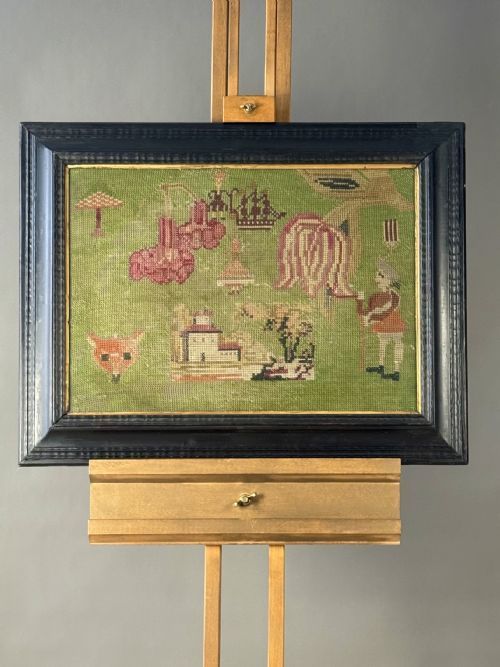
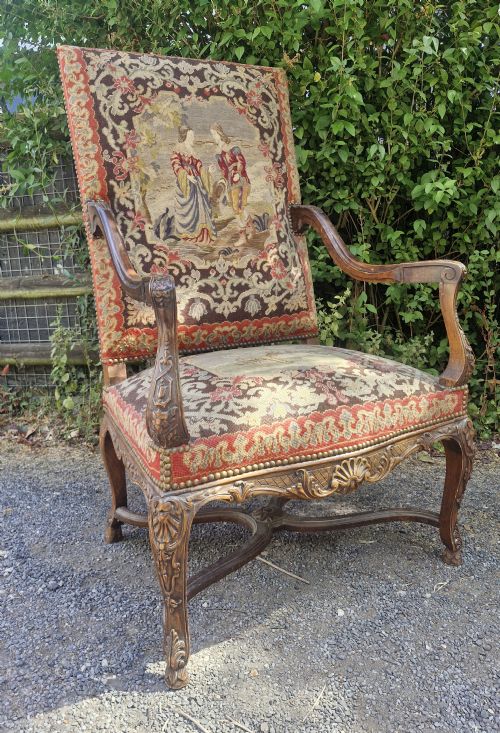
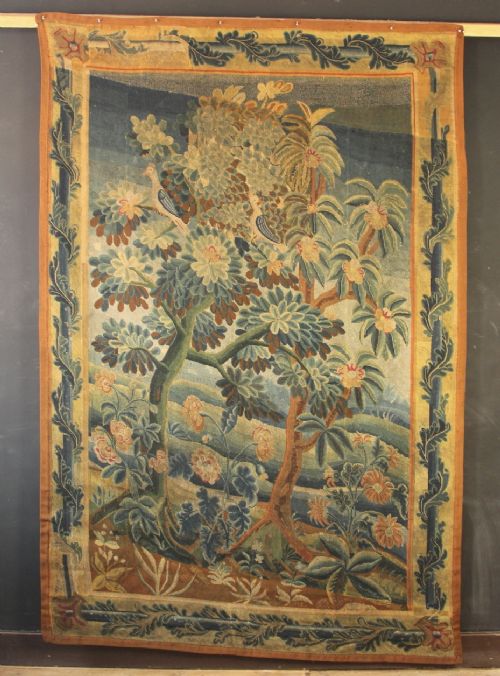
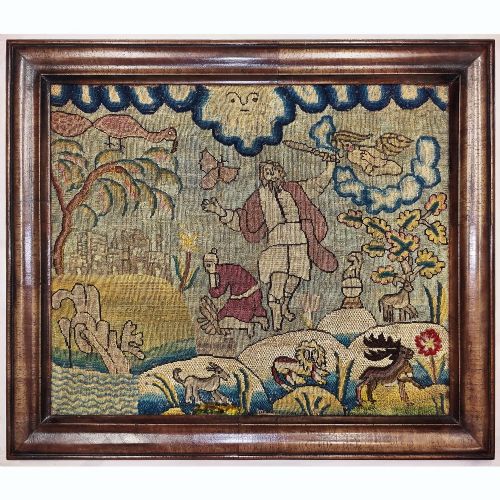
Antique pictorial needlework comprises framed textile art, tapestries, samplers and embroidered panels created across the sixteenth, seventeenth, eighteenth and nineteenth centuries. These works range from small framed beadwork fragments and samplers to large European tapestries and upholstered furnishings.
The pieces on this page span diverse origins and styles, including Stuart, Georgian, Victorian and French Baroque examples. Buyers frequently encounter framed needlework pictures depicting figures and scenes, alongside cushion covers and samplers executed in wool, silk and metal thread.
How they were made
These works rely on foundational textiles such as linen which artisans stitched using wool, silk and metal threads. Techniques encompass intricate embroidery, gros point and beadwork applied to form detailed pictorial scenes.
Framing forms an integral part of presentation, with surviving pieces often retained in period wooden frames, including carved wood and rosewood enclosures that protect the delicate textiles within.
Stitched entirely by hand, these centuries-old samplers preserve the secret spelling mistakes of children from the Georgian era.
What varies in quality
The distinction between standard works and exceptional pieces rests upon the finesse of the needlework and the complexity of the pictorial design. Early examples utilising silk and metal thread often display superior chromatic depth and compositional intricacy.
Preservation of the original textile and the integrity of the surrounding period frame significantly influence the standing of an item. Pieces retaining crisp detail in figures and scenes command greater attention from collectors.
The Antique Pictorial Needlework Glossary
- Sampler
- A piece of needlework produced as a demonstration or test of skill in various stitches, often featuring alphabets, motifs and maker names.
- Gros point
- A type of needlepoint embroidery worked on coarse canvas with wool yarn, creating a durable and textured surface used in tapestries and furnishings.
- Tapestry
- A form of textile art traditionally woven on a loom or executed in heavy needlework, depicting pictorial narratives and historical scenes.
- Metal thread
- Fine wire or metal-wrapped silk threads utilised in advanced embroidery to add shimmering detail and heraldic highlights.
Antique Pictorial Needlework: Frequently Asked Questions
How do I hang antique needlework?
Position framed textile art away from direct sunlight to prevent fading of wool and silk threads over time. Maintain stable indoor humidity levels to protect the underlying linen and wood frames.
Ensure the hanging hardware is securely fixed to support the weight of the framed piece without placing strain on the antique structure.
How do I date a sampler?
Examine the stitched dates, names and genealogical details often included by the original maker within the composition. Stylistic indicators such as border designs and alphabet fonts also offer clues to the period.
Compare the materials, such as the weave of the linen ground and the type of wool or silk threads, against known examples from the same era.
What is the difference between tapestry and embroidery?
Tapestries are traditionally woven structures where weft threads create the image directly on a warp, though the term also applies to heavy needlework panels. Embroidery involves stitching decorative threads onto a pre-existing woven foundation fabric.
Pictorial needlework generally relies on embroidery techniques applied to canvas or linen rather than loom-weaving the entire image from scratch.