

Regency Drop Leaf
A regency drop leaf table brings clever folding flaps and rich cabinet woods together to suit rooms of any proportion.
Regency Drop Leaf
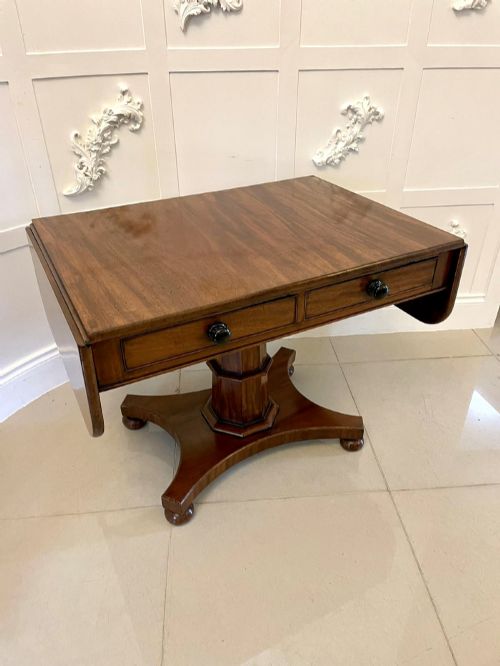
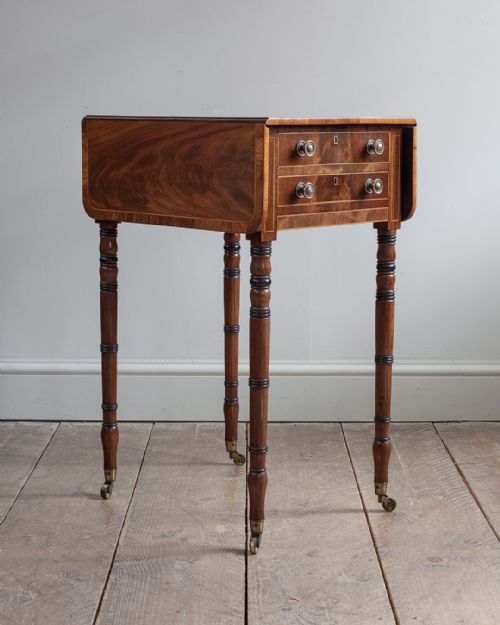
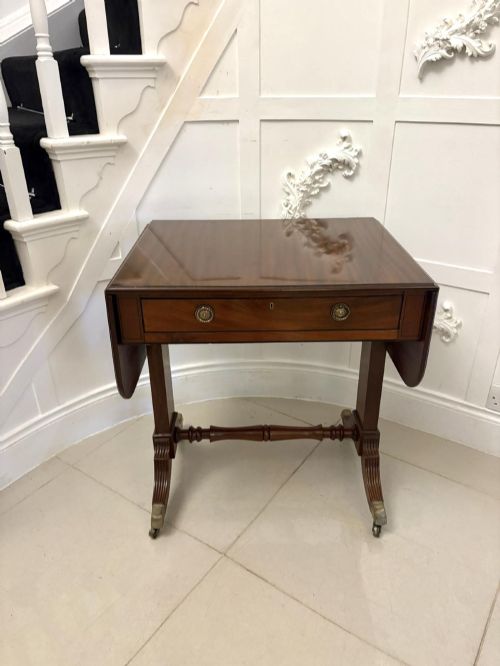
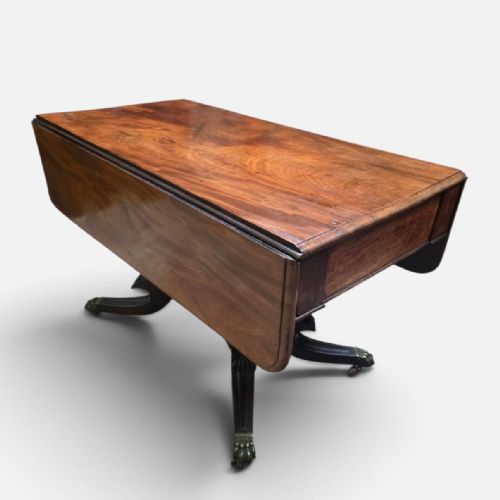
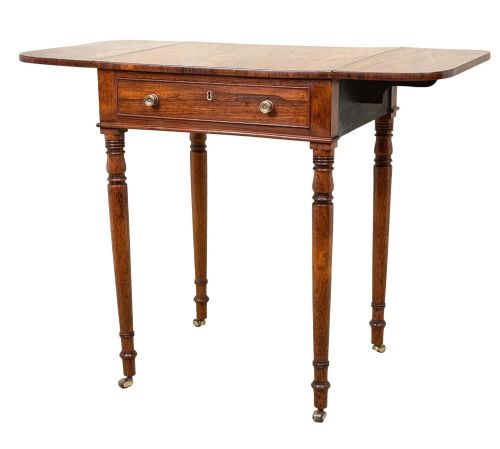
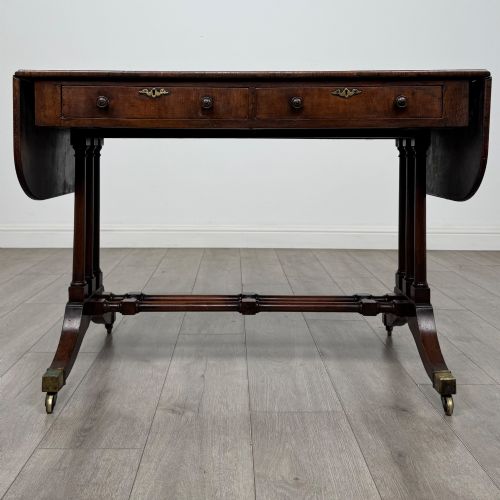
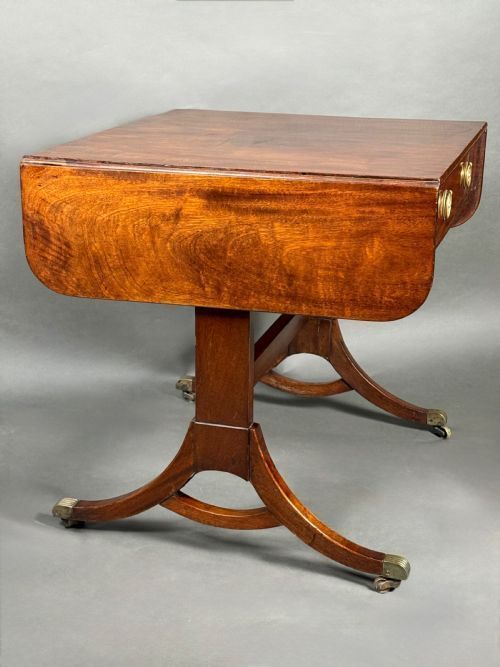
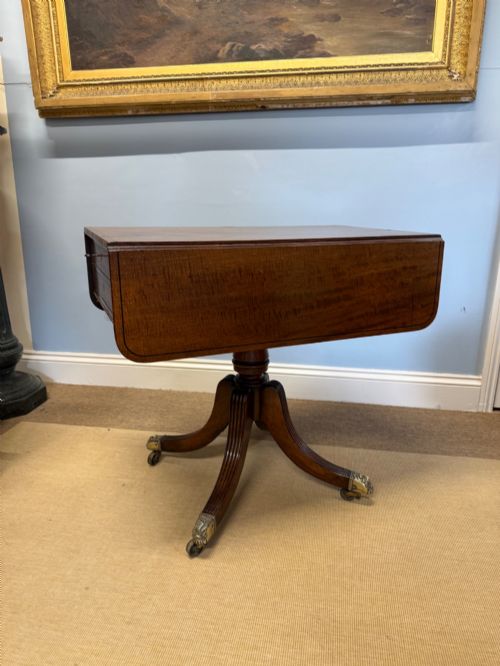
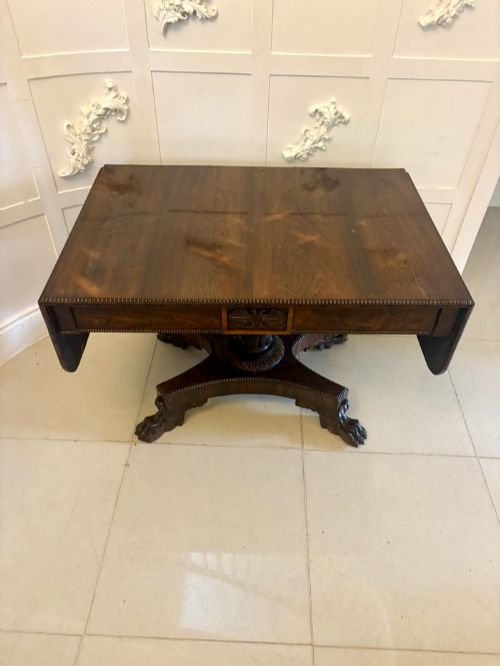
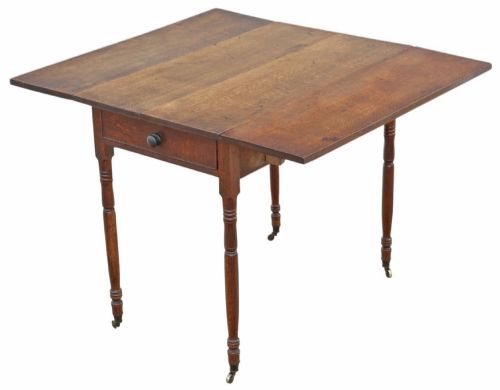
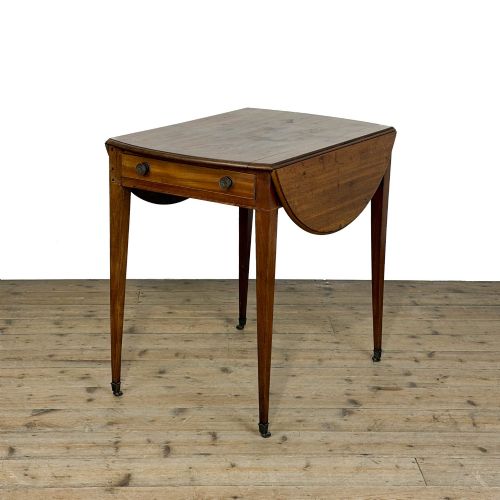
When you search for a regency drop leaf, you encounter tables designed with hinged flaps that expand the surface when needed and drop away compactly against the base. The selection spans formal sofa tables, compact pembroke tables, and larger dining formats.
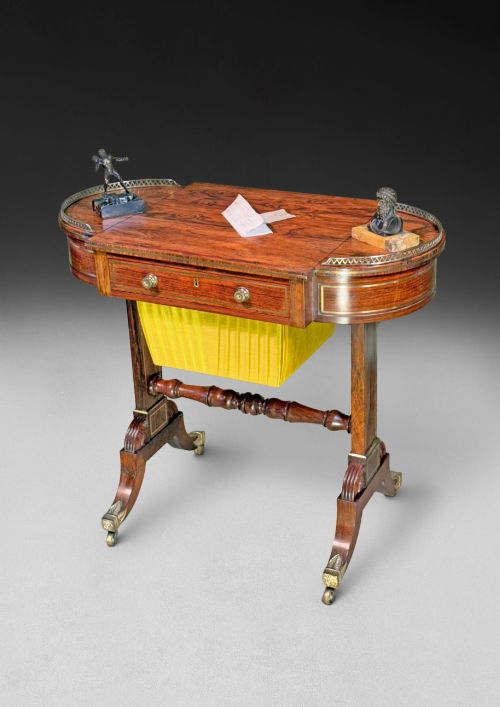
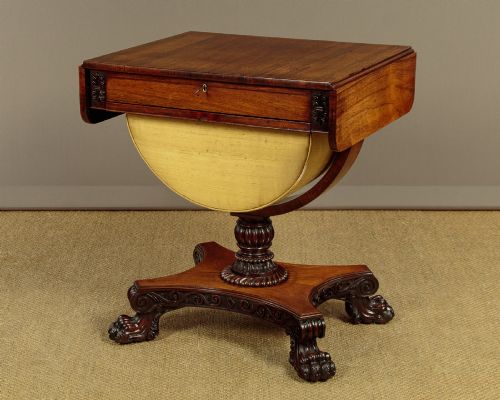
Most examples originate from the Regency, Georgian, and wider nineteenth-century periods, showing periods from eighteen hundred onwards alongside later Victorian and Edwardian interpretations. Forms include work tables fitted for sewing, lamp tables, and freestanding centre tables.
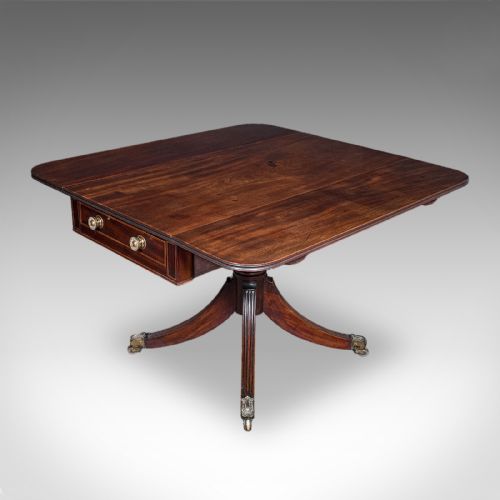
The prevailing aesthetic relies on clean architectural lines, elegant column supports, and occasionally lyre ends or brass castors. These pieces served versatile functions in period drawing rooms and parlours, adapting easily from modest side stands to dining configurations.
Materials and construction methods
Cabinetmakers of the period relied heavily on solid and figured timbers, frequently selecting rich mahogany, flame mahogany, and dark rosewood for exterior surfaces. Contrasting details often incorporate satinwood, boxwood, and delicate wood inlay to frame drawers and table edges.
Structural integrity depended on stable secondary woods and precise joinery to support the hinged leaves under daily use. Brass fittings, including decorative castors and key escutcheons, complete the construction details recorded across the archive.
Listings feature woods including rosewood, satinwood, and flame mahogany.
Factors defining superior examples
Quality rests primarily in the choice of timber and the natural figuring displayed across the top and the drop leaves. Highly prized specimens exhibit book-matched flame mahogany or richly grained rosewood rather than plain stock.
Refinement of proportion and secondary details also separate ordinary items from exceptional ones. Finely turned pillars, precise crossbanding in contrasting woods, and original brass castors indicate skilled workshop execution.
James Mein·Druce and Co·Gillows
The Regency Drop Leaf Glossary
- Drop leaf
- A table fitted with hinged flaps on one or two sides that can be raised to enlarge the surface area. This mechanism allows the furniture to save space when not in use.
- Pembroke table
- A small occasional table featuring two hinged drop leaves on opposite sides and usually a single drawer. It originated in the eighteenth century and remained popular through the Regency era.
- Sofa table
- A rectangular freestanding table designed to stand in front of a sofa, featuring drop leaves at the short ends. They often incorporate trestle or pillar supports.
- Crossbanding
- A strip of veneer applied to the borders of a table top or drawer front so that the grain runs perpendicular to the main surface. This technique creates a neat decorative frame.
Regency Drop Leaf: Frequently Asked Questions
What is a regency drop leaf table used for?
These tables served multiple functions in period interiors, acting as dining surfaces, writing desks, or side stands depending on their specific form. The drop leaves allowed households to adjust the footprint of the furniture according to the company present.
Smaller formats such as pembroke or work tables held sewing equipment or tea wares beside a chair. Larger dining and breakfast versions stood ready in the centre of the room until extended for meals.
How do I identify a regency period piece?
Authentic Regency examples typically date from roughly eighteen hundred to the eighteen twenties, displaying restrained classical proportions and architectural influence. Look for distinctive column supports, brass paw castors, and precise inlay work.
Timber choice also guides attribution, with dense mahogany and dark rosewood dominating the era. Grain patterns and structural construction methods help distinguish genuine period work from later reproductions.
Can I use a drop leaf table every day?
These tables were built for daily household service by skilled cabinetmakers using robust timbers like solid mahogany. The hinged mechanisms and drop leaves withstand normal use provided the support arms are handled carefully.
Routine maintenance involves protecting the polished wood surface from moisture and direct heat. Regular gentle polishing preserves the timber and maintains the finish over years of practical service.