



Regency Drop Front Desk
These regency drop front desk pieces bring architectural presence and concealed writing surfaces to a room.
Regency Drop Front Desk
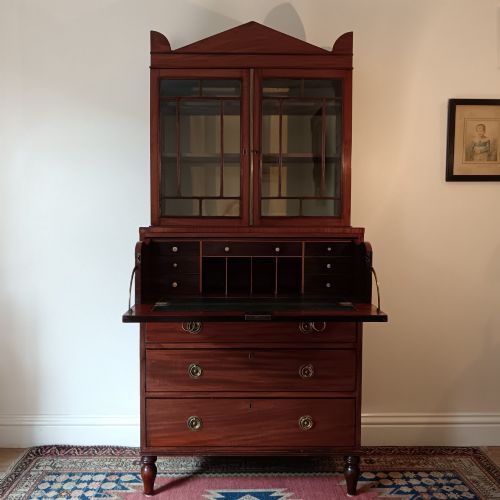
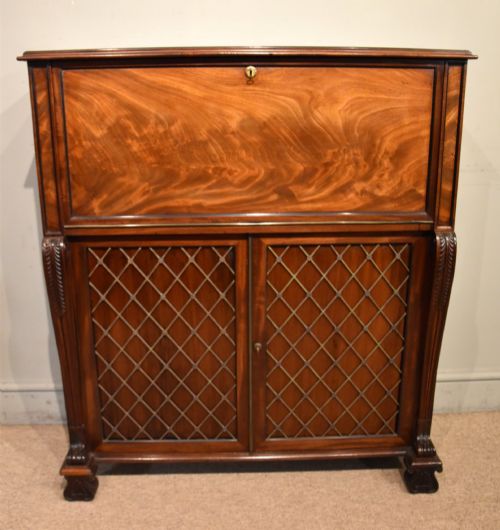
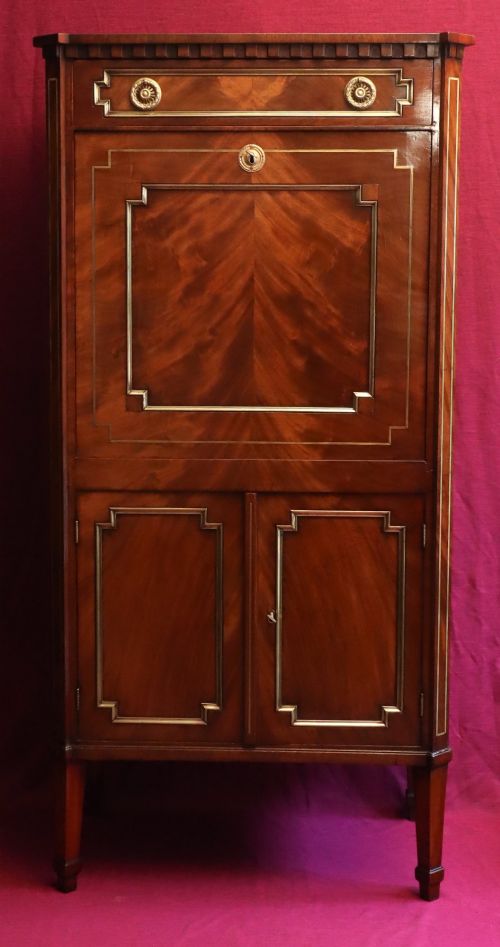
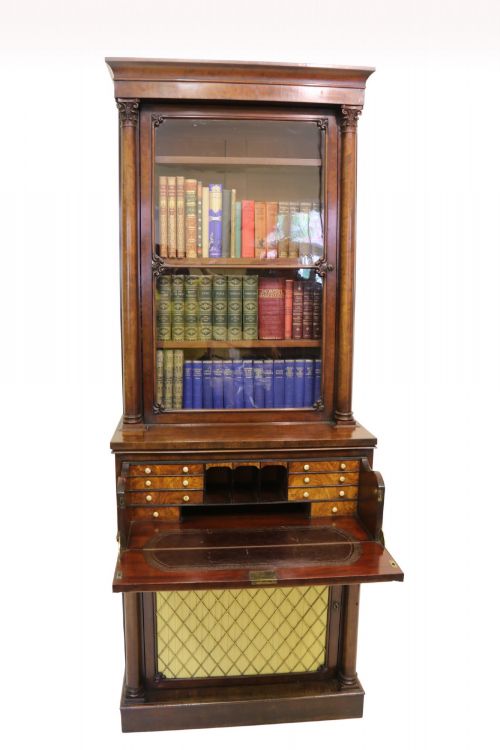
A regency drop front desk takes several distinct structural forms, most commonly appearing as taller secretaire bookcases or broader chests of drawers fitted with a pull-down writing flap. The selection spans the nineteenth century, Georgian, and Victorian periods, drawing on Regency, George III, George IV, and Irish Regency design traditions.
Materials and Construction
The pieces rely primarily on solid mahogany and flame mahogany veneer, matched with secondary woods such as oak and detailed with brass and glass elements. Interiors often incorporate fitted writing compartments lined with baize or leather surfaces.
Cabinetmakers utilised figured timber selections to create striking grain patterns on the drop fronts and drawer facades, while internal drawer divisions and pigeonholes required precise joinery techniques.
The listings on this page span the 18th, 19th, and Victorian centuries, incorporating mahogany, oak, brass, and glass.
Assessment of Quality
Quality rests upon the selection of the timber, particularly the consistency of flame mahogany veneer across prominent surfaces, and the restraint or ambition of the brass inlay. Proportion and scale dictate whether a cabinet holds an imposing presence or a refined, compact balance.
The sophistication of the internal fittings, including secret drawers and pigeonhole arrangements within the fall front, separates standard production from workshop-attributed pieces.
George Oakley·Gillows of Lancaster·Gillington of Dublin
The Regency Drop Front Desk Glossary
- Secretaire
- A desk or chest of drawers containing a concealed writing drawer or a drop-down front panel that reveals a fitted writing surface and compartments. This form bridges the utility of a chest with the function of a writing desk.
- Escritoire
- An alternative term for a writing cabinet or desk featuring a fall front flap. It originates from the French term for writing.
- Flame mahogany
- A veneer cut from the fork of the mahogany tree where the branch meets the trunk, producing a distinctive flickering, flame-like grain pattern. Cabinetmakers placed these veneers symmetrically to catch the light.
- Baize
- A coarse woolen material resembling felt, historically used to line writing surfaces and pull-out flaps on desks. It provides a durable, soft texture for writing.
- Wellington chest
- A tall, narrow chest of drawers secured by a hinged locking stile on one side that fastens with a key. This form occasionally incorporates a secretaire drawer within the stack.
Regency Drop Front Desk: Frequently Asked Questions
What is a regency drop front desk?
A regency drop front desk is a piece of furniture featuring a hinged writing flap that pulls down or drops forward to reveal a fitted interior of small drawers and pigeonholes. These forms include secretaire bookcases, chests of drawers, and cabinets.
They combine upright storage with a concealed writing surface, making them practical for correspondence while maintaining a formal exterior aesthetic.
How do I identify a Gillows piece?
Pieces attributed to Gillows of Lancaster often display specific structural signatures, high-grade figured mahogany, and refined internal stationery fittings. Documentary evidence or stylistic comparisons help establish the attribution.
Workshop hallmarks include meticulous dovetailing and characteristic secondary timber choices consistent with Lancashire production.
Where were these desks placed?
These pieces sat in libraries, drawing rooms, and studies where correspondence and household administration took place. The upper bookcase sections housed libraries, while the lower desks managed papers.
Their dual function allowed them to serve as both display cabinets and functional writing stations in formal interiors.
How do I care for flame mahogany?
Flame mahogany requires protection from direct sunlight and excessive temperature fluctuations to prevent the veneer from drying or lifting. Regular dusting with a soft cloth maintains the finish.
Applied wax feeds the timber and preserves the depth of the grain without building up heavy chemical residues.