
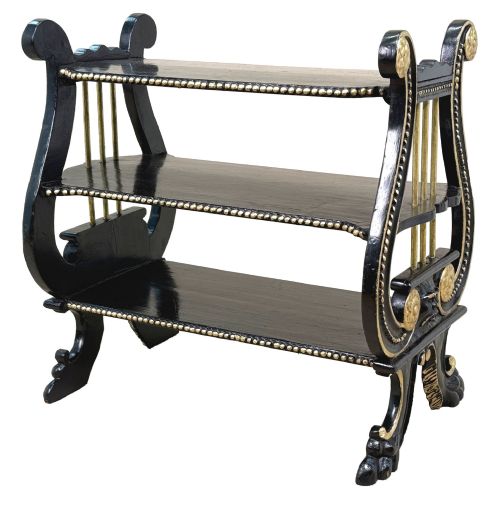
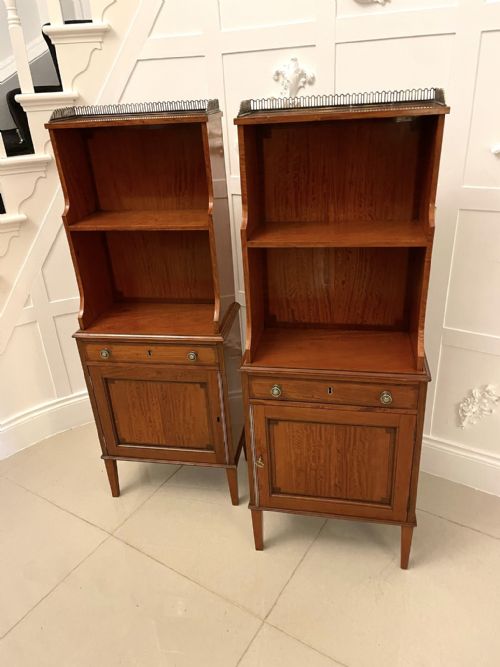
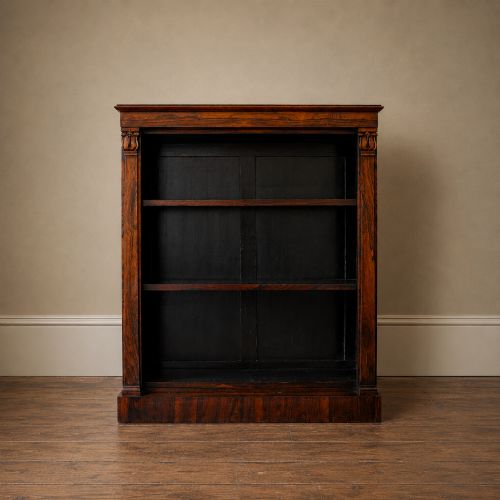
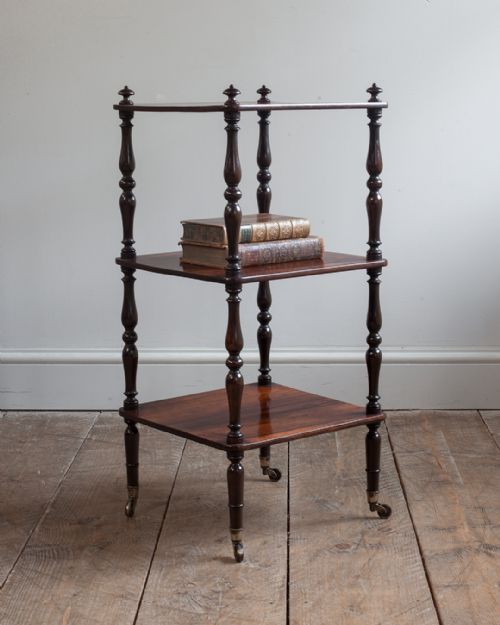
Regency Display Shelf
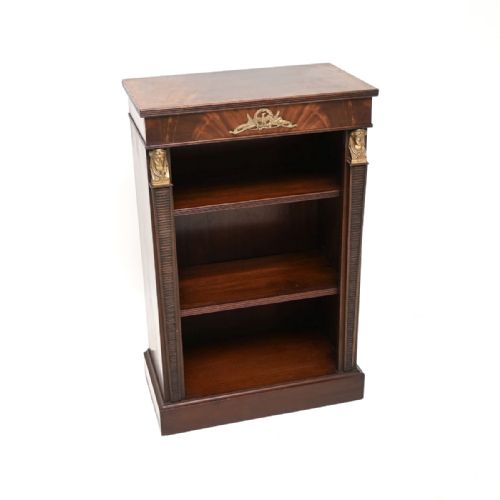
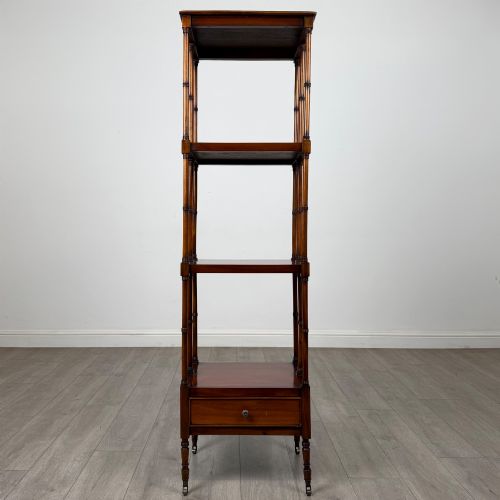
A regency display shelf organises books and small ornaments with tiered tiers and slender supports, bringing structured display space to a room.
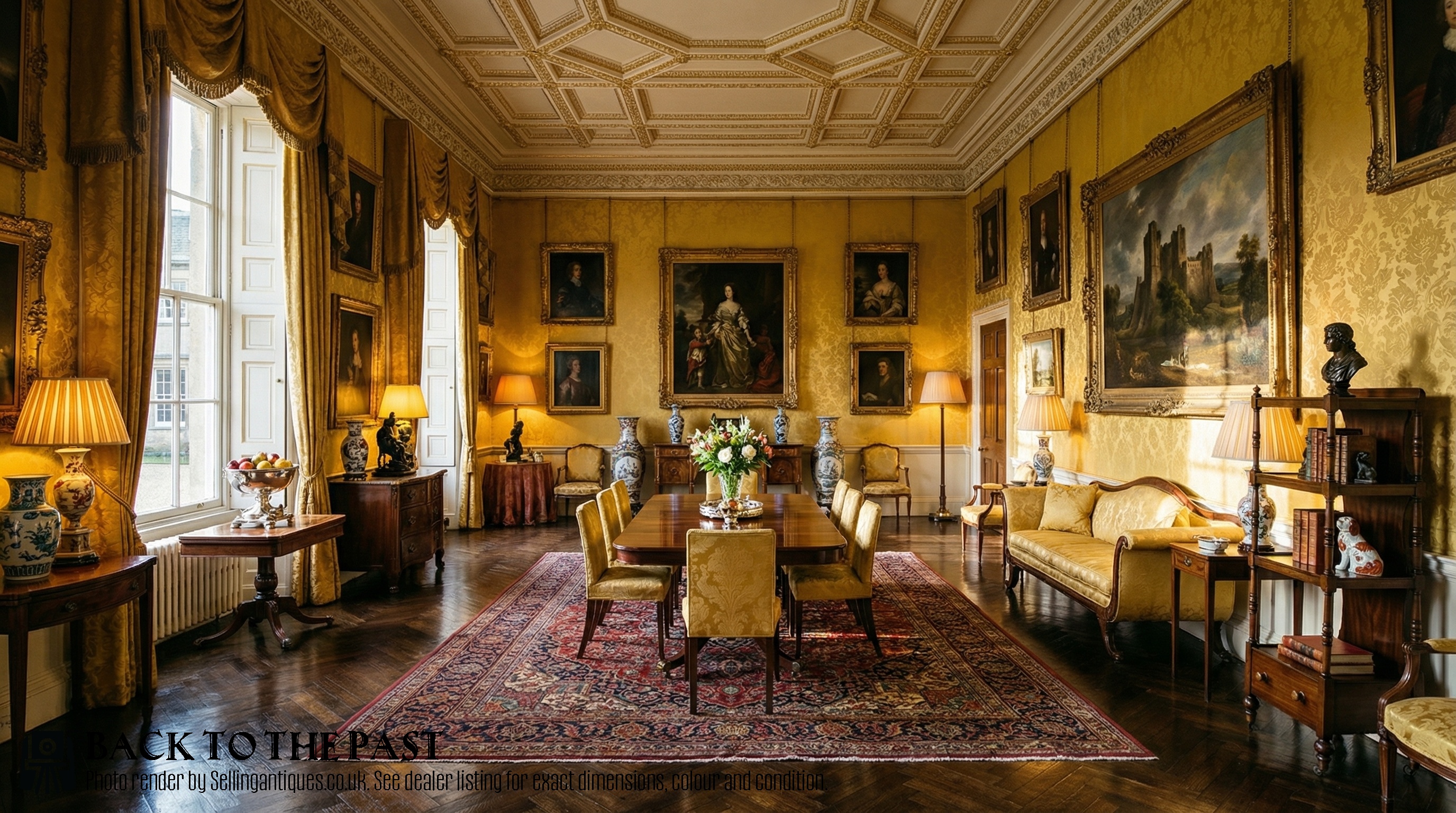
Regency Display Shelf
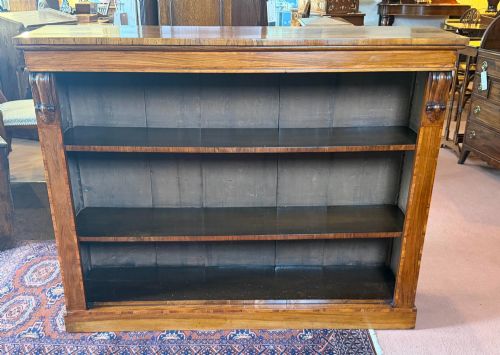
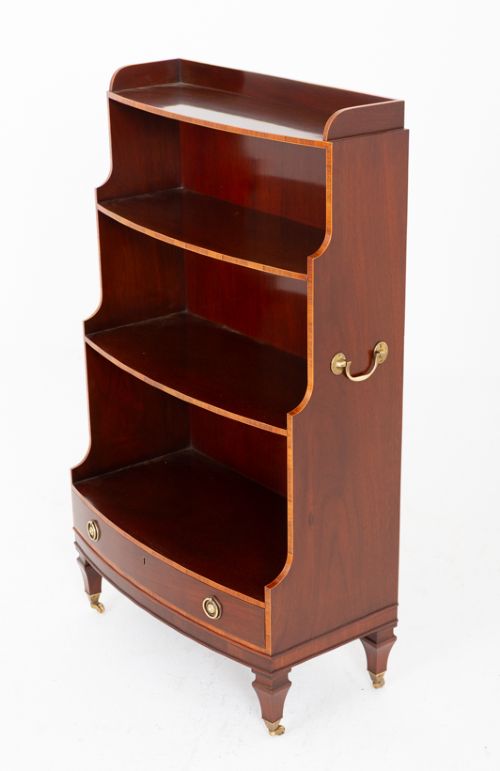
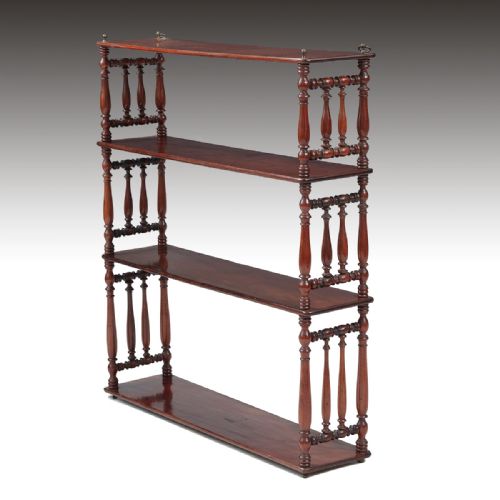
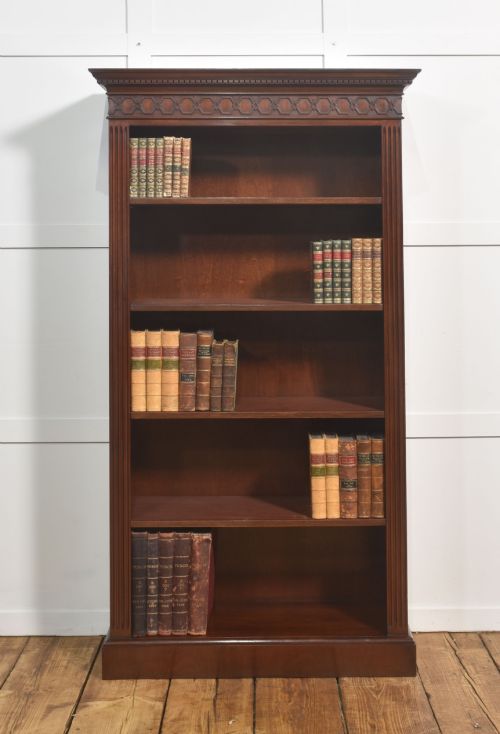
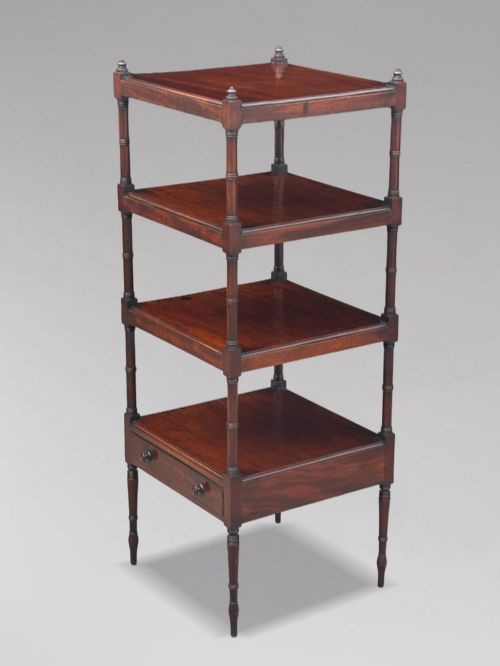
A regency display shelf encompasses open bookcases, multi-tiered whatnots, wall hanging shelves, and étagères designed to hold books and decorative objects. The pieces originate primarily from the nineteenth century, including the Regency and William IV periods, alongside later revival interpretations.
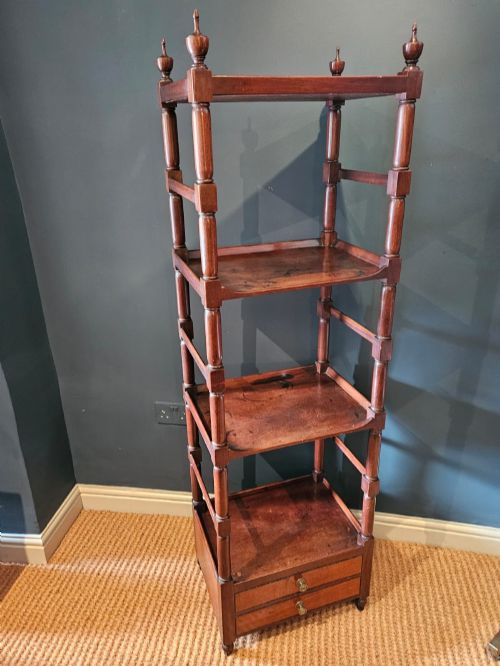
Buyers encounter freestanding tiered furniture most frequently on this page, often built with graduating shelves supported by turned columns or uprights. These vertical formats provide practical storage for volumes and small possessions without dominating the floor area of a room.
Materials and construction methods
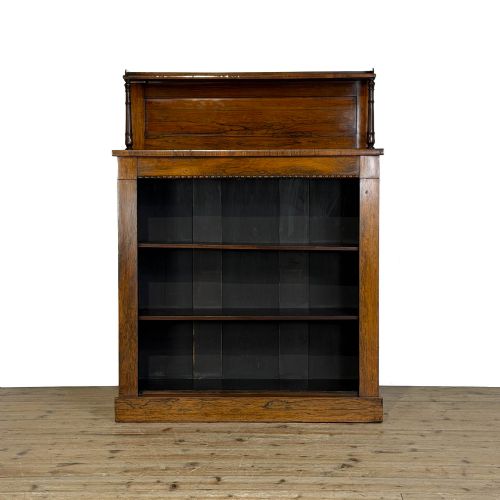
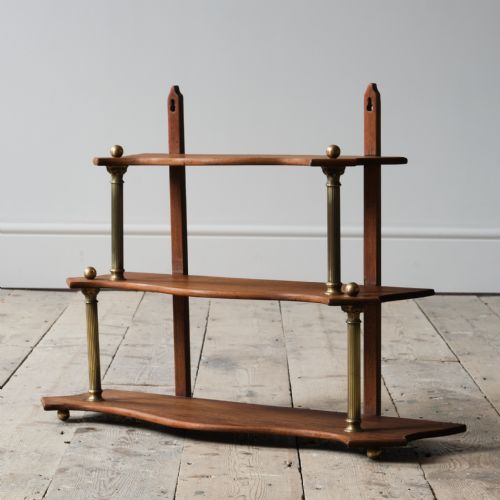
Cabinet makers constructed these pieces predominantly using timbers such as mahogany, rosewood, and walnut, frequently selecting figured veneers like flame mahogany or birdseye maple for visible surfaces. Brass details appear regularly, taking the form of inlaid lines, gallery rails, or structural supports that accent the timber.
Joinery techniques focus on stability across multiple tiers, utilising upright columns or shaped sides to bear the weight of stacked books and porcelain. Wall hanging versions incorporate secure brackets or fixing points, while freestanding variants rely on solid corner posts and sturdy base sections.
The selection includes portable bookshelves, music stands, and corner stands alongside standard open bookcases and étagères.
Distinctions in quality
The refinement of the timber selection dictates much of the distinction between standard and superior examples, particularly where richly figured veneers or carefully matched grains are employed. Finer pieces demonstrate meticulous attention to secondary details like brass inlay, finely turned columns, and well-proportioned graduating tiers.
Structural integrity and original components further separate examples, as does the presence of maker attribution or workshops adhering to high standards of period cabinet making. The crispness of carved elements and the survival of patinated surfaces indicate the level of craftsmanship invested in the construction.
Gillows
The Regency Display Shelf Glossary
- Whatnot
- A piece of furniture consisting of multiple open shelves for displaying ornaments or books, developed in the late eighteenth century and popular throughout the nineteenth century.
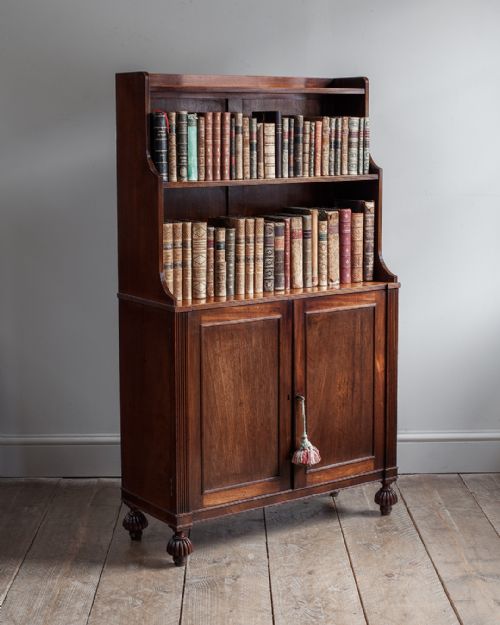
- Waterfall bookcase
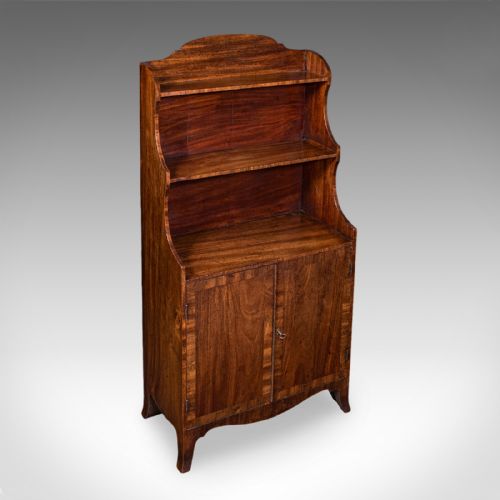
- A standing set of bookshelves where each tier steps back from the one below it, creating a profile resembling descending water.
- Étagère
- A piece of furniture with a series of open shelves for displaying small objects, similar in function to a whatnot.
- Chiffonier
- A low cabinet, often featuring shelves or a raised superstructure above enclosed storage space, used for holding books or serving ware.
- Brass inlay
- The technique of embedding thin strips or shaped pieces of brass into the wood surface to create decorative patterns.
Regency Display Shelf: Frequently Asked Questions
What is a regency display shelf used for?
These pieces serve to display collections of books, ceramics, and small decorative objects across multiple open tiers or shelves. Their compact footprints allow them to fit into drawing rooms, libraries, and hallways where vertical storage is required.
Freestanding and wall-hung versions accommodate different spatial needs, keeping everyday items accessible while adding architectural interest to empty wall spaces.
How do I identify a period regency display shelf?
Period pieces from the early nineteenth century exhibit characteristic timber choices like rosewood, mahogany, and flame mahogany, often paired with brass inlay or fine turning. Construction methods reflect nineteenth-century cabinet making, including hand-cut joints and native secondary woods.
Revival pieces from later decades replicate these forms but typically display different internal construction methods and modern fastening hardware upon closer inspection.
Where should I place a whatnot in my home?
Whatnots suit corners, alcoves, and walls beside seating areas where their tiered shelves can be viewed from multiple angles. Their open construction maintains a sense of light and space in a room compared to heavy enclosed cabinetry.
Avoid placing antique veneered timber in direct sunlight or near active heat sources to prevent the wood from drying and warping over time.
Are hanging shelves sturdy enough for heavy books?
Wall-hung shelves are designed primarily for lighter volumes, decorative plates, and small ornaments rather than heavy reference books. The strength of a hanging shelf depends entirely on secure wall fixings and the structural integrity of the backboards.
Using appropriate wall anchors suited to your specific wall type ensures the piece safely supports its intended load.