
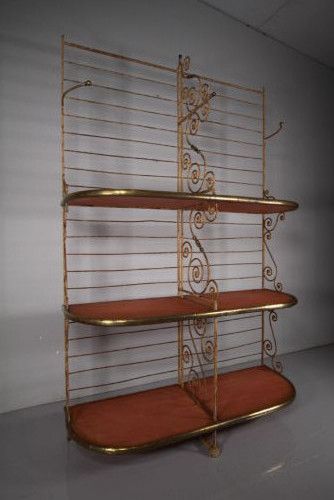
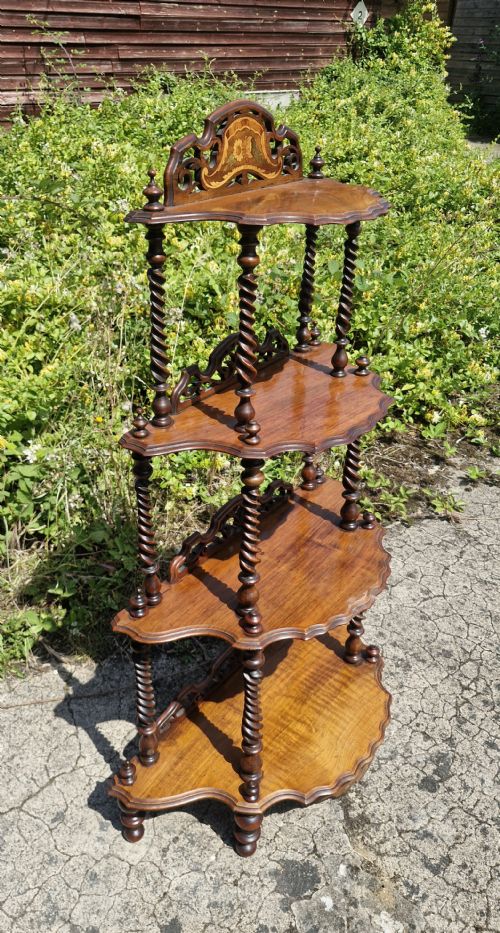
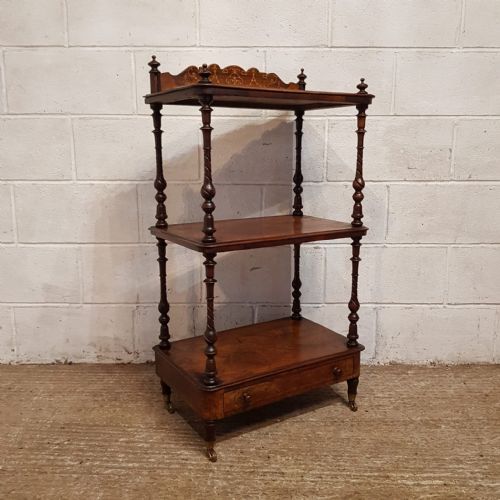


Vintage Etagere Unit
A vintage etagere unit brings open tiered display to any room, offering versatile surfaces for books, plants and ornaments.
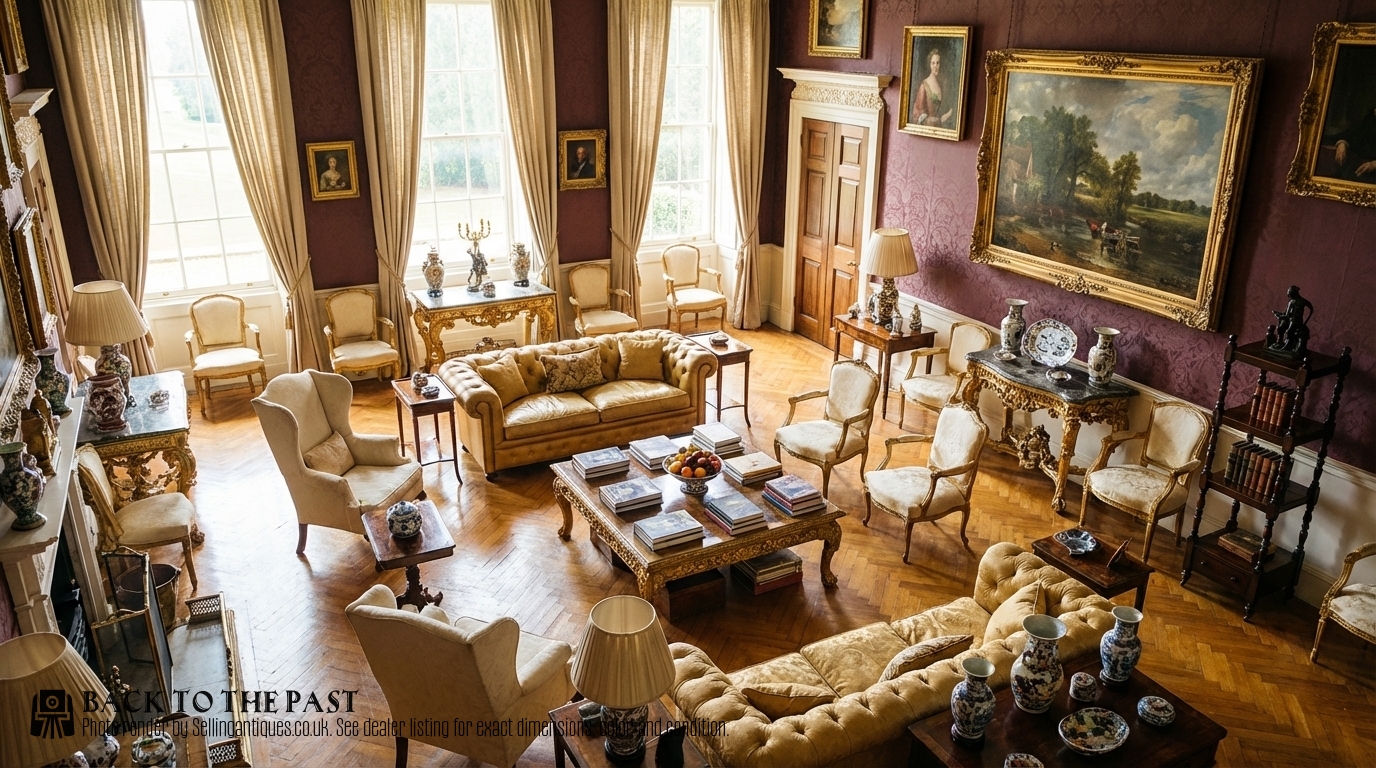
Vintage Etagere Unit
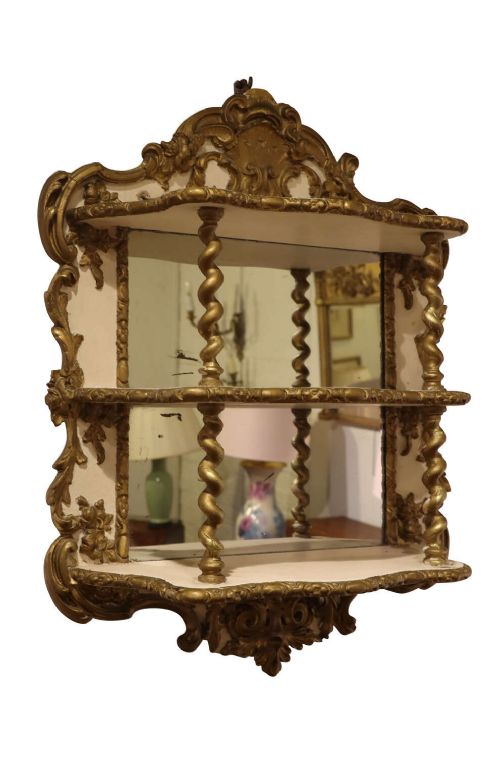
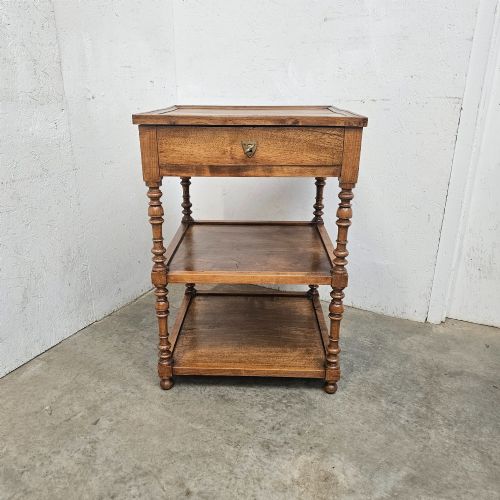
When you search for a vintage etagere unit, you encounter multi-tiered open shelving designed to showcase decorative objects rather than store heavy volumes. These pieces range from freestanding corner units and multi-tier floor stands to wall-mounted shelves.
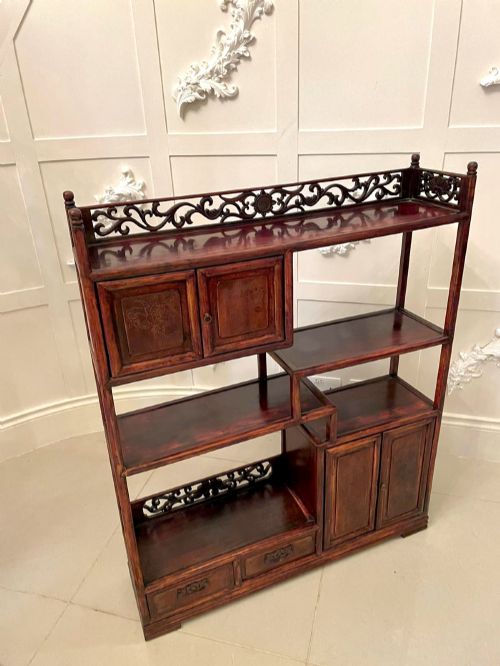
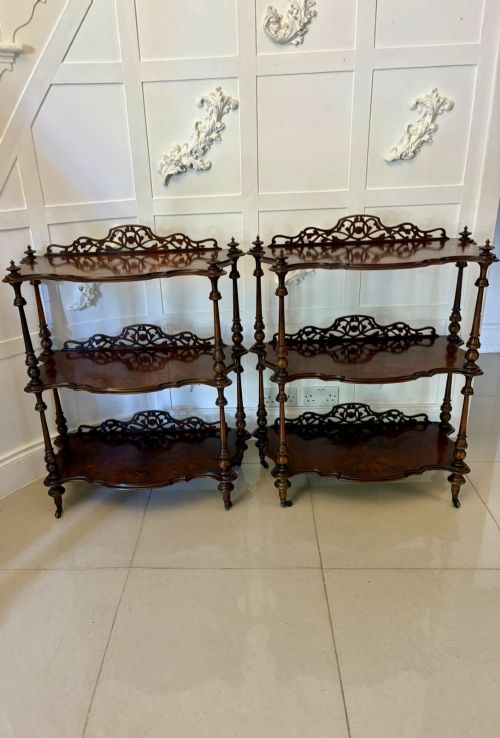
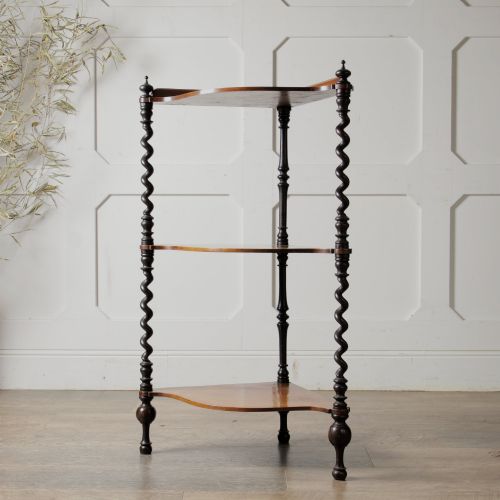
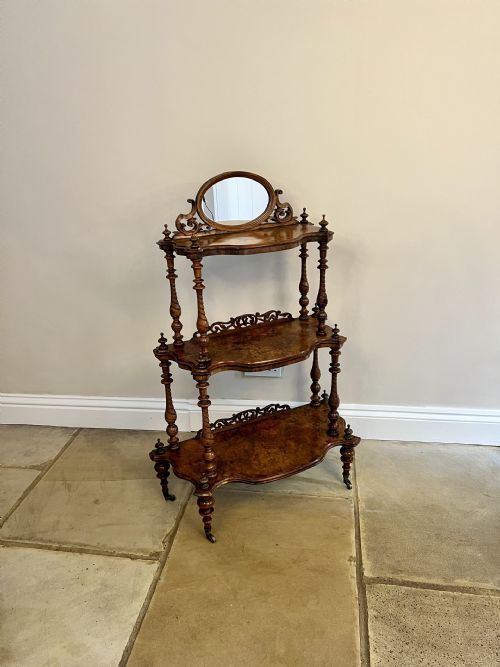
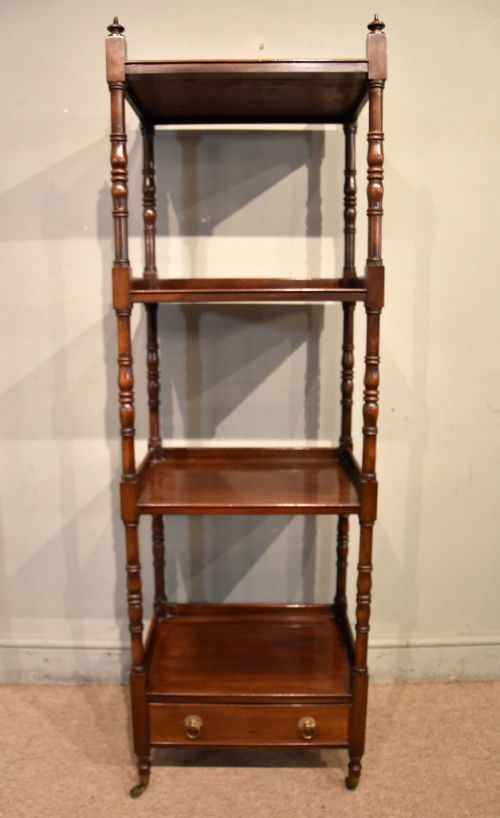
The most common examples on this page are Victorian and nineteenth-century pieces, frequently described as whatnots or display stands. Mahogany and burr walnut dominate the traditional English iterations, often featuring turned or barley twist supports.
Lighter alternatives also appear, including bamboo cabinets from the late nineteenth century and French walnut or wrought iron designs. Buyers select these items to introduce vertical display space into sitting rooms and hallways without blocking light.
Materials and construction
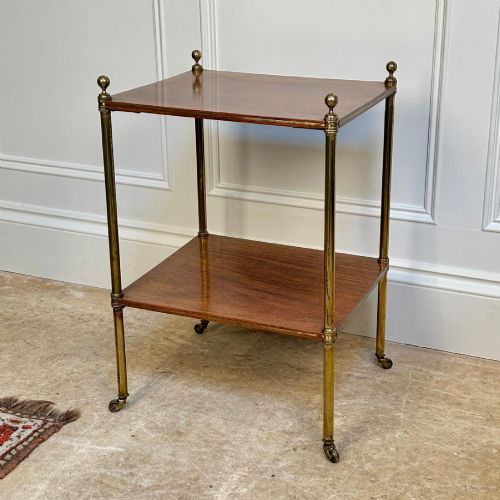
Timbers such as mahogany, walnut, burr walnut and rosewood form the structure of most wooden examples, paired with glass or brass details where appropriate. Cabinetmakers utilised figured veneers on primary surfaces to catch the eye.
Alternative materials include wrought iron and bamboo, reflecting diverse stylistic influences from French provincial designs to Anglo-Indian carving. Structural stability relies on tier-by-tier assembly, whether supported by turned wooden legs or metal scrollwork.
Several Victorian whatnots managed to survive two world wars while holding nothing heavier than a ceramic pug and a collection of seashells.
Assessing quality
Quality reveals itself in the choice of timber and the crispness of the turning or carving. Burr walnut and figured mahogany indicate a higher grade of manufacture than plain secondary woods.
Construction details separate standard items from superior examples. Sound joinery at the shelf junctions and refined brass fittings point to skilled workmanship during the period.
The Vintage Etagere Unit Glossary
- Etagere
- A piece of furniture consisting of a set of open shelves for displaying small objects or ornaments. These tiered stands developed in France during the eighteenth century.
- Whatnot
- A nineteenth-century multi-shelved stand used for displaying ornaments and books. It appears frequently in walnut and mahogany across the Victorian period.
- Barley twist
- A type of column or leg carved in a spiral shape resembling a twist of barley. This decorative turning is common on Victorian supports.
- Burr walnut
- Wood taken from the wart or burl of a walnut tree, yielding highly decorative grain patterns. Makers utilised these veneers on prominent surfaces.
- Aesthetics
- A late nineteenth-century design movement focusing on decorative arts and bamboo construction. Pieces from this era often feature light frames and Japanese-inspired motifs.
Vintage Etagere Unit: Frequently Asked Questions
What is an etagere used for?
An etagere provides multiple open tiers for displaying porcelain, silver, books and small decorative objects. They function well in drawing rooms, bedrooms and hallways where surface space is useful.
Because the shelves are open, these units keep collections visible from all angles without overwhelming the room visually.
How do I date a whatnot?
Dating relies on timber choices, turning styles and overall proportions. Victorian pieces often use burr walnut with barley twist columns, while Georgian examples tend to feature linear mahogany frames.
Examining the construction methods underneath the shelves and the type of fixings used also helps establish the era of manufacture.
Are these units sturdy enough for heavy books?
Most etageres and whatnots are intended for display items, decorative ceramics and lighter volumes rather than heavy reference libraries. The open tiered construction prioritises elegance over load-bearing strength.
Placing heavier items on the bottom tier helps maintain stability while keeping upper shelves light and balanced.
What is the difference between a whatnot and an etagere?
The terms often overlap in nineteenth-century British and French furniture. A whatnot typically refers to English tiered stands in mahogany or walnut, while etagere can describe French or lighter decorative framework.
Both serve the same primary purpose of tiered display, differing mainly in regional design vocabulary and decorative flourishes.