


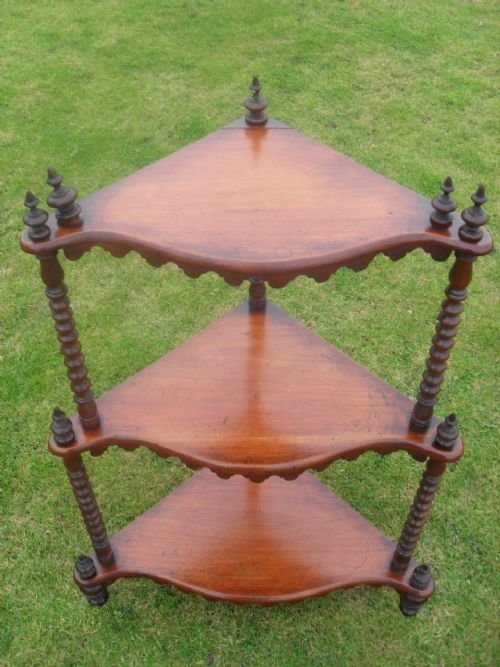
Warm Brown Whatnot
A warm brown whatnot offers tiered display and storage, bringing rich timber tones and practical charm to a room.
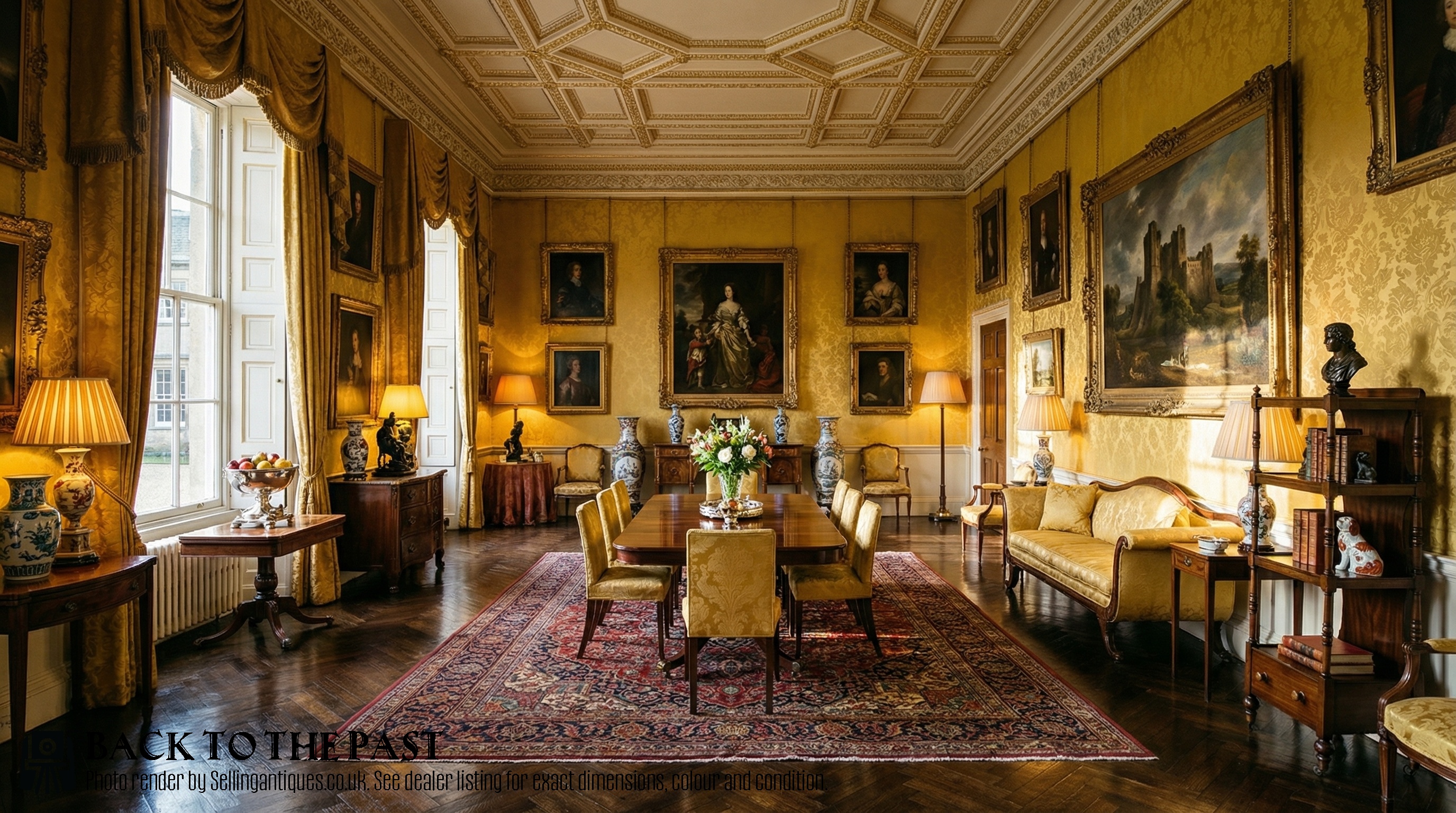
Warm Brown Whatnot
A warm brown whatnot is a tiered shelving unit designed for displaying objects or holding books, appearing in forms such as standing multi-tier units, hanging shelves, and cabinet combinations. When you search for this phrase, you meet pieces predominantly from the Victorian, Edwardian, and Regency periods.
The materials span rich timbers like mahogany and walnut, occasionally complemented by marble tops or boxwood inlay. These pieces serve as functional furniture that breaks up wall space or corners while adding deep, warm brown hues to an interior.
Materials and construction
Makers utilised dense hardwoods such as mahogany and walnut to build these tiered structures, ensuring stability across multiple levels of shelving. Grain selection played a major role in achieving the characteristic warm brown appearance of the timber.
Decorative touches included boxwood inlay, brass mounts, and inset marble tops, particularly on pieces dating towards the turn of the twentieth century. Joinery methods varied from simple upright supports with fixed shelves to more complex cabinet and buffet integrations.
Judging quality
Quality rests upon the selection of the timber and the crispness of any inlay or turning on the upright supports. Pieces with well-figured mahogany or walnut display a depth of colour that elevates the entire furnishing.
Structural integrity across multiple tiers marks the distinction between standard items and superior examples. Refined edge moulding and thoughtful proportions separate simple utility pieces from finer decorative furniture.
The Warm Brown Whatnot Glossary
- Whatnot
- A piece of furniture consisting of open shelves for books or ornaments. It usually stands against a wall or in a corner.
- Dumb waiter
- A tiered serving piece or mobile stand used for holding dishes or decorative items. Examples often feature round revolving or stationary tiers.
- Inlay
- A technique where contrasting materials like boxwood are inserted into the timber surface to create decorative patterns. It adds fine detail to shelves and cabinet doors.
- Serpentine
- A gently curved line resembling a snake, describing the undulating front edge of a shelf or cabinet. This shaping softens the silhouette of the timber.
Warm Brown Whatnot: Frequently Asked Questions
What is a whatnot used for?
A whatnot serves as an open shelving unit for displaying ornaments, ceramics, and books. It provides vertical storage without blocking light in a room.
Historically, these pieces stood in drawing rooms and parlours to showcase decorative items collected over time.
How many tiers do they have?
Tier counts typically range from three to five levels depending on the height and purpose of the unit. Standing models often use four or five graduated shelves.
Hanging versions usually feature two or three tiers to keep the weight manageable for wall mounting.
What woods are used?
Construction relies heavily on traditional hardwoods such as mahogany and walnut. These timbers provide the strength needed to support multiple shelves while offering rich colour.
Secondary woods and occasional decorative elements like boxwood appear in inlaid borders and stringing.
Are they all standing units?
Not all pieces stand on the floor, as wall shelves and hanging cabinets offer alternative space-saving options. Some examples incorporate enclosed display cupboards or music cabinet functions.
Buffets and dumb waiters also share the tiered shelving characteristic found in standard whatnots.