
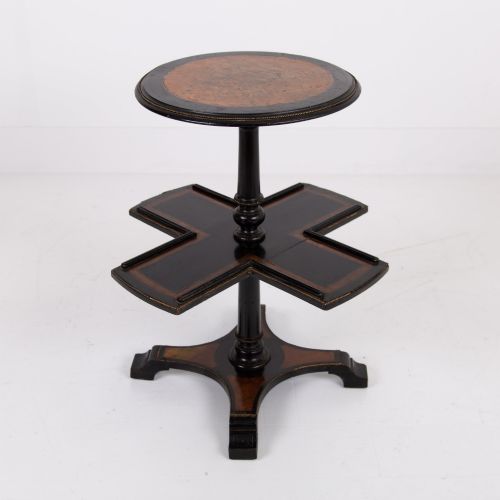
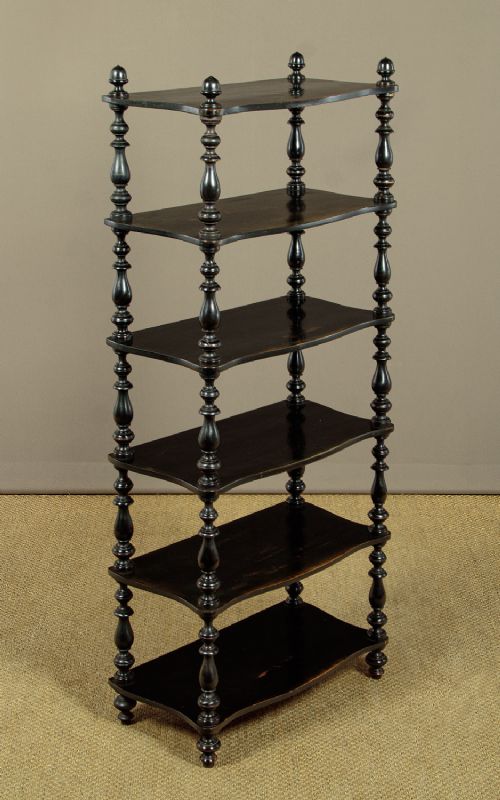


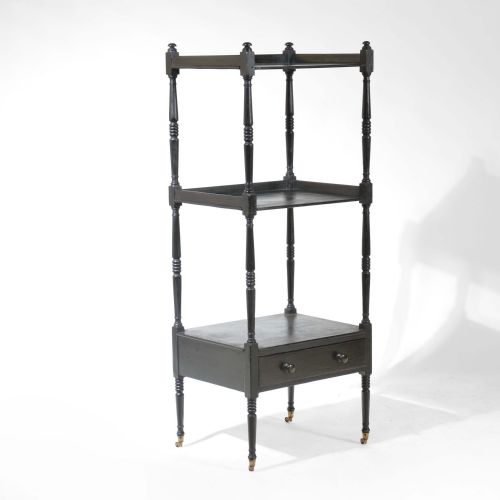


Ebonised Tier Shelf
An ebonised tier shelf offers dark, striking surfaces for display, combining functional tiers with the dramatic finish of blackened wood.
Ebonised Tier Shelf
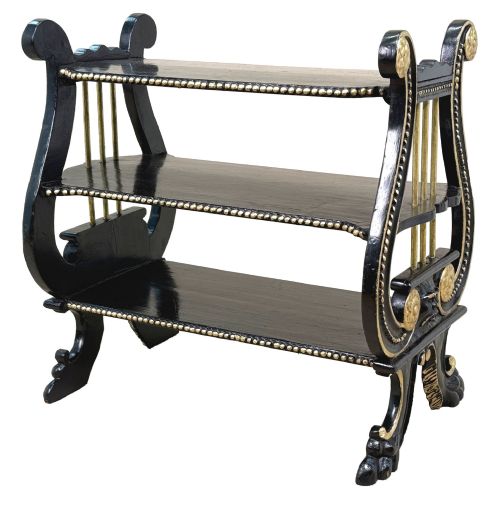
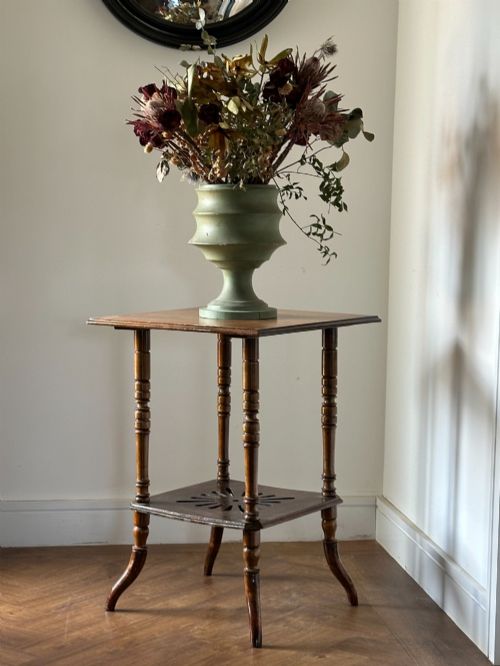
An ebonised tier shelf provides multiple levels of surface area for display, spanning forms such as étagères, whatnots, corner units, and wall-hanging shelves. The pieces appearing here predominantly date from the nineteenth century, including Victorian and Edwardian examples alongside French styles.
These items function as practical furniture for small objects and books while serving as decorative focal points through their dark, treated timber surfaces. Buyers encounter both freestanding tiered stands and wall-mounted variations designed to maximise vertical space in a room.
How they were made
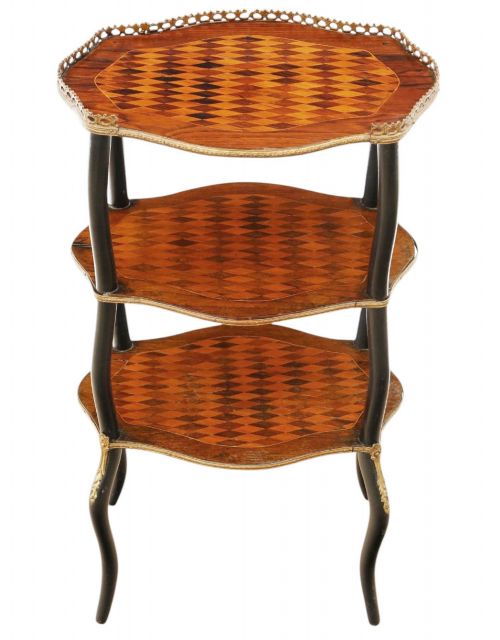
Cabinet makers achieved the characteristic dark finish by treating lighter timbers such as fruitwood, mahogany, or walnut with a black stain or polish to imitate costly ebony. Many examples incorporate contrasting materials, pairing the blackened wood with brass mounts, gilt decoration, or inlaid parquetry and marquetry.
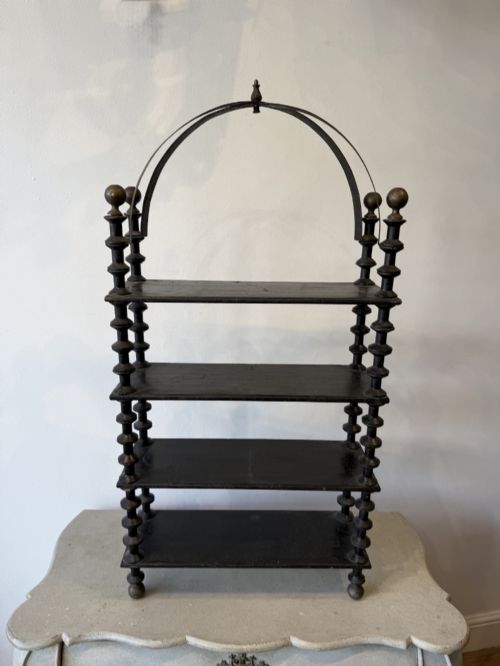
Structural complexity varies from simple turned supports, such as bobbin legs, to elaborate fretwork and tiered platforms veneered in exotic woods like amboyna or burr walnut. Joinery techniques reflect the period of production, joining multiple shelves to upright supports with precision.
Listings demonstrate that ebonised tier shelves frequently incorporate walnut, mahogany, and amboyna veneer alongside mixed timber parquetry.
What varies in quality
The distinction between standard and superior pieces rests on the choice of underlying timber, the crispness of any carving or parcel gilding, and the complexity of the tiered architecture. Pieces utilising dense woods and refined brass or ormolu mounts demonstrate superior craftsmanship compared to simpler utilitarian versions.
Attention to detail on the ebonised surface itself, along with the precision of inlaid parquetry or mixed timber banding, determines the overall refinement of the shelf. The structural integrity of the multiple tiers and their supporting uprights dictates the durability and standing of the piece.
The Ebonised Tier Shelf Glossary
- Ebonised
- Wood treated to resemble ebony by staining or painting the surface black. This finish gained popularity during the Victorian era to create dramatic contrast.
- Étagère
- A piece of furniture consisting of a set of open shelves for displaying small objects. Originating in France, these stands often feature multiple tiers.
- Whatnot
- A freestanding piece of furniture with multiple open shelves used for ornaments or books. It became common in nineteenth-century interiors.
- Parquetry
- Geometric mosaic woodwork used for decorative floors or furniture surfaces. Makers combined various timbers to form repeating patterns.
- Bobbin
- A turned woodwork detail resembling small spools or bobbins threaded together. This decorative turning style appears frequently on nineteenth-century supports.
Ebonised Tier Shelf: Frequently Asked Questions
What is an ebonised tier shelf?
An ebonised tier shelf is a multi-level display piece constructed from wood finished with a dark, black stain to imitate ebony. These items range from wall-hanging brackets to freestanding étagères and corner units.
They provide vertical storage and display surfaces, often featuring decorative inlays, gilt highlights, or turned supports typical of nineteenth-century design.
How were these shelves used historically?
Historically, these tiered stands served to display decorative ornaments, porcelain, and small books in Victorian and Edwardian reception rooms. Their open structure allowed collectors to exhibit curated items from multiple angles.
They functioned both as space-saving corner units and as prominent freestanding furniture pieces that added architectural interest to plain walls.
How do I live with an ebonised tier shelf?
Living with these pieces involves using the multiple shelves for balanced displays of ceramics, books, or plants while protecting the dark wooden surfaces from excessive moisture. Placing them away from direct sunlight preserves the rich ebonised finish and any delicate gilt details.
Their slim vertical profiles make them suitable for hallways, alcoves, or corners where floor space is limited.
How can I tell Victorian from Edwardian examples?
Victorian examples often display heavier proportions, Gothic influences, or Aesthetic Movement details such as parcel gilding and Anglo-Japanese motifs. Timber choices like amboyna and walnut frequently define this earlier period.
Edwardian pieces tend to show lighter construction, sometimes incorporating French marquetry, finer ormolu mounts, and more delicate inlaid borders across the tiers.