
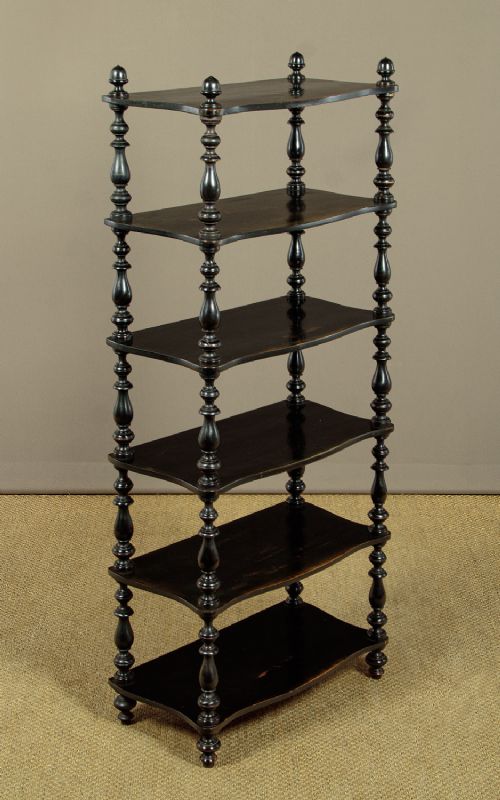
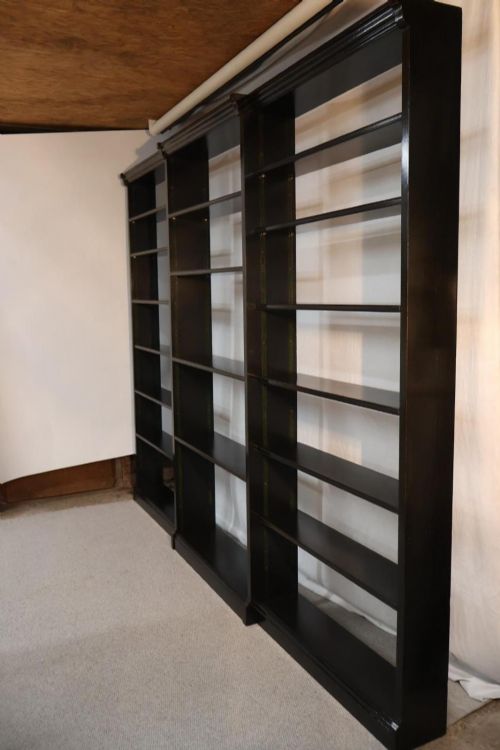


Victorian Ebonised Display Shelf
A victorian ebonised display shelf offers dark elegance and tiered storage, bringing dramatic contrast and period character into a modern interior.
Victorian Ebonised Display Shelf
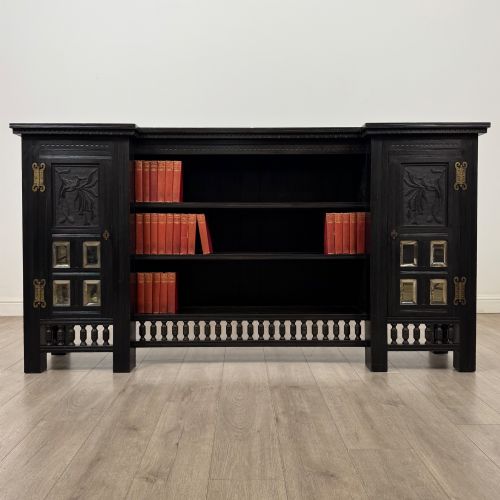
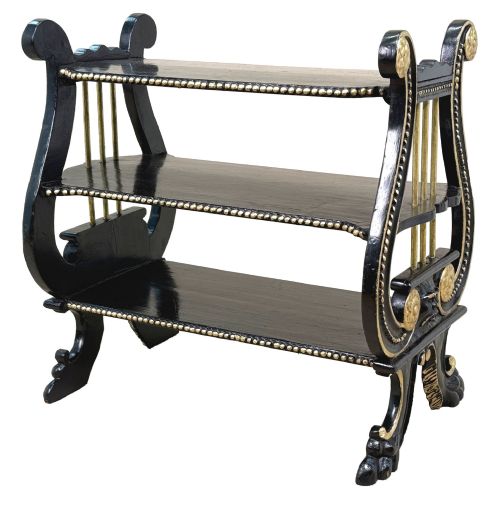
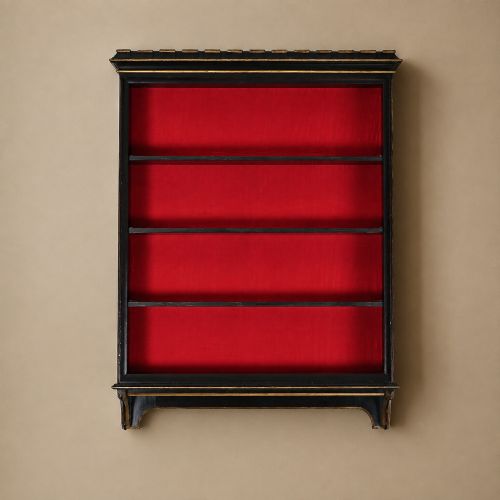
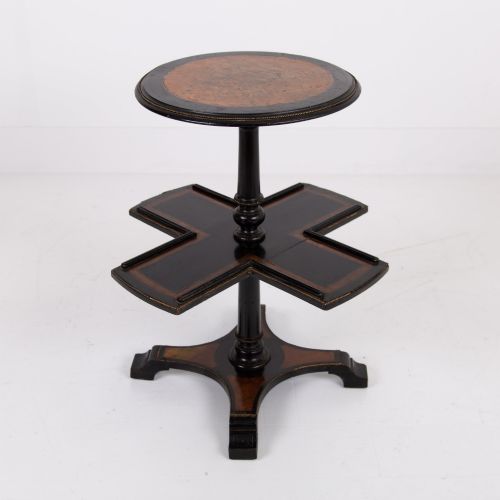
A victorian ebonised display shelf combines dark finished wood with tiered platforms, providing a striking surface for ornaments and books. Buyers searching for a victorian ebonised display shelf will encounter wall bookcases, corner units, étagères, and tiered stands dating from the mid to late nineteenth century.
The dominant styles span Victorian, Gothic Revival, and the Aesthetic Movement, reflecting a period of varied design revivals. Many examples incorporate parcel gilt highlights, contrasting timbers, or inlaid details that elevate the piece beyond plain utility.
Forms vary from compact wall-hanging shelves and corner units to multi-tiered dumb waiters and large reception hall cabinets. The common thread is the use of ebonised timber to create a formal, striking silhouette suited to both grand and intimate rooms.
Materials and construction
Makers utilised timber treated with dark stain or paint to imitate ebony, a technique central to the ebonised finish seen across these pieces. Secondary woods, fruitwoods, or walnut often form the carcase, occasionally paired with amboyna or burr walnut for contrasting panels.
Decoration relied on parcel gilding, brass fittings, inset Wedgwood plaques, and painted details to accent the dark surfaces. Glass doors, mirrored backs, and carved elements further enriched the construction of these cabinets and étagères.
Listings feature Victorian pieces spanning from eighteen-fifty to nineteen-hundred, incorporating materials such as ebonised timber, burr walnut, brass, and glass.
Judging quality and execution
Quality rests in the depth and durability of the ebonised finish, alongside the crispness of any carving or parcel gilding. Superior items display finer timber selection beneath the dark surface, such as burr walnut or amboyna, rather than plain secondary woods.
Structural integrity in multi-tiered stands and wall bookcases distinguishes better workshops from standard production. Well-joined corners, stable shelf supports, and intact original glass or brass hardware elevate the standing of a piece.
George Edmund Street·Wedgwood
The Victorian Ebonised Display Shelf Glossary
- Ebonised
- Wood finished to imitate true ebony, typically through staining, painting, and polishing. This treatment gained immense popularity during the Victorian and Aesthetic periods for its dramatic dark contrast.
- Étagère
- A piece of furniture consisting of open shelves for displaying ornaments or small objects. These tiered stands range from corner units to multi-tiered freestanding display pieces.
- Parcel Gilt
- Partially gilded surfaces where gold leaf highlights specific carved details, mouldings, or edges. It creates a rich contrast against the dark ebonised background.
- Aesthetic Movement
- A late nineteenth-century design style emphasising visual beauty over narrative or moral themes. Pieces from this movement often feature ebonised finishes influenced by Japanese art.
- Gothic Revival
- An architectural and decorative style drawing inspiration from medieval forms. In shelving and bookcases, this translates to pointed arches, structural tracery, and robust proportions.
Victorian Ebonised Display Shelf: Frequently Asked Questions
What is an ebonised shelf?
An ebonised shelf is a piece of wooden furniture treated with a dark finish to resemble expensive ebony wood. These items became popular during the nineteenth century for displaying porcelain and decorative objects.
The dark surface provides a neutral backdrop that makes brightly coloured ceramics and gilt items stand out. Most examples from this era utilise standard timbers finished with dark stain or paint rather than solid ebony.
Where were corner shelves used?
Corner shelves and wall bookcases served to utilise unused room angles in Victorian reception halls, drawing rooms, and parlours. They provided practical storage without taking up valuable floor space.
Smaller wall-hanging versions held books or cabinet plates, while larger étagères stood on the floor to display collections. Their placement depended largely on the room's lighting and traffic flow.
How do I care for ebonised wood?
Ebonised wood requires gentle dusting with a soft, dry cloth to prevent micro-scratches on the dark surface. Avoid modern silicone polishes, which can build up a hazy film over the dark finish.
Keep the timber away from direct sunlight and strong heat sources to prevent fading and splitting. Occasional application of a suitable wax helps maintain the lustre of the polish.
How do I date a Victorian shelf?
Dating relies on examining construction methods, secondary timbers, decorative motifs, and hardware. Pieces from the 1850s often show heavier Gothic Revival influences, while 1880s and Aesthetic Movement items lean towards lighter, Japanned details.
Tool marks on the backboards, screw types, and hinge styles offer further clues to the decade of manufacture. Comparing the stylistic details against known period pieces helps narrow down the origin.