



19th Century Corner Shelves
These 19th century corner shelves bring vertical display space to awkward angles, offering tiered surfaces in rich timbers that collectors prize.
19th Century Corner Shelves
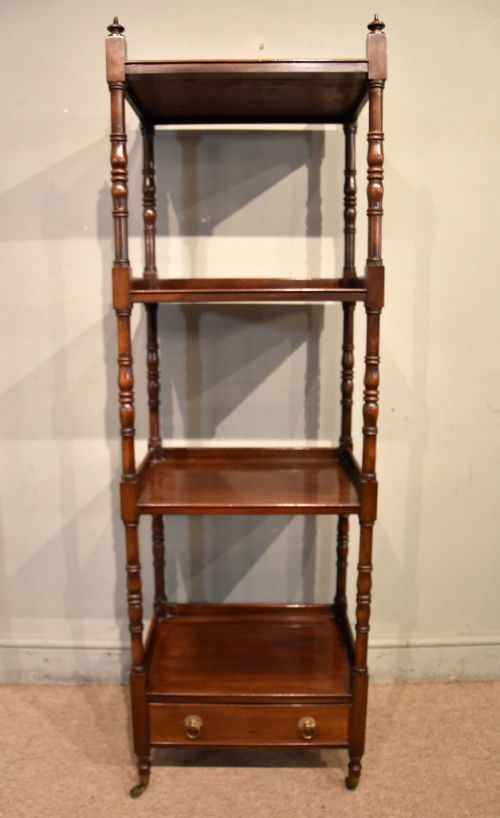
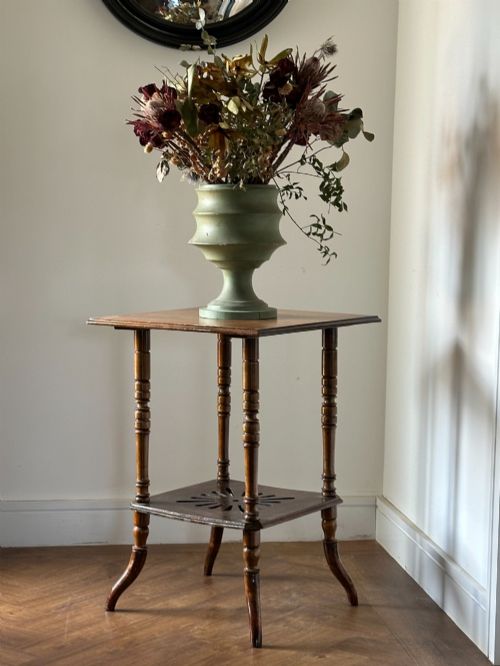
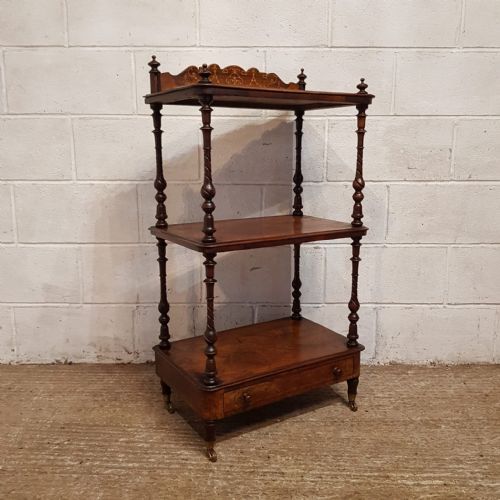
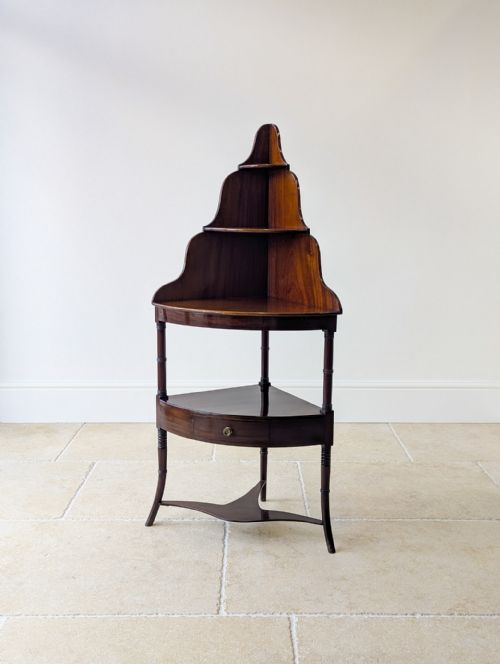
When you search for 19th century corner shelves, you enter a field populated by tiered open stands, corner cupboards, and multi-tier whatnots designed to fit room angles. The pieces appearing here span the Georgian, Regency, and Victorian eras, alongside specific decades such as the eighteen-fifties, sixties, and eighties.
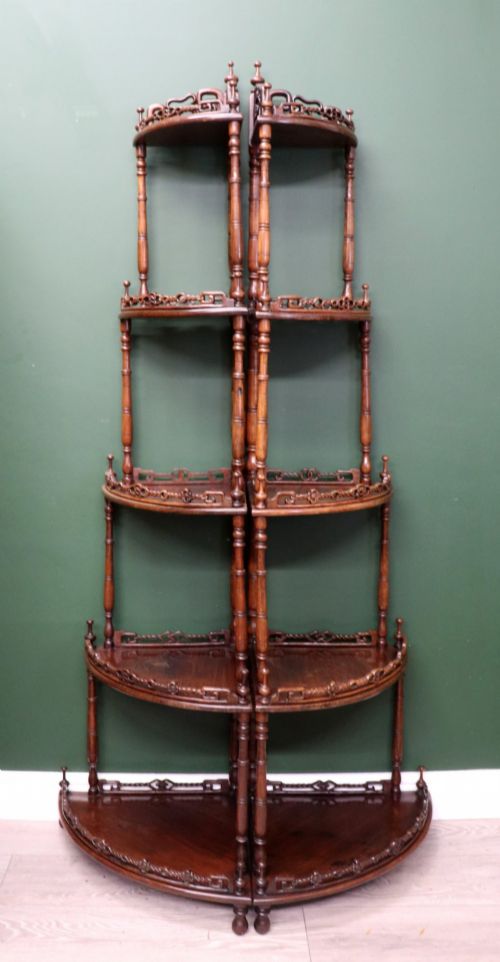
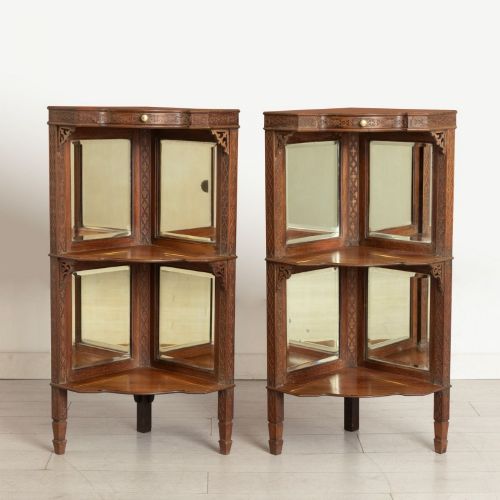
You are most likely to meet mahogany and walnut examples, ranging from simple three-tier stands to elaborate inlaid corner whatnots and glass-fronted display cabinets. The broader family includes etageres and wall brackets, though the specific geometry of a corner unit remains the defining architectural trait.
Materials and Construction
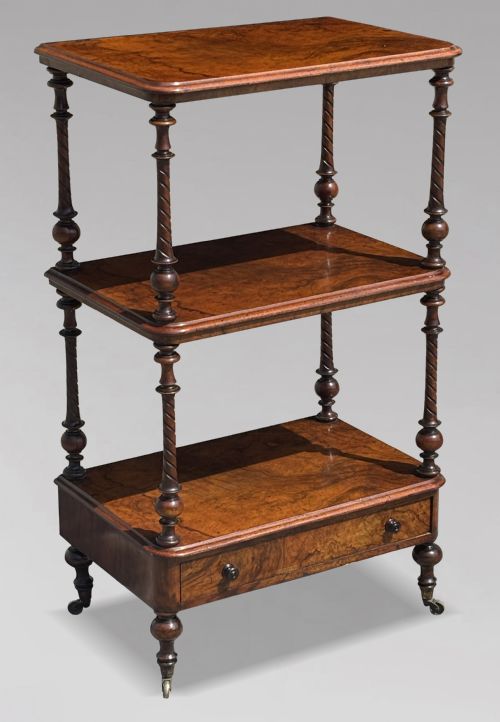
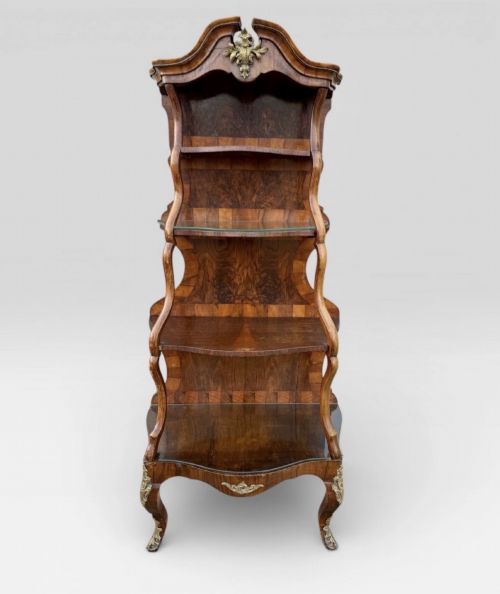
Cabinet makers utilised dense hardwoods, chiefly mahogany and walnut, often selecting burr walnut veneers for rich surface figuring alongside secondary insertions of rosewood, oak, and birdseye maple. Brass details, gilt metal mounts, and mirrored glass backings appear on finer iterations, reflecting light across the tiered shelving.
Construction relies on precise joinery to support multiple levels, utilising turned supports, carved columns, or bracketed uprights to secure the graduated shelves. Inlaid marquetry and shaped galleries distinguish the output of specialised workshops from standard domestic joinery.
Listings demonstrate a strong preference for walnut and mahogany, with 19th century examples frequently taking the form of four-tier whatnots.
Evaluating the Pieces
The distinction between ordinary utility items and superior examples lies in the selection of timber and the ambition of the design. Dense mahogany with strong grain patterns or highly figured burr walnut veneers elevates a standard shelving unit into a distinguished piece of furniture.
Attention to detail in the turned supports, the crispness of any inlaid marquetry, and the integration of gilt metal or brass mounts separate workshops of standard competence from celebrated cabinet makers. The survival of original mirrored glass and uncompromised structural tiered sections determines the standing of the piece.
Edwards & Roberts·John Stow Ltd·E.W Godwin
The 19th Century Corner Shelves Glossary
- Whatnot
- A movable set of open shelves for displaying ornaments, books, or china. These tiered stands gained popularity during the Georgian and Victorian periods.
- Etagere
- A piece of furniture consisting of a set of open shelves for knick-knacks. They share close similarities with whatnots in multi-tiered construction.
- Burr walnut
- A prized wood veneer showing intricate, swirling grain patterns formed from tree growths. Cabinet makers utilised this material on high-status Victorian display furniture.
- Demi-lune
- Having a half-moon or semicircular shape. Console whatnot tables often utilise this profile to sit flush against flat walls or anchor corner transitions.
19th Century Corner Shelves: Frequently Asked Questions
What are 19th century corner shelves used for?
These pieces function as open display units designed specifically to occupy unused room angles. Historically, they held small porcelain ornaments, books, and decorative objects.
Today, they serve the same practical purpose in domestic interiors, utilising vertical wall space without dominating the floor area of a room.
How do I identify a Victorian corner whatnot?
Victorian examples frequently employ dark walnut, burr walnut veneers, or rosewood, often featuring inlaid marquetry and turned support columns. They commonly present three or four tiered platforms.
Earlier Georgian and Regency pieces tend to favour plain mahogany with simpler architectural lines, whereas later Victorian versions lean towards ornamental display.
What is the difference between a whatnot and an etagere?
While both terms describe multi-tiered shelving units intended for display, etagere often implies a slightly lighter, French-influenced decorative piece. Whatnot remains the more common British term for tiered stands across the nineteenth century.
In practice, makers and sellers frequently used both names interchangeably for the same forms.
How do I style corner shelves in a modern room?
Allow the timber grain and tier structure to stand out by keeping displayed objects curated and minimal. Placing books on lower tiers and smaller decorative items above maintains visual balance.
Ensure the wall fixings are secure if the unit is tall, as multi-tiered antique furniture can be top-heavy.