




Turned Wood Corner Shelf
A turned wood corner shelf uses neglected angles to display cherished objects without crowding a room.
Turned Wood Corner Shelf
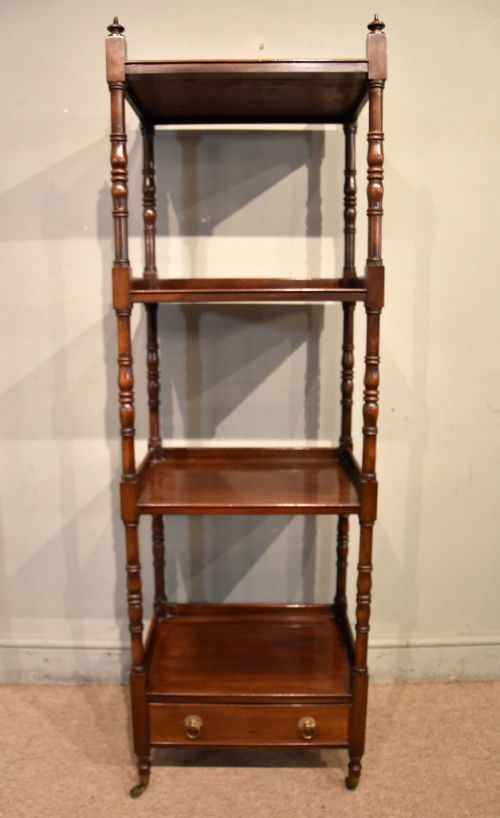
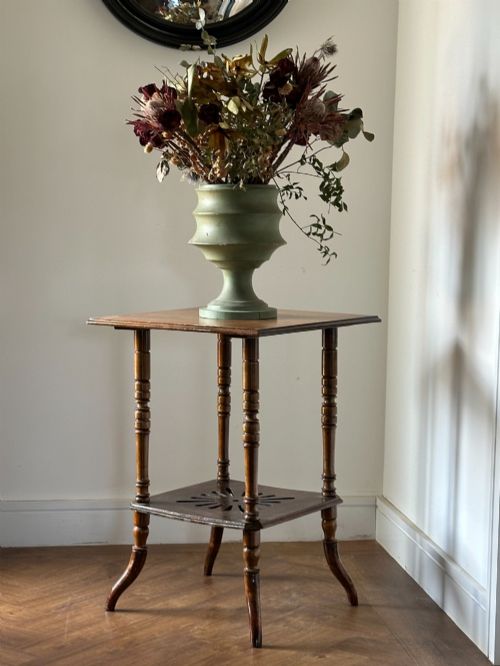
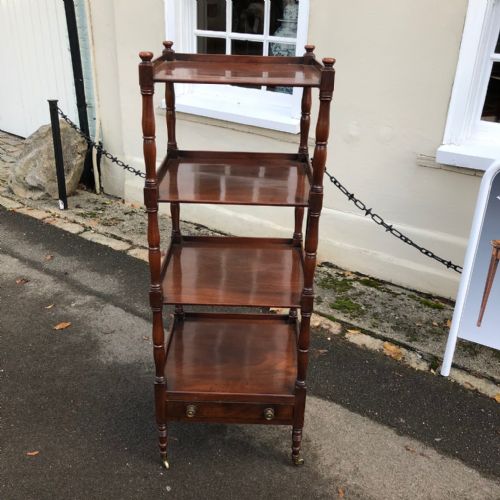
A turned wood corner shelf is an architectural piece designed to fit snugly into room junctions while providing tiered display space. The pieces seen here span the Georgian, Regency, and Victorian eras, often taking the form of multi-tier whatnots, etageres, or freestanding corner units.
Origins stretch across the nineteenth century, encompassing distinct aesthetic movements and cabinet-making traditions. Pieces range from simple oak variants to elaborate rosewood and marquetry inlaid examples.
Materials and construction methods
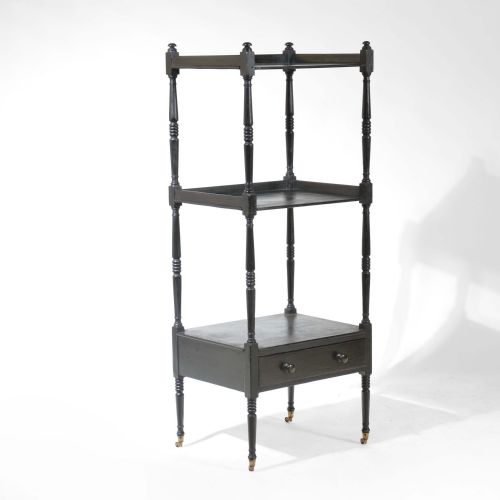
Cabinet-makers relied heavily on dense hardwoods like mahogany, walnut, and rosewood, occasionally employing ebonised wood or softer timbers for secondary structures. These materials were shaped using traditional turning techniques to form the structural supports and upright columns.
Surface decoration frequently included marquetry inlay and brass details to enhance the visual appeal of the tiers. Construction prioritises stability in angled spaces, joining individual shelves securely to turned corner posts.
Distinguishing quality across examples
Quality rests primarily in the choice of timber and the precision of the turning work on the upright supports. Finer examples display carefully selected grain patterns, superior joinery, and thoughtful integration of decorative elements like marquetry inlay.
The architectural proportion of the tiers dictates the overall elegance of the piece. Subtlety in the turned elements separates standard utility items from refined parlour furnishings.
The Turned Wood Corner Shelf Glossary
- Whatnot
- A set of open shelves used for displaying ornaments or books. These pieces became popular in the nineteenth century for parlour and drawing-room use.
- Etagere
- A piece of furniture consisting of a set of open shelves for displaying small objects. The term often overlaps with whatnot in period descriptions.
- Marquetry Inlay
- Decorative woodwork where pieces of veneer are fitted into a ground material to form designs. This technique elevates the surface finish of finer furniture.
- Ebonised Wood
- Timber treated to resemble ebony, a dense dark wood. Victorian makers frequently used this finish to achieve a striking contrast.
Turned Wood Corner Shelf: Frequently Asked Questions
What is a turned wood corner shelf?
A turned wood corner shelf is a multi-tiered display unit designed to fit into room corners, utilising vertical space efficiently.
These pieces typically feature turned wooden supports holding up several graduated shelves for ornaments or books.
How were these corner shelves used?
Period interiors utilised these units in parlours and drawing rooms to display decorative objects, ceramics, and small books.
Their angled design allowed homeowners to furnish unused corners without obstructing pathways through the room.
How do I date a corner whatnot?
Dating relies on identifying stylistic markers, timber choices, and construction methods associated with Georgian, Regency, or Victorian eras.
Earlier pieces often showcase simpler mahogany forms, whilst later Victorian examples might incorporate ebonised finishes or walnut with marquetry.
Where should I place one at home?
These units fit naturally into empty room angles to add vertical interest and display space.
They work particularly well in hallways, studies, or living rooms where floor space is limited.