


Burr Wood Shelf Unit
A burr wood shelf unit brings rich, swirling grain and tiered display space to a room, spanning Victorian and Regency styles.
Burr Wood Shelf Unit
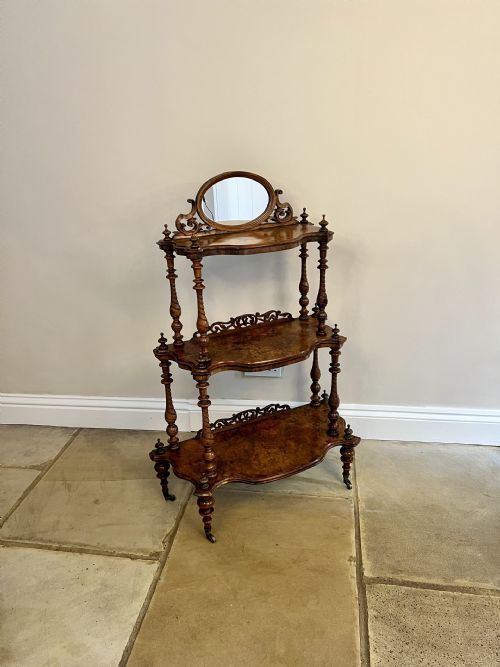
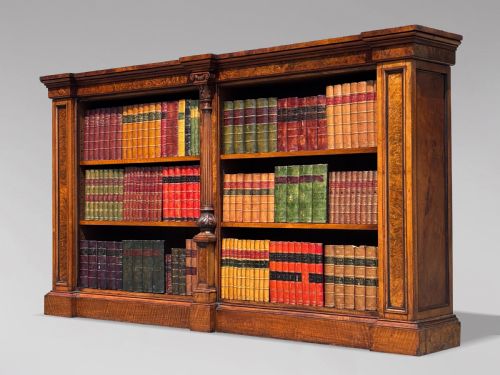
A burr wood shelf unit encompasses tiered etageres, open bookcases, and whatnots designed to display books and decorative objects. Buyers seeking this phrase encounter multi-tiered walnut and burr walnut furniture dating from the nineteenth century, including Victorian and Regency examples.
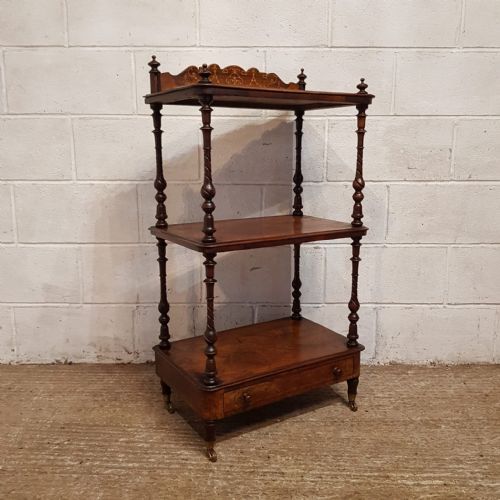
The most common forms on this page are Victorian burr walnut whatnots and open bookcases featuring multiple shelves supported by turned columns or carved supports. These pieces combine utility with decorative grain work, utilising amboyna and elm in select regional pieces.
How they were made
Cabinet makers utilised highly figured burr walnut veneers applied to sound hardwood carcases, creating rich patterns across shelves and panels. Turnery, marquetry inlay, and brass details complete the construction of these nineteenth-century items.
Makers incorporated mirror glass and open shelving structures into etageres and whatnots, balancing delicate upright supports with sturdy timber platforms. Traditional joinery methods secured the tiers, ensuring stability for display use.
Listings feature walnut, burr walnut, amboyna, and elm across Victorian, Regency, and William IV periods.
What varies in quality
The choice of burr veneer dictates the visual impact, with tighter, more complex grain patterns marking out superior examples. Finer pieces display meticulous marquetry inlay and careful matching of the wood across multiple tiers.
Structural refinement separates standard items from exhibition quality pieces, visible in crisp carving on the supports and balanced proportions. The integration of brass fittings and secondary hardwoods reflects the original maker's ambition.
The Burr Wood Shelf Unit Glossary
- Whatnot
- A movable set of open shelves used for displaying ornaments and small books, popular throughout the nineteenth century.
- Etagere
- A French term for a tiered piece of furniture designed for display, often featuring three or more open shelves.
- Burr wood
- Timber taken from a tree growth where the grain has swirled into intricate patterns, highly valued for decorative veneer.
- Marquetry
- Decorative inlay work using strips of wood and other materials to form geometric or floral patterns on a surface.
- Regency style
- An English design aesthetic drawing on classical Greek and Roman motifs, dating roughly from the early nineteenth century.
Burr Wood Shelf Unit: Frequently Asked Questions
What is a burr wood shelf unit used for?
These units serve primarily to display books, ceramics, and decorative objects across multiple open tiers. Their compact footprints make them versatile for placing in living spaces and studies.
Historically, they evolved to hold household miscellany within reach while showing off the decorative properties of figured timber. Today, they continue to function as display furniture in traditional and modern interiors.
How do I identify a Victorian whatnot?
Victorian whatnots typically feature three or four tiered shelves supported by turned wooden columns or carved uprights. They often incorporate burr walnut veneers and occasionally include a small drawer or mirror.
Checking the construction reveals period joinery methods and timber choices consistent with nineteenth-century workshops. The presence of marquetry inlay or exhibition quality carving points towards the upper end of the period output.
What is the difference between an etagere and a whatnot?
While both terms describe tiered shelving furniture, etagere originates from French design vocabulary and often implies a lighter, highly decorative framework. Whatnot is the traditional English term for similar multi-shelf display stands.
In practice, nineteenth-century makers used both designations interchangeably for open-shelved furniture. The specific form depends more on regional style and date than on the terminology used in the listing.
How do I care for burr walnut furniture?
Burr walnut veneer requires protection from direct sunlight and excessive temperature fluctuations to prevent the wood from drying or splitting. Regular dusting with a soft, dry cloth preserves the polished surface.
Applying a traditional beeswax polish occasionally helps nourish the timber and maintain the depth of the grain. Avoid placing damp items directly onto the antique shelves.