
Regency Dining Server
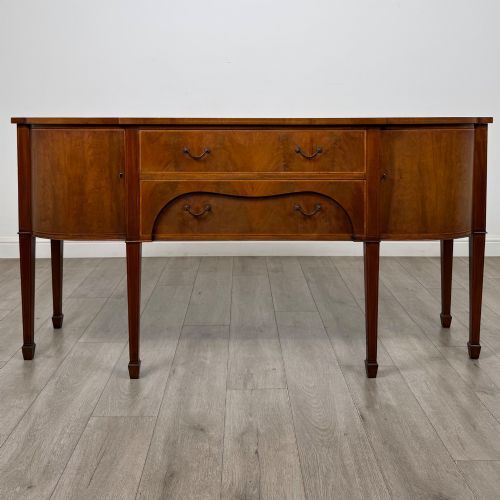
A regency dining server organises the formal dining room, combining deep mahogany timber with practical storage for service during meals.
Regency Dining Server
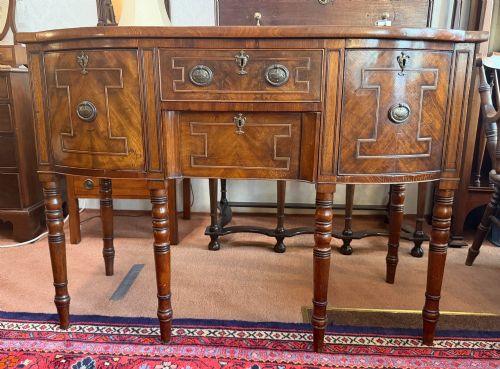
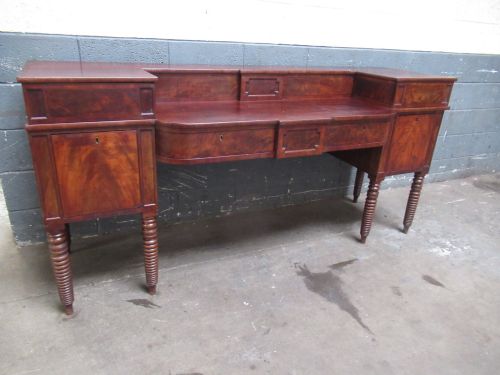
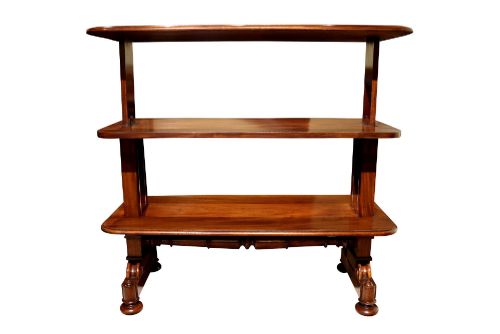
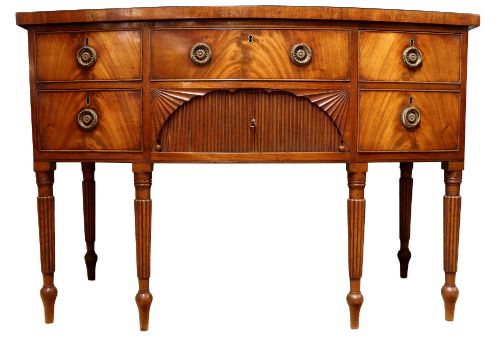
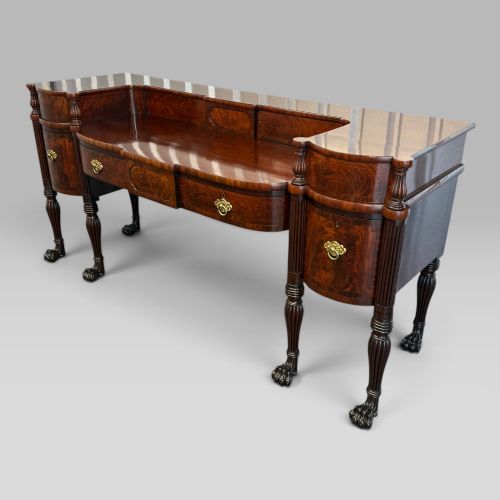
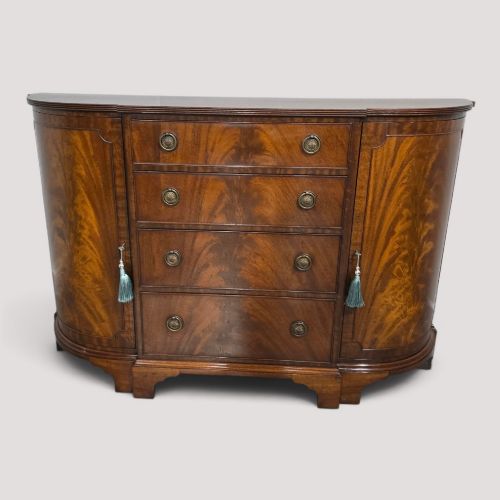
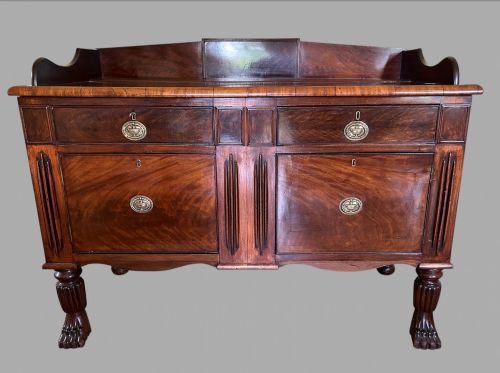
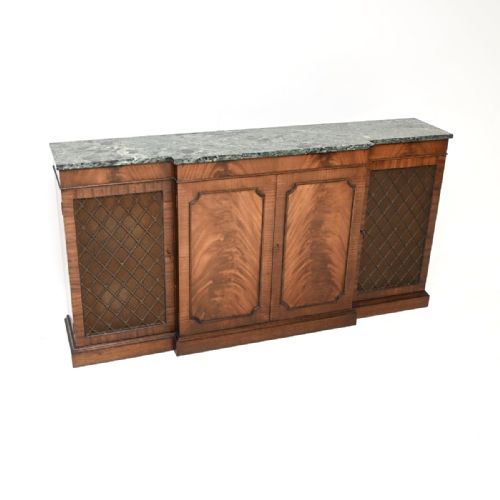
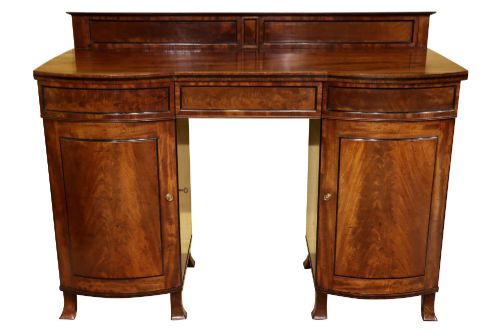
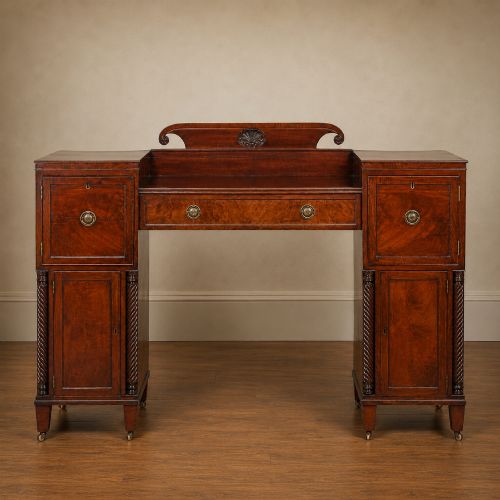
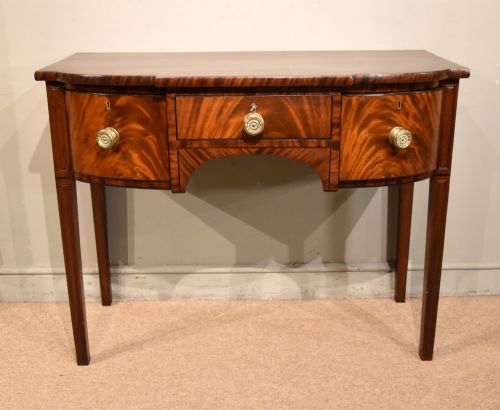
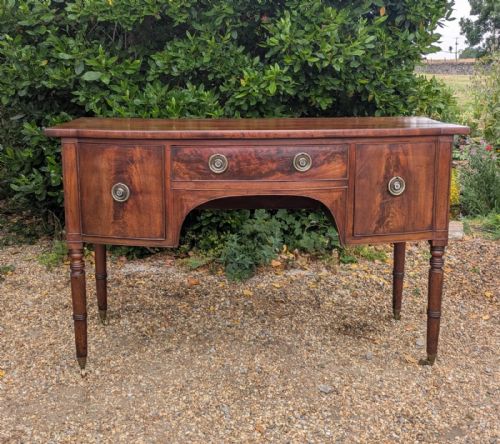
A regency dining server encompasses large serving tables, bow-front sideboards, pedestal sideboards, and breakfronts originating primarily from the nineteenth century, including Georgian and William IV periods. Buyers most frequently encounter mahogany bow-front sideboards featuring inlaid boxwood and ebony details, alongside pedestal formats supported by lion paw feet.
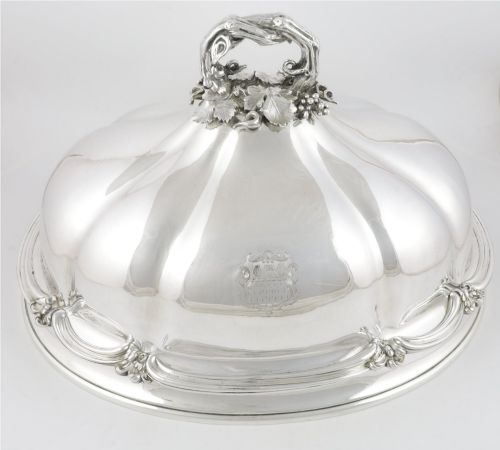
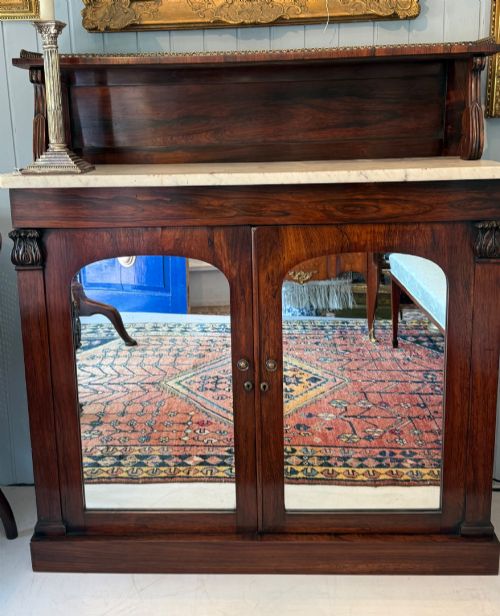
The inventory includes Scottish and Irish variants of imposing scale, alongside smaller demi-lune shapes and chiffoniers dating into later decades. These pieces served to hold silver, plates, and food during large household dinners, reflecting the formal dining habits of their era.
Materials and Construction
Cabinet makers utilised solid mahogany and applied flame mahogany veneer to carcases, building rich visual depth across expansive drawer fronts and top boards. Inlays of boxwood and ebony create sharp linear borders, while brass inlay adds metallic contrast on finer examples.
Structural elements incorporate carved mahogany pedestals, lion paw feet, and marble tops where heavy duty food preparation or service took place. Secondary timbers support the internal drawer construction, hidden behind primary cabinet surfaces.
Listings feature mahogany, rosewood, and marble across nineteenth century periods including Regency, Georgian, and William IV.
Markers of Distinction
Quality rests in the selection of timber, visible where figured flame mahogany veneers align symmetrically across multiple drawers and doors. The crispness of brass or wood inlay and the depth of carved wooden details, such as pedestal mounts and feet, separate standard items from superior workshop output.
Proportion and scale dictate visual success, ranging from neat compact sideboards to grand breakfronts with harmonious architectural lines. The integrity of the original carcase timbers and the restraint applied to decorative brass or stringing define the better examples.
Gillows·Roberts Cadman
The Regency Dining Server Glossary
- Bow-front
- A convex curved cabinet front that projects outward in a smooth arc. This shape softens the corners of dining rooms while offering practical interior depth.
- Breakfront
- A large piece of cabinet furniture where the central section projects forward from the flanking wings. It creates a strong architectural presence in formal dining spaces.
- Flame mahogany
- Timber cut from the fork of the mahogany tree to produce a distinct, fiery grain pattern. Cabinet makers used veneer sheets of this wood on prominent surfaces.
- Pedestal sideboard
- A design featuring two distinct pedestals flanking a central section, popular during the nineteenth century. These often stand upon carved feet.
- Chiffonier
- A low cabinet equipped with shelves or drawers, functioning as a smaller companion to the main sideboard. It provides auxiliary surface space for dining paraphernalia.
Regency Dining Server: Frequently Asked Questions
Where did they stand in the dining room?
These servers stood against the main dining room wall, positioned close to the dining table for easy access during meals.
Servants used the broad top surfaces to place dishes, silver, and wine before transferring them to guests.
How do I spot a true nineteenth century piece?
Examine the timber construction inside the drawers and check for hand-cut dovetails joining the drawer sides together.
Look for the warm patina built up across the mahogany surfaces through decades of polishing.
What is the difference between a sideboard and a serving table?
Sideboards typically incorporate banks of drawers and enclosed cupboards for storing dining silver and linen.
Serving tables operate as open frames without built-in cabinetry, focusing entirely on a flat top surface.
How do I care for mahogany veneer surfaces?
Keep the timber away from direct heat sources and sudden humidity changes to prevent the veneer from lifting.
Apply traditional beeswax polish sparingly to maintain the natural lustre of the wood grain.