
Regency Dining Pedestals
Regency dining pedestals are the structural supports and pillar-based tables that define formal nineteenth-century dining rooms, sought after for their versatility and grand scale.
Regency Dining Pedestals
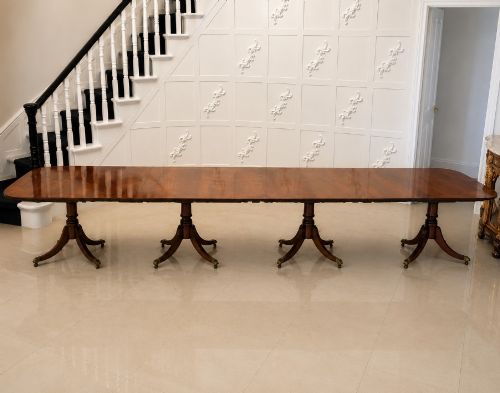
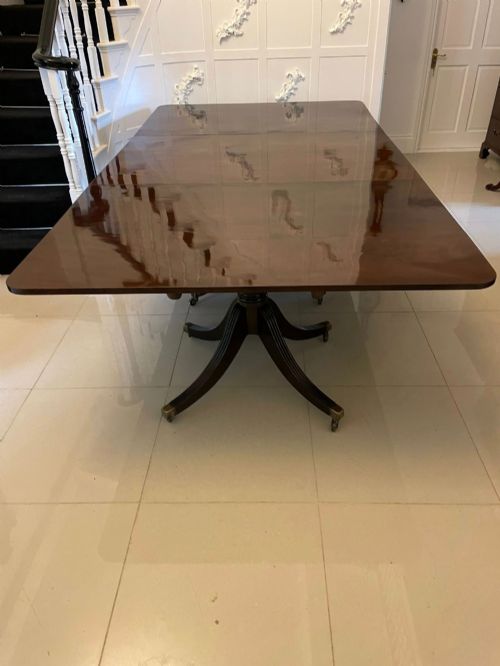
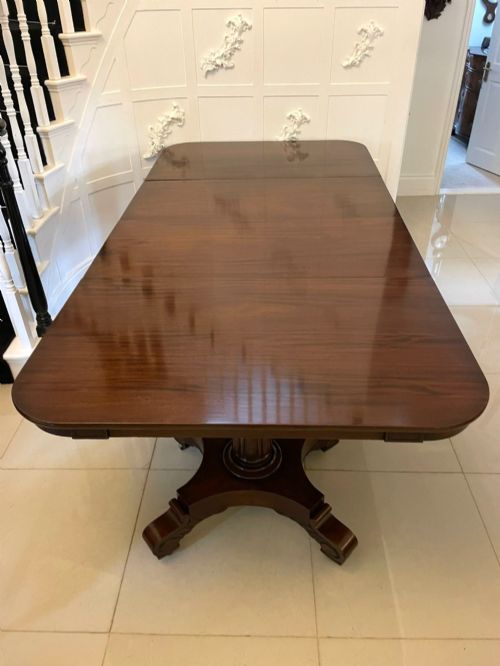
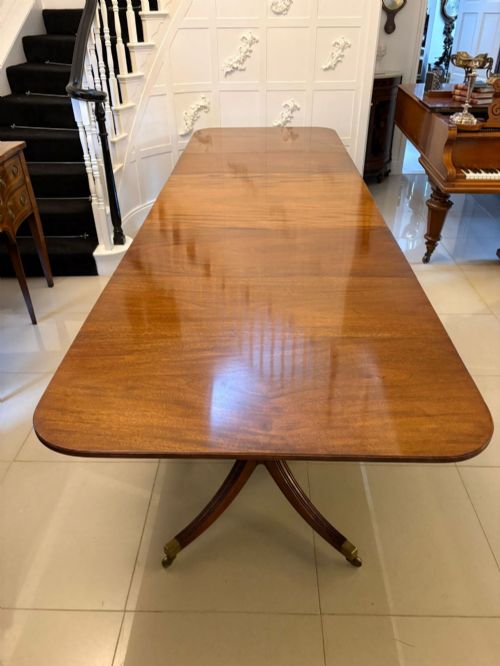
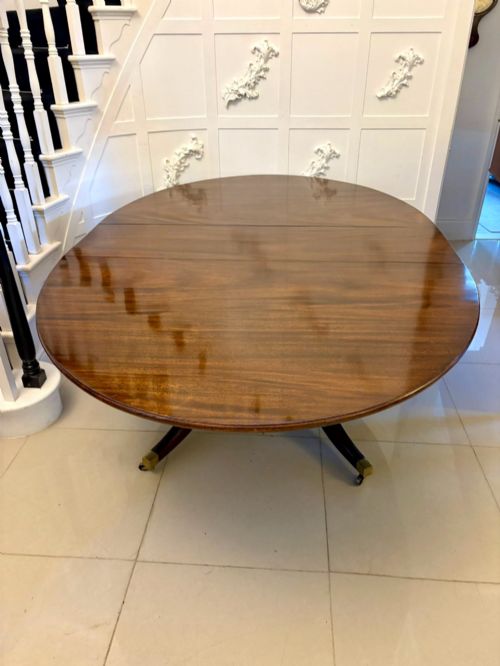
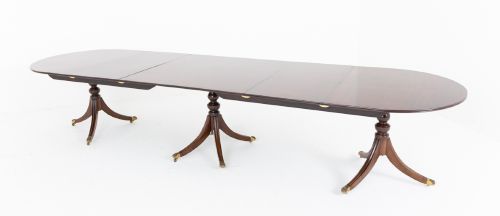
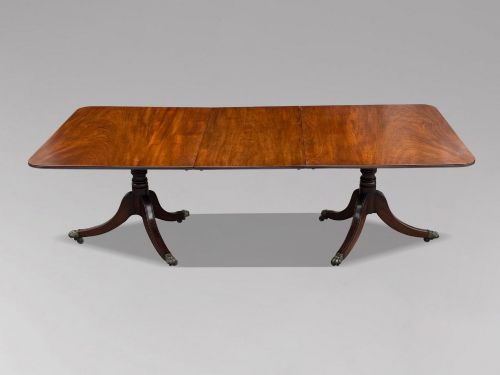
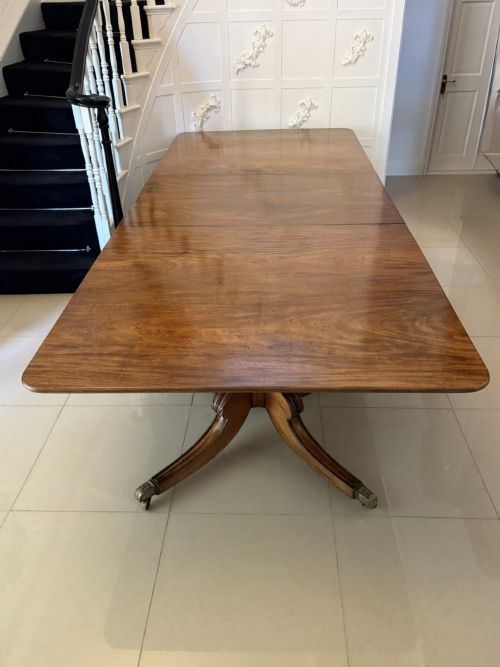
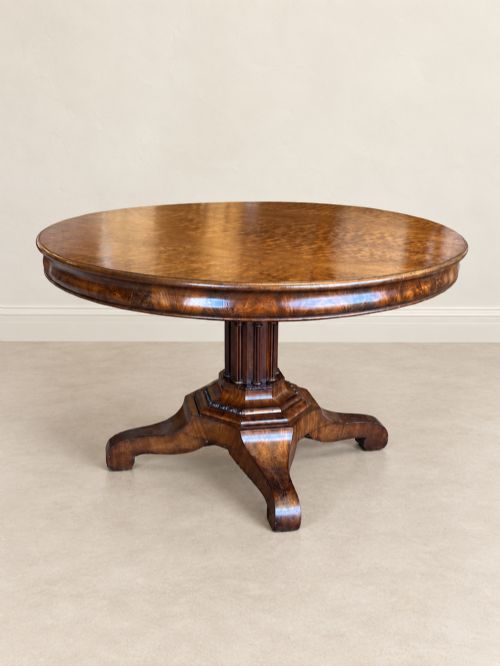
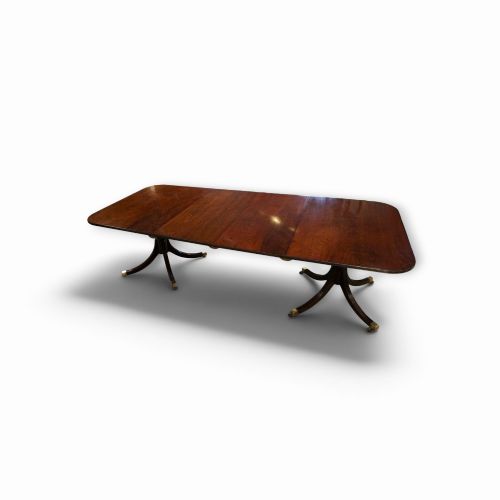
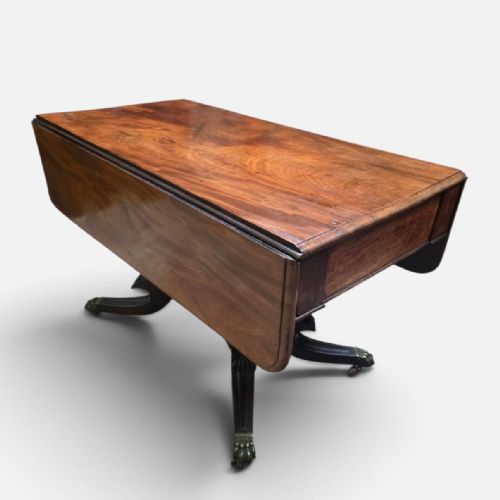
When buyers search for regency dining pedestals, they encounter multi-pillar extendable tables and single pedestal breakfast or centre tables dating from the nineteenth century alongside later revivals. These forms comprise solid timber bases supporting expansive leaves designed to accommodate large gatherings.
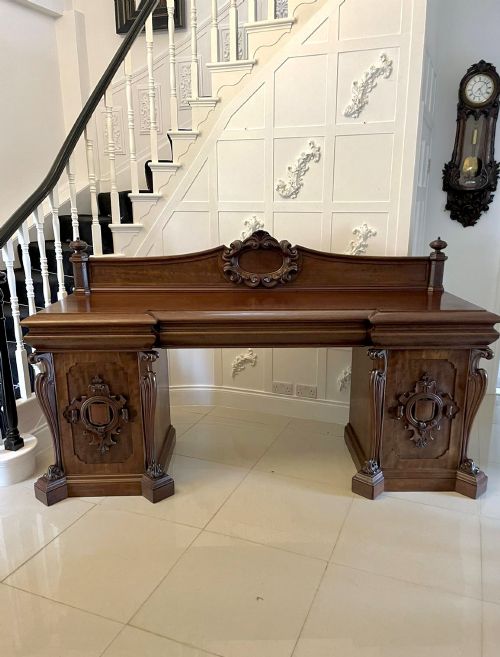
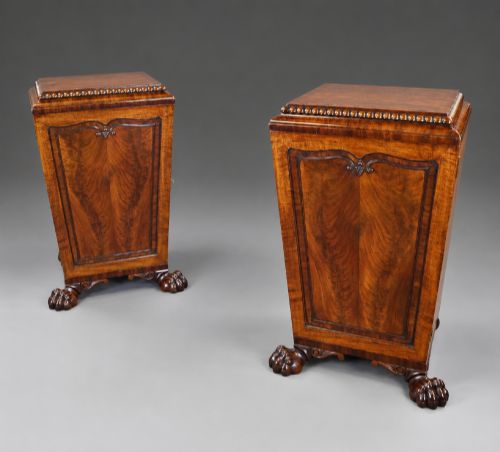
The inventory on this page ranges from twin-pillar configurations suitable for moderate spaces to four-pillar banquet tables seating up to twenty-eight guests. Alongside extending dining tables, buyers find tilt-top breakfast tables and sideboards utilising pillar supports.
While period pieces originate from the Georgian, Regency, and William IV eras, the listings also encompass twentieth-century Regency Revival interpretations. These pieces share the characteristic column and base architecture intended for domestic dining.
What varies in quality
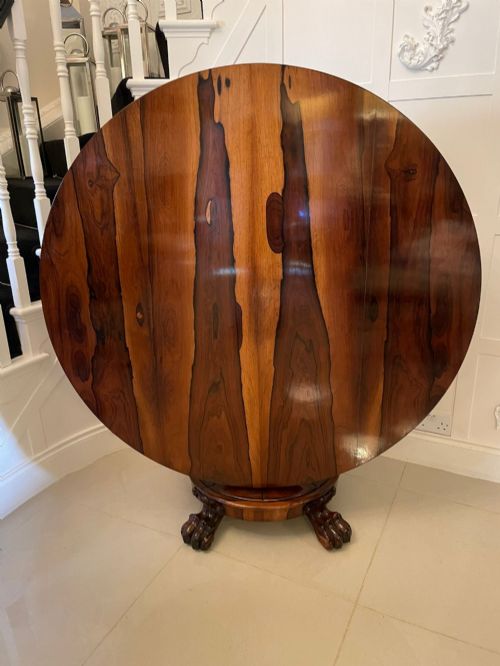
Quality separates through the selection of timber grains, evident in the vibrancy of figured and flame mahogany veneers across the top boards. Superior examples display precise cabinetmaking in the joinery of the pillar mounts and the crispness of any carved details on the bases.
The structural integrity of the extending mechanism and the matching of timber leaves across multi-pillar formats dictate the overall standard. Tables that maintain alignment and stability across three or four pedestals represent the upper echelon of these dining forms.
Listings feature mahogany, rosewood, and oak materials across nineteenth-century and twentieth-century revival periods.
Gillows of Lancaster
The Regency Dining Pedestals Glossary
- Pedestal
- The central pillar or column supporting a table top, often dividing into multiple supports on larger dining tables.
- Crossbanding
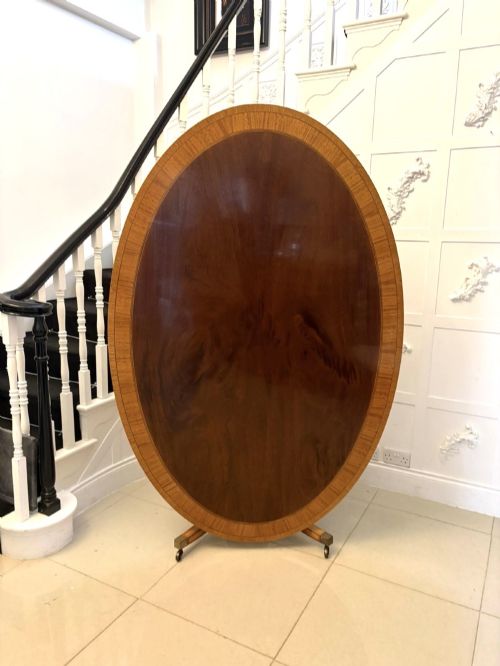
- A border of veneer laid with the grain running perpendicular to the main surface, typically seen in contrasting timbers like satinwood.
- Tilt-top
- A hinged tabletop mechanism that allows the surface to fold vertically for storage or placement against a wall when not in use.
- Triform
- A three-sided base structure commonly found beneath the central columns of breakfast and centre tables.
- Extending dining table
- A table designed with removable leaves and multiple pillars to expand seating capacity for large dinners.
Regency Dining Pedestals: Frequently Asked Questions
How do I seat guests around a pedestal table?
Multi-pillar dining tables allow chairs to be positioned along the length and around the ends without fixed legs obstructing legroom.
Adding extra leaves alters the length to suit the number of diners, supported by the underlying pedestals.
What is the difference between a breakfast table and a dining table?
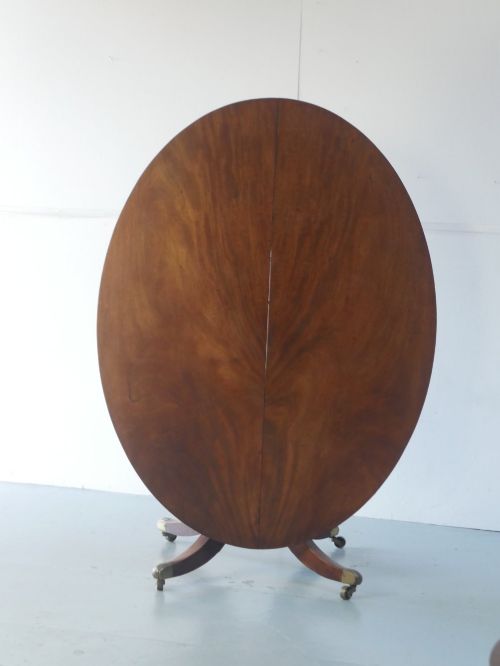
Breakfast tables typically feature a single pillar with a tilt-top mechanism and a circular or oval top intended for smaller rooms.
Dining tables employ two, three, or four pedestals to support long rectangular or extending surfaces for formal meals.
How do I identify a Regency Revival piece?
Regency Revival pieces date from later periods such as the early twentieth century while copying the pillar forms and mahogany materials of the original nineteenth-century style.
Examination of the timber construction, fixings, and secondary woods helps distinguish these later interpretations from period antiques.
How are extra leaves stored?
Extending dining tables incorporate removable timber leaves that are lifted out when a smaller seating capacity is required.
These separate leaves must be stored flat in a dry environment to prevent warping when not inserted into the table.