
Regency Chiffonier Cupboard
A regency chiffonier cupboard brings low-slung elegance to a room, offering concealed storage beneath display space.
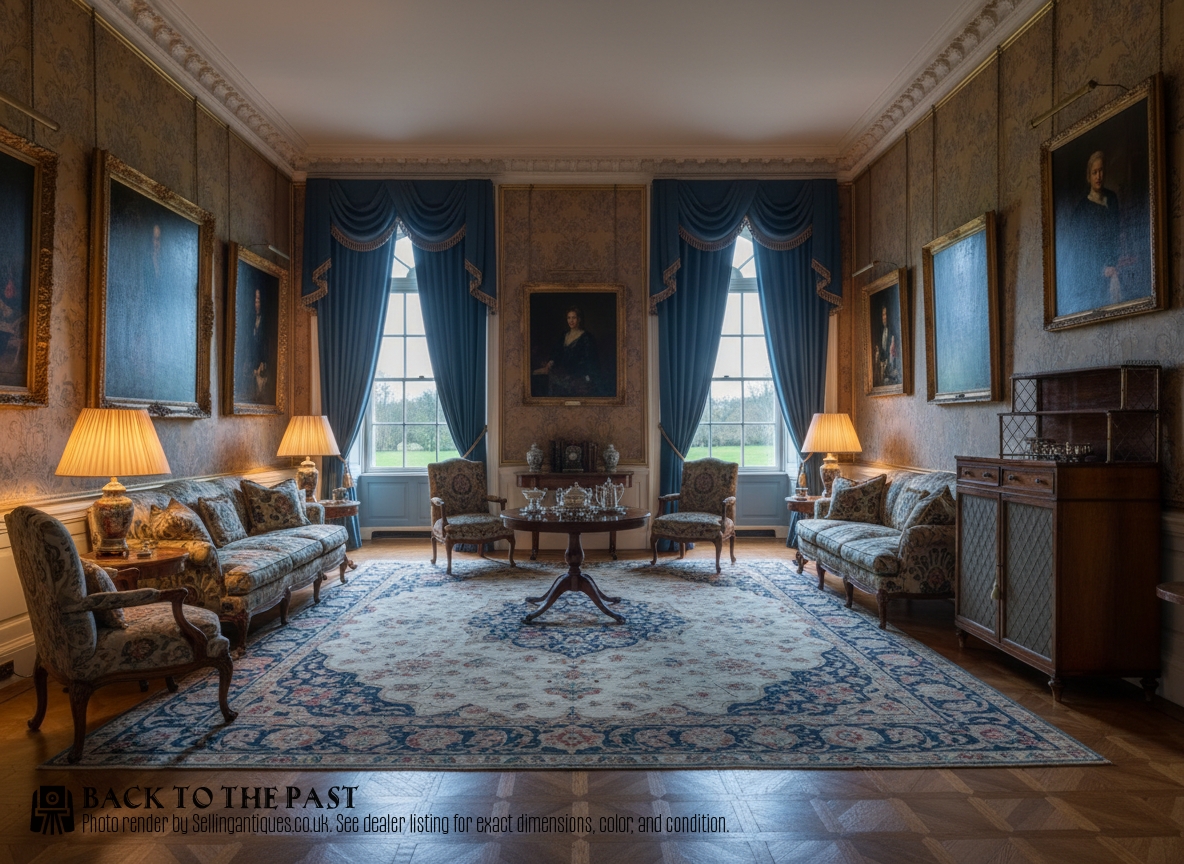
What a regency chiffonier cupboard is
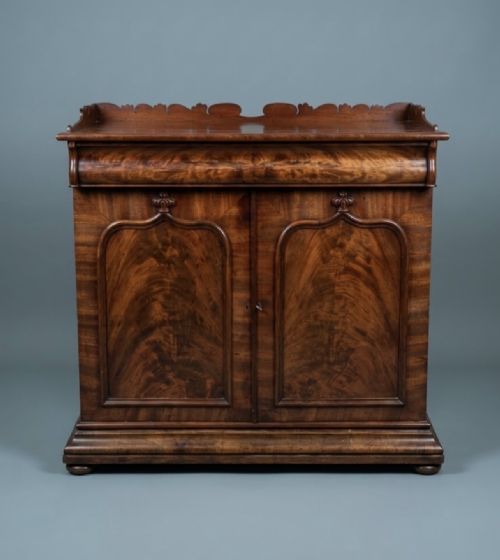
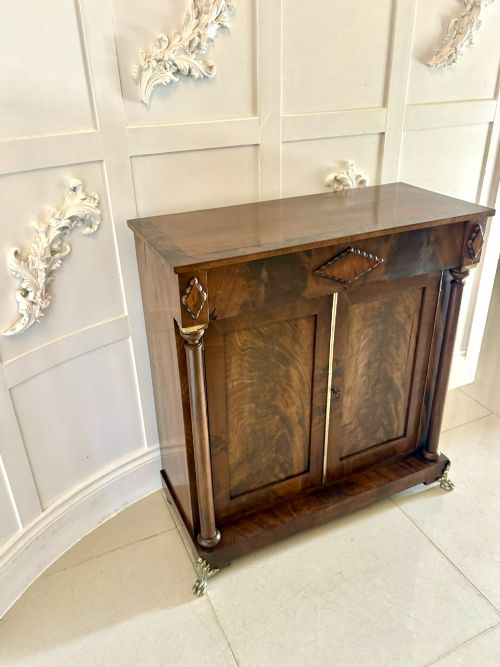
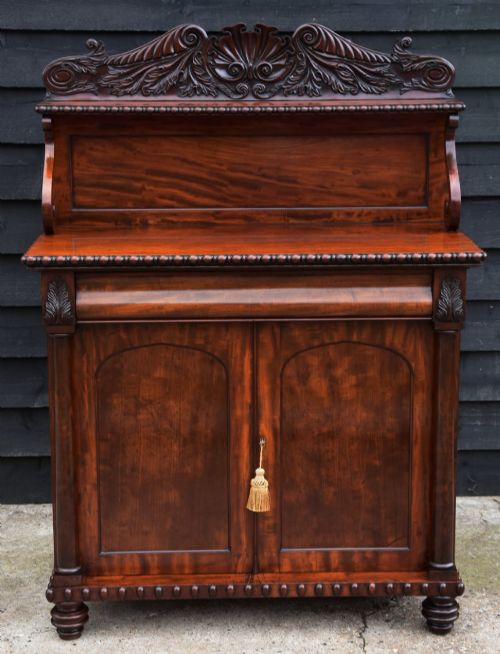
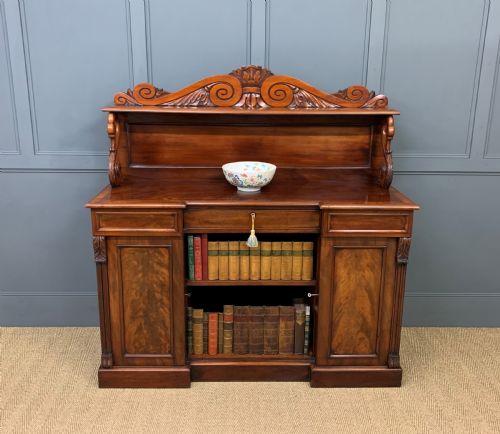
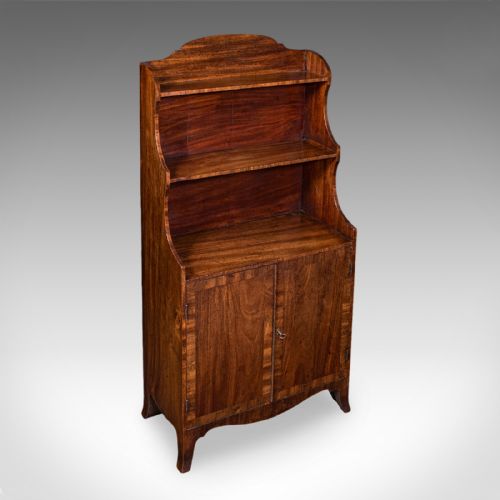
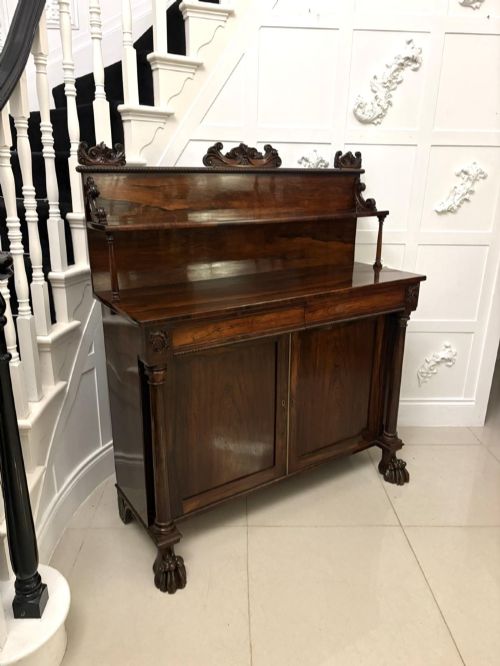
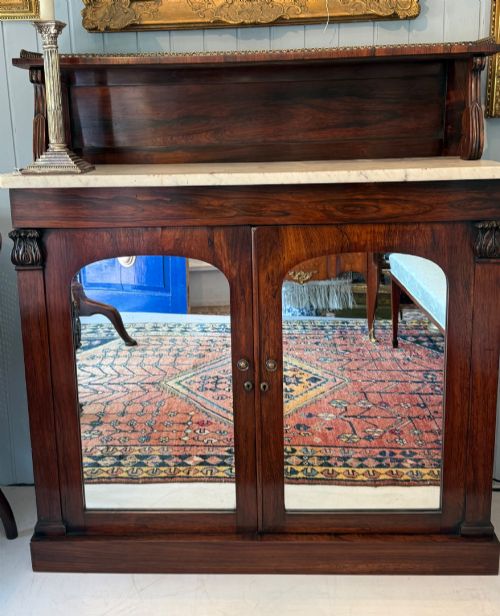
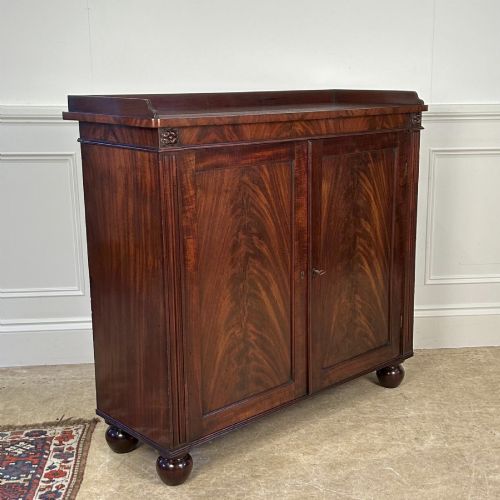
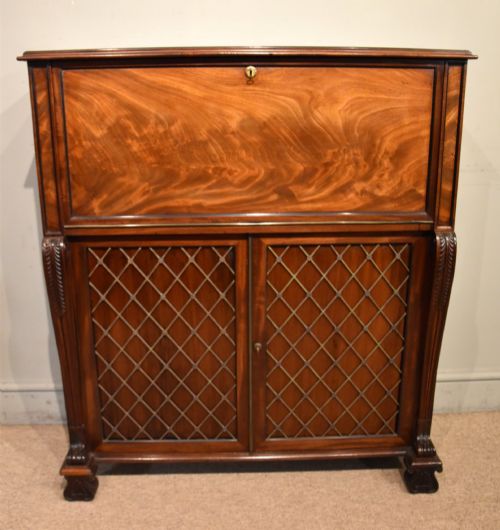
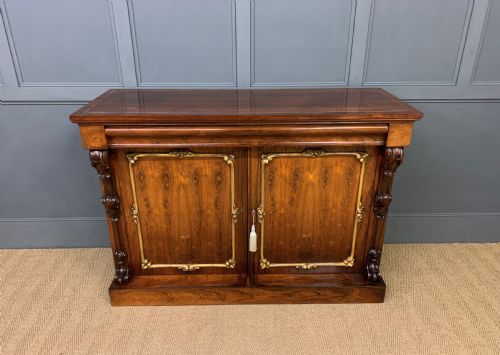
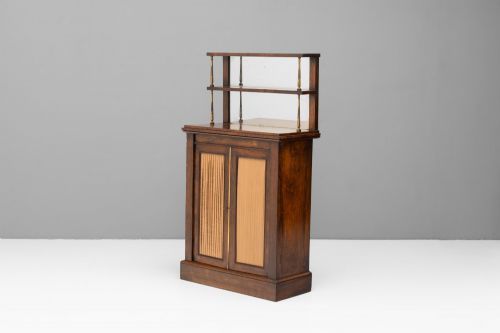
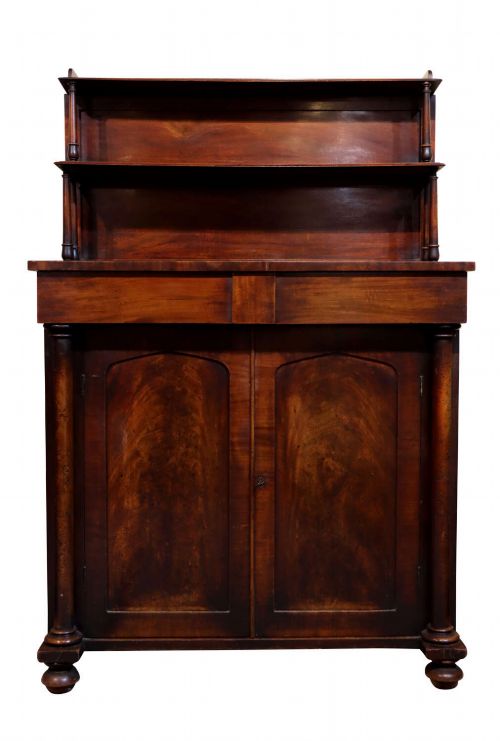
A regency chiffonier cupboard is a low storage piece combining cupboard doors with upper shelves or flat surfaces, originating in the Regency period and nineteenth century. These items function as compact sideboards or hall cupboards in dining spaces and sitting rooms.
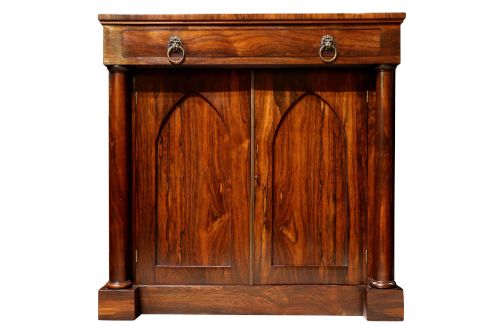
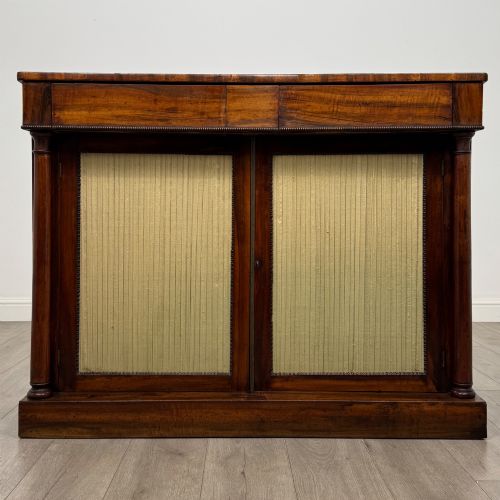
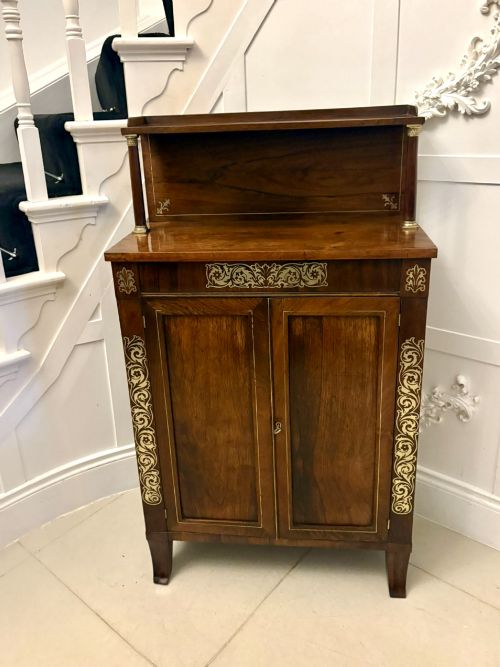
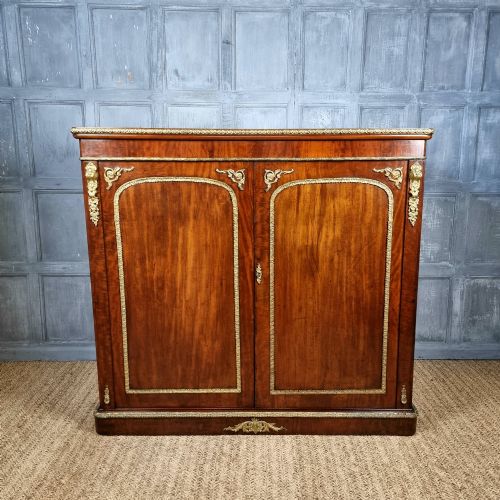
The versions most commonly met on this page appear in rosewood, simulated rosewood, and mahogany timbers. Many examples incorporate specific details such as Gothic panelled doors, brass grilles, marble tops, or integrated secretaire writing compartments.
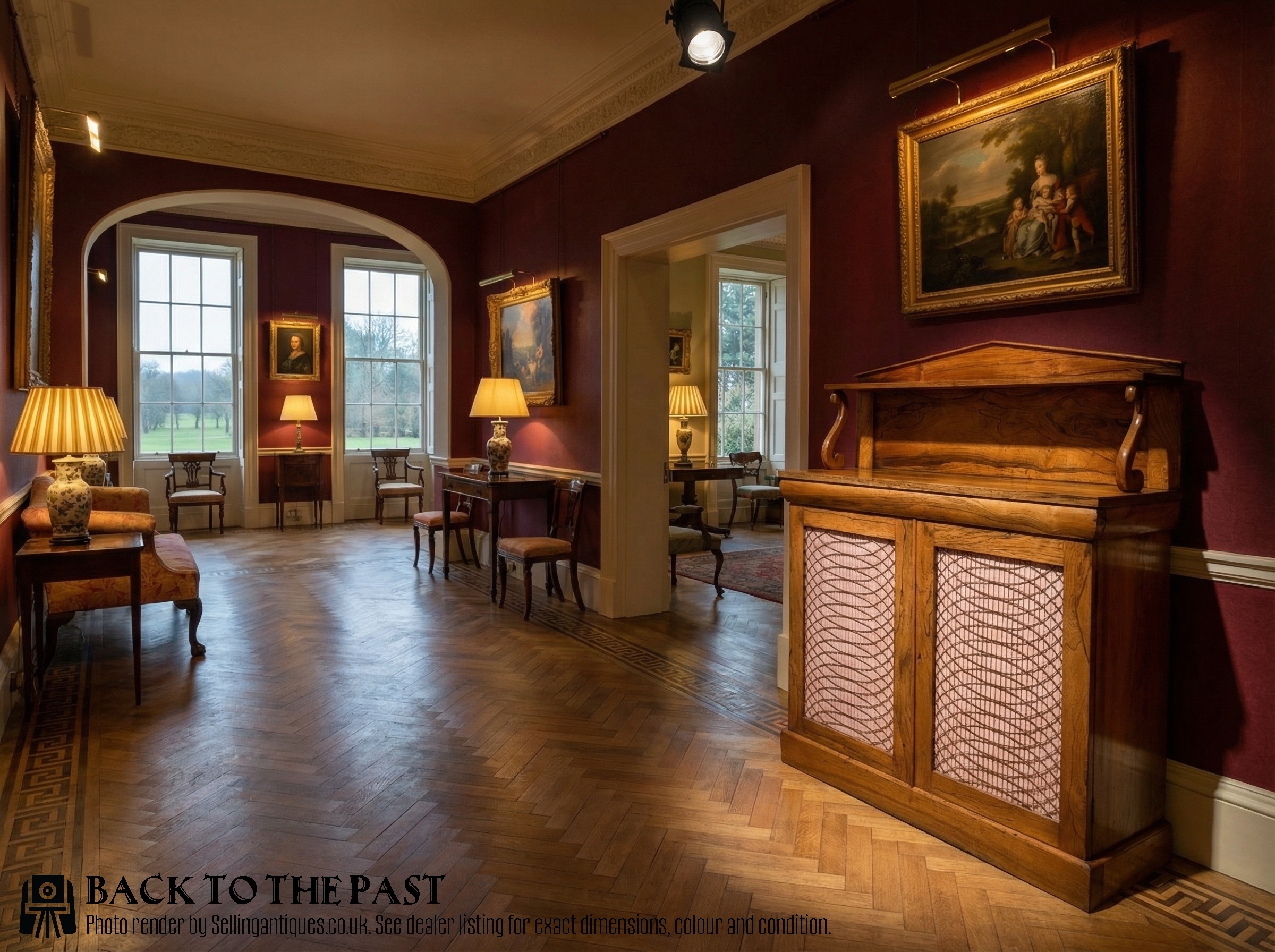
How they were made
Cabinet makers constructed these pieces primarily from solid woods and veneers, selecting rosewood and mahogany for their rich grain patterns. Simulated rosewood surfaces also appear, replicating exotic timbers through painted graining techniques on alternative woods.
Metal elements form an integral part of the construction, utilising brass for decorative mounts, handles, and inset wire meshes on cabinet doors. Gilt decoration and fabric linings further enrich the internal and external surfaces.
Retail Price Guide 2026
Typical UK retail prices for regency chiffonier cupboard, calculated from the Sellingantiques database of over a million retail prices indexed since 2003. This retail price guide relies exclusively on Sellingantiques data; no external sources or auction records are used, so the figures do not describe the wider market.
The archive and current listings show both rosewood and mahogany as the dominant timber choices for these cabinets.
What varies in quality
The distinction between standard pieces and the finest examples lies in the selection of figured mahogany or rosewood veneers. Superior craftsmanship shows in the crispness of gilt decoration and the precision of fitted secretaire drawers.
Proportion and scale dictate the desirability of individual pieces, with smaller formats and unusual configurations commanding particular attention. Integrated architectural elements, such as Gothic panels or marble tops, elevate the sophistication of the design.
The Regency Chiffonier Cupboard Glossary
- Chiffonier
- A low cabinet or sideboard featuring enclosed lower storage, often surmounted by a shelf or gallery. This form evolved during the Regency era to serve multipurpose functions in fashionable interiors.
- Secretaire
- A writing compartment disguised as a drawer, featuring a drop-down front and internal pigeonholes. These fitted desks provide workspace without disrupting the unified facade of the cupboard.
- Simulated rosewood
- A decorative paint finish applied to a base wood to imitate the dark grain and contrasting figure of genuine rosewood. Artisans utilised this technique to achieve a costly aesthetic with more accessible materials.
- Gilt
- Applied gold leaf or gold paint used to highlight carved details, mouldings, and decorative motifs. This surface treatment adds bright contrast against dark mahogany and rosewood bodies.
- Brass wire
- Fine metal filaments woven into mesh panels for cabinet doors, allowing partial visibility of interior contents while maintaining a secure enclosure.
Frequently Asked Questions
What is a regency chiffonier cupboard?
A regency chiffonier cupboard is a low-profile storage item featuring lower doors, often accompanied by upper shelving or a flat top surface.
These pieces were designed for nineteenth-century reception rooms to store household items and display decorative objects.
How were these cabinets used originally?
Originally, these cabinets served in dining rooms and drawing rooms to hold linens, silver, or books.
Some variations included secretaire drawers, allowing them to function additionally as compact writing desks in domestic settings.
What materials do these cupboards feature?
The primary woods used in construction include rosewood, mahogany, and simulated rosewood finishes.
Secondary materials commonly integrated into the design are brass mounts, metal wire grilles, fabric panels, and occasional marble tops.
How do you style one today?
These cabinets fit easily into modern interiors as sideboards in hallways, living rooms, or dining spaces.
The flat top surface and internal shelving provide practical display areas for lamps, books, and ceramics.
How do you identify the Regency period?
Regency pieces typically display clean architectural lines, classical proportions, and restrained classical ornamentation.
Makers of this era favoured dark exotic veneers paired with bright metal accents like brass inlay and gilt details.